
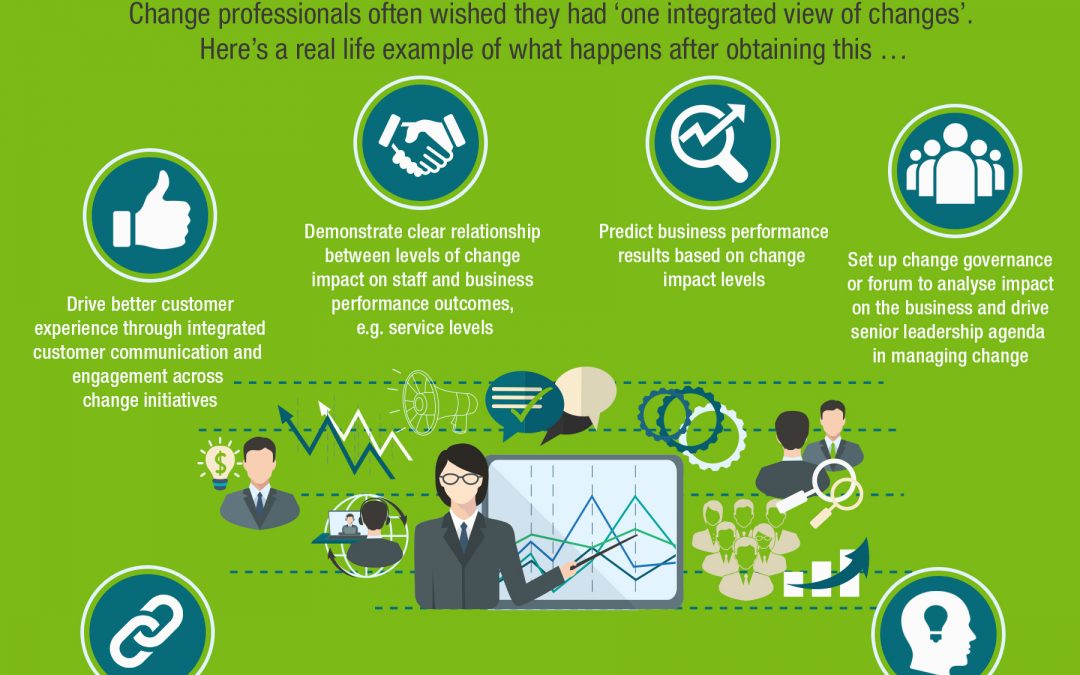
Life after achieving a single view of change: what happens next and why it matters
For years, the holy grail of enterprise change management has been “one view of change”: a consolidated, real-time picture of every initiative landing across the organisation, who it affects, when, and how intensely. Many teams pursue this for months or even years, fighting for data, standardising taxonomies, and building relationships with programme managers who would rather not share their timelines. Then, finally, they get it. The single view exists. The portfolio is visible. And the immediate reaction from most teams is: “Now what?”
This is the part nobody writes about. Achieving visibility is a milestone, not a destination. The real value of a single view of change only materialises when the organisation learns to use it: to make different decisions, to govern portfolios more actively, and to protect employee capacity in ways that were previously impossible. This article explores what happens after you achieve a single view of change, the capabilities it unlocks, and the mistakes that can undermine it.
Why visibility alone does not change anything
The first uncomfortable truth is that having a single view of change does not automatically lead to better outcomes. It is possible, and surprisingly common, for an organisation to build an impressive portfolio view and then continue making decisions exactly as it did before: politically, reactively, and without reference to cumulative employee impact.
This happens because visibility is a necessary condition for good portfolio governance, but not a sufficient one. Three additional ingredients are required:
- Decision rights: Someone must have the authority to act on what the data shows, including the authority to delay, reschedule, or descope initiatives when saturation thresholds are breached
- Decision triggers: The organisation needs predefined thresholds that mandate review, not just dashboards that people can choose to ignore
- Decision cadence: Portfolio reviews must happen frequently enough to be relevant. A quarterly review is too slow for most enterprise portfolios where timelines shift weekly
A Planview analysis of strategic portfolio management found that only 13% of organisations had achieved high effectiveness across all three attributes of strategic portfolio management: visibility, alignment, and adaptability. Most had visibility but lacked the governance structures to translate it into action.
The five capabilities a single view of change unlocks
When an organisation genuinely learns to use its single view of change, it gains access to capabilities that were previously impossible. These are not theoretical advantages; they are specific, observable shifts in how the change function operates.
1. Cumulative impact analysis
For the first time, you can see the total load of change landing on any given team, role, or location across all initiatives. This is fundamentally different from looking at each initiative in isolation. A single system upgrade might look manageable. But when you overlay it with the process redesign, the organisational restructure, and the regulatory compliance programme all hitting the same operations team in the same quarter, the picture changes dramatically.
Cumulative impact analysis allows you to move from “is this initiative ready?” to “can this team absorb one more change right now?” That is a far more useful question.
2. Proactive sequencing and scheduling
With a portfolio view, you can identify scheduling conflicts before they happen. If two major go-lives are planned for the same business unit in the same month, you can raise the issue six weeks in advance rather than discovering it in a post-implementation review. The value here is not just avoiding collisions; it is creating a rational basis for sequencing conversations that were previously driven by whoever had the loudest sponsor.
3. Scenario modelling for new initiatives
When a new initiative is proposed, you can model its impact on the existing portfolio before committing resources. What happens if we launch in Q2 versus Q3? Which teams would tip into saturation? What if we phase the rollout by region rather than going organisation-wide? These are questions that can only be answered with a populated portfolio view, and they fundamentally change the quality of business case discussions.
4. Evidence-based stakeholder engagement
Senior leaders respond to data they cannot argue with. A single view of change provides that. When you can show the CTO that the technology team is absorbing impacts from seven concurrent initiatives, and that the data predicts adoption risk will peak in six weeks, you are having a fundamentally different conversation than “the team seems overwhelmed.” The specificity and evidence base of a portfolio view changes the nature of stakeholder engagement from persuasion to problem-solving.
5. Trend analysis and organisational learning
Over time, a maintained portfolio view becomes a historical record. You can analyse patterns: which types of changes consistently take longer to adopt? Which business units recover fastest from saturation peaks? What level of concurrent change correlates with attrition spikes? This kind of organisational learning is impossible without longitudinal data, and it transforms the change function from reactive support to strategic advisory.
The governance shifts required to make it work
Achieving a single view of change requires data and tooling. Making it useful requires governance reform. Here are the specific structural changes that distinguish organisations that merely have visibility from those that use it effectively.
Establish a change portfolio authority. Someone, whether a change portfolio manager, a transformation office lead, or a governance committee, must have the explicit mandate to review portfolio-level data and make recommendations about initiative timing, sequencing, and resource allocation. Without this authority, the single view becomes a reporting artefact rather than a decision-making tool.
Build change data into initiative approval gates. Before any new initiative receives funding or resources, the portfolio impact assessment should be a mandatory input. This means the business case template includes a section on cumulative impact to affected teams, and the approval committee reviews this alongside financial and strategic criteria.
Create escalation triggers based on saturation thresholds. Define what “too much change” looks like for your organisation. This will vary by industry, workforce composition, and change maturity. But the principle is consistent: when a team’s cumulative impact score crosses a defined threshold, a review is automatically triggered. This takes the decision out of subjective judgement and into a structured process.
A 2025 Smartsheet report on enterprise project portfolio management found that 92% of professionals said adapting to organisational change is difficult, and organisations with defined, repeatable governance processes were far more likely to adapt quickly when conditions shifted.
Common mistakes after achieving a single view of change
Having worked with dozens of organisations that have built portfolio visibility, a consistent set of mistakes emerges in the first six to twelve months. Knowing these in advance can save you from repeating them.
- Overloading the view with detail. The temptation is to capture everything: every micro-change, every communication, every training session. This creates noise that obscures the signal. Your single view should focus on changes that materially affect people’s day-to-day work, not every email update or optional webinar.
- Treating the view as a static report. A portfolio view that gets updated monthly is already outdated. Effective organisations treat it as a living system that updates as timelines shift, new initiatives are approved, and adoption data comes in. If your single view is a quarterly PDF, you are missing most of its value.
- Failing to maintain data quality. The view is only as good as its inputs. If project managers stop updating their timelines, or if new initiatives are approved without being added to the portfolio, the view degrades quickly. Data governance is not a one-time setup; it requires ongoing discipline and clear accountability for who updates what, and when.
- Using visibility for blame instead of planning. When the portfolio view reveals that a team is overwhelmed, the correct response is “how do we help?” not “whose fault is this?” If stakeholders feel the data will be used punitively, they will stop contributing to it. The fastest way to kill a single view of change is to weaponise it.
A practical roadmap for the first 90 days after going live
If your organisation has recently achieved a single view of change, or is close to it, here is a structured approach to making it operationally useful within the first quarter.
Days 1 to 30: validate and socialise
Spend the first month validating the data with initiative owners. Walk each major programme team through the portfolio view and confirm that their timelines, impacts, and affected audiences are accurate. This serves two purposes: it improves data quality, and it builds ownership. When programme managers see their initiative in context alongside everything else hitting their stakeholders, they become allies rather than resistors.
Days 31 to 60: identify and act on quick wins
Look for obvious scheduling conflicts or saturation hotspots and bring them to the relevant governance forum. You want an early success story: an instance where the portfolio view identified a risk that would have been missed, and the organisation took action to mitigate it. This builds credibility for the approach and creates demand for more portfolio-level insight.
Days 61 to 90: embed into governance
Work with the transformation office or portfolio governance committee to make the change portfolio review a standing agenda item. Present the first trend analysis: what has changed in the portfolio over the past two months? Where has impact increased or decreased? Which teams have moved from amber to red? This establishes the rhythm of data-driven portfolio governance.
How digital change platforms sustain the single view
Maintaining a single view of change manually, in spreadsheets or slide decks, is possible at small scale but unsustainable for organisations managing more than a handful of concurrent initiatives. Purpose-built platforms like The Change Compass are designed to maintain the single view as a living system: automatically aggregating impact data across initiatives, visualising cumulative load by team and time period, and enabling the scenario modelling and threshold-based alerts that make governance actionable rather than theoretical.
The shift that matters most
Achieving a single view of change is a significant accomplishment, but it is the beginning of a capability journey, not the end. The organisations that extract the most value from their portfolio visibility are those that pair it with clear decision rights, defined saturation thresholds, and a governance cadence that forces regular engagement with the data. Without these structures, even the most comprehensive portfolio view sits unused.
The real measure of success is not whether you can see all the change happening across your organisation. It is whether that visibility leads to different, better decisions about how change is planned, sequenced, and delivered. That is the life after one view of change, and it is where the work truly begins.
Frequently asked questions
What is a single view of change?
A single view of change is a consolidated, real-time picture of all change initiatives across an organisation, showing who they affect, when impacts land, and how intensely. It enables portfolio-level analysis of cumulative employee impact rather than viewing each initiative in isolation.
How long does it take to build a single view of change?
With a purpose-built platform, a usable portfolio view can be established in four to eight weeks for a mid-sized portfolio. Manual approaches using spreadsheets typically take three to six months and are harder to maintain over time. The data collection and stakeholder engagement are usually more time-consuming than the technical setup.
What happens if we build a single view but leadership ignores it?
This is common and usually stems from the view not being embedded into governance processes. The solution is to make portfolio data a mandatory input to initiative approval gates and steering committee agendas, rather than an optional report. Starting with one compelling example of a risk the view identified can build executive buy-in.
Can a single view of change work across different methodologies?
Yes. Organisations running a mix of waterfall, agile, and hybrid programmes can still build a single view by focusing on the common denominator: the impact on people. Regardless of delivery methodology, every initiative creates change impacts that affect specific teams at specific times. The portfolio view aggregates these impacts, not the project plans.
References
- Planview, “What Is Strategic Portfolio Management?”
- Smartsheet, “Enterprise Project Portfolio Management (EPPM): Complete Guide”
- Epicflow, “Trends in Project Portfolio Management: What’s Next in PPM”
- Broadcom ValueOps, “10 Trends in Strategic Portfolio Management for 2024”