Air traffic control is one of the most sophisticated and high-stakes management systems in the world. Ensuring the safety of thousands of flights daily requires rigorous coordination, precise timing, and a structured yet adaptable approach. When failures occur, they often result in catastrophic consequences, as seen in the tragic January 2025 midair collision between an army helicopter and a passenger jet in Washington, D.C. airspace.
Think about the last time you took a flight. You probably didn’t worry about how the pilot knew where to go, how to land safely, or how to avoid other planes in the sky. That’s because air traffic control is a well-oiled machine, built on a foundation of real-time data, clear protocols, and experienced professionals making split-second decisions. Now, imagine if air traffic controllers had to work with outdated information, or if pilots had to rely on intuition rather than hard facts. Chaos, right?
The same principles that apply to managing air traffic also hold valuable lessons for change and transformation management within organisations. Large-scale transformations involve multiple initiatives running in parallel, conflicting priorities, and significant risks. Without a structured, centralised approach, organisations risk failure, reduced value realisation, and employee fatigue.
The same logic applies to organisational change and transformation. Leaders are often trying to land multiple initiatives at once, each with its own trajectory, speed, and impact. Without real-time, accurate data, it’s all too easy for change initiatives to collide, stall, or overwhelm employees. Just as the aviation industry depends on continuous data updates to prevent disasters, businesses must embrace data-driven decision-making to ensure their transformation efforts succeed.
Here we’ll explore what air traffic control can teach us about using data effectively in change management. If you’ve ever felt like your organisation’s transformation efforts are flying blind, chaotic and uncoordinated, this one’s for you.
Lesson 1: The Danger of Overloading Critical Roles
The D.C. Midair Collision: A Case of Role Overload
In January 2025, a tragic midair collision occurred in Washington, D.C. airspace between an army helicopter and a passenger jet, claiming 67 lives. Investigations revealed multiple contributing factors, including inadequate pilot training, fatigue, insufficient maintenance, and ignored safety protocols. This incident underscored the dangers of overstretched resources, outdated processes, and poor data visibility—lessons that extend beyond aviation and into how organisations manage complex, high-stakes operations like change and transformation.
Additionally, the air traffic controller on duty was handling both helicopter and airplane traffic simultaneously, leading to a critical lapse in coordination. This split focus contributed to poor coordination and a lack of real-time situational awareness, ultimately leading to disaster. This is aligned with findings from various research that providing adequate resources is important in driving change and transformation.
Parallels in Change and Transformation Management
Organisations often suffer from similar overload issues when managing change. Many initiatives—ranging from business-as-usual (BAU) efforts to large-scale transformations—compete for attention, resources, and stakeholder engagement. Without a structured approach, teams end up working in silos, unaware of competing priorities or overlapping impacts.
There are some who argue that change is the new norm, so employees just need to get on the program and learn to adapt. It may be easy to say this, but successful organisations have learnt how to do this, versus ignoring the issue. After all, managing capacity and resources is a normal part of any effective operations management and strategy execution. Within a change context, the effects are just more pronounced given the timelines and the need to balance both business-as-usual and changes.
Key Takeaways:
Centralised Oversight: Organisations need a structured governance model—whether through a Transformation Office, PMO, or Change Centre of Excellence—to track all initiatives and prevent “collisions.”
Clear Role Definition: Initiative owners and sponsors should have a clear understanding of their responsibilities, engagement processes, and decision-making frameworks.
Avoiding Initiative Overload: Employees experience “change fatigue” when multiple transformations run concurrently without proper coordination. Leaders must balance initiative rollout to ensure sustainable adoption.
Lesson 2: Providing Initiative Owners with Data-Driven Decision Autonomy
The UPS ‘Continuous Descent Arrivals’ System
UPS has been testing a data-driven approach to landings called ‘Continuous Descent Arrivals’ (source: Wall Street Journal article: Managing Air Traffic Control). Instead of relying solely on air traffic controllers to direct landing schedules, pilots have access to a full dashboard of real-time data, allowing them to determine their optimal landing times while still following a structured governance protocol. While CDA is effective during light traffic conditions, implementing it during heavy traffic poses technical challenges. Air traffic controllers must ensure safe separation between aircraft while optimising descent paths.
Applying This to Agile Change Management
In agile organisations, multiple initiatives are constantly iterating, requiring a balance between flexibility and coordination. Rather than centralised bottleneck approvals, initiative owners should be empowered to make informed, autonomous decisions—provided they follow structured governance (and when there is less risk of multiple releases and impacts on the business).
Key Takeaways:
Real-Time Data Sharing: Just as pilots rely on up-to-date flight data, organisations must have a transparent system where initiative owners can see enterprise-wide transformation impacts and adjust accordingly.
Governance Without Bureaucracy: Pre-set governance protocols should allow for self-service decision-making without stifling agility.
Last-Minute Adjustments with Predictability: Agile initiatives should have the flexibility to adjust their release schedules as long as they adhere to predefined impact management processes.
Lesson 3: Resourcing Air Traffic Control for Organisational Change
Lack of Air Traffic Controllers: A Root Cause of the D.C. Accident
The D.C. accident highlighted that understaffing was a critical factor. Insufficient air traffic controllers led to delayed decision-making and unsafe airspace conditions.
The Importance of Resource Allocation in Change and Transformation
Many organisations lack a dedicated team overseeing enterprise-wide change. Instead, initiatives operate independently, often leading to inefficiencies, redundancies, and conflicts. According to McKinsey, companies that effectively prioritise and allocate resources to transformation initiatives can generate 40% more value compared to their peers.
Key Takeaways:
Dedicated Transformation Governance Teams: Whether in the form of a PMO, Transformation Office, or Change Centre of Excellence, a central function should be responsible for initiative alignment.
Prioritisation Frameworks: Not all initiatives should receive equal attention. Organisations must establish structured prioritisation mechanisms based on value, risk, and strategic alignment.
Investment in Change Capacity: Just as air traffic controllers are indispensable to aviation safety, organisations must invest in skilled change professionals to ensure seamless initiative execution.
Lesson 4: Proactive Risk Management to Prevent Initiative Collisions
The Risk of Unchecked Initiative Timelines
Just as midair collisions can occur due to inadequate tracking of aircraft positions, organisational change initiatives can “crash” when timelines and impacts are not actively managed. Without a real-time view of concurrent changes, organisations risk:
Conflicting Business Priorities: Competing transformations may pull resources in different directions, leading to delays and reduced impact.
Change Saturation: Employees struggle to absorb too many changes at once, leading to disengagement and lower adoption.
Operational Disruptions: Poorly sequenced initiatives can create unintended consequences, disrupting critical business functions.
Establishing a Proactive “Air Traffic Control” for Change
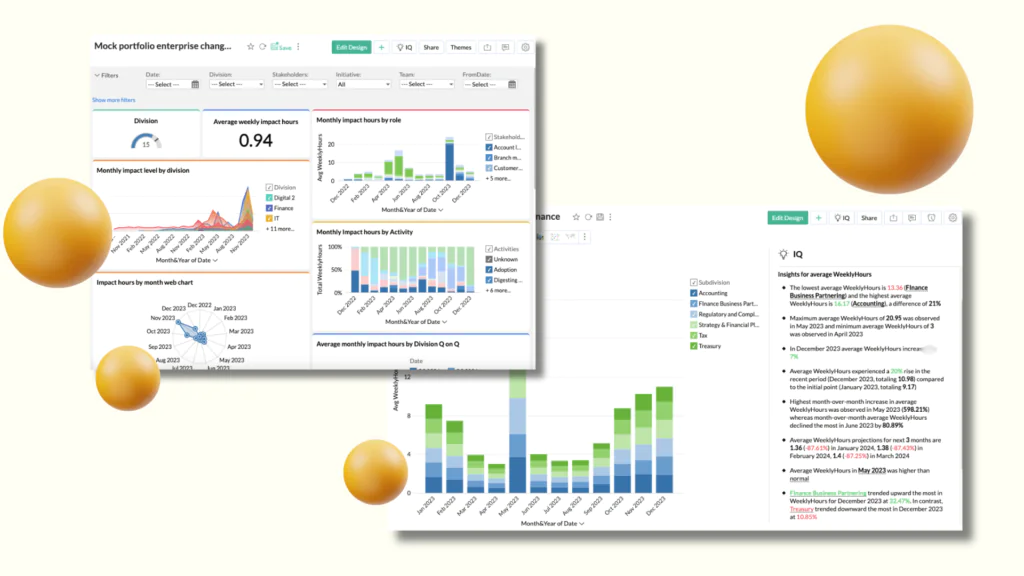
Enterprise Change Heatmaps: Organisations should maintain a real-time dashboard of ongoing and upcoming changes to anticipate and mitigate risks.
Stakeholder Impact Assessments: Before launching initiatives, leaders must assess cumulative impacts on employees and customers.
Strategic Sequencing: Similar to how air traffic controllers ensure safe landing schedules, organisations must deliberately pace their change initiatives.
The Role of Data in Change and Transformation: Lessons from Air Traffic Control
You Need a Single Source of Truth—No More Guesswork
Aviation Example: The Power of Integrated Data Systems
In aviation, pilots and controllers don’t work off scattered spreadsheets or conflicting reports. They use a unified system that integrates radar, satellite tracking, and aircraft GPS, providing a single, comprehensive view of air traffic. With this system, pilots and controllers can see exactly where each aircraft is and make informed decisions to keep everyone safe.
Application in Change Management: Why Fragmented Data is a Recipe for Disaster
Now, compare this to how many organisations manage change. Different business units track initiatives in separate spreadsheets, using inconsistent reporting standards. Transformation offices, HR, finance, and IT often operate in silos, each with their own version of the truth. When leaders don’t have a clear, real-time picture of what’s happening across the organisation, it’s like trying to land a plane in thick fog—without instruments.
Key Takeaways:
Create a Centralised Change Management Platform: Just like air traffic control relies on a single system, organisations need a centralised platform where all change initiatives are tracked in real time.
Standardise Data Collection and Reporting: Everyone involved in change initiatives should follow the same data standards to ensure consistency and accuracy.
Increase Visibility Across Business Units: Leaders need an enterprise-wide view of all change efforts to avoid conflicts and align priorities.
Real-Time Data Enables Agile, Confident Decision-Making
UPS has a fascinating system for managing landings, known as ‘Continuous Descent Arrivals.’ Instead of waiting for air traffic controllers to dictate their landing time, pilots receive real-time data about their approach, runway conditions, and surrounding traffic. This allows them to determine the best landing time themselves—within a structured framework. The result? More efficient landings, less fuel waste, and greater overall safety.
Application in Change Management: The Danger of Outdated Reports
Too often, business leaders make transformation decisions based on data that’s weeks—or even months—old. By the time they realise a problem, the initiative has already veered off course. When leaders lack real-time data, they either act too late or overcorrect, causing further disruptions.
Key Takeaways:
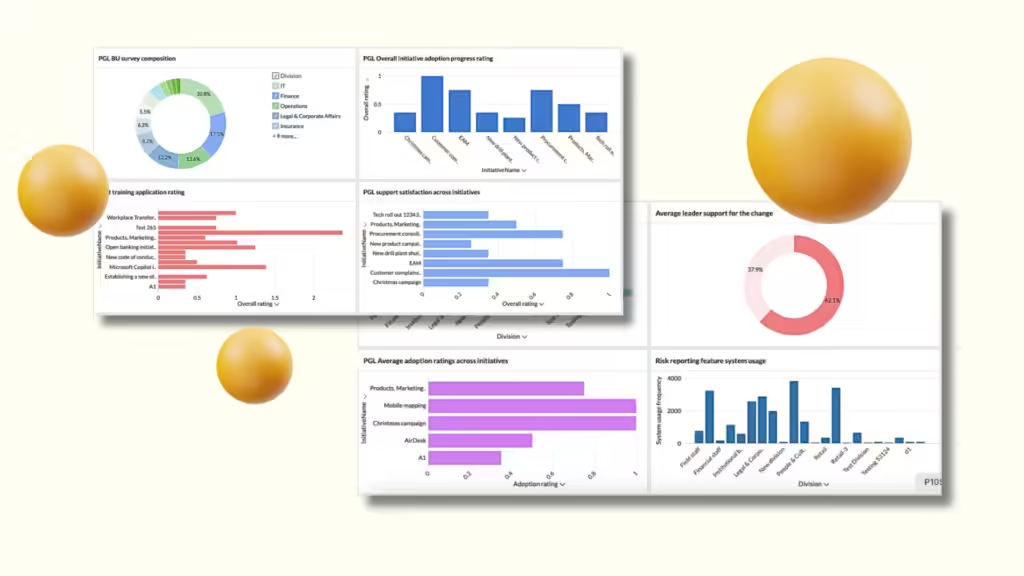
Use Live Dashboards for Initiative Management: Just as pilots rely on real-time flight data, change leaders should have constantly updated dashboards showing initiative progress, risks, and dependencies.
Empower Initiative Owners with Data-Driven Autonomy: When given up-to-date information, initiative owners can make faster, smarter adjustments—without waiting for top-down approvals.
Leverage Predictive Analytics to Anticipate Challenges: AI-driven insights can flag potential risks, such as change saturation or conflicting priorities, before they become full-blown issues.
Modern aircraft are equipped with automatic dependent surveillance-broadcast (ADS-B) systems, which allow them to communicate real-time flight data with each other. If two planes are on a collision course, these systems warn pilots, giving them time to adjust. It’s a proactive approach to risk management—problems are detected and resolved before they escalate.
Application in Change Management: Avoiding Crashes Between Initiatives
In organisations, multiple change initiatives often roll out simultaneously, each demanding employee attention, resources, and operational bandwidth. Without real-time risk monitoring, it’s easy to overwhelm employees or create operational bottlenecks. Many organisations don’t realise there’s an issue until productivity starts dropping or employees push back against the sheer volume of change.
Key Takeaways:
Invest in Impact Assessment Tools: Before launching an initiative, leaders should evaluate its potential impact on employees and the business.
Run Scenario Planning Exercises: Like pilots in flight simulators, organisations should model different change scenarios to prepare for potential challenges.
Set Up Early Warning Systems: AI-driven analytics can detect overlapping initiatives, allowing leaders to intervene before issues arise.
The High Cost of Inaccurate or Delayed Data
Aviation Example: The D.C. Midair Collision
The tragic January 2025 midair collision in Washington, D.C. was, in part, the result of outdated and incomplete data. A single air traffic controller was responsible for both helicopter and airplane traffic, leading to a dangerous lapse in coordination. Miscommunication about airspace restrictions only made matters worse, resulting in an avoidable catastrophe.
Poor Data Leads to Costly Mistakes
The corporate equivalent of this is when transformation teams work with old or incomplete data. Decisions based on last quarter’s reports can lead to wasted resources, poorly sequenced initiatives, and employee burnout. The consequences might not be as immediately tragic as an aviation disaster, but the financial, momentum and cultural costs can be devastating.
Key Takeaways:
Prioritise Frequent Data Updates: Change leaders must ensure initiative data is refreshed regularly to reflect real-time realities.
Collaborate Across Functions to Maintain Accuracy: Transformation leaders, HR, finance, and IT should work together to ensure all change impact data is reliable.
Automate Reporting Where Possible: AI and automation can reduce human error and provide real-time insights without manual effort.
Balancing Automation with Human Judgment
Aviation Example: Autopilot vs. Pilot Oversight
While modern planes rely heavily on autopilot, pilots are still in control. They use automation as a support system, but ultimately, human judgment is the final safeguard. It’s the perfect balance—automation enhances efficiency, while human oversight ensures safety.
Some leaders may find the process of collecting and analyzing data cumbersome, time-consuming, and even unnecessary—especially when they’re focused on quick execution. Gathering accurate, real-time data requires investment in tools, training, and disciplined processes, which can feel like an administrative burden rather than a value driver.
However, the benefits far outweigh the effort. A well-structured data system provides clarity on initiative progress, prevents conflicting priorities, enhances decision-making, and ensures resources are allocated effectively. Without it, organisations risk initiative overload, employee burnout, wasted budgets, and ultimately, failed transformations. Just like in aviation, where poor data can lead to fatal accidents, a lack of real-time insights in change management can result in costly missteps that derail business success.
Moreover, having an integrated process whereby data regularly feeds into decision making, as a normal business-as-usual process, builds the overall capability of the organisation to be a lot more agile and be able to change with confidence.
Navigating Change with Data-Driven Precision
Aviation has shown us what happens when decision-makers lack real-time, accurate data—mistakes happen, and consequences can be severe. In organisational change, the same principles apply. By embracing real-time data, predictive analytics, and structured governance, companies can navigate change more effectively, preventing initiative overload, reducing resistance, and maximising impact.
Ultimately, the goal is simple: Ensure your change initiatives don’t crash and burn. And just like in aviation, data is the key to a smooth landing.
If you would like to chat more about how to utilise a digital/AI solution that will equip you will insightful data to make critical business decisions in your air traffic control of your changes, reach out to us here.
Transformation and change professionals often find themselves in the position of defending the value of change management. Despite the critical role that change management plays in ensuring successful project outcomes, many stakeholders remain sceptical. Some view it as a discretionary cost rather than an essential function. Many change management centres of excellences have faced the axe or at least been downsized.
This scepticism can be exacerbated by comments that dismisses roles such as change managers as unnecessary. In Australia, there are even comments by a politician that positions such as change manager “do nothing to improve the lives of everyday Australians”. The context of this comment was targeting positions related cultural, diversity and inclusions advisors, along the same lines as that driven by Trump in the United States. This has upset a lot of change professionals as you can imagine.
To counter this, Change Management Centres of Excellence (CoEs) must move beyond advocacy and education to proactively demonstrate their tangible value. Let’s explore practical approaches to proving the value of change management, ensuring its sustained recognition and investment.
1. Leverage Empirical Research to Support Your Case
There is substantial research demonstrating that change management interventions lead to improved project outcomes. Change practitioners can use these studies as evidence to substantiate their value. For example:
Prosci Research has consistently shown that projects with excellent change management are significantly more likely to achieve their objectives compared to those with poor change management. According to the Best Practices in Change Management study, 88% of participants with excellent change management met or exceeded objectives, while only 13% of those with poor change management met or exceeded objectives. This means that projects with excellent change management were approximately seven times more likely to meet objectives than those with poor change management (Source).
Even implementing fair change management practices can lead to a threefold improvement in project outcomes (Source).
McKinsey found that transformation initiatives are 5.8 times more successful if CEOs communicate a compelling change story, and 6.3 times more successful when leaders share messages about change efforts with the rest of the organisation (Source).
By framing change management as an evidence-based discipline, Change CoEs can strengthen their credibility and influence senior stakeholders. Furthermore, sharing industry benchmarks and case studies showcasing successful change management implementations can add weight to the argument.
2. Calculate the Financial Value of Managing a Change Portfolio
Executives prioritize financial metrics, making it essential to quantify the financial impact of change management. This article How to calculate the financial value of managing a change portfolio provides a structured approach to calculating the financial value of managing a change portfolio. Some key financial considerations include:
Productivity Gains: Effective change management reduces employee resistance and increases adoption rates, leading to quicker realization of benefits. For instance, if a new system is introduced, strong change management ensures employees use it efficiently, eliminating productivity dips.
Cost Avoidance: Poorly managed change efforts can lead to rework, delays, and even project failures, incurring significant costs. For example, a failed system implementation due to lack of change management could require millions in additional investments to correct issues and retrain employees.
Revenue Acceleration: When changes are adopted swiftly and efficiently, organisations can capitalize on new opportunities faster. In industries such as retail, banking, and technology, time-to-market is critical. The faster employees and customers adapt to new changes, the sooner the organisation can generate revenue from those changes.
Risk Mitigation: Resistance and poor change adoption can lead to compliance risks, reputational damage, and disengagement, all of which have financial implications. A compliance failure due to lack of engagement in a new regulatory process could lead to fines and reputational loss.
To make this more tangible, Change CoEs should create financial models that quantify the cost of failed change initiatives versus successful ones. They can also track and report savings from avoided risks and improved efficiency, linking these directly to the organisation’s bottom line.
3. Demonstrate Value Through Behaviour Change
One of the most effective ways to prove the impact of change management is by tracking behaviour change. Change is not successful unless employees adopt new ways of working, and this can be measured using:
Adoption Metrics: Track usage rates of new systems, tools, or processes. For instance, if a company implements a new CRM system, measuring login frequency, data entry consistency, and feature utilization can indicate successful adoption.
Performance Data: Compare key performance indicators (KPIs) before and after change implementation. If a new customer service protocol is introduced, tracking customer satisfaction scores and response times will provide tangible insights into its effectiveness.
Employee Surveys: Gauge sentiment and readiness for change. Pulse surveys can reveal how confident employees feel about a transformation and whether they understand its purpose and benefits.
Stakeholder Feedback: Capture qualitative insights from leaders and frontline employees. Executives often rely on direct feedback from managers to gauge whether changes are being embraced or resisted.
By presenting a clear narrative that links change management efforts to observable behaviour shifts, Change CoEs can make their value more tangible. It is also beneficial to conduct longitudinal studies, tracking behaviour change over time to ensure sustained impact.
Imagine being able to present a set of behaviour metrics that are forward looking measures for benefit realisation. This can position favourably the tangible value of change management activities and approaches.
Customer Experience Improvements: Measure customer satisfaction before and after change initiatives. If a change initiative improves customer interactions, metrics such as Net Promoter Score (NPS) and retention rates will reflect its impact.
Employee Engagement and Retention: Effective change management reduces uncertainty and anxiety, leading to better engagement and lower attrition. Organisations that manage change well see lower absenteeism and stronger workforce commitment.
Organisational Agility: Organisations with strong change management capabilities adapt faster to market disruptions. Companies that successfully embed change management in their DNA are more resilient during economic downturns or competitive shifts.
Cultural Transformation: Change management plays a key role in shaping corporate culture, which influences long-term business success. For example, embedding a culture of continuous learning can make future change initiatives easier to implement.
By framing change management as a driver of strategic outcomes, rather than just an operational function, Change CoEs can enhance their perceived value.
5. Position change as a key part of risk management
Demonstrating the value of change management through risk management is a powerful approach for the Change CoE. By highlighting how effective change management mitigates various risks associated with organisational change, you can justify its importance and secure necessary support and resources.
This is particularly useful and important for the financial services sector where risk is now the front and centre of attention for most senior leaders, with the increasingly intense regulatory environment and scrutiny by regulators.
Risk in Change
Change initiatives inherently carry risks that can impact an organisation’s operations, culture, and bottom line. Effective change management helps identify and address these risks proactively. By implementing a robust change risk management framework, organisations can adapt their overall risk management strategies to cover change-related risks throughout the project lifecycle. This approach allows for early identification of potential obstacles, enabling timely interventions and increasing the likelihood of successful change implementation.
Delivery Risk
Change management plays a crucial role in mitigating delivery risks associated with project implementation. While project managers typically focus on schedule, cost, and quality risks, change managers can identify and manage risks that are delivered into the business as a result of the change. By working closely with project managers, change professionals can introduce processes to minimize the potential business impact of these delivered risks during project delivery. This collaboration ensures that the project not only delivers the required change but does so with minimal disruption to the organisation.
Quantifying Risk Mitigation
To further demonstrate the value of change management, it’s essential to quantify its contribution to risk mitigation. By adapting the organisation’s risk assessment matrix or tools, change managers can determine the probability and potential impact of each identified risk. This analysis allows for prioritization of risks and implementation of appropriate mitigation strategies.
By tracking how change management interventions reduce the likelihood or impact of these risks, you can provide tangible evidence of its value to senior leadership. By framing change management as a critical component of risk management, you can shift the conversation from justifying its existence to showcasing its indispensable role in ensuring successful organisational transformations. This not only demonstrates the value of change management but also aligns it with broader organisational goals of risk reduction and strategic success.
6. Proactively Measure and Track Value Delivery
Tracking and reporting the tangible value created by change management is essential. Organisations frequently undergo leadership transitions, and new decision-makers may question the need for a Change CoE. A well-documented history of impact ensures continuity and ongoing investment.
McKinsey research indicated that Transformations that provide both initiative-level and program-level views of progress through relevant metrics are 7.3 times more likely to succeed (Source).
To achieve this:
Develop a Change Management Dashboard: Use KPIs to track adoption rates, employee readiness, and impact on business metrics.
Create Case Studies: Document success stories with before-and-after comparisons. Case studies should include challenges, change management interventions, and final outcomes.
Conduct Quarterly Impact Reviews: Regularly present insights to senior leaders. Demonstrating trends and ongoing improvements ensures continued executive buy-in.
Link Change Efforts to Strategic Priorities: Show how change management enables key business goals, such as revenue growth, market expansion, or operational efficiency.
7. Shift from Education to Results-Driven Influence
While stakeholder education is important, it has limitations. Many executives have preconceived notions about change management. Rather than relying solely on relationship-building, focus on delivering results that speak for themselves. Key strategies include:
Pilot Programs: Run small-scale change initiatives with measurable impact. If an executive is sceptical, a successful pilot can turn them into an advocate. It is highly unlikely that executives will not want to see metrics that indicate how effective a change initiative is progressing.
Strategic Partnerships: Align with key business units to co-own change success. Partnering with Finance, HR, Risk, Operations and IT leaders can reinforce the business value of change management.
Agile Change Management: Deliver incremental wins to showcase immediate value. Iterative, feedback-driven approaches ensure continuous improvement and visibility.
Change management professionals must move beyond justification and actively prove their worth. By leveraging empirical research, financial calculations, behaviour tracking, alternative value measures, and proactive reporting, Change CoEs can secure their place as indispensable business functions. In a world where scepticism towards roles like change management persists, the best defence is a compelling, evidence-based demonstration of impact.
Do We Really Need a View of Changes Across the Organisation?
As the pace of change accelerates, senior leaders are increasingly asking for a comprehensive view of changes happening across the organisation. However, not everyone sees the need for this. Some change practitioners focus solely on project-level implementation, while others concentrate on developing change capability or leadership. So, is a broad organisational view of change necessary? The short answer is yes—and here’s why.
Why is a View of Changes Important?
1. Understanding Change is Key to Improving It
Managing change effectively requires a clear understanding of what is changing. Without visibility into the scope and nature of changes, how can we improve them? Imagine if Finance attempted to manage an organisation’s finances without access to financial data. The same principle applies to change management—without insights into ongoing changes, making informed improvements to how change is managed becomes impossible or at least ineffective.
A holistic view also helps identify patterns and systemic issues that may not be visible when looking at changes in isolation. For example, if multiple teams are experiencing resistance to similar types of change, it may indicate an underlying cultural or structural issue rather than a problem with individual initiatives.
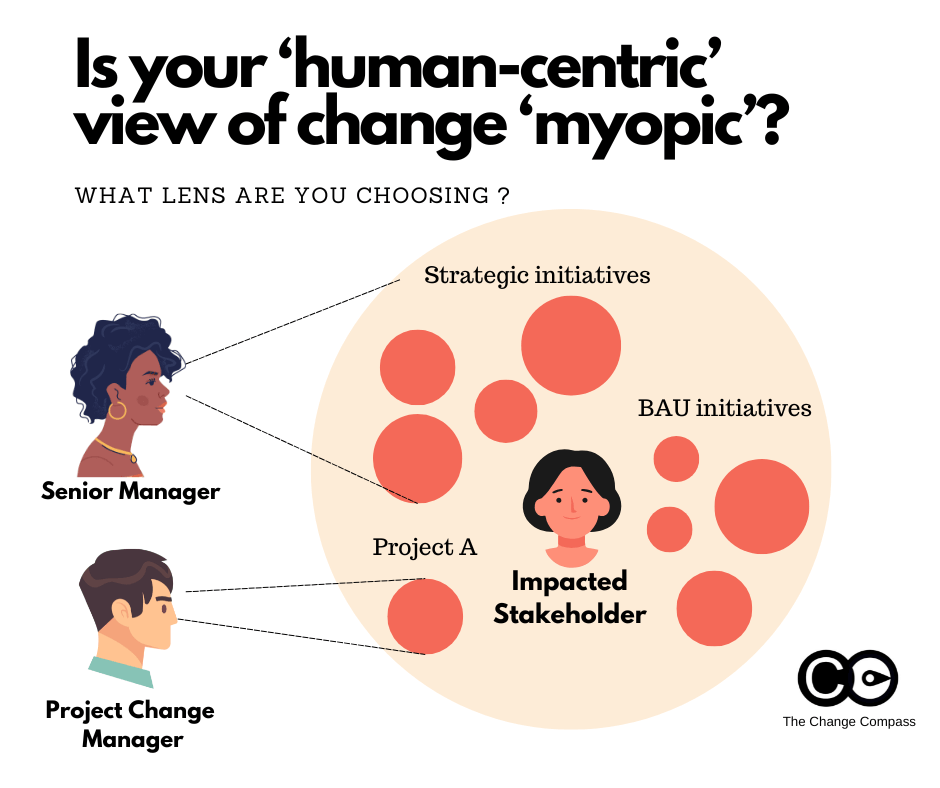
2. Avoiding a Myopic View
Many change practitioners operate at the project level, focusing on the change they are driving without visibility into other initiatives. This narrow focus can lead to conflicting priorities, resource constraints, and stakeholder fatigue. A fragmented approach often results in duplication of effort, where multiple teams work on similar initiatives without coordination, wasting time and resources.
A lack of visibility can also cause bottlenecks. For instance, two major transformation projects requiring input from the same group of employees may create undue pressure, leading to burnout and decreased productivity. With an organisational view, leaders can identify these risks in advance and implement measures to mitigate them, such as staggering implementation timelines or providing additional support.
3. Taking a Human-Centred Approach
A human-centred approach to change means viewing change from the perspective of impacted stakeholders rather than just from a project lens. Employees and customers experience multiple changes together, not in isolated silos. To design change experiences that work, we must understand the overall change landscape and how it affects people’s daily work and interactions.
Without a consolidated view, employees may feel overwhelmed by frequent, disconnected changes. This often leads to change fatigue, disengagement, and resistance. By considering how multiple changes intersect, organisations can design more coherent and supportive transition experiences for their people, improving adoption rates and overall satisfaction.
There are some who would rather not use the term ‘change fatigue’. Sure. Other labels may be used instead. However, not acknowledging its existence does not mean that it does not exists. We can choose to not label and not address the impacts of multiple changes. By doing this it will not magically go away. This is not going to help the business perform better and reach its targets.
4. Supporting Leadership in Managing Business Performance
Leaders are concerned about how changes impact business performance. Without a consolidated view of what is changing, how those changes interact, and their organisational impact, it is difficult to provide meaningful insights. A structured view of change enables leaders to make informed decisions, mitigate risks, and optimise the overall change portfolio to support business objectives.
For example, if an organisation is rolling out a new customer relationship management (CRM) system while simultaneously restructuring its sales teams, leaders need to assess whether these initiatives will complement or hinder each other. Without this awareness, they may inadvertently introduce inefficiencies, such as duplicate training efforts or conflicting performance expectations.
5. Enhancing Organisational Readiness for Change
A key benefit of having a comprehensive view of change is improving organisational readiness. Readiness is not just about preparing individuals for a specific change but ensuring the organisation as a whole is capable of absorbing and adapting to continuous transformation.
An organisation that understands its change landscape can proactively assess its capacity for change at any given time. If several major initiatives are running concurrently, leaders can evaluate whether the organisation has the resources, cultural maturity, and leadership alignment to support them. Without this visibility, companies risk overloading employees and creating resistance due to excessive, poorly timed changes.
Furthermore, readiness assessments can identify gaps in capability, such as the need for additional training, clearer communication, or adjustments in leadership support. When organisations have a clear view of upcoming changes, they can put proactive measures in place, such as phased rollouts, targeted engagement efforts, or reinforcement mechanisms, to ensure smoother transitions and greater adoption success.
6. How an Integrated View of Change Supports Business Readiness
An integrated view of change enables organisations to move beyond reactive change management and embrace proactive change readiness. By mapping all significant transformations across the business, leaders can anticipate challenges, synchronise efforts, and prepare employees more effectively.
For example, if a company is implementing a new enterprise resource planning (ERP) system while also shifting to a hybrid work model, an integrated change view allows decision-makers to assess whether these changes will create conflicting demands on employees. Instead of overwhelming teams with simultaneous process and technology shifts, adjustments can be made to stagger rollouts, align training programs, and provide tailored support.
Additionally, when businesses have a comprehensive perspective on change, they can implement readiness initiatives such as leadership coaching, employee engagement strategies, and resilience-building programs well in advance. This ensures that by the time changes take effect, the organisation is not just aware of them but fully prepared to embrace and sustain them. An integrated approach fosters a culture of adaptability, making the business more resilient in the face of continuous transformation.
Addressing Common Concerns: “It’s Too Complicated”
A frequent argument against establishing an organisation-wide change view is that it is too complex and resource-intensive. However, this does not need to be the case.
1. Start Small and Scale Gradually
Instead of attempting a whole-organisation approach from the outset, begin with a stakeholder lens. Understand how changes impact specific stakeholder groups, then expand to teams, departments, and eventually the entire organisation. This phased approach ensures manageable progress without overwhelming stakeholders.
One way to do this is by focusing on a single high-impact function, such as IT or HR, and mapping their change landscape before expanding outward. By demonstrating value in a contained environment, it becomes easier to gain buy-in for broader adoption.
2. Begin with Basic Data
There is no need to start with an elaborate data set. A simple list of initiatives is enough to begin forming a picture. Over time, additional data points—such as timelines, affected stakeholders, and interdependencies—can be added to enhance visibility and analysis.
Many organisations already have elements of this data scattered across different departments. Consolidating this information in a central repository can be a quick win that provides immediate value without requiring extensive new processes.
3. Take an Agile, Iterative Approach
Building a change view incrementally allows for continuous refinement and adaptation. By adopting an agile mindset, practitioners can deliver immediate value while progressively enhancing the data set. This approach ensures that the effort remains practical and sustainable while demonstrating benefits to stakeholders at each stage.
Using lightweight collaboration tools, such as shared spreadsheets or simple dashboard software, can help kickstart the process without significant investment in complex change management platforms.
Once you progress to a more sophisticated level where you need AI support and advanced dashboarding, check out Change Compass.
The Benefits of an Organisational View of Change
1. Improved Stakeholder Experience
By understanding the cumulative impact of multiple changes, organisations can better manage stakeholder experiences. Employees are often subject to change saturation when faced with numerous uncoordinated initiatives. A holistic view enables better sequencing and pacing of change to ensure smoother transitions.
2. Enhanced Risk Management
Without an overarching view, risks associated with overlapping initiatives may go unnoticed until issues arise. Identifying potential bottlenecks and conflicts early helps in designing mitigating strategies before problems escalate. Risks may include program delivery risk, operational risk, benefit realisation risk and various people risks.
3. Better Resource Allocation
Organisations often face resource constraints, whether in terms of budget, personnel, or time. A consolidated view helps leaders prioritise initiatives effectively, ensuring that resources are allocated to high-impact changes while minimising inefficiencies.
4. Strengthened Leadership Decision-Making
Leaders require data-driven insights to make informed strategic decisions. A comprehensive change landscape provides clarity on what is happening across the organisation, empowering leaders to align transformation efforts with business objectives.
Practical Steps to Establish an Organisation-Wide Change View
Step 1: Identify Key Stakeholders
Begin by engaging stakeholders across the organisation to understand their concerns and expectations. These may include senior executives, department heads, project managers, and frontline employees.
Step 2: Map Current and Upcoming Changes
Compile a list of all ongoing and planned initiatives. Categorise them by business function, timeline, impacted teams, and strategic priority. This will create an initial snapshot of the change landscape.
Step 3: Identify Interdependencies
Assess how different initiatives interact with each other. Are there overlapping resource requirements? Do changes in one area impact another? Recognising these dependencies enables better coordination and minimises disruption.
Step 4: Develop a Change Portfolio View
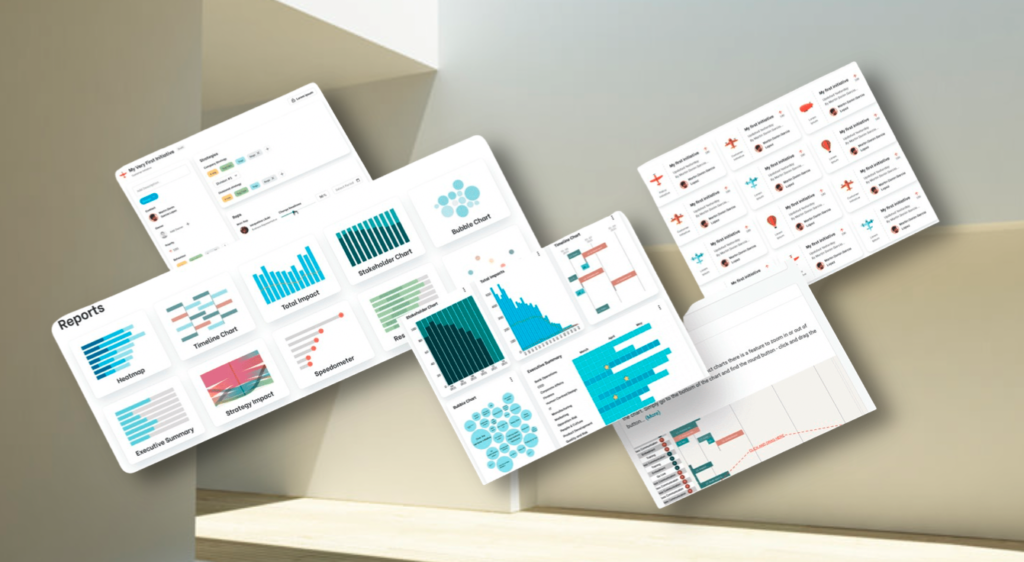
Use visualisation tools to represent the collected data in a meaningful way. Heatmaps, Gantt charts, and stakeholder impact matrices can help illustrate the overall change picture.
Step 5: Implement Governance Structures
Establish governance mechanisms to continuously update and refine the change portfolio. This may involve periodic reviews, a centralised change coordination team, or designated change champions within each department.
Step 6: Communicate Insights Effectively
Share findings with stakeholders in a digestible format. Providing clarity on how changes align with organisational priorities fosters engagement and encourages proactive collaboration.
Future Trends in Organisational Change Visibility
1. Increased Use of Digital Tools
Advanced analytics, AI-driven insights, and dashboard visualisation tools are making it easier to track and analyse change across an organisation in real-time.
2. Integration with Business Strategy
Change management is increasingly being embedded within broader business strategy execution and performance metrics tracking, ensuring alignment with long-term goals.
3. Greater Focus on Employee Experience
Organisations are recognising the importance of measuring change from an employee perspective. This includes sentiment analysis, real-time feedback loops, and adaptive communication strategies.
A comprehensive view of change across an organisation is not just a ‘nice-to-have’—it is essential for effective change management. It enables better decision-making, reduces unintended consequences, and enhances the overall employee experience. While establishing such a view may seem complex, taking a pragmatic, step-by-step approach makes it achievable and valuable.
For experienced change and transformation professionals, this shift in perspective is not just about managing change—it’s about leading it effectively in an increasingly dynamic world.
Change management practitioners are often tasked with ensuring that transitions are smooth and successful. However, to truly excel in this role, it’s crucial to embrace a systems thinking approach—an understanding that organisations are complex, interconnected systems where every change, including new core business processes and new processes, can create ripple effects throughout. One of the most potent tools for fostering systems thinking is the use of change data within change portfolio management. Here, we will focus on how change data can build interconnectedness across the organisation, enhance the management of change initiatives, and ultimately improve business results.
What is systems change management and why is it important?
Systems change management involves a strategic approach to transforming complex systems, addressing underlying issues rather than just symptoms, including important internal processes. It’s crucial for fostering sustainable development, enhancing organizational efficiency, and driving innovation. By understanding interconnections within systems, organizations can implement effective solutions that lead to long-term positive impacts.
The below are some of the core principles in Systems Thinking and how they may be applied to change portfolio management through data and analysis.
Principle 1: Interconnectedness
At the core of systems thinking is the principle of interconnectedness. Organisations are not merely a collection of individual parts; rather, they consist of various components that interact in complex ways. When change is initiated in one area, it can have unintended consequences in another. For instance, a change in the sales strategy might impact customer service processes, employee motivation, and even supply chain operations. By recognising these interconnected relationships, practitioners can make more informed decisions that take the broader organisational context into account.
In fact, change impact assessment is the process of identifying and ascertaining the linkages across the system. With each change, the various impacts across different processes, people working to support those processes and the systems involved in the processes.
Principle 2: Feedback Loops
Another fundamental aspect of systems thinking is the identification and understanding of feedback loops. These loops can be either reinforcing (positive) or balancing (negative). A reinforcing feedback loop occurs when a change in one part of the system leads to further changes in the same direction, creating a cycle of growth or enhancement. For example, an increase in employee training may lead to improved performance, which in turn boosts morale and reduces turnover, further enhancing overall productivity.
Conversely, balancing feedback loops act to stabilize the system. They can dampen the effects of change, preventing extremes from occurring. Recognising these feedback mechanisms allows practitioners to leverage positive feedback loops to enhance desired outcomes while being vigilant against the negative loops that may emerge, which could undermine the change initiatives.
Here is an example of a feedback loop –
Goal: Prevent stagnation or failure by adjusting strategies based on real-time feedback.
Use case: Ensuring that deviations or resistance are managed effectively to keep the change on track.
How it works:
Collect data from employee surveys, performance metrics, and feedback sessions to understand what’s working or not.
Identify points of resistance and take corrective actions (e.g., additional training or clarifying leadership vision).
Example: If employees express frustration with new tools, gather input and refine the rollout to address concerns.
Collect data from employee surveys, performance metrics, and feedback sessions to understand what’s working or not.
Identify points of resistance and take corrective actions (e.g., additional training or clarifying leadership vision).
Example: If employees express frustration with new tools, gather input and refine the rollout to address concerns.
What are key benefits of feedback loops?
Increased adaptability: Ensures the organisation can react to unforeseen challenges during implementation.
Engaged workforce: Employees feel more involved when they see their feedback incorporated into the process.
Sustainable change: Continuous feedback ensures that change efforts stay relevant, preventing them from losing momentum or being abandoned.
Principle 3: Causality
Systems thinking also emphasizes understanding causality—how different components of the organisation influence one another. This perspective is vital in change management, as it shifts the focus from merely addressing symptoms of problems to exploring their root causes. This can be applied throughout the change lifecycle ranging from understanding the impacts across the organisation, through to anticipating resistance and motivation levels to support the change.
Here is an example of applying the principle of causality in systems thinking
Change Initiative: Implementing a New KPI-Based Evaluation System
Initial Cause: Leaders decide to replace the existing subjective performance reviews with measurable KPIs to improve accountability.
Direct Effect: Employees shift their focus to achieving their KPIs.
This change seems positive—employees now have clear, measurable targets to meet.
Ripple Effects Across the System:
Short-term unintended outcome: Employees may begin to focus only on achieving their KPIs, ignoring tasks that are not directly rewarded, such as collaboration or innovation.
Behavioural impact: Some employees might feel micromanaged or disengaged if they view the new system as rigid or unfair.
Team dynamics: Competitive behaviour between employees could increase, reducing collaboration and creating silos.
Long-term Causal Feedback:
Lower collaboration can negatively affect innovation and employee morale, leading to attrition of high performers.
A balancing feedback loop emerges when HR notices a decline in collaboration scores and recommends revising KPIs to include teamwork-related metrics.
Principle 4: Holistic Perspective
Adopting a holistic perspective is crucial in systems thinking. Instead of viewing the organisation as a set of isolated parts, practitioners should consider the organisation as a dynamic whole. This approach enables better problem-solving and decision-making by considering all relevant factors and their interactions. A holistic view facilitates a deeper understanding of how changes in one area may impact others, ultimately leading to more sustainable and effective change initiatives.
For example, An organisation is running several parallel initiatives under a broader digital transformation effort, including:
CRM System Implementation
Agile Ways of Working Initiative
Cloud Migration for Core IT Systems
Employee Upskilling Program on Digital Tools
Application of Holistic Perspective
Identifying InterdependenciesThe CRM system needs to integrate with both legacy IT infrastructure and future cloud platforms, incorporating new features to enhance user experience.
The agile transformation affects how teams work, influencing the success of the CRM project and cloud migration by demanding faster collaboration cycles.
The upskilling program needs to ensure employees are trained not only in new digital tools but also on agile practices and cloud-based platforms.
Avoiding Initiative SilosWithout a holistic view, each project might focus only on its own goals, causing schedule conflicts (e.g., IT resources are overbooked for the cloud migration and CRM deployment).
Teams might experience change fatigue if initiatives are rolled out simultaneously without coordination. For example, employees may struggle to participate in the upskilling program while also meeting deadlines for the agile rollout.
Portfolio-Level Governance and PrioritizationUsing a holistic lens, the portfolio management team can sequence projects logically. For example:
First: Migrate critical systems to the cloud to ensure the CRM implementation has a stable foundation.
Second: Begin the agile transformation to align working methods before launching cross-functional CRM initiatives.
Third: Schedule employee upskilling to ensure readiness before key milestones in the CRM and cloud projects.
Optimizing Resources and Reducing RisksViewing the portfolio holistically allows management to optimize resource allocation (e.g., sharing skilled IT personnel across cloud and CRM projects efficiently).
By aligning initiatives, the company mitigates the risk of conflicting efforts and reduces change fatigue through coordinated communication and engagement plans.
The CRM system needs to integrate with both legacy IT infrastructure and future cloud platforms.
The agile transformation affects how teams work, influencing the success of the CRM project and cloud migration by demanding faster collaboration cycles.
The upskilling program needs to ensure employees are trained not only in new digital tools but also on agile practices and cloud-based platforms.
Without a holistic view, each project might focus only on its own goals, causing schedule conflicts (e.g., IT resources are overbooked for the cloud migration and CRM deployment).
Teams might experience change fatigue if initiatives are rolled out simultaneously without coordination. For example, employees may struggle to participate in the upskilling program while also meeting deadlines for the agile rollout.
Using a holistic lens, the portfolio management team can sequence projects logically. For example:
First: Migrate critical systems to the cloud to ensure the CRM implementation has a stable foundation.
Second: Begin the agile transformation to align working methods before launching cross-functional CRM initiatives.
Third: Schedule employee upskilling to ensure readiness before key milestones in the CRM and cloud projects.
First: Migrate critical systems to the cloud to ensure the CRM implementation has a stable foundation.
Second: Begin the agile transformation to align working methods before launching cross-functional CRM initiatives.
Third: Schedule employee upskilling to ensure readiness before key milestones in the CRM and cloud projects.
Viewing the portfolio holistically allows management to optimize resource allocation (e.g., sharing skilled IT personnel across cloud and CRM projects efficiently).
By aligning initiatives, the company mitigates the risk of conflicting efforts and reduces change fatigue through coordinated communication and engagement plans.
Principle 4: Emergence
Finally, the concept of emergence in systems thinking highlights how complex behaviours can arise from simple interactions among components. The principle of emergence in systems thinking refers to the idea that when individual elements interact, new patterns or behaviours emerge that were not predictable by examining the parts alone. In change portfolio management, this means that the outcomes of managing multiple change initiatives may be different—often more complex or unexpected—than the sum of each individual change project. Emergent behaviours can create both opportunities and risks.
Scenario: Managing a Sustainability Transformation Portfolio
A large organisation launches several interconnected initiatives to become a more sustainable enterprise:
Carbon Reduction Initiative – Shift to renewable energy and reduce emissions.
Sustainable Supply Chain Project – Engage suppliers on environmental standards.
Green Product Innovation Program – Develop eco-friendly products.
Employee Engagement Initiative – Promote green behaviours among employees.
Application of Emergence
Unexpected Synergies EmergeEmployees participating in the engagement initiative start identifying operational inefficiencies, such as excess waste, leading to additional cost savings.
The green product innovation program creates a culture of experimentation that spills over into other departments, resulting in improved collaboration and faster innovation cycles across the organisation, beyond sustainability-focused efforts.
Emergent Risks and Complex InteractionsSuppliers struggling to meet new sustainability requirements may delay the sustainable supply chain project, impacting both product launches and company operations.
Employees feel overwhelmed by the number of sustainability programs and resist further change, creating unexpected resistance that spreads to unrelated initiatives, such as digital transformation efforts.
New Opportunities Emerge from InteractionsAs cross-functional teams work together, new business models emerge. For example, sales and product teams discover that green products appeal to a new customer segment, leading to revenue growth opportunities not originally anticipated in the change portfolio plan.
Collaborations with suppliers in the supply chain project uncover the potential for joint ventures focused on sustainable technology.
Employees participating in the engagement initiative start identifying operational inefficiencies, such as excess waste, leading to additional cost savings.
The green product innovation program creates a culture of experimentation that spills over into other departments, resulting in improved collaboration and faster innovation cycles across the organisation, beyond sustainability-focused efforts.
Suppliers struggling to meet new sustainability requirements may delay the sustainable supply chain project, impacting both product launches and company operations.
Employees feel overwhelmed by the number of sustainability programs and resist further change, creating unexpected resistance that spreads to unrelated initiatives, such as digital transformation efforts.
As cross-functional teams work together, new business models emerge. For example, sales and product teams discover that green products appeal to a new customer segment, leading to revenue growth opportunities not originally anticipated in the change portfolio plan.
Collaborations with suppliers in the supply chain project uncover the potential for joint ventures focused on sustainable technology.
It may not be possible to forecast or anticipate all types of employee behaviours and reactions to new changes introduced. However, engaging your stakeholders and involving them in the change process may help you identify these in advance.
The Role of Change Data in Building Systems-Thinking Within Change Portfolio Management
Change portfolio management involves overseeing a collection of change initiatives and ensuring that they align with the organisation’s strategic objectives. The integration of change data into this process can significantly enhance systems thinking capabilities.
Creating a Data-Driven Culture
One of the first steps in leveraging change data is to establish a data-driven culture. Practitioners should promote the importance of data in decision-making processes across the organisation. By providing visibility of the changes that are upcoming, they can empower employees at all levels to utilize change data in their daily work. This cultural shift fosters an environment where data becomes a common language, allowing for clearer communication about changes and their potential impacts. However, do note that different type of employees may require different type of data.
Mapping Change Initiatives
Using change data, organisations can create visual maps of their change initiatives. These maps can illustrate how different initiatives are interconnected and highlight the dependencies between them. For example, a visual representation can show how key performance indicators link to a new software implementation, relying on training programs or how changes in one department may impact others. By visualizing these relationships, practitioners can better assess the potential ripple effects of changes and make more informed decisions.
Monitoring and Analysing Feedback Loops
By actively monitoring change data, organisations can identify and analyse feedback loops in real-time and enhance user adoption. This ongoing audit analysis allows practitioners to quickly respond to emerging trends or unintended consequences, including potential performance improvements. For instance, if data shows a decline in employee productivity following a process change, practitioners can investigate and implement corrective actions before the situation worsens. By understanding these feedback loops, organisations can not only react to changes but also proactively shape their outcomes.
Causal Analysis
Incorporating change data into causal analysis enables organisations to identify the root causes of issues. Practitioners can use data analytics to explore the relationships between different components of the organisation, leading to a clearer understanding of how changes impact various outcomes. This data-driven approach allows for more targeted interventions, ensuring that efforts are directed towards addressing the underlying issues rather than merely treating surface-level symptoms.
Holistic Change Portfolio Assessment
When practitioners evaluate their change portfolio, they should adopt a holistic approach that considers the interplay between various initiatives within the change management process. By analysing change data in aggregate, organisations can identify patterns and trends that may not be visible when examining initiatives in isolation. This holistic assessment allows practitioners to prioritise initiatives that align with broader organisational goals, ultimately leading to more effective change management.
Fostering Collaborative Environments
Change data can also be a catalyst for fostering collaborative environments. By sharing insights and findings from change initiatives, organisations can create a culture of collaboration where change agents help teams learn from one another’s experiences. This exchange of information can lead to emergent solutions that drive innovation and improve the process of change outcomes. Additionally, collaborative tools and platforms can be leveraged to facilitate communication and knowledge sharing across departments.
Building Connectedness Across the Organisation
The integration of change data across different types of changes into change portfolio management fosters interconnectedness within the organisation. By emphasising the importance of data and encouraging collaboration, practitioners can create a more cohesive organisational culture that embraces change.
Enhancing Communication
Clear communication is essential for effective change management. Change data provides a foundation for effective communication about initiatives and their impacts to key stakeholders. Practitioners can use data visualizations and reports to communicate progress, challenges, and successes, fostering a sense of shared understanding across the organisation.
Breaking Down Silos
Change data can also help break down silos within the organisation. By sharing data and insights across departments, practitioners can encourage collaboration and foster a sense of unity. This interconnectedness enhances problem-solving capabilities, as diverse teams bring different perspectives to the table, leading to more innovative solutions. Issues may be pre-empted if stakeholders can pick up on impacts that may be missed for example.
Aligning Goals and Objectives
When change initiatives are informed by change data, it becomes easier to align goals and objectives across the organisation. Practitioners can use data to ensure that all initiatives are working towards the same strategic objectives, reducing the likelihood of conflicting priorities. This alignment creates a more focused approach to change management, ultimately leading to improved business results.
Improving Business Results Through Systems Thinking
The application of systems thinking through change data in change portfolio management can lead to substantial improvements in business results. By fostering interconnectedness, enhancing communication, and breaking down silos, organisations can create a more agile and responsive environment.
Increased Agility
Organisations that embrace systems thinking and utilize change data are better equipped to respond to changes in the external environment. By understanding the interconnectedness of their initiatives, practitioners can pivot quickly in response to emerging trends or challenges. This agility is essential in today’s fast-paced business landscape.
Enhanced Employee Engagement
When employees see their work as part of a larger, interconnected system, they are more likely to feel engaged and motivated. By involving employees in the change process and using data to demonstrate the impact of their contributions, organisations can foster a sense of ownership and commitment to change initiatives.
Improved Decision-Making
Systems thinking promotes better decision-making by encouraging practitioners to consider the broader context of their actions. When decisions are informed by change data, organisations can identify potential consequences and make choices that align with their strategic goals. This improved decision-making ultimately leads to more successful change outcomes.
Sustainable Change Initiatives
Finally, the application of systems thinking and change data can lead to more sustainable change initiatives. By focusing on root causes, leveraging feedback loops, and fostering collaboration, organisations can implement changes that are not only effective in the short term but also sustainable over time. This sustainability is crucial for long-term business success.
Change data is a powerful lever that change management practitioners and business leaders can use to foster systems thinking within their organisations. By recognising the interconnectedness of change initiatives, understanding feedback loops, exploring causality, adopting a holistic perspective, and nurturing environments for emergence, organisations can improve their approach to change management solutions. Through these efforts, practitioners can build connectedness across the organisation, ultimately enhancing how change is managed and driving improved business results, as well as ensuring the success of that change. Embracing systems thinking in change portfolio management is not just a best practice; it’s a necessity for organisations seeking to thrive in an ever-evolving business landscape.
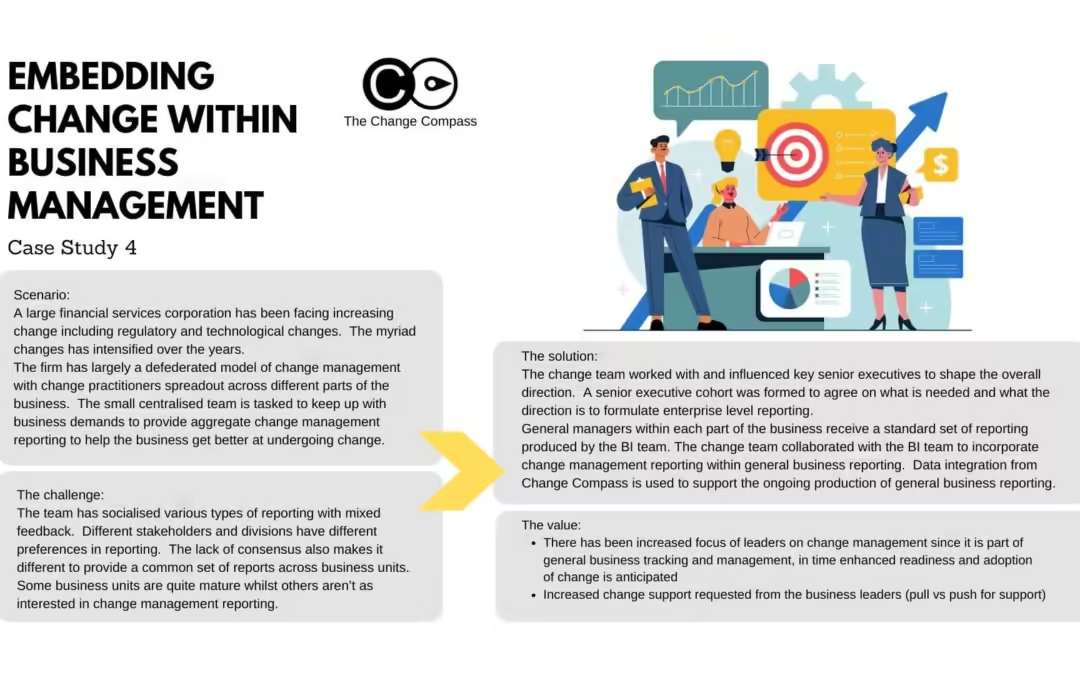
In the rapidly evolving landscape of financial services, organisations face significant challenges due to regulatory and technological changes. A large financial services corporation has recognised the need for an integrated approach to change management reporting, embedding it within general business reporting to enhance organisational agility and effectiveness. This case study outlines the firm’s journey, challenges faced, solutions implemented, and the resulting value derived from this strategic initiative.
Background
The corporation operates under a defederated model of change management, where change practitioners are distributed across various business units. This structure has led to inconsistent change management practices and reporting, complicating the ability to provide comprehensive insights into organisational change efforts. As regulatory demands and technological advancements have intensified, the need for cohesive change management reporting became paramount.
Challenges
The primary challenges encountered by the centralized change management team included:
Diverse Reporting Preferences: Different stakeholders and divisions within the organization exhibited varying preferences for reporting formats and metrics. This lack of consensus hindered the development of a standardized reporting framework.
Maturity Disparities: Business units displayed varying levels of maturity in their change management practices, with some units showing strong interest while others remained indifferent.
Feedback Variability: Initial attempts to socialize various reporting types received mixed feedback, complicating efforts to establish a unified approach.
Solution Implementation
To address these challenges, the change management team adopted a multi-faceted strategy:
Executive Engagement: The team actively engaged with senior executives to align on the direction for change management reporting. A senior executive cohort was formed to define essential reporting needs and establish a common vision.
Collaboration with Business Intelligence (BI) Team: The change management team partnered with the BI team to integrate change management metrics into existing general business reports. This collaboration ensured that change management insights were included in routine business tracking.
Data Integration: Utilising data from Change Compass facilitated the ongoing production of comprehensive reports that combined operational metrics with change management insights.
Value Realized
The integration of change management reporting into general business reporting yielded several significant benefits:
Increased Leadership Focus: By embedding change metrics within standard business reports, leaders began to prioritize change management as part of their strategic oversight. This shift is expected to enhance readiness and adoption of future changes across the organization.
Proactive Change Support: Business leaders increasingly requested support for change initiatives, indicating a transition from a push model (where support is offered) to a pull model (where support is actively sought).
Enhanced Reporting Consistency: The establishment of a standardized set of reports improved clarity and consistency in how change initiatives were tracked and communicated across business units.
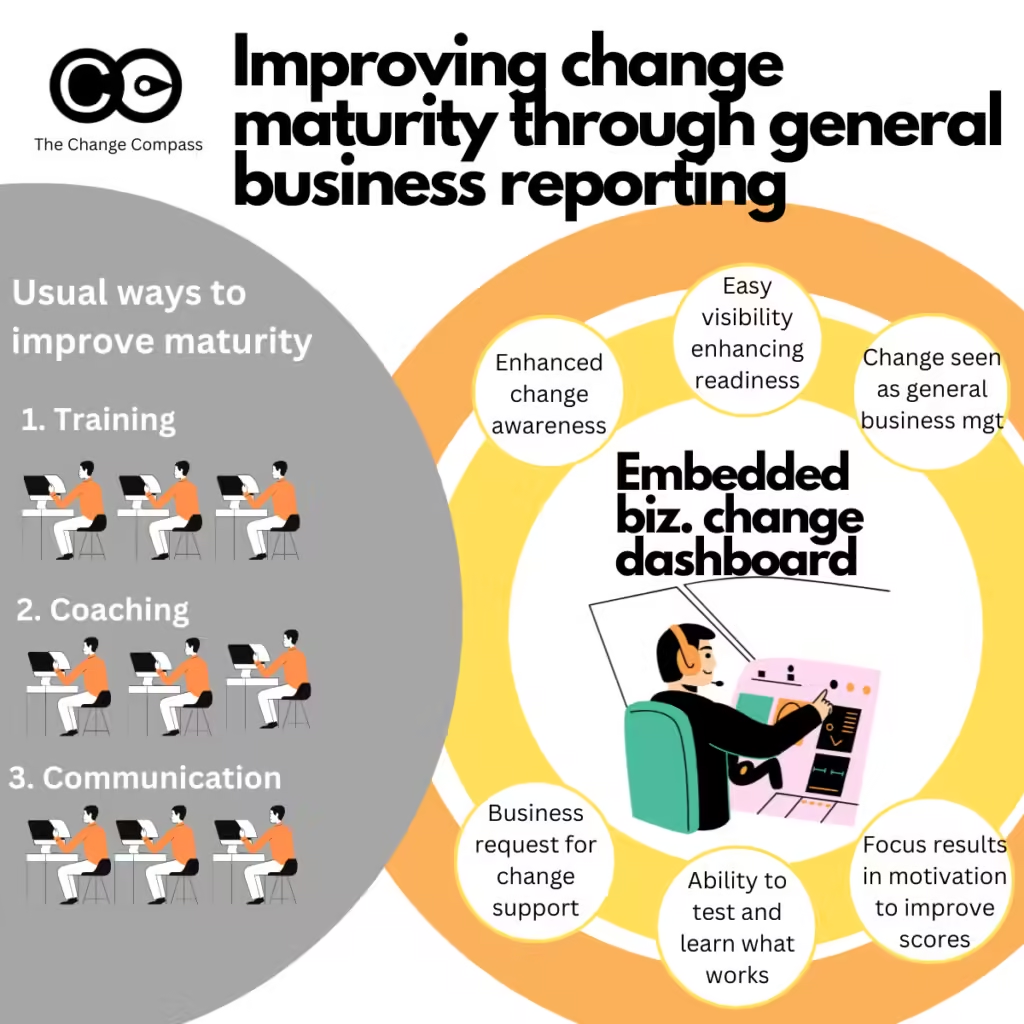
Change management Maturity: Enhancing change management maturity within the business is general done through capability development and coaching. However, this case showcases that embedding change management within general business management is a strategic way to raise awareness, visibility, and through this enhance the business’ efforts to improve the management of change.
This case study illustrates how a large financial services corporation successfully embedded change management reporting into its general business reporting framework. By engaging senior leadership, collaborating with data teams, and standardising metrics, the organisation not only improved its reporting capabilities but also fostered a culture that values proactive engagement with change initiatives. As a result, the firm is better positioned to navigate future changes while ensuring that it meets regulatory demands and capitalizes on technological advancements.