Change managers are not just facilitators of change transition; they are strategic partners who must understand and navigate complex organisational landscapes. One key skill that is often under-emphasised in this role is analytical capability. By adopting a strategic consultant’s mindset and employing robust analytical skills, change managers can significantly enhance their effectiveness throughout the project lifecycle. Let’s explore how change managers can leverage analytical skills at each phase of the project lifecycle, emphasising frameworks like MECE and TOSCA to drive successful change initiatives.
The Importance of an Analytical Lens
Change management involves facilitating transitions while ensuring that stakeholders are engaged and informed. However, to do this effectively, change managers must analyse complex data sets, identify patterns, and make informed decisions based on evidence. This analytical lens can be applied through every stage of the project lifecycle: commencement, planning, execution, monitoring, and closure.
Gone are the days when change practitioners are making recommendations ‘from experience’ or based on stakeholder input or feedback. For complex transformation, stakeholders now (especially senior stakeholders) demand a more rigorous, data-driven approach to drive toward solid change outcomes.
1. Project Commencement Phase
At the project commencement phase, the groundwork is laid for the entire change initiative. Change managers need to scan the organizational environment through the lens of impacted stakeholders, gathering relevant information and data.
Example: Consider a company planning to implement a new customer relationship management (CRM) system. The change manager should begin by analysing the existing state of customer interactions, assessing how the change will impact various departments such as sales, marketing, and customer service. This involves conducting stakeholder interviews, reviewing existing performance metrics, and gathering feedback from employees.
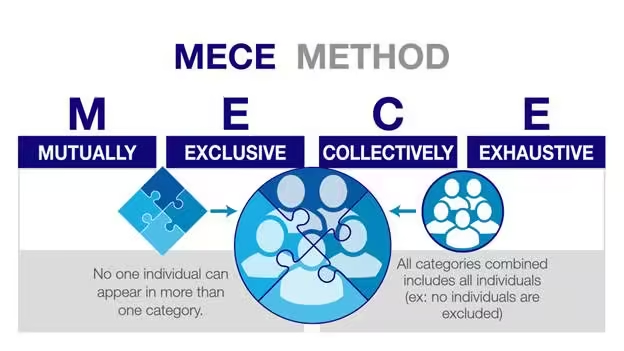
Using a MECE (Mutually Exclusive, Collectively Exhaustive) framework, the change manager can categorize stakeholder concerns into distinct groups—such as operational efficiency, user experience, and integration with existing systems—ensuring that all relevant factors are considered. By identifying these categories, the change manager can articulate a clear vision and define the desired end state that resonates with all stakeholders.
The above is from Caseinterview.com
Hypothesis: Sales Team Will Resist the New CRM System Due to Lack of Training and User-Friendliness
Step 1: Identify the Hypothesis
Hypothesis: The sales team will resist the new CRM system because they believe it is not user-friendly and they fear insufficient training.
Step 2: Break Down the Hypothesis into MECE Categories
To validate this hypothesis, we’ll break it down into specific categories that are mutually exclusive and collectively exhaustive. We’ll analyse the reasons behind the resistance in detail.
Categories:
User Experience Issues
Complexity of the Interface
Navigation Difficulties
Feature Overload
Training and Support Concerns
Insufficient Training Programs
Lack of Resources for Ongoing Support
Variability in Learning Styles
Change Management Resistance
Fear of Change in Workflow
Previous Negative Experiences with Technology
Concerns About Impact on Performance Metrics
Step 3: Gather Data for Each Category
Next, we need to collect data for each category to understand the underlying reasons and validate or refute our hypothesis.
Category 1: User Experience Issues
Data Collection:
Conduct usability testing sessions with sales team members.
Administer a survey focusing on user interface preferences and pain points.
Expected Findings:
High rates of confusion navigating the new interface.
Feedback indicating that certain features are not intuitive.
Category 2: Training and Support Concerns
Data Collection:
Survey the sales team about their current training needs and preferences.
Review existing training materials and resources provided.
Expected Findings:
Many team members express a need for more hands-on training sessions.
A lack of available resources for ongoing support after the initial rollout.
Category 3: Change Management Resistance
Data Collection:
Conduct focus groups to discuss fears and concerns regarding the new system.
Analyse historical data on previous technology implementations and employee feedback.
Expected Findings:
Employees voice concerns about how the CRM will change their current workflows.
Negative sentiments stemming from past technology rollouts that were poorly managed.
Step 4: Analyse Data Within Each Category
Now that we have gathered the data, let’s analyse the findings within each MECE category.
Analysis of Findings:
User Experience Issues:
Complexity of the Interface: Usability tests reveal that 70% of sales team members struggle to complete certain tasks in the CRM.
Navigation Difficulties: Survey responses show that 80% find one step of the navigation counterintuitive, leading to frustration.
Training and Support Concerns:
Insufficient Training Programs: Surveys indicate that only 40% of employees feel adequately trained to use this part of the new system.
Lack of Resources for Ongoing Support: Focus groups reveal that team members are unsure where to seek help after the initial training.
Change Management Resistance:
Fear of Change in Workflow: Focus group discussions highlight that 60% of participants fear their productivity will decrease with the new system, at least during the post Go Live period.
Previous Negative Experiences: Historical data shows that past technology rollouts had mediocre adoption rates due to insufficient support, reinforcing current fears.
Step 5: Develop Actionable Recommendations
Based on the analysis of each category, we can create targeted recommendations to address the concerns raised.
Recommendations:
User Experience Issues:
Conduct additional usability testing with iterative feedback loops to refine the CRM interface before full rollout.
Simplify the navigation structure based on user feedback, focusing on the most frequently used features.
Training and Support Concerns:
Develop a comprehensive training program that includes hands-on workshops, tutorials, and easy-to-access online resources.
Establish a dedicated support team to provide ongoing assistance, ensuring team members know whom to contact with questions.
Change Management Resistance:
Implement a change management strategy that includes regular communication about the benefits of the new system, addressing fears and expectations.
Share success stories from pilot programs or early adopters to demonstrate positive outcomes from using the CRM.
By following this detailed step-by-step analysis using the MECE framework, the change manager can thoroughly investigate the hypothesis regarding the sales team’s resistance to the new CRM system. This structured approach ensures that all relevant factors are considered, enabling the development of targeted strategies that address the specific concerns of stakeholders. Ultimately, this increases the likelihood of successful change adoption and enhances overall organizational effectiveness.
Data-Driven Decision Making:
At this stage, change managers should work closely with the project sponsor and project manager to determine effective positioning. A data-driven approach allows the change manager to form a hypothesis about how the change will impact stakeholders. For instance, if data suggests that the sales team is particularly resistant to change, the manager might hypothesize that this resistance stems from a lack of understanding about how the new CRM will enhance their workflow.
2. Planning Phase
Once the project is initiated, the planning phase requires detailed strategy development. Here, analytical skills are essential for conducting stakeholder analysis and impact assessments.
Example: In our CRM implementation scenario, the change manager must analyse the data collected during the commencement phase to identify the specific impacts on different departments. This involves grouping and sorting the data to prioritize which departments require more extensive support during the transition.
Using the TOSCA (Target, Objectives, Strategy, Constraints, Actions) framework provides a structured approach to guide the change management process for the CRM implementation. This framework helps clarify the overall vision and specific steps needed to achieve successful adoption. Below is a detailed exploration of each component:
1. Target
Definition: The target is the overarching goal of the change initiative, articulating the desired end state that the organization aims to achieve.
Application in CRM Implementation:
Target: Improve customer satisfaction and sales efficiency.
This target encapsulates the broader vision for the CRM system. By focusing on enhancing customer satisfaction, the organization aims to create better experiences for clients, which is crucial for retention and loyalty. Improving sales efficiency implies streamlining processes that enable sales teams to work more effectively, allowing them to close deals faster and serve customers better.
2. Objectives
Definition: Objectives are specific, measurable outcomes that the organization intends to achieve within a defined timeframe.
Application in CRM Implementation:
Objectives: Increase customer retention by 20% within a year.
This objective provides a clear metric for success, enabling the organization to track progress over time. By setting a 20% increase in customer retention as a target, the change manager can align training, support, engagement and system adoption with this goal. This objective also allows for measurable evaluation of the CRM’s impact on customer relationships and retention efforts.
3. Strategy
Definition: The strategy outlines the high-level approach the organization will take to achieve the objectives. It serves as a roadmap for implementation.
Application in CRM Implementation:
Strategy: Implement phased training sessions for each department, with tailored support based on the unique impacts identified.
This strategy emphasizes a thoughtful and structured approach to training, recognizing that different departments may face distinct challenges and needs when adapting to the new CRM. By rolling out training in phases, the organization can focus on one department at a time, ensuring that each team receives the specific support they require. Tailoring the training content based on the unique impacts identified earlier in the MECE analysis helps maximize engagement and effectiveness, addressing concerns about usability and fostering greater adoption of the CRM.
4. Constraints
Definition: Constraints are the limitations or challenges that may impact the successful implementation of the strategy. Recognizing these upfront allows for better planning and risk management.
Application in CRM Implementation:
Constraints: Limited budget and time restrictions.
Acknowledging these constraints is critical for the change manager. A limited budget may affect the types of training resources that can be utilized, such as hiring external trainers or investing in advanced learning technologies. Time restrictions might necessitate a more rapid rollout of the CRM system, which could impact the depth of training provided. By recognizing these constraints, the change manager can plan more effectively and prioritize key areas that will deliver the most value within the available resources.
5. Actions
Definition: Actions are the specific steps that will be taken to implement the strategy and achieve the objectives.
Application in CRM Implementation:
Actions: Develop a communication plan that includes regular updates and feedback mechanisms.
This action focuses on the importance of communication throughout the change process. A well-structured communication plan ensures that all stakeholders, particularly the sales team, are kept informed about the implementation timeline, training opportunities, and how their feedback will be incorporated into the process. Regular updates foster transparency and help build trust, while feedback mechanisms (such as surveys or suggestion boxes) allow team members to voice concerns and share their experiences. This two-way communication is essential for addressing issues promptly and reinforcing a culture of collaboration and continuous improvement.
By applying these frameworks, change managers can make informed recommendations that align with organizational objectives. This structured approach helps ensure that all relevant factors are accounted for and that stakeholders feel included in the planning process.
3. Execution Phase
As the project moves into the execution phase, the change manager must remain agile, continually collecting organizational data to confirm or reject the hypotheses formed during the planning stage.
Example: In an agile setting, where iterative processes are key, the change manager should implement mechanisms for ongoing feedback. For instance, after each sprint of CRM implementation, the manager can gather data from users to assess how well the system is being received. Surveys, usage analytics, and focus groups can provide rich insights into user experiences and pain points.
This ongoing data collection allows change managers to adjust their strategies in real-time. If feedback indicates that certain features of the CRM are causing confusion, the change manager can pivot to provide additional training or resources targeted specifically at those areas. This iterative feedback loop is akin to the work of strategic consultants, who continuously assess and refine their approaches based on empirical evidence.
Example in Practice: Imagine a situation where the sales team reports difficulties with the new CRM interface, leading to decreased productivity. The change manager can analyse usage data and user feedback to pinpoint specific issues. This data-driven insight can guide the development of targeted training sessions focusing on the problematic features, thus addressing concerns proactively and fostering user adoption.
4. Monitoring Phase
Monitoring the change initiative is crucial for ensuring long-term success. Change managers need to analyse performance metrics to evaluate the effectiveness of the implementation and its impact on the organization.
Example: For the CRM project, key performance indicators (KPIs) such as sales conversion rates, customer satisfaction scores, and employee engagement levels should be monitored. By employing data visualization tools, change managers can easily communicate these metrics to stakeholders, making it clear how the change initiative is progressing.
A fact-based approach to analysing these metrics helps in making informed decisions about any necessary adjustments. If, for instance, customer satisfaction scores are declining despite an increase in sales, the change manager may need to investigate further. This might involve conducting interviews with customers or analysing customer feedback to identify specific areas for improvement.
Suppose the organization observes a drop in customer satisfaction scores following the CRM implementation. The change manager could work with other stakeholders to conduct a root cause analysis using customer feedback and service interaction data to identify patterns, such as longer response times or unresolved issues. By addressing these specific problems, the change manager can refine the CRM processes and enhance overall service quality.
5. Closure Phase
The closure phase involves reflecting on the outcomes of the change initiative and drawing lessons for future projects. This is where the analytical skills of change managers can shine in assessing the overall impact of the change.
Example: After the CRM system has been fully implemented, the change manager should conduct a comprehensive review of the project along with the project team (retro). This involves analysing both qualitative and quantitative data to evaluate whether the initial objectives were met. Surveys can be distributed to employees to gather feedback on their experiences, while sales data can be analysed to determine the financial impact of the new system.
Using frameworks like MECE can help in categorizing the lessons learned. For instance, feedback could be sorted into categories such as user experience, operational efficiency, and overall satisfaction, allowing the change manager to develop clear recommendations for future initiatives.
Lessons Learned: If the analysis shows that certain departments adapted more successfully than others, the change manager could investigate the factors contributing to this variance. For example, departments that received more personalized support and training may have demonstrated higher adoption rates. This insight can inform strategies for future change initiatives, emphasizing the importance of tailored support based on departmental needs.
Building Relationships with Senior Leaders
In addition to the technical aspects of change management, the ability to communicate effectively with senior leaders is crucial. Seasoned change managers must clearly understand organizational objectives and be able to articulate how the change initiative contributes to these goals.
Example: During discussions with senior leadership, a change manager along with the rest of the project team can present data showing how the CRM system has improved customer retention rates and increased sales. By positioning this information in an easily understandable and rigorous manner, the change manager demonstrates the value of the initiative and its alignment with broader organizational objectives.
Effective communication ensures that leaders remain engaged and supportive throughout the change process, increasing the likelihood of success. By continuously linking the change initiative to organizational goals, change managers can build trust and credibility with stakeholders at all levels.
Leveraging Analytical Frameworks
Throughout the project lifecycle, incorporating structured analytical frameworks can enhance the decision-making process. Here are two key frameworks that change managers can leverage:
MECE Framework
MECE (Mutually Exclusive, Collectively Exhaustive) helps in breaking down complex information into manageable parts without overlap. By ensuring that all categories are covered without redundancy, change managers can identify all relevant factors affecting the change initiative.
TOSCA Framework
TOSCA (Target, Objectives, Strategy, Constraints, Actions) provides a comprehensive roadmap for change initiatives. By clearly defining each component, change managers can develop coherent strategies that align with organizational goals. This framework not only clarifies the change strategy but also ensures that all team members understand their roles in achieving the objectives.
Continuous Learning and Adaptation
Change management is not a static process; it requires continuous learning and adaptation. As organizations evolve, change managers must stay attuned to emerging trends and best practices in the field. This involves seeking feedback, conducting post-project evaluations, and staying updated on analytical tools and methodologies.
Change managers can attend workshops, participate in industry conferences, and engage with professional networks to enhance their analytical skills and learn from peers. By sharing experiences and insights, change managers can refine their approaches and incorporate new strategies that drive successful change.
The Transformative Power of Analytical Skills
The role of a change manager is multifaceted and requires a broad range of skills. However, one skill that stands out as particularly critical is the ability to think analytically. By adopting a strategic consultant’s mindset and applying analytical skills at each phase of the project lifecycle, change managers can significantly enhance their effectiveness.
From project commencement to closure, employing frameworks like MECE and TOSCA allows change managers to approach challenges in a structured way, making informed decisions that drive successful change. Continuous data collection, stakeholder engagement, and effective communication with senior leaders are essential components of this analytical approach.
In an era where organizations must adapt quickly to change, the ability to analyse complex data sets and derive actionable insights will distinguish successful change managers from the rest. Emphasizing this critical skill not only positions change managers as strategic partners within their organizations but also ensures that change initiatives lead to lasting, positive transformations.
As change practitioners, let us elevate our analytical capabilities and drive impactful change with confidence and clarity. By embracing this essential skill, we can navigate the complexities of organizational change and lead our teams toward a successful future.
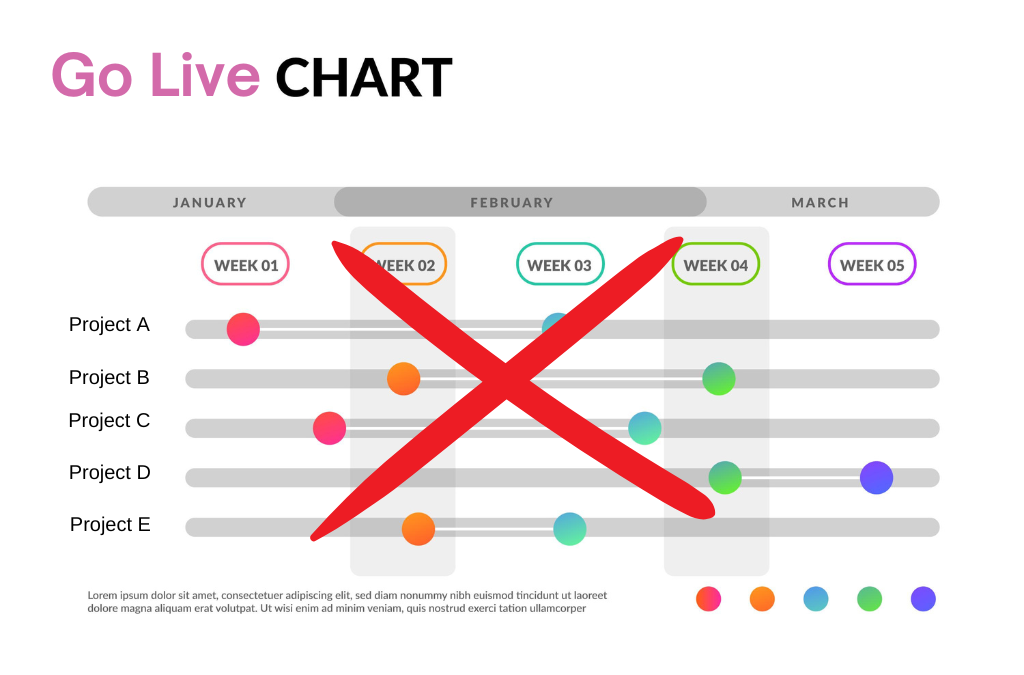
In the world of change management, Go Lives are often seen as significant milestones. For many project teams, these events represent the culmination of months or even years of hard work, signaling that a new system, process, or initiative is officially being launched. It’s common for stakeholders to view Go Lives as a key indicator of the success of a change initiative. However, while Go Lives are undeniably important, relying on them as the primary measure of change impact can be misleading and potentially harmful to the overall change effort.
Go Lives are just one piece of the puzzle. Focusing too heavily on these milestones can lead to an incomplete understanding of the change process, neglecting crucial activities that occur both before and after Go Live. Let’s outline the risks associated with using Go Lives to report on change management impacts and offers best practices for a more holistic approach.
Go Lives: A Double-Edged Sword
Go Lives are naturally a focal point for project teams. They represent a clear, tangible goal, and the success of a Go Live can boost morale, validate the efforts of the team, and provide a sense of accomplishment. From a project delivery perspective, Go Lives are critical. They signal that the project has reached a level of maturity where it is ready to be released to the broader organization. In terms of resourcing and business readiness, Go Lives ensure that everything is in place for the new system or process to function as intended.
However, the very attributes that make Go Lives attractive can also make them problematic as indicators of change impact. The simplicity and clarity of a Go Live event can lead stakeholders to overestimate its significance, from a impacted business perspective. The focus on Go Lives can overshadow the complex and often subtle changes that occur before and after the event. While a successful Go Live is necessary for change, it is not sufficient to guarantee that the change will be successful in the long term.
The Pre-Go Live Journey: Laying the Foundation for Change
A significant portion of the change management journey occurs long before the Go Live date. During this pre-Go Live phase, various engagement and readiness activities take place that are critical to shaping the overall impact of the change. These activities include town hall meetings, where leaders communicate the vision and rationale behind the change, and briefing sessions that provide detailed information about what the change will entail.
Training and learning sessions are also a crucial component of the pre-Go Live phase. These sessions help employees acquire the necessary skills and knowledge to adapt to the new system or process. Discussions, feedback loops, and iterative improvements based on stakeholder input further refine the change initiative, ensuring it is better aligned with the needs of the organization.
These pre-Go Live activities are where much of the groundwork for successful change is laid. They build awareness, generate buy-in, and prepare employees for what is to come. Without these efforts, the Go Live event would likely be met with confusion, resistance, or outright failure. Therefore, it is essential to recognize that the impact of change is already being felt during this phase, even if it is not yet fully visible.
Post-Go Live Reality: The Real Work Begins
While the Go Live event marks a significant milestone, it is by no means the end of the change journey. In fact, for many employees, Go Live is just the beginning. It is in the post-Go Live phase that the true impact of the change becomes apparent. This is when employees start using the new system or process in their daily work, and the real test of the change’s effectiveness begins.
During this phase, the focus shifts from preparation to adoption. Employees must not only apply what they have learned but also adapt to any unforeseen challenges that arise. This period can be fraught with difficulties, as initial enthusiasm can give way to frustration if the change does not meet expectations or if adequate support is not provided.
Moreover, the post-Go Live phase is when the long-term sustainability of the change is determined. Continuous reinforcement, feedback, and support are needed to ensure that the change sticks and becomes embedded in the organization’s culture. Without these ongoing efforts, the change initiative may falter, even if the Go Live event was deemed a success.
The Risk of Misleading Stakeholders
One of the most significant dangers of focusing too heavily on Go Lives is the risk of misleading stakeholders. When stakeholders are led to believe that the Go Live event is the primary indicator of change impact, they may not fully appreciate the importance of the activities that occur before and after this milestone. This narrow focus can lead to a number of issues.
Firstly, stakeholders may prioritize the Go Live date to the exclusion of other critical activities. This can result in insufficient attention being paid to pre-Go Live engagement and readiness efforts or to post-Go Live adoption and support. As a consequence, the overall change initiative may suffer, as the necessary foundations for successful change have not been properly established.
Secondly, stakeholders may develop unrealistic expectations about the impact of the change. If they believe that the Go Live event will immediately deliver all the promised benefits, they may be disappointed when these benefits take longer to materialize. This can erode confidence in the change initiative and reduce support for future changes.
Finally, a narrow focus on Go Lives can create a false sense of security. If the Go Live event is successful, stakeholders may assume that the change is fully implemented and no further action is required. This can lead to complacency and a lack of ongoing support, which are essential for ensuring the long-term success of the change.
Best Practices for Reporting Change Management Impact
To avoid the pitfalls associated with relying on Go Lives as indicators of change impact, change management practitioners should adopt a more holistic approach to reporting. This involves considering the full scope of the change journey, from the earliest engagement activities to the ongoing support provided after Go Live. Here are some best practices for reporting on change management impact:
Integrate Pre-Go Live Metrics:
Track and report on engagement activities, such as attendance at town hall meetings, participation in training sessions, and feedback from employees.
Monitor changes in employee sentiment and readiness levels throughout the pre-Go Live phase.
Report on aggregate pan-initiative change initiative impost on business units, pre-Go Live
Emphasize Post-Go Live Support:
Develop metrics to measure the effectiveness of post-Go Live support, such as the number of help desk inquiries, employee satisfaction with the new system, and the rate of adoption.
Highlight the importance of continuous feedback loops to identify and address any issues that arise after Go Live.
Communicate the need for ongoing reinforcement and support to stakeholders, emphasizing that change is an ongoing process
Report on post-Go Live adoption time impost expected across initiatives
Provide a Balanced View of Change Impact:
Ensure that stakeholders understand that Go Live is just one part of the change journey and that significant impacts occur both before and after this event.
Use a combination of quantitative and qualitative data to provide a comprehensive view of change impact.
Regularly update stakeholders on progress throughout the entire change journey, not just at the time of Go Live.
Manage Expectations:
Clearly communicate to stakeholders that the full impact of the change may not be immediately visible at the time of Go Live.
Set realistic expectations about the timeline for realizing the benefits of the change.
Prepare stakeholders for potential challenges in the post-Go Live phase and emphasize the importance of ongoing support.
While Go Lives are important milestones in the change management process, they should not be used as the sole indicator of change impact. The journey to successful change is complex, involving critical activities before, during, and after the Go Live event. By adopting a more holistic approach to reporting on change management impact, practitioners can provide stakeholders with a more accurate understanding of the change journey, manage expectations more effectively, and ensure the long-term success of the change initiative.
The key takeaway is that change management is not just about delivering a project; it’s about guiding an organization through a journey of transformation. Go Lives are just one step in this journey, and it is the responsibility of leaders to ensure that every step is given the attention it deserves.
Every large organisation generates significant volumes of change management data. Readiness assessments, impact analyses, stakeholder surveys, adoption trackers, change plans, training records. Most of it is created at the project level, used briefly, and then archived when the project closes. The insight it could generate, about what kinds of change land well, which stakeholder groups are consistently resistant, how cumulative load affects adoption, which interventions work in your culture, largely disappears.
This disposal of valuable data is one of the most common and least-discussed limitations of how organisations currently approach change management. When change data is managed tactically, it serves only the project that created it. When it is managed strategically, it becomes an organisational asset that improves the quality of change decisions across the portfolio, year on year.
Capgemini Invent’s 2023 change management study, surveying 1,175 professionals globally, found that high data maturity in change programmes correlates with a 27% improvement in change success rates, and that data-driven leadership adds a further 23% lift. The research is unambiguous: how you manage change management data is a meaningful predictor of transformation outcomes.
This article is about making that shift, from tactical, project-level data management to strategic change data management that builds cumulative intelligence about how change works in your organisation.
The four common failure modes of change data management
Most organisations do not set out to manage change data poorly. The failure modes are structural, rooted in how change management work is organised rather than individual capability gaps.
Data collection is ad hoc and project-specific. When each project team designs their own impact assessment templates, readiness survey questions, and adoption tracking approaches, the data produced is genuinely useful within that project and largely useless outside it. There is no consistent taxonomy, no standard scales, and no common definitions. When you try to ask a cross-portfolio question , “which of our business units consistently shows lower adoption rates?” , the data cannot answer it because it was never designed to be aggregated.
Data lacks factual grounding. A significant proportion of change data is perception-based, reflecting what change managers think about stakeholder readiness or impact severity rather than what the evidence shows. Heat maps built on subjective ratings, readiness assessments scored by the project team rather than the affected employees, and impact analyses that reflect project plan assumptions rather than actual operational context all share this weakness. The data is not wrong, exactly, but its evidential basis is thin and rarely documented. When challenged by senior stakeholders, it is difficult to defend.
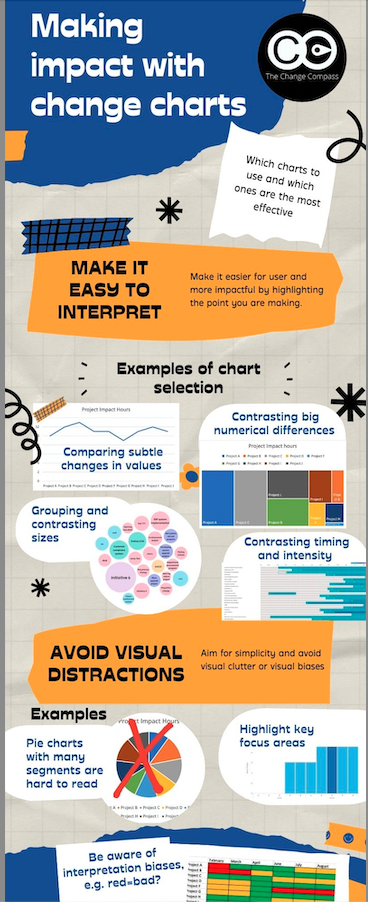
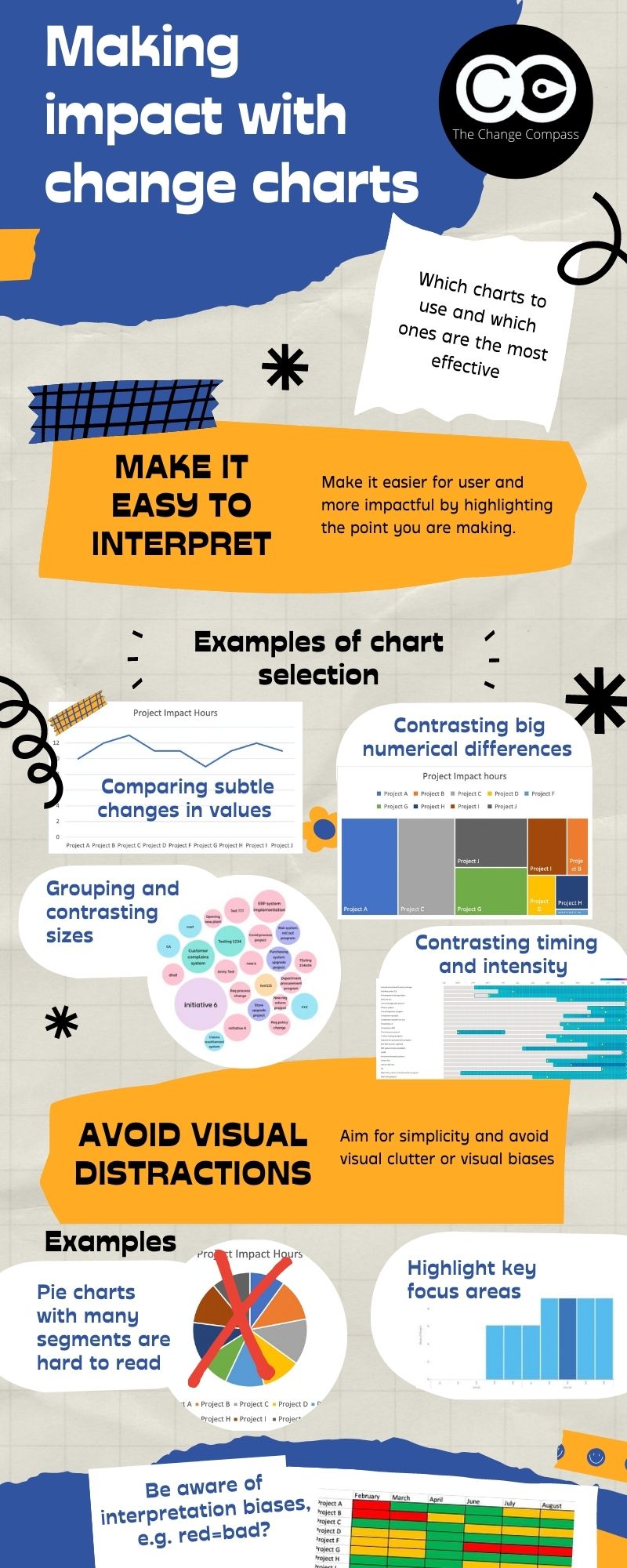
Visualisation obscures rather than reveals. The way change data is visualised has a substantial effect on whether it drives decisions. A heat map that shows everything as amber is not a useful risk management tool; it has simply translated uncertainty into colour. Visualisations that use the wrong chart type for the underlying data pattern, or that present too many variables at once, or that aggregate data in ways that mask important distribution effects, are actively misleading even when the underlying data is sound.
Data is not retained as an asset. When a programme closes, its change data typically closes with it. The lessons embedded in three years of readiness assessments, adoption surveys, and stakeholder feedback are lost. The next programme team starts from scratch, repeating the same diagnostic work, making the same assumptions, and potentially encountering the same predictable resistance that a prior team navigated successfully. This waste is invisible because no one tracks the cost of reinventing the wheel, but it is substantial.
What strategic change management data management actually means
Strategic change management data management is the practice of designing, collecting, governing, and preserving change data as a reusable organisational asset rather than a project-level administrative product. It has five characteristics that distinguish it from tactical data management.
Consistent taxonomy and definitions
A strategic approach starts with agreement on what you are measuring and how. What does ‘high impact’ mean in your organisation’s context? How is change readiness defined and at what granularity? What are the stages of adoption your organisation recognises, and what observable behaviours characterise each stage? These definitions need to be documented, agreed by change leadership, and applied consistently across every programme in the portfolio.
This sounds straightforward but is often contentious, because standardisation requires programme teams to give up some flexibility in how they approach impact assessment and readiness measurement. The benefit, however, is that every new dataset generated becomes immediately comparable with every prior dataset, and portfolio-level analytics become possible.
Portfolio-level collection and aggregation
Individual programme data is useful to the programme team. Portfolio-level data, aggregated across all active and historical programmes, is useful to the change function leadership, to HR, to business unit heads, and to the executive team. Strategic change data management designs data collection with portfolio aggregation in mind from the outset, not as an afterthought.
The questions that portfolio-level change data can answer are categorically more strategic than those accessible from project-level data. Which business units are accumulating unsustainable change load this quarter? Which change types consistently generate higher resistance in your culture? Which combinations of interventions correlate with faster adoption in your organisation specifically? These are the questions that allow a change function to operate proactively rather than reactively.
Fact-based data quality standards
Strategic change data management requires documented standards for what constitutes adequate evidence for different data types. Stakeholder impact ratings should be supported by operational analysis, not solely by project team estimation. Readiness assessments should include both leader perceptions and employee-level indicators, because they frequently diverge. Adoption metrics should triangulate system usage data, survey data, and direct observation rather than relying on a single source.
This does not mean perfection is required before data can be used. It means being explicit about the evidential basis of data and the uncertainty that attaches to it. A readiness rating of 65% that is based on a 40-respondent employee survey is meaningful. The same rating based on a change manager’s estimate without respondent data should be labelled and treated differently.
Retention and longitudinal analysis
One of the most underexploited opportunities in change management is longitudinal analysis of your organisation’s own change history. If your organisation has been running significant change programmes for five or more years, and if that data has been retained in a structured format, you have the basis for genuinely organisation-specific benchmarks.
What percentage of employees in your operations function were typically at target adoption six months after a technology rollout in the past? What does the readiness trajectory typically look like for a business unit facing a structural reorganisation? These organisation-specific patterns are more useful for planning purposes than generic research benchmarks, because they reflect your culture, your leadership style, and your workforce characteristics.
A governance structure for change data
Strategic change data management requires governance: clear ownership, defined data standards, review cycles, and access controls. Without governance, standards erode over time as programme teams revert to their preferred approaches, data quality degrades, and the portfolio view becomes unreliable.
Governance for change data does not need to be elaborate. A data steward role within the change function, clear standards documentation, a quarterly review of data quality across the portfolio, and a defined retention policy are sufficient for most large organisations. The key is that someone is accountable for the quality of the organisational change data asset, not just the quality of their own programme’s data.
AI and automation: what they add to strategic change data management
The intersection of artificial intelligence and change management data is generating genuine capability improvements, particularly in the speed of synthesis and the detection of patterns that manual analysis would miss.
Capgemini’s concept of Intelligent Data-Driven Change Management (IDCM) combines human emotional intelligence with algorithmic insights to support change decisions. In practical terms, this means AI that can monitor multiple data streams simultaneously (survey results, system usage, engagement metrics, communication analytics) and surface signals that warrant human attention, rather than requiring change managers to manually synthesise all of this information.
Key AI applications in strategic change data management include:
Natural language processing of stakeholder feedback and open survey responses, identifying sentiment patterns and emerging concerns at scale without manual qualitative coding
Anomaly detection in adoption curves, flagging when a stakeholder group’s trajectory deviates significantly from expected patterns
Predictive modelling of adoption outcomes based on historical programme data, adjusted for current programme characteristics and context
Automated generation of executive summaries from portfolio data, reducing the reporting burden on change teams while improving reporting consistency
It is important to be clear about what AI does not replace. It does not replace the judgment required to understand why a stakeholder group is resistant, the relationship-building required to address that resistance, or the strategic thinking required to sequence programmes effectively. AI in change management is most valuable as a signal amplifier, drawing human attention to where it is most needed. The strategic framework within which those signals are interpreted remains a human responsibility.
Building a change data ecosystem
For organisations ready to move beyond ad-hoc data management, a change data ecosystem is the infrastructure that makes strategic change data management operational.
A change data ecosystem has three layers. The collection layer is where data enters the system: programme impact assessments, readiness surveys, adoption tracking, training completion, and communication analytics. The aggregation layer is where programme-level data is normalised, consolidated, and stored in a format that enables cross-programme analysis. The decision layer is where the data is used: executive dashboards, portfolio risk views, programme intervention decisions, and historical benchmarks.
Platforms like The Change Compass are purpose-built for this architecture, specifically for the challenge of visualising cumulative change load and adoption status across a complex change portfolio. The value of purpose-built change management software, compared to using general-purpose business intelligence tools, is that the data models and analytical frameworks are pre-configured for change management use cases. You are not building the methodology from scratch; you are applying it.
The shift from reporting to decision intelligence
The ultimate destination of strategic change management data management is decision intelligence: a state where change data actively informs decisions about sequencing, resourcing, intervention design, and programme prioritisation in real time rather than retrospectively.
This virtuous cycle is what mature change functions are beginning to achieve. They use data to improve programmes, which generates better data, which improves the next generation of programmes. The cumulative knowledge advantage this creates over time is significant and durable.
Getting there requires investment in the governance, tooling, and cultural change described in this article. But the starting point is simpler than it might appear. Pick one consistent definition. Apply it across your active programmes. Retain the data when those programmes close. Review what the combined data tells you at the end of the year. You will have begun the shift from tactical to strategic change data management, and the first cycle of learning will show you exactly why it matters.
Frequently asked questions
What is strategic change management data?
Strategic change management data is change-related information that is designed, collected, and governed as an organisational asset rather than a project-level administrative record. It includes readiness assessments, adoption metrics, impact analyses, and stakeholder data that are standardised across programmes and retained for portfolio-level analysis and longitudinal learning.
Why is change management data difficult to manage strategically?
The primary challenge is that change work is traditionally organised at the project level, where data serves only the immediate programme. Creating strategic value from change data requires cross-programme standardisation, governance ownership, and retention infrastructure, none of which emerge naturally from project-centric delivery structures.
How does data maturity affect change management outcomes?
Capgemini Invent’s research found that organisations with high data maturity in their change programmes achieve 27% higher success rates. The mechanism is that mature data management enables faster, more targeted interventions, better portfolio decisions, and more credible reporting to executive stakeholders, all of which directly improve adoption outcomes.
What role does AI play in change management data?
AI tools in change management primarily serve as pattern recognition and signal amplification tools. They can process large volumes of survey data, monitor multiple data streams simultaneously, and flag anomalies in adoption curves that warrant human attention. They do not replace the judgment, relationship, and strategic capabilities of change practitioners; they help those capabilities operate at a scale that manual analysis cannot support.
How should change data be governed?
Effective governance for change data requires a designated data steward, documented standards for data definitions and collection methods, a quality review cycle (typically quarterly), and a retention policy that specifies how long data from completed programmes is preserved and in what format. Governance does not need to be complex, but it does need to be explicit and owned.
Where should an organisation start in managing change data more strategically?
Start with taxonomy. Agree on consistent definitions for impact rating, readiness scoring, and adoption stages across your active change portfolio. Apply those definitions in your next programme cycle. Retain the data when programmes close. Then, at the end of a 12-month cycle, review the combined dataset and ask what questions it can answer that you could not previously answer. The value of the investment will be visible in the first year.
References
Capgemini Invent. Change Management Study 2023. https://www.capgemini.com/insights/research-library/change-management-study-2023/
Capgemini. Data-Driven Change Management is Crucial for Successful Transformation. https://www.capgemini.com/news/press-releases/data-driven-change-management-is-crucial-for-successful-transformation/
ResearchGate. The Role of Change Management in Enhancing Data-Driven Decision Making: Insights from Business Intelligence Initiatives (2024). https://www.researchgate.net/publication/384017092_The_Role_of_Change_Management_in_Enhancing_Data-Driven_Decision_Making_Insights_from_Business_Intelligence_Initiatives
Prosci. The Correlation Between Change Management and Project Success. https://www.prosci.com/blog/the-correlation-between-change-management-and-project-success
Panorama Consulting. Top Organizational Change Management Trends for 2025. https://www.panorama-consulting.com/top-change-management-trends-for-2025/