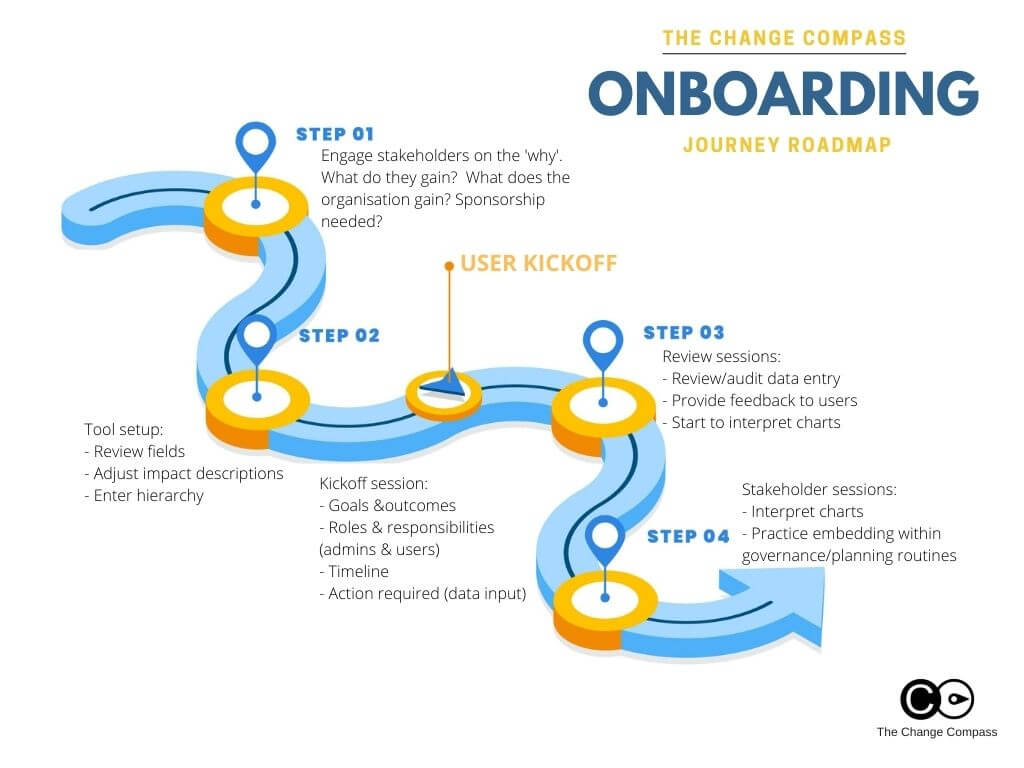


When organisations roll out a new system or digital tool, the default playbook tends to look something like this: schedule a training session, send a few announcement emails, hold a town hall or go-live event, and then declare the project complete. It is a familiar pattern, and it is one that consistently fails to produce the outcomes that organisations need. Completion rates for training modules say little about whether people are actually using the new system in their day-to-day work. Attendance at a launch event does not translate into changed behaviour at the desk. The gap between “we trained everyone” and “everyone is using the system effectively” can be enormous, and it is precisely this gap that derails the return on investment for so many technology and transformation programmes.
The root cause of this gap is a fundamental misunderstanding of what user onboarding actually requires. Onboarding is not a moment in time. It is not a box to tick. It is a multi-stage process that unfolds over weeks and months, requiring deliberate effort across a range of levers that together determine whether adoption becomes embedded in the organisation or quietly fades after the initial excitement. Research from Prosci consistently shows that projects with excellent change management are six times more likely to meet their objectives than those with poor change management – yet most organisations still treat onboarding as a communications and training exercise rather than a full change management process.
Full adoption – the kind where people are confident, willing, and consistently using a new system in ways that deliver business value – requires addressing at least eight distinct levers: user capability, user motivation, user capacity, senior manager buy-in, line manager buy-in, communication and awareness, measurement and reinforcement, and strategic alignment. Miss any one of these, and adoption will remain partial at best. This article explores each lever in depth and offers a practical framework for designing an onboarding journey that achieves sustainable, organisation-wide change.
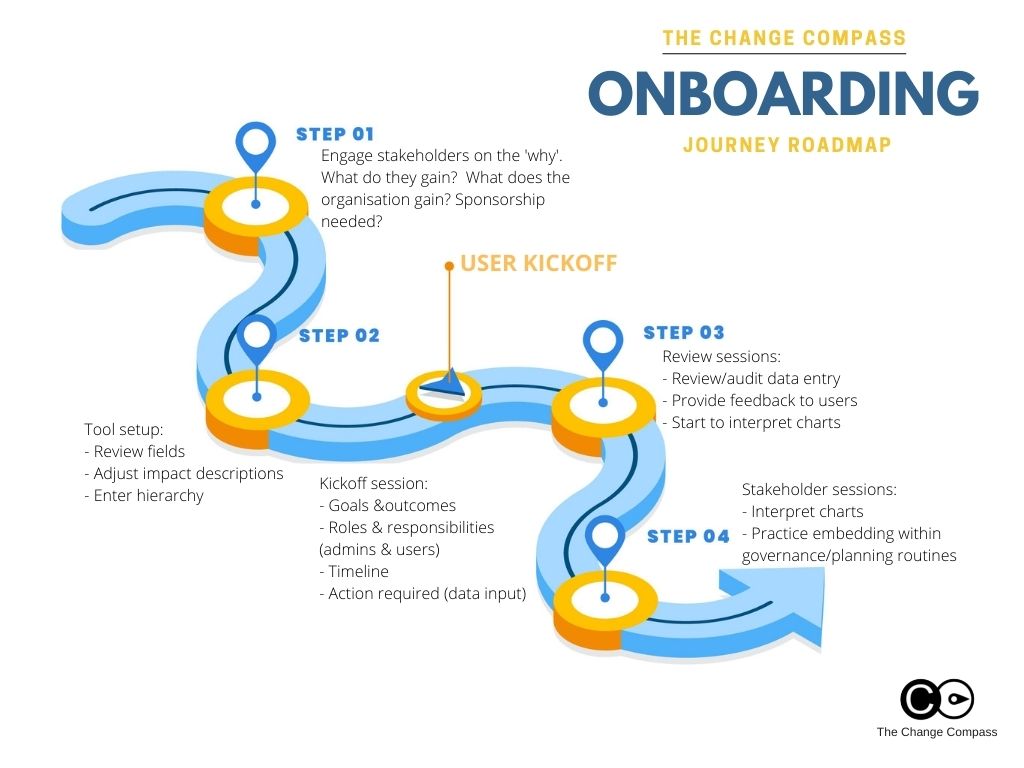
Download the User Onboarding Journey infographic for a visual overview of the full adoption process.
Why onboarding is a process, not an event
The event-based model of onboarding has its roots in a reasonable intuition: people need information before they can use something new, so give them that information in a structured setting and they will be ready to go. The problem is that adult learning and behaviour change are far more complex than this model assumes. A single training session, however well designed, provides exposure – but exposure is not the same as competence, and competence is not the same as adoption. People need repeated practice, contextualised support, and the confidence that comes from doing something real, not just simulated, before new behaviours become habitual.
Gartner research on digital workplace adoption has highlighted that most technology investments underperform because organisations focus almost entirely on the technical deployment and the go-live moment, while underinvesting in the sustained behaviour change work that happens afterwards. The post-go-live period – typically the first 90 days – is where adoption is either won or lost, yet it is precisely this period that receives the least structured attention in most programme plans. Change management activity drops off just as employees are encountering real-world friction, forming habits, and deciding whether the new way of working is genuinely worth the effort.
Thinking of onboarding as a journey rather than an event reframes the entire challenge. It shifts the question from “did we deliver training?” to “are people using the system confidently and consistently?” It moves the success metric from outputs (training completion, attendance) to outcomes (usage rates, error rates, productivity metrics, user satisfaction). And it creates the organisational mandate to sustain change management activity well beyond go-live, which is where real adoption is ultimately built.
The eight levers of full user adoption
Achieving full adoption requires organisations to work across eight interconnected levers simultaneously. These are not sequential steps but parallel dimensions of the onboarding journey, each of which must receive deliberate design and ongoing attention throughout the adoption lifecycle.
User capability is the most obvious lever – people need to know how to use the system. But capability goes beyond knowing where to click. It encompasses conceptual understanding of why the system works the way it does, procedural fluency in completing tasks efficiently, and the confidence to troubleshoot when things do not go as expected. User motivation is equally foundational. Even highly capable users will revert to old ways of working if they do not see a compelling reason to change. Motivation is shaped by how clearly the benefits of adoption are communicated in terms that are personally relevant to each user group, not just in terms of organisational efficiency.
User capacity is a lever that is frequently overlooked. Employees may be capable and motivated to use a new system, yet lack the time and mental bandwidth to develop proficiency during a busy period. If adoption is competing with peak workloads or concurrent change initiatives, it will consistently lose. Senior manager buy-in and line manager buy-in are the two sponsorship levers, and they operate quite differently. Senior leaders shape the strategic narrative and signal organisational priority; line managers shape the day-to-day environment in which people actually change their behaviour. Communication and awareness, measurement and reinforcement, and strategic alignment round out the framework, ensuring that adoption is visible, tracked, and connected to the organisation’s broader direction of travel.
Building user capability and confidence
Effective capability building starts well before go-live and continues long after it. The pre-launch phase should focus on building awareness and foundational understanding – what is changing, why it matters, and what it will mean for each role. This is distinct from system training, which is most effective when delivered as close to the point of first real use as possible. Training delivered weeks before go-live is largely forgotten by the time it is needed, a finding that is well-established in learning science and confirmed repeatedly in enterprise technology deployments.
Learning design for onboarding should be role-specific, scenario-based, and layered. Generic system overviews are far less effective than task-focused modules that walk users through the exact workflows they will use in their specific jobs. Scenario-based learning – where participants practise in realistic simulations before working with live data – builds procedural fluency in a low-stakes environment. Layered learning, where foundational skills are covered at go-live and more advanced capabilities are introduced over the following weeks, respects the cognitive reality that people can only absorb so much at once.
Confidence is the bridge between capability and consistent use. Many users who have completed training still hesitate to use a new system in real situations because they are not confident they will get it right. Support mechanisms in the post-go-live period – floor walkers, super-users embedded in teams, easily accessible help resources, and a psychologically safe environment where asking questions is normalised – are as important as the training itself. A McKinsey study on large-scale transformation programmes found that organisations that invested heavily in on-the-job support during the first 90 days post-launch achieved adoption rates that were significantly higher than those that relied on classroom training alone.
The critical role of manager buy-in
Of all the levers in the onboarding framework, manager buy-in at both the senior and line manager levels may be the most powerful and the most underdeveloped in practice. Prosci’s research on change management best practices consistently identifies active and visible sponsorship as the single most important contributor to successful change outcomes – yet sponsorship is often confused with endorsement. A senior leader who approves a project and appears at the launch event has provided endorsement. What they need to provide is active, ongoing, visible engagement: talking about the change in team meetings, asking questions about adoption progress, removing barriers when they arise, and role-modelling the new behaviours themselves.
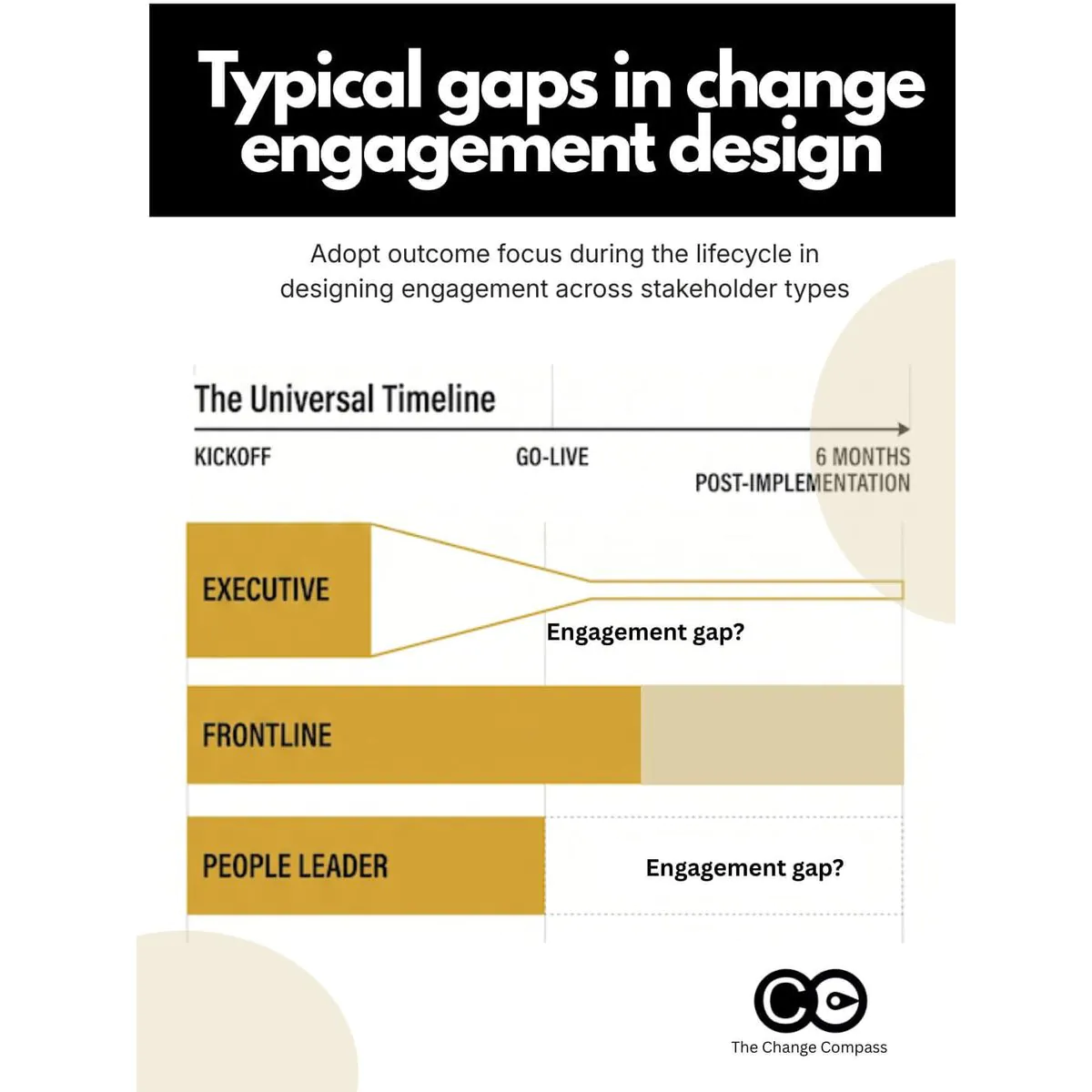
Line managers are the proximate influence on employee behaviour. Employees take their cues from their direct manager about what is genuinely important, what will be rewarded, and what can safely be deprioritised. When line managers actively support adoption – checking in on how team members are finding the new system, making time for practice and questions, celebrating progress – adoption accelerates. When line managers are neutral or disengaged – perhaps because they were not adequately prepared for their role in the change – adoption stalls even when users have received excellent training.
Preparing managers for their adoption role requires specific attention. Many managers have deep expertise in their functional domain but have not been equipped with change leadership skills. An effective onboarding programme includes a specific workstream for managers: helping them understand the adoption journey their teams will experience, giving them language and tools to have productive conversations about the change, and keeping them informed of adoption data so they can act on it. When line managers become active agents of adoption rather than passive recipients of communications, the impact on outcomes is substantial and sustained.
Measurement and reinforcement as adoption drivers
What gets measured gets managed – and in the context of user adoption, this principle is not merely a cliche but a practical necessity. Organisations that track adoption metrics systematically are able to identify where the journey is breaking down, intervene before disengagement becomes entrenched, and demonstrate the value of their change management investment to senior stakeholders. Organisations that rely on training completion rates as their primary adoption metric are flying blind, because completion tells you nothing about whether the learning transferred into changed behaviour.
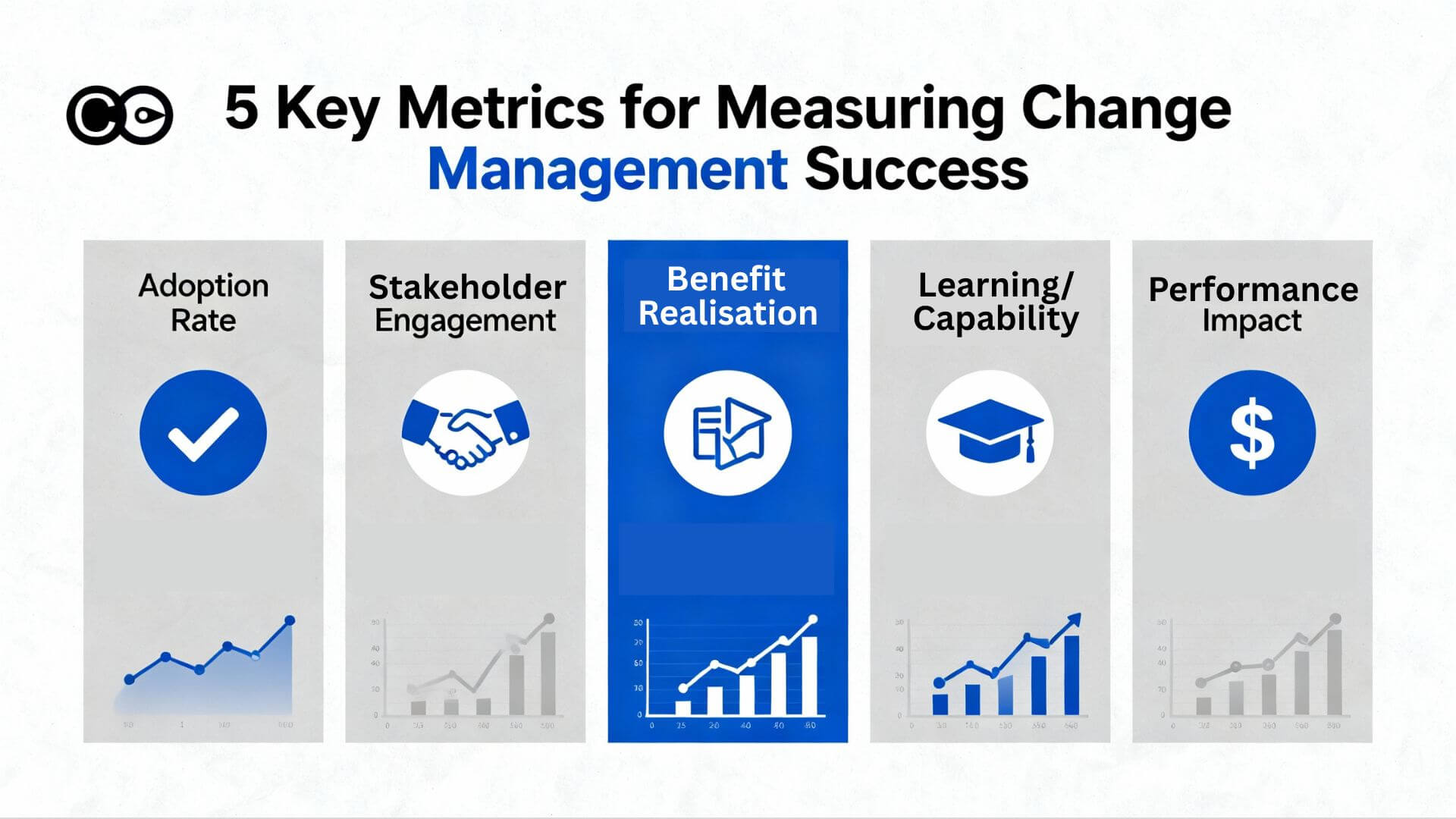
A robust adoption measurement framework tracks leading and lagging indicators across the adoption journey. Leading indicators – the precursors to adoption – include training completion, awareness levels (measured through pulse surveys), manager engagement scores, and the volume and nature of support requests. Lagging indicators – the actual adoption outcomes – include system usage rates by role and team, error rates, productivity metrics, and user satisfaction scores. Together, these data points paint a picture of where adoption is strong and where it needs additional support.
Reinforcement is the sustained activity that converts early adoption into embedded habit. According to research published in the Harvard Business Review, behaviours that are reinforced through recognition, feedback, and accountability are far more likely to stick than those that are simply trained and left to self-sustain. Reinforcement mechanisms in an onboarding journey include celebrating adoption milestones publicly, incorporating system use into performance conversations, updating processes and job aids so that the new way of working is embedded in documented procedures, and periodically refreshing skills as the system evolves. Reinforcement is not a one-time activity but an ongoing practice that spans the full adoption lifecycle.
Designing an onboarding journey for your organisation
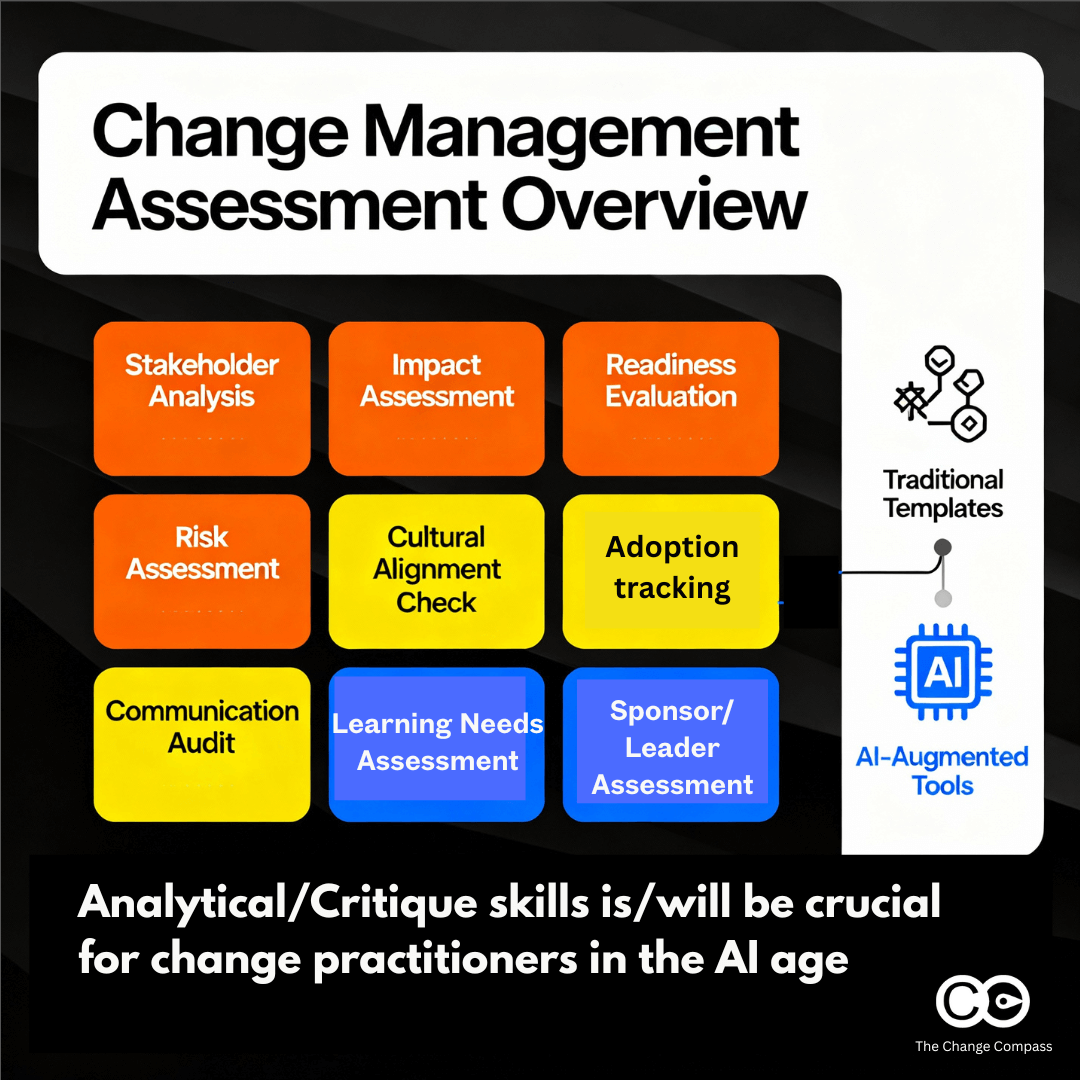
Designing an effective onboarding journey begins with understanding the adoption landscape for the specific change. Not all systems affect all users in the same way, and not all user groups will face the same adoption challenges. A thorough impact assessment – identifying which roles are affected, how significantly their work will change, what capability gaps exist, and what motivational barriers may arise – is the foundation of a well-targeted onboarding plan. Without this analysis, organisations tend to apply a generic approach that works reasonably well for the easiest-to-adopt groups and fails the groups that most need support.
The onboarding journey should be mapped as a timeline with clear phases: awareness and readiness (pre-go-live), active adoption (the first 30-60 days post-go-live), and embedding and reinforcement (60-180 days and beyond). Each phase has different objectives and requires different interventions. The awareness phase focuses on building a compelling case for change and preparing the organisation to receive and use it. The active adoption phase delivers training, floor support, and manager engagement at the moment of real use. The embedding phase shifts focus to reinforcement, measurement, and continuous improvement.
Strategic alignment – the eighth lever – means ensuring that the onboarding journey is designed in the context of the organisation’s broader change portfolio and strategic priorities. If the new system is one of five significant changes landing on the same population in the same quarter, user capacity will be stretched and motivation will be harder to sustain. Understanding the change landscape and sequencing or pacing adoption activity accordingly is a strategic decision that sits above the programme level and requires executive attention. Organisations that manage their change portfolios deliberately are consistently more successful at achieving individual adoption outcomes because they protect the cognitive and emotional capacity their people need to change.
How The Change Compass supports the full onboarding journey
The Change Compass is a purpose-built platform designed to help organisations manage the complexity of change at scale, and this directly supports the full user onboarding journey described in this article. At its core, The Change Compass gives change leaders and senior managers a clear, data-driven view of the change landscape across the organisation – who is being affected by what, when, and at what intensity. This portfolio-level visibility is the foundation for making strategic decisions about sequencing, pacing, and resourcing adoption activity for individual systems and tools.
For onboarding programmes specifically, The Change Compass helps organisations track adoption levers systematically, identify at-risk populations before disengagement becomes entrenched, and provide managers with the information they need to fulfil their sponsorship role effectively. The platform’s change impact data makes it possible to have evidence-based conversations with senior leaders about where adoption support is most needed, making the case for sustained investment in the embedding phase rather than allowing change management activity to drop off after go-live.
By connecting the onboarding journey to the broader change portfolio, The Change Compass also helps organisations protect user capacity – ensuring that adoption of a new system is not sabotaged by competing demands from other concurrent changes. This is a dimension of adoption planning that is almost impossible to manage without the kind of cross-programme visibility that a dedicated platform provides. The result is an onboarding experience that is not only better planned but better sustained, delivering the full adoption outcomes that justify the investment in new systems and tools.
Frequently asked questions
How long should a user onboarding journey last?
The duration of an onboarding journey depends on the complexity of the system, the extent of the behaviour change required, and the size and diversity of the user population. As a general guide, the active adoption phase spans the first 60 days post-go-live, and the embedding phase extends to at least 180 days. For highly complex systems or large-scale deployments, structured adoption support may continue for 12 months or more. The key signal that the embedding phase can be scaled back is sustained, consistent usage rates across user groups – not the passage of a fixed amount of time.
What is the difference between user adoption and user engagement?
User adoption refers to the extent to which people are using a new system or tool in place of previous ways of working – it is fundamentally about behaviour change. User engagement refers to the quality and depth of that use – whether people are using the system confidently, efficiently, and in ways that realise its full capability. Both matter. High adoption with low engagement (everyone logs in but few use advanced features) leaves value on the table. A well-designed onboarding journey addresses both, building adoption first and deepening engagement over time through progressive capability development and reinforcement.
How do you measure whether onboarding has been successful?
Success in onboarding is measured against the adoption outcomes defined at the outset of the programme, not against activity metrics like training completion or event attendance. Meaningful measures of onboarding success include system usage rates by role and team (compared against targets), error rates and support ticket volumes (trending down over time), user confidence and satisfaction scores (measured through pulse surveys), and ultimately the business outcomes that the system was intended to deliver – whether that is processing efficiency, data quality, customer experience, or another value driver. Establishing baseline measures before go-live and tracking them through the adoption journey is essential to demonstrating value and identifying where intervention is needed.
What is the most common reason user adoption fails?
The single most common reason user adoption fails is the premature withdrawal of change management support after go-live. Organisations invest heavily in the lead-up to launch and then assume that adoption will sustain itself once the system is live and users have been trained. In reality, the post-go-live period is where the hardest adoption work happens – where users encounter real-world friction, form habits, and decide whether the new way of working is worth sustaining. Without structured support, reinforcement, and active manager engagement during this period, many users revert to workarounds or old systems. Sustained investment in the embedding phase is the most reliable way to protect the gains made in the active adoption phase.
References
Prosci. (2023). Best Practices in Change Management. Prosci Research. https://www.prosci.com/blog/roi-change-management
Gartner. (2022). How to Drive Digital Adoption in the Workplace. Gartner Research. https://www.gartner.com/en/information-technology/insights/digital-workplace
Harvard Business Review. (2012). To Change Your Company’s Culture, Don’t Start by Trying to Change the Culture. https://hbr.org/2012/07/cultural-change-that-sticks
McKinsey & Company. (2023). Unlocking success in digital transformations. McKinsey Digital. https://www.mckinsey.com/capabilities/people-and-organizational-performance/our-insights/unlocking-success-in-digital-transformations