Data Foundations and the Limits of Traditional Reporting
Change and transformation leaders are increasingly tasked with supporting decision making through robust, actionable reporting. Despite the rise of specialist tools, teams still lean heavily on Excel and Power BI because of their familiarity, ease and widespread adoption. However, as the pace and scale of organisational change accelerate, these choices reveal critical limitations, especially in supporting nuanced organisational insights.
Why High, Medium, Low Reporting Falls Short
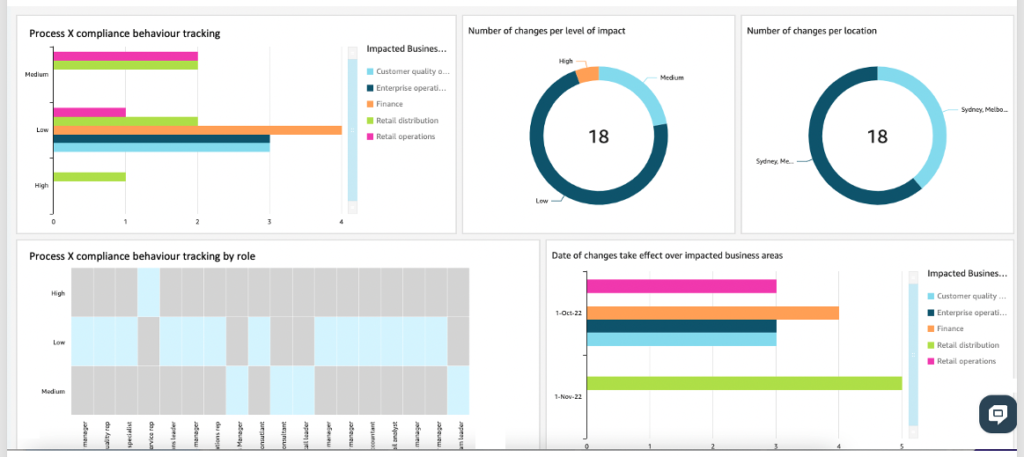
Many change teams default to tracking change impact and volume using simple “high, medium, low” traffic light metrics. While this method offers speed and clarity for basic reporting, it fails to capture context, regional nuance, or the real intensity of change across diverse teams. This coarse approach risks obscuring important details, leaving senior leaders without the depth needed to target interventions or accurately forecast operational risks.
Change practitioners are often short on time and choosing whatever is easier and faster often becomes the default choice, i.e. Excel. This short-sighted approach focuses on quickly generating an output to try and meeting stakeholder needs without thinking strategically what makes sense at an organisational level, and the value of change data to drive strategy and manage implementation risks.
Data Capture: Getting the Inputs Right
Excel’s flexibility lets teams start capturing change data quickly, but often at the expense of structure. When fields and templates vary, information can’t be standardized or consistently compared. Manual entry introduces duplication, missing values, and divergent interpretations of change categories. Power BI requires disciplined and structured underlying data to function well; without careful source management, output dashboards reflect input chaos rather than clarity. Therefore, when pairing Excel with Power BI chart generation, often a BI (business intelligence) specialist is required to help configure and structure the chart outputs in Power BI.
Tips for effective data capture:
Establish clear data templates and definitions before rolling out change tracking.
Centralize where possible to avoid data silos and redundant records.
Assign responsibilities for maintaining quality and completeness at the point of entry.
Data Cleansing and Auditing: Maintaining Integrity
Excel and Power BI users are frequently responsible for manual data validation. The process is time-consuming, highly error-prone, and often fails to catch hidden inconsistencies, especially as data volumes grow. Excel’s lack of built-in auditing makes it tough to track changes or attribute ownership, increasing risks for compliance and reliability.
Best practices for cleansing and auditing:
Automate as much validation as possible, using scripts or built-in platform features.
Use a single master source rather than local versions to simplify updates.
Develop version control and change logs to support traceability and confidence in reporting.
Visualization, Dashboarding, and Interpretation Challenges in Change Reporting
After establishing robust data foundations, the next hurdle for senior change practitioners is translating raw information into clear, actionable insights. While Excel and Power BI each provide capabilities for visualizing change data, both bring unique challenges that can limit their effectiveness in supporting strategic decision making.
Visualization and Dashboard Design
Excel’s charting options are familiar and flexible for simple visualizations, but quickly become unwieldy as complexity grows. Static pivot charts and tables, combined with manual refreshing, reduce the potential for interactive analysis. Power BI offers more engaging, dynamic visuals and interactive dashboards, yet users frequently run into formatting frustrations, such as limited customization, bulky interfaces, and difficulties aligning visuals to precise narrative goals.
Some specific visualization and dashboard challenges include:
Difficulty representing complex, multidimensional change metrics within simplistic dashboards, e.g. impact by stakeholder by location by business unit by type of change.
Limited ability in both tools to customize visual details such as consistent colour themes or layered insights without significant effort.
Dashboard performance degradation with very large or complex datasets, reducing responsiveness and usability.
Interpreting Data and Supporting Decision Making
Effective dashboards must not only display data properly but also guide users toward meaningful interpretation. Both Excel and Power BI outputs can suffer when change teams focus too heavily on volume metrics or simple aggregated scores (like high/medium/low, or counting activities such as communication sent) without contextualizing underlying drivers. This can mislead executives into overgeneralized conclusions or missed risks.
Challenges include:
Dashboards overwhelmed by numbers without narrative or highlight indicators.
Difficulty embedding qualitative insights alongside quantitative data in either tool.
Sparse real-time feedback loops; often snapshots lag behind ongoing operational realities.
Tips and Tricks for Effective Visualization and Insights
Limit dashboard visuals to key metrics that align tightly with decision priorities; avoid clutter.
Use conditional formatting or custom visuals (in Power BI) to draw attention to anomalies or trends.
Build interactive filters and drill-downs to enable users to explore data layers progressively.
Combine quantitative data with qualitative notes or commentary fields to bring context to numbers.
Schedule regular dashboard updates and ensure data pipelines feed timely, validated information.
Once the foundation of reliable data capture and cleansing is set, the next major hurdle for senior change practitioners is transforming raw change data into clear, actionable insights. Excel and Power BI both offer visualization and dashboarding capabilities, yet each presents challenges that can limit their effectiveness in supporting strategic decision-making.
Visualization and dashboard design challenges
Excel’s charting features are familiar and flexible for simple visuals but quickly become cumbersome as complexity grows. Its static pivot charts and manual refresh cycles limit interactive exploration. Power BI adds interactive and dynamic visualizations but users often encounter limitations such as restricted formatting options, bulky interfaces, and considerable effort required to tailor visuals to convey precise change narratives.
Specific challenges include:
Struggling to represent complex, multi-dimensional change metrics adequately within simplistic dashboards.
Limited ability to apply consistent colour schemes or layered insights without advanced customization.
Performance degradation in dashboards when datasets become large or complex, impacting responsiveness and user experience.
Data interpretation and decision-making support
A dashboard’s true value comes from guiding users towards meaningful interpretation rather than just presentation of numbers. Both Excel and Power BI outputs may fall short if change teams rely excessively on aggregated volume metrics or high/medium/low scales without embedding context or deeper qualitative insight. This risks executives making generalized conclusions or overlooking subtle risks.
Key challenges include:
Dashboards overrun with numbers lacking narrative or prioritized highlights.
Difficulty integrating qualitative insights alongside quantitative data within either platform.
Reporting often static or delayed, providing snapshots that lag behind real-time operational realities.
Tips and tricks for more effective visualization and insight generation
Restrict dashboards to key metrics closely aligned with leadership priorities to avoid clutter.
Leverage conditional formatting or Power BI’s custom visuals to highlight trends, outliers or emerging risks.
Incorporate interactive filters and drill-downs allowing users to progressively explore data layers themselves.
Pair quantitative dashboards with qualitative commentary fields or summary narratives to provide context.
Implement disciplined refresh schedules ensuring data pipelines are timely and validated for ongoing accuracy.
Practical advice for change teams and when to consider dedicated change management tools
Change teams vary widely in size, maturity, and complexity of their reporting needs. For less mature or smaller teams just starting out, Excel often remains the most accessible and cost-effective platform for capturing and communicating change-related data. However, as organisational demands grow in complexity and leadership expects richer insights to support timely decisions, purpose-built change management tools become increasingly valuable.
Excel as a starting point
For teams in the early stages of developing change reporting capabilities, Excel offers several advantages:
Familiar user interface widely known across organisations.
Low entry cost with flexible options for data input, simple visualizations, and ad hoc analysis.
Easy to distribute offline or via basic file-sharing when centralised platforms are unavailable.
However, small teams should be mindful of Excel’s limitations and implement these best practices:
Design standardised templates with clear field definitions to improve consistency.
Concentrate on key metrics and avoid overly complex sheets to reduce error risk.
Apply version control discipline and regular data audits to maintain data accuracy.
Plan for future scalability by documenting data sources and formulas for easier migration.
Progressing to Power BI and beyond
As reporting needs mature, teams can leverage Power BI to create more dynamic, interactive dashboards for leadership. The platform offers:
Integration with multiple data sources, enabling holistic organisational views.
Rich visualizations and real-time data refresh capabilities.
Role-based access control improving collaboration and data governance.
Yet Power BI demands some specialist skills and governance protocols:
Teams should invest in upskilling or partnering internally to build and maintain reports.
Establish rigorous data governance to avoid “data swamp” issues.
Define clear escalation paths for dashboard issues to maintain reliability and trust.
When to adopt purpose-built change management platforms
For organisations undergoing complex change or those needing to embed change reporting deeply in strategic decision making, specialist tools like The Change Compass provide clear advantages:
Tailored data models specific to change management, capturing impact, readiness, resistance, and other essential dimensions.
Automated data capture integrations from multiple enterprise systems reducing manual effort and errors.
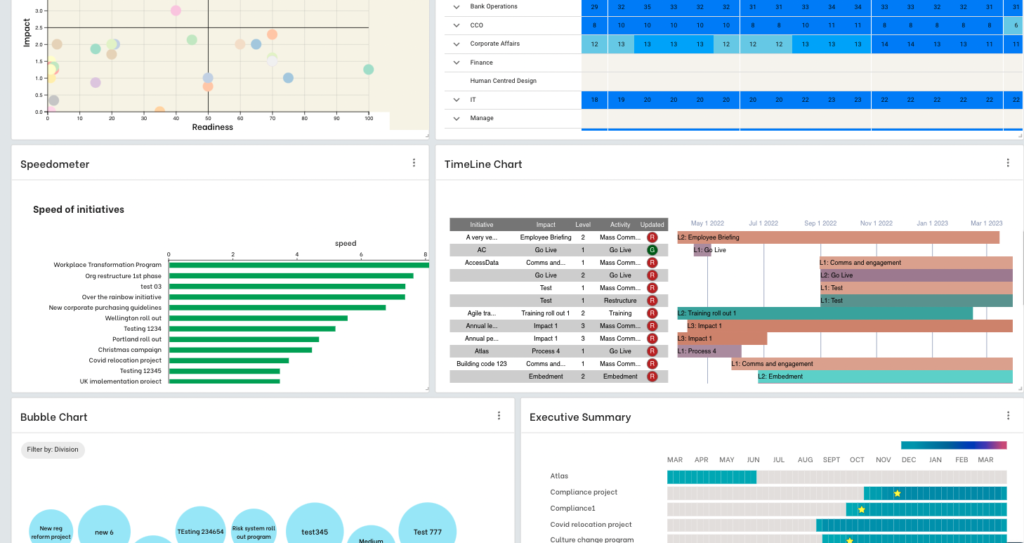
Advanced analytics and visualizations designed to support executive decision making with predictive insights and scenario planning, leveraging AI capabilities.
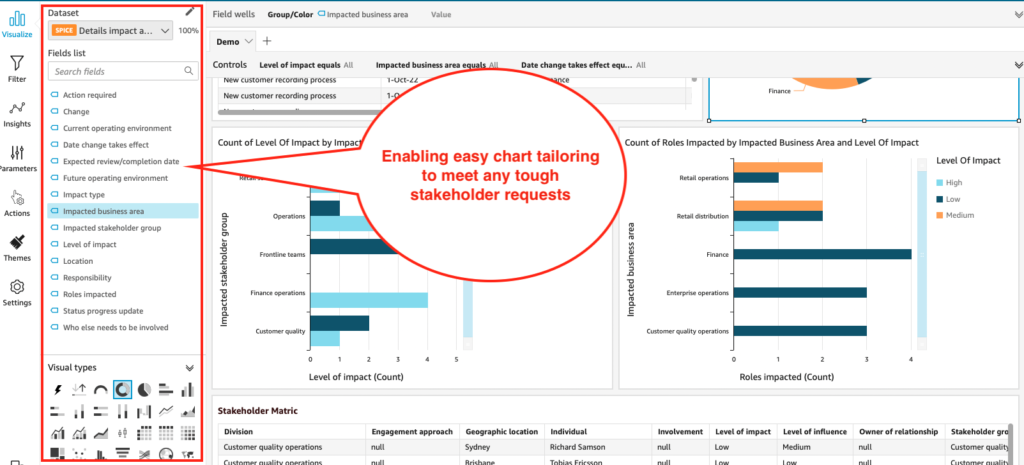
Ease of creating/editing chart and dashboards to match stakeholder needs, e.g. The Change Compass has 50+ visuals to cater for the most discerning stakeholder
Collaboration features aligned to change team workflows.
Built-in auditing, compliance, and performance monitoring focused on change initiatives.
Purpose-built platforms significantly reduce the effort required to turn change data into trusted, actionable insights, freeing change leaders to focus on driving transformation rather than managing reporting challenges.
Summary advice for change teams
Stage
Recommended tools
Focus areas
Starting out
Excel
Standardise templates, focus on core metrics, enforce data discipline
Purpose-built enterprise platforms (e.g. The Change Compass)
Integrate systems, leverage tailored analytics, support operations and executive decisions
Selecting the right reporting approach depends on organisational scale, available skills, and leadership needs. Recognising when traditional tools have reached their limits and investing in specialist change management platforms ensures reporting evolves as a strategic asset rather than a bottleneck.
This staged approach supports both incremental improvements and long-term transformation in how change teams provide decision support through high-quality, actionable reporting.
Practical advice for change teams and when to consider dedicated change management tools
Change teams vary widely in size, maturity, and complexity of their reporting needs. For less mature or smaller teams just starting out, Excel often remains the most accessible and cost-effective platform for capturing and communicating change-related data. However, as organisational demands grow in complexity and leadership expects richer insights to support timely decisions, purpose-built change management tools become increasingly valuable.
Excel as a starting point
For teams in the early stages of developing change reporting capabilities, Excel offers several advantages:
Familiar user interface widely known across organisations.
Low entry cost with flexible options for data input, simple visualizations, and ad hoc analysis.
Easy to distribute offline or via basic file-sharing when centralised platforms are unavailable.
However, small teams should be mindful of Excel’s limitations and implement these best practices:
Design standardised templates with clear field definitions to improve consistency.
Concentrate on key metrics and avoid overly complex sheets to reduce error risk.
Apply version control discipline and regular data audits to maintain data accuracy.
Plan for future scalability by documenting data sources and formulas for easier migration.
Progressing to Power BI and beyond
As reporting needs mature, teams can leverage Power BI to create more dynamic, interactive dashboards for leadership. The platform offers:
Integration with multiple data sources, enabling holistic organisational views.
Rich visualizations and real-time data refresh capabilities.
Role-based access control improving collaboration and data governance.
Yet Power BI demands some specialist skills and governance protocols:
Teams should invest in upskilling or partnering internally to build and maintain reports.
Establish rigorous data governance to avoid “data swamp” issues.
Define clear escalation paths for dashboard issues to maintain reliability and trust.
When to adopt purpose-built change management platforms
For organisations with complex change environments or those needing to embed change reporting deeply in strategic decision making, specialist tools like The Change Compass provide clear advantages:
Tailored data models specific to change management, capturing impact, readiness, resistance, and other essential dimensions.
Automated data capture integrations from multiple enterprise systems reducing manual effort and errors.
Advanced analytics and visualizations designed to support executive decision making with predictive insights.
Collaboration features aligned to change team workflows.
Built-in auditing, compliance, and performance monitoring focused on change initiatives.
Purpose-built platforms significantly reduce the effort required to turn change data into trusted, actionable insights, freeing change leaders to focus on driving transformation rather than managing reporting challenges.
Selecting the right reporting approach depends on organisational scale, available skills, and leadership needs. Recognising when traditional tools have reached their limits and investing in specialist change management platforms ensures reporting evolves as a strategic asset rather than a bottleneck.
This staged approach supports both incremental improvements and long-term transformation in how change teams provide decision support through high-quality, actionable reporting. With greater maturity, change teams also start to invest in various facets of data management, from data governance, data cleansing and data insights to provide a significant lift in perceived value by senior business stakeholders.
Understanding the real distinction between traditional, project-focused change management and the practice of enterprise change management (ECM) opens the door to a structured approach to genuine organisational agility and resilience. While project-based approaches often provide short-term benefits, ECM elevates change to an ongoing strategic capability, ensuring the entire organisation moves in concert rather than as a collection of isolated initiatives.
Rethinking the project lens
Traditionally, change management has surfaced in response to specific projects or change initiatives such as rolling out new technology platforms, redesigning new processes, digital transformation or introducing new products. These efforts share familiar hallmarks:
Project teams focus their energy on preparing the change process for affected employees, ensuring communications are clear, training is tailored, and stakeholder concerns are addressed swiftly. Metrics such as training completion rates or engagement scores offer a sense of progress, and feedback loops close as soon as “go-live” is achieved.
Project-centric change targets only those directly impacted by the initiative.
Coordination and collaboration between projects may be limited or absent.
Yet, this approach can quickly run into problems as the scale and frequency of the pace of change grows. And let’s face it, which sizeable organisation isn’t going through multiple changes at the same time? What appears to be a tightly managed process locally can, at an organisational level, lead to fragmentation, duplicated effort, and staff exhaustion – sometimes described as “change fatigue”. Diverse teams may be asked to adapt to multiple new systems, processes or behaviours in rapid succession, often with little integration or prioritisation.
Making sense of change saturation
Change fatigue is not a product of resistance to ‘doing things differently’ – it’s a predictable response when staff face overlapping initiatives with inadequate support or context. Portfolio-level visibility is rare in project-centric models, so team members may juggle competing demands with limited clarity on which changes matter most.
People become disengaged when the rationale for change is unclear or inconsistent.
Fragmented delivery means lessons learnt in one project aren’t transferred to others.
Resource conflicts emerge, exacerbating the pace and stress of simultaneous transitions.
Such issues underscore why organisations are searching for a more holistic way to approach change. Rather than reactively managing each initiative, ECM creates a deliberate structure for balancing effort, building capability, and driving lasting value in support of organisational strategy.
ECM is not a “set and forget” solution, nor a suite of templates for project managers to file away. It’s a disciplined, repeatable practice, and an approach that blends governance, data, collaboration and technology so that change becomes woven into daily operations. The core aim is for organisational change to transform from a series of disruptions to a united strategic capability aligned with strategic objectives and goals at various levels of the organisation.
Anchoring change in strategy and purpose
ECM starts with a clear connection to strategy. Initiatives are not pursued simply because they fit a project schedule – they are selected, sequenced and resourced to deliver against longer-term organisational goals and values. This strategic alignment requires regular, portfolio-wide reviews and a strong sense of interdependencies.
Change activity is mapped against broader business priorities for successful change management.
Leadership and employee engagement is visible and continuous throughout cycles of change.
Decisions are made with an understanding of cumulative change impact on staff and operations.
Governance and portfolio management
One of the defining features of ECM is the elevation of governance from discrete project steering groups to enterprise-wide oversight. This means all change activity – from small tweaks to major transformations – is managed within a portfolio framework. Coordinated governance offers leaders:
Real-time visibility of all initiatives, reducing risk of overlapping or conflicting changes;
The ability to sequence work to avoid bottlenecks or overload;
Standard tools for collecting outcomes, learning, and scaling success.
This portfolio approach doesn’t stifle innovation or agility – it enables them. With the big (and ‘medium’) picture in hand, leadership can make timely adjustments, redirect resources where needed, and capitalise on synergies between concurrent change efforts.
Consistent methodology and language
To embed ECM, organisations need a consistent approach to how change is defined, planned, and delivered. This includes shared terminology, frameworks, capability building and tools. A common language ensures that teams across functions understand what’s expected and how to measure success.
Shared frameworks reduce confusion and speed up onboarding new projects.
Common metrics allow lessons learnt from one area to influence others.
Continuous capability development ensures capability is refreshed as the organisation evolves (and capability does not just refer to training).
Cultivating organisational capability
ECM demands proactive investment in building change expertise at all levels, including the enterprise level. Unlike traditional approaches centred in specialist teams, ECM diffuses capability throughout the organisation. Everyone – from the executive team to frontline employee change champions – can access the knowledge, resources, and support necessary to champion change in their own environment.
The benefit of this diffusion is that change management doesn’t become a bottleneck or a specialist bottling plant; rather, it becomes part of the organisational DNA, supporting sustainable transitions even as pressure for change intensifies.
Capability-building programs help embed change management skills into routine business operations.
Peer communities foster exchange of techniques, stories and practical tools.
Capability-building programs help embed change into routine business operations.
Integrating change with core functions
Real value arises when change management links arms with other core business functions – risk, finance, HR, operations, technology:
Risk management: Proactive identification and management of people-related and operational risks ensure less disruption and faster remediation.
Human resources: Structured alignment of talent, training and role transitions supports staff through periods of uncertainty.
Finance: Budgets reflect strategic priorities and benefit targets, allowing responsive reallocation as circumstances shift.
Operations: Rollouts are coordinated with and catered to day-to-day workflow, minimising friction and confusion.
This interconnected approach elevates change from a project concern to a constant enabler, strengthening business readiness and agility.
Data, measurement and digital enablement
ECM takes measurement seriously, moving beyond output metrics to focus on outcomes and behaviour. Reporting and analytics track adoption rates, operational impact, readiness levels, and risk hotspots across all initiatives in progress.
Dashboards provide visibility for boards, executive teams and change leaders.
Analytics highlight trends over time, support decision-making, and provide evidence for resource allocation, including data on impact, capacity, readiness and adoption
Stakeholder feedback is collected continuously and drives refinement of practices.
Digital platforms make this easier – centralising data, automating routine assessments, and allowing fast recognition of leading and lagging indicators in change efforts. However, technology is an enabler not a replacement for skilled analysis and strategic judgement.
Continuous improvement and learning loops
ECM embeds cycles of review, adjustment and learning. Change accelerates, but so too does the speed of feedback, reflection, and correction. Leaders and teams benefit from:
Structured periodic reviews such as portfolio level PI planning (program increment planning);
Real-time lessons learned loops;
Identification and scaling of success stories;
Open channels for feedback and honest discussion.
These activities foster resilience, build trust, and demystify the process of change, turning every initiative – successful or otherwise – into an opportunity for deeper organisational learning.
Overcoming obstacles in enterprise change management
Establishing ECM is a long-term commitment and not without its challenges. Common obstacles include:
Leadership inertia or lack of sustained sponsorship;
Underinvestment in resources and capability growth;
Cultural resistance – where staff view working with change data as a burden rather than an opportunity;
Conflicting priorities between business units;
Difficulty standardising reporting or aligning diverse teams.
Overcoming these barriers requires persistent engagement, investment in technology and skills, and a strong focus on communication. Leadership needs to be visible, responsive, and ready to recalibrate as conditions change.
Implementing enterprise change management: A practical roadmap
Organisations seeking to build ECM need a clear game plan. Here’s a practical roadmap synthesised from best practice:
Vision and Alignment Begin with a shared understanding of why ECM matters and the results it is supposed to deliver. Shape the vision in conversation across the business, not from the top down.
Assessment of Current State Map change activity in flight, assess capability gaps, and audit readiness. Involve a range of stakeholders in the diagnosis phase to surface risks and opportunities, including readiness assessments where applicable.
Strategic Planning and Design Create a blueprint for integrated governance, methodology, and reporting lines. Define responsibilities, success measures and timing with input from relevant business units.
Capability-Building Investment Establish ongoing programs for training, coaching, and skill development. Make capability-building an expected part of career pathways and leadership routines.
Technology Selection and Integration Choose digital tools that fit scale, and goals. Integrate with other business systems where it makes sense for seamless reporting.
Delivery and Implementation Roll out ECM frameworks in parallel with major projects and business-as-usual activities. Regularly review progress, and support teams with tailored resources.
Evaluation, Review and Improvement Set up mechanisms for real-time feedback and course correction. Celebrate success, learn from setbacks, and continually update strategies as the business evolves.
Demonstrating the value of ECM requires robust evidence that change capability translates into real organisational outcomes. Key measures include key performance indicators related to adoption rates: How quickly and thoroughly staff take up new behaviours, systems or processes.
Adoption rates: How quickly and thoroughly staff take up new behaviours, systems or processes.
Readiness indices: Staff sense of preparedness and confidence ahead of change launches.
Business impact: Direct and indirect effects of change on performance, service delivery, quality, and customer satisfaction.
Resource allocation and utilisation: Efficiency in people, budget, and technology deployment over time.
Lessons learnt and continuous improvement: Degree of learning captured and applied to future projects.
Using a dashboard approach, organisations can compare progress between regions or functions, surface best practices, and allocate resources based on what works.
Enterprise change in action
ECM comes to life best through real examples. Consider an organisation embarking on major tech transformation. Early stages are plagued with confusion over responsibilities, inconsistent reporting, and pockets of resistance. By shifting to an ECM approach, the organisation sets up a central governance board, standardises its methodology, introduces regular engagement forums, and builds ongoing feedback loops.
The pace of adoption increases as staff gain clarity.
Risks are flagged earlier, allowing for timely intervention.
Costs are controlled through better prioritisation.
Change becomes less disruptive, more predictable, and ultimately more valuable.
In another scenario, a business grapples with multi-site process rollouts. ECM allows for custom pacing, local adaptation with centralised oversight, and regular calibration of resource needs. Staff feel more engaged and less overwhelmed, while leadership gains better transparency over outcomes.
Frequently Asked Questions
Why is ECM worth the investment?
ECM isn’t a luxury – it’s an organising principle for sustainable performance. It helps prevent costly failures and delays, reduces risk, and builds shared capability that fuels growth in an increasingly volatile world.
How does ECM drive transformation success?
By connecting change activity directly to broader strategy, creating clear frameworks and governance, and embedding skills at every level, ECM supports smooth, coordinated transitions – turning vision into reality with measurable benefit.
What analytical tools and technology support ECM?
Dashboards, portfolio level charts, and centralised analytics platforms provide transparency, drive accountability, and highlight the most impactful interventions. These tools work best when paired with regular dialogue and active review. Starting with simple excel sheets may make sense, but in the longer term have significant limitations.
How do organisations diffuse change leadership beyond core teams?
Training programs, peer communities, and open communication mean staff across every function can act as change advocates, spreading best practice without relying on a small group of specialists.
Final reflections
Enterprise change management represents a profound shift away from treating change as a series of one-off events towards establishing enduring, organization-wide capabilities in organizational change management. Through strategic alignment, integrated governance, continuous development, and robust measurement, ECM helps businesses thrive amid complexity and uncertainty, significantly improving the change implementation process.
The journey toward ECM takes sustained commitment, but the benefits – a culture that welcomes new ideas, adapts faster, and builds lasting value – are worth the effort. For those determined to succeed, ECM stands not just as a methodology, but the bedrock of a truly adaptive organisation.
What this also means is that the change and transformation team or practice increases its influence and contribution to the business goals in a direct way. Senior leaders and key stakeholders will see very clearly the value and contribution of the change management team and how it drives forward the business agenda. Gone are the days where change practice is seen as a nice-to-have with little contribution to business objectives.
Disruptions are all around us. First, the various disruptions with Covid on all aspects of people’s lives around the globe. Now we have the riots across the US as well as other countries about racial inequality. With these, we have the backdrop of constant significant changes and changes in new technologies that constantly challenge how we run our lives. What next you may ask?
Disruptions to how change management initiatives are managed seem to never cease. You think you’ve been through the worst with Covid impacting the budget expenditure on projects and the implementation timeline thrown up in the air due to lack of business capacity. The racial riots are disrupting normal business operations and it is back to business continuity plans for some organizations. How might we continue to manage our various change initiatives amongst these constant disruptions?
Strategic approaches
In being able to effectively respond to constant business disruptions on initiatives, a set of routines and business processes need to take place prior to the individual disruptions. Developing a strategic plan is essential to achieve the desired results and navigate these challenges.
Use the three horizons of growth as a framework to focus efforts on initiatives
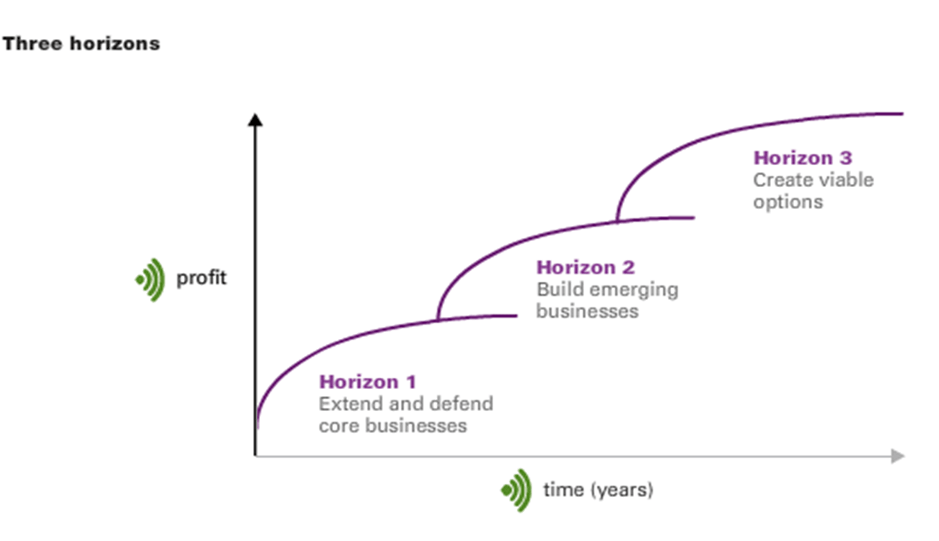
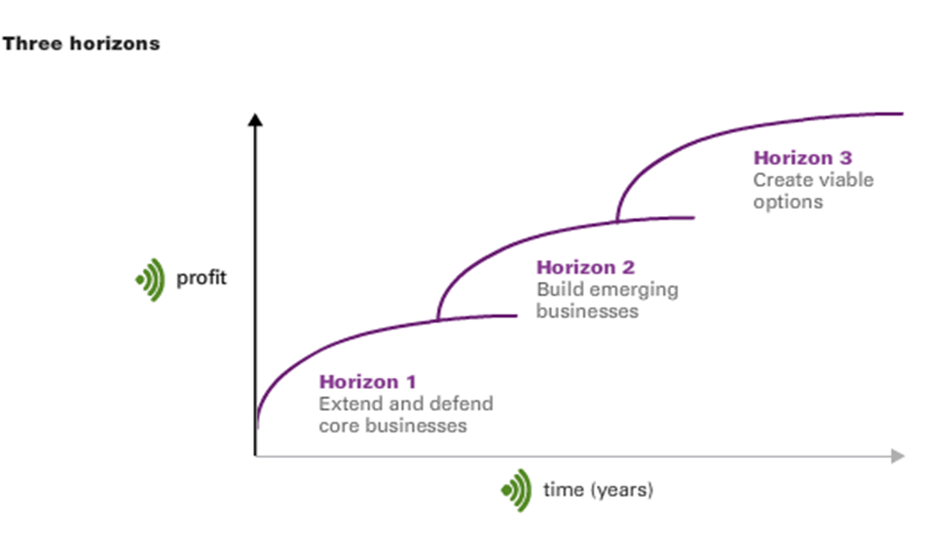
McKinsey’s three horizons of growth describe 3 horizons of which initiatives should be clustered. Each horizon forms a critical set of initiatives from which the organisation may continue to develop and grow. If all focus was placed on horizon 1 that are focused on the here and now shorter-term initiatives, then the organisation is not placed to deal with emerging challenges addressed under horizons 2 and 3. Vice versa if all the effort is placed on horizon 3 and not 1.
With business disruptions, the effort and expenditure placed on initiatives can be evaluated in light of which horizon they are in. For example, if the Covid disruption is so significant on the business that it’s a matter of survival, then all efforts should focus on horizon 1 initiatives that contribute to organisational survival in terms of revenue and cost management. If the disruption is significant but not debilitating then it may be wise to spend half of the effort on horizon 1 with the rest on horizons 2 and 3.
Adopt a portfolio approach to manage changes
When initiatives are treated in isolation it is very difficult to flex and adjust to changes compared to a portfolio approach to manage change initiatives. Individual initiatives have limited resource capacity and project activities will have limited impact compared to multiple initiatives.
Having a portfolio approach to manage changes means having established the following:
Data-based approach to manage change impacts with a view of change impacts across initiatives for business leaders.
Ability to visualize and plan the change impacts from a business-unit-centric and stakeholder group centric perspective
Ability to manage resourcing across initiatives so that as required resources may be flexed up or down across the overall portfolio based on prioritisation
Ability to guide and prepare each business for multiple changes across initiatives
Key stakeholder messages may be synchronised and packaged across initiatives versus an initiative by initiative approach
Improved ability to map out clearly the various skills and capabilities being implemented across initiatives to avoid duplication and improve synergies
What can change practitioners contribute in planning for disruptions?
Derive different change scenarios
Scenario planning as a technique is rarely used in a project planning context. However, it is especially critical and relevant within an agile environment. Agile project practices mean that changes keep iterating and therefore it may be hard to anticipate what the end solution or incremental change will look like. It may also be hard to anticipate how the business models and business will respond to the changes being proposed if we don’t know what the changes will look like.
To allow adequate time to plan for changes it is very helpful to derive at least 2 scenarios. In an agile environment, change practitioners need to adopt a hypothesis-based approach to deriving change approaches. Let’s take an example of a standard system implementation project. In rolling out a new system these could be 2 likely scenarios based on the hypothesis being posed.
Hypothesis: The system being implemented is easy and intuitive for users and therefore the change approach will be sufficient with awareness raising and a 1 hour training session
Scenario 1: The hypothesis is true and all users have found it easy and intuitive to use and therefore the change approach proposed is sufficient to prepare the users for this change.
Scenario 2: The hypothesis is only partially true and there are some user groups who struggled to understand all features of the system and need additional help and guidance. Additional training sessions with coaches are proposed
A different way of contrasting different scenarios will be to derive different project expenditures and funding requirements and resulting change delivery work. For example, under the system implementation project, a ‘Toyota’ approach of delivery could involve minimum training and stakeholder awareness generation. For a ‘Rolls Royce’ approach of delivery which will cost significantly more could include tailored coaching sessions for each stakeholder group, 1:1 coaching for senior leaders, a long awareness campaign, and an extensive measurement system. This helps stakeholders understand the cost of delivery and will help them to select an appropriate delivery model.
The usefulness of planning ahead to anticipate for different scenarios mean that steps may be taken to be ready for either of the scenarios and so the project team will not be caught off guard in case the hypothesis proposed is proved false.
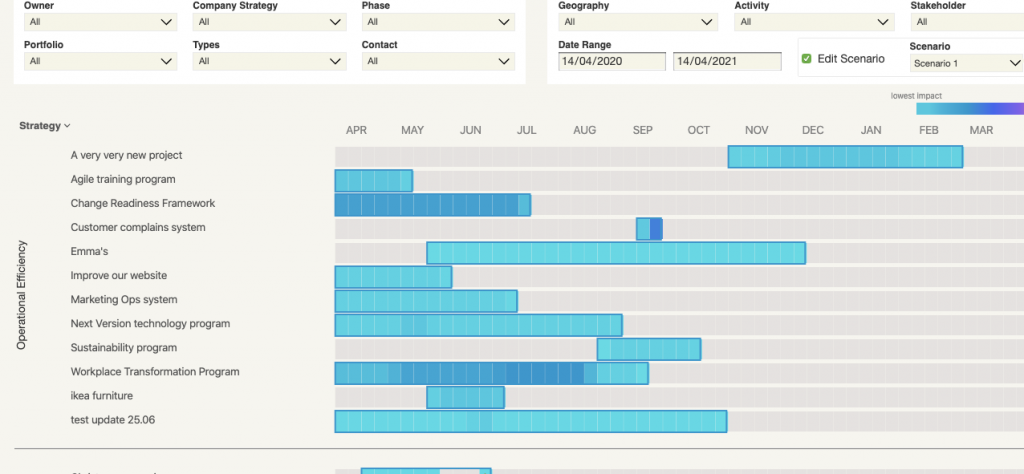
To be able to visualize different scenarios it is important to show the different impacts of the scenarios. This includes the impact of time, sequencing, and impact levels on stakeholder groups. With a different rollout approach will stakeholder groups have better bandwidth and ability to adopt the change or will the bandwidth be more limited?
Here is an example of a scenario planning visual where the user can simply drag the impact bars to different times and be able to save this as a scenario. After saving the scenario the next activity will be to analyse the scenario to make sense of the potential impacts of this scenario on the business and impacted stakeholders. Are there project dependencies that need to be taken into consideration? What is the overall change impact across initiatives as a result of the changes in this scenario? How does this impact the customer versus internal stakeholder groups?
For scenarios to be used in a practical way it is important to be able to list any ‘proof points’ that outline how we can tell that the scenario is becoming true or not. These proof points can include anything ranging from stakeholder reactions, the timing of the implementation, the complexity of the features or solution, cost, and other tangible measurements such as system response time, time taken to perform the process, etc.
Agree on decision making principle with stakeholder
Prior to any disruptions, it is important to agree with stakeholders key decision-making principles. Having clear, agreed decision-making principles means that key decisions can be made without subjecting to personal opinions or preferences. During any times of disruption Decision-making principles can be organised as ‘trade-off’ principles with a prioritised order of importance. Below are some examples:
Cost
Time
People resource bandwidth
Benefit realisation
Stakeholder readiness and acceptance
External media implications
Factor in critical path in project planning
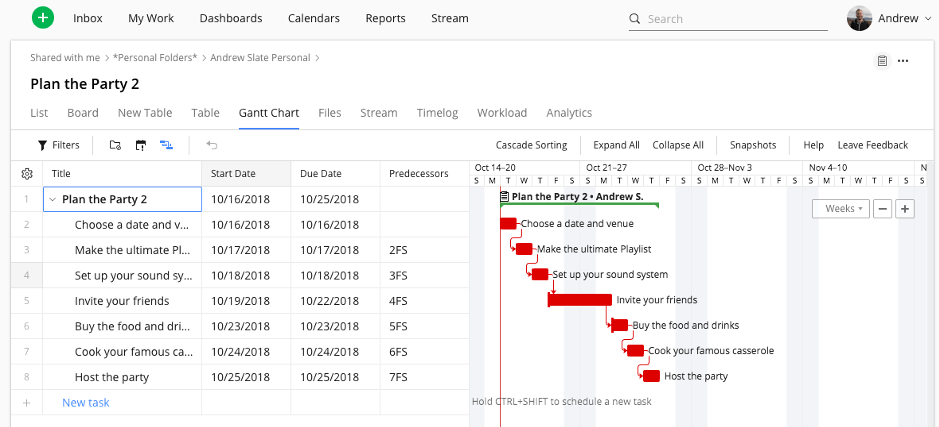
The critical path method is a way in which a project’s key interdependencies are linked and mapped out in a linear way so as to understand the key logical points along the project. From this any potential disruptions, slippages or delays in project deliverables and how they impact the remaining deliverables can be clearly understood and planned for.
A clear understanding of the critical path within a project means that with any disruptions to activities the impacts of this on the rest of the deliverables can easily be articulated. To deal with the disruptions to the project a longer implementation may need to be negotiated with the impacted businesses, or depending on the nature of the disruption, a different project approach with different deliverables may need to be derived.
Here we discussed multiple ways in which the change practitioner can help the organisation get ready for various disruptions to change initiatives. During periods of disruptive change, it is even more critical for change practitioners to demonstrate their value to lead and maneuver around and plan for uncertainty. Agile organisations are well placed to deal with disruptions, however, an effective set of routines, practices, preparations, and capabilities are all critical to building overall organisational readiness.
Rethinking Change Champions Beyond the Project Lens
For decades, the change champion has been a familiar figure in large-scale transformation projects – the trusted liaison between the change team and the business, responsible for rallying colleagues, answering questions, and providing on-the-ground feedback.
But in most organisations, they are treated as short-term, disposable resources: assembled for a single initiative, tasked with helping during deployment, and then disbanded as soon as the project reaches steady state.
This project-by-project approach misses a critical opportunity.
Increasingly, forward-thinking organisations are moving towards an enterprise change champion model and treating these roles not as temporary assignments, but as a strategic, cross-project capability that sits at the heart of building a more change-resilient workforce.
Why the Traditional Change Champion Model Falls Short
The conventional change champion construct has obvious strengths:
Champions are close to the ground, embedded in business units, and understand local challenges.
They can translate change plans into the everyday realities of their teams.
They give the project team early warning signs about resistance or readiness issues.
However, the limitations are equally apparent:
Short-Term Focus – Once a deployment is complete, project change champions are often released without retaining the capability they’ve built.
Loss of Internal Expertise – Any lessons learned, trust built, and skills acquired fade quickly when champions return to their ‘day jobs’ without a broader mandate.
Fragmentation – Each project recruits, trains, and manages its own champions independently, leading to inconsistent standards and duplicated engagement with the same stakeholders.
Missed Development Opportunities – Some of the most promising leaders remain untapped between projects.
When organisations experience continuous transformation with multiple overlapping initiatives, with varying scopes and impacts, this ad-hoc model leads to change fatigue and diluted influence.
A Step Change: The Enterprise-Wide Change Champion Network
What It Is
Instead of recruiting champions per project, the enterprise model creates a standing network of empowered, skilled employees and first-line managers who are trained, nurtured, and deployed to support any change in any part of the organisation.
They operate at two primary levels:
Employee-level champions – embedded in day-to-day operations, they bring peer credibility and act as the first touchpoint for change comms and readiness checks.
First-line manager champions – supervisory-level influencers who bridge the gap between leadership and frontline teams, actively managing the people side of change.
In addition, division-level representatives coordinate champion activity across their area and connect with the enterprise portfolio of changes. Some may sit in operational planning, HR, or directly in an enterprise change team, depending on organisational structure.
The Case for a Longer Term Champion Network
Change execution is not just about effective rollout – it’s about repeatable, scalable ability to change. The enterprise champion model delivers three key benefits that move the needle:
Sustainable Capability – Skills in influencing without authority, creative engagement, and grassroots communication are retained in the organisation.
Faster Time-to-Adoption – Champions already know the frameworks, templates, and rhythms of engagement, so each new change ramps up quickly.
Talent Pipeline – Champions gain visibility, influencing opportunities, and leadership exposure, making them prime candidates for promotion into leadership, project, or change roles. Many organisations using this model have inadvertently built a ‘leadership incubator’ in the process.
Selecting the Right Champions: Intake Principles
Not every employee is suited to being a champion. The selection criteria are critical to ensuring the network is both high-performing and credible:
Motivation – Champions must see value in playing the role, both intrinsically (desire to help the organisation evolve) and extrinsically (career growth, recognition).
Communication Skills – Ability to translate technical or abstract change messages into plain language for peers.
Coordination and Influence – Capable of corralling colleagues, keeping engagement high, and working across both formal reporting lines and informal networks.
The intake process should feel purposeful. This is not “volunteering” in the casual sense – it’s joining a professional network with enterprise significance.
Beyond Cheerleading: Shaping Change from the Ground Up
Traditional change champions too often become just “posters and cupcakes” – the enthusiastic promoters of a change, but with little voice in how it is planned or measured.
In the enterprise model, champions:
Raise Awareness – in ways that are relevant to their teams and culture, rather than relying on corporate one-size-fits-all messaging.
Sense-Check Readiness – gathering feedback and sentiment before key milestones, providing accurate insight back to project and leadership teams.
Design Local Engagement – creating tailored activities that make the change tangible and exciting.
Co-Own Measurement – participating in tracking adoption and readiness, and linking these to operational performance where relevant.
This measurement element is powerful. If champions see what is changing, when, and how much across the enterprise, they can better pace local adoption and avoid overwhelming their teams.
Now we turn to the how: the design, governance, and development practices that make an enterprise-wide change champion network a strategic business capability — trusted by leaders, respected by peers, and seen as a genuine driver of change adoption and organisational learning.
1. Designing the Enterprise Change Champion Model
A well-performing network of champions doesn’t rely on goodwill alone. It’s a deliberate, resourced capability with defined structure, integration points, and a clear operating rhythm.
a. Network Tiers
The most effective enterprise models feature three interconnected levels:
Local Champions (Employee Level)
Embedded within everyday operations.
Directly influence peers through trust and credibility.
Ensure changes are contextualised for their specific work environment.
First-Line Manager Champions
Serve as change role models for their teams.
Help translate strategic initiatives into operational priorities.
Manage workload balance between BAU and transformation demands.
Divisional / Functional Representatives
Coordinate local champions within their function or geography.
Interface with enterprise-level change, HR, or operational planning teams.
Escalate systemic adoption risks or barriers.
b. Integration with the Enterprise Operating Rhythm
Champions must be integrated into core business cycles, not treated as an “extra thing they do in their spare time”:
Quarterly Business Reviews – Include updates on change readiness and adoption.
Operational Meetings – Reserve time for upcoming change briefings.
Annual Planning – Involve champions in pipeline awareness so they can pace change delivery for their teams.
This ensures the network’s role is embedded, not bolted on.
2. Governance: Balancing Structure with Flexibility
A champion network requires governance to maintain credibility, but too much rigidity can limit creativity and ownership. Senior practitioners should consider:
a. Clear Mandate
Document the network’s remit:
To build and sustain readiness for change across the enterprise.
To surface ground-level issues early.
To contribute to measuring change adoption.
This clarity prevents champions from being used as “free event organisers” rather than strategic enablers.
b. Sponsorship
High-performing networks have active executive sponsorship, ideally within the executive team, ensuring:
Visibility at the top table.
Authority to escalate blockers.
Access to resources.
c. Role Tenure and Rotation
Typical tenure: 18–30 months, with renewal based on performance and availability.
Regular rotation broadens exposure for more employees, refreshes energy in the network, and reduces burnout from continuous change advocacy.
An enterprise network will only be as strong as its learning and development program. Champions need more than “change updates” – they need targeted skill-building.
a. Core Skills Curriculum
Influencing Without Authority – Building informal power and trust networks.
Change Fundamentals – Understanding models, frameworks, and adoption levers.
Storytelling for Change – Shaping narratives that inspire action.
Sentiment Analysis – Gathering and interpreting feedback on readiness and concerns.
Metrics Literacy – Understanding change dashboards and linking people data with performance outcomes.
b. Experiential Development
Shadowing Project Teams – To understand the “engine room” of change delivery.
Rotations Across Divisions – Cross-pollination of experience and approaches.
Facilitating Workshops – Hands-on leadership of engagement activities.
c. Recognition and Career Pathways
If you want the best people to step forward as champions, you need to position it as a career accelerator:
Formal credits in performance reviews.
Priority consideration for emerging leadership or project roles.
Public recognition in forums or internal comms.
4. Linking Champions to Change Metrics: Data as an Engagement Tool
One of the most powerful enablers of an enterprise champion network is visibility of change data– not just for executives, but for the champions themselves.
When champions can see:
The enterprise change portfolio – what’s coming, when, and where.
Impact heatmaps – the degree of change affecting each function.
Adoption trends – progress metrics by region, team, or process.
…they can better inform their local teams, manage change saturation, and proactively address pockets of resistance.
Champion-Led Reporting Loops
Champions provide local sentiment and engagement data back to the change and leadership teams.
This creates two-way measurement, balancing top-down project metrics with authentic ground-level insight.
5. Sustaining Momentum Over Time
Even the most enthusiastic champion cohorts can lose energy without deliberate momentum-building mechanisms. Senior leaders can embed sustainability by:
Regular Cohort Events – Quarterly summits to refresh skills, share success stories, and align on upcoming priorities.
Recognition Rituals – Spotlighting champions who have made significant local impact.
Knowledge Hubs – Digital platforms to share templates, tools, and peer insights.
Graduation Paths – Allowing champions to “graduate” to advanced roles (e.g., mentoring new champions or stepping into change leadership roles).
Proving Impact, Embedding Talent Pipelines, and Cultivating a Change-Agile Culture
Previously we explored the rationale for shifting to an enterprise-wide change champion model and how to design, govern, and develop a high-performing network. Now we close the loop by focusing on how to demonstrate return on investment (ROI), embed the champion network into talent and leadership pipelines, and drive a culture where agility and change readiness are organisational norms.
1. Demonstrating the Strategic Impact and ROI of the Champion Network
Transformation leaders need to show tangible value to maintain investment in the champion model. This requires defining and tracking the right measures across multiple dimensions:
a. Change Adoption Metrics
Speed to Adoption: Time taken for teams to reach defined levels of new process or tool usage.
Adoption Volume: Percentage of the workforce actively using or complying with the change.
Resistance Incidence: Frequency and severity of resistance signals identified via champions.
b. Employee Engagement and Sentiment
Regular pulse surveys co-designed with champions to gauge readiness, concerns, and morale.
Qualitative feedback from champions about barriers and enablers on the ground.
c. Talent Development Outcomes
Promotion and role progression rates of change champions.
Retention of champions compared to peer groups.
Champion participation rates in subsequent change initiatives.
d. Business Performance Linkage
Where possible, correlate change adoption rates with key performance indicators affected by the transformation (e.g., productivity improvement, customer satisfaction, error reduction).
The narrative around these metrics should highlight how the champion network reduces risk, accelerates change, and strengthens leadership pipelines—making it easier to secure ongoing support and resources.
2. Embedding the Champion Network into Talent and Leadership Pipelines
One of the most powerful aspects of an enterprise change champion model is its ability to develop future leaders through hands-on, cross-functional change experience:
a. Career Pathway Integration
Define clear career pathways linking champion roles to leadership, project management, and change leadership positions.
Include champion experience as a valued skill in performance appraisals and promotion criteria.
b. Succession and Rotation Planning
Rotate champions through different business units and change projects to broaden their exposure.
Use the network as a talent pipeline, actively identifying high-potential employees for targeted development.
c. Leadership Sponsorship and Mentorship
Engage senior leaders as sponsors for champions, providing mentorship and visibility on strategic initiatives.
Create mentorship programs pairing seasoned change professionals with champions to accelerate learning.
When treated seriously as a talent development program, the champion network becomes a leadership incubator that benefits the organisation far beyond the immediate change portfolio.
3. Cultivating a Change-Agile Culture through the Champion Model
Beyond skills and metrics, the enterprise champion model shapes an organisation’s cultural DNA by embedding change agility as a norm:
a. Peer Influence and Grassroots Advocacy
Champions serve as trusted peers who normalize change discussions, reducing fear and uncertainty.
Their ongoing active involvement signals to employees that change is continuous and manageable.
b. Building Collective Ownership
Shared responsibility for success is fostered as champions co-own change outcomes with leadership and project teams.
This prevents change being viewed as “something done to us” and instead as “something we drive together.”
c. Transparent Communication and Feedback Loops
Regular updates from champions create a two-way dialogue between employees and leaders.
Transparent sharing of data and progress builds trust and accountability.
d. Resilience and Adaptability
The readiness and skills of champions help the organisation respond dynamically to shifting priorities and emerging challenges.
4. Case Study Insights: Organisations Leading with Enterprise Change Champions
Many organizations have reaped significant benefits from this approach:
A global financial services firm reported a 30% faster adoption rate for technology transformations after establishing an enterprise champion network, alongside measurable improvements in employee engagement during change windows.
A large insurer credits their champion network with preventing change fatigue across multiple simultaneous programs by pacing adoption and tailoring communications locally, thereby maintaining high service continuity.
These examples highlight that a well-designed enterprise champion model is more than a support function. It is a strategic enabler of organisational resilience and talent development.
Closing Thoughts
Building a sustainable enterprise change champion model requires commitment, structure, and investment. But the payoff is clear: an organisation equipped not only to execute change more effectively but to cultivate the next generation of leaders who understand change at a deep level.
By proving impact through metrics, integrating champions into career pathways, and cultivating a culture of collective ownership and agility, senior change and transformation practitioners can transform their organisations into change-ready powerhouses.
If you’re keen on setting up an enterprise change champion group powered by change data insights, reach out and chat to us.
It used to be that change management is the ‘poor’, neglected cousin of other disciplines in terms of access to functional software to assist in its performance across every aspect of change and risk management. There is a wide range of software available for a range of project management disciplines such as, business analysis, testing, project management, portfolio management, etc. However, for change management, the pickings have been almost non-existent 10 years ago.
Fast forward to 2022, there is now a handful of change management software in the market to assist with various work categories for the change manager. However, there is still ways to go in the understand of organisational change management in the marketplace. Compilations of change management software offering on the internet is usually a mixture of all types of software, many of which are not organisational change management in nature, and instead, technical change management (used by IT folks). For example https://orgmapper.com/change-management-tool/
How does a change management process help a company?
A change management process helps a company by providing a structured approach to minimizing disruptions and transitioning individuals, teams, and organizations from a current state to a desired future state. It minimizes resistance, enhances communication, and ensures that changes align with business goals, ultimately leading to smoother transitions and improved outcomes.
How can change management software help the change practitioner?
What is the implementation of change management?
The implementation of change management involves a structured approach to transitioning individuals, teams, and organizations from a current state to a desired future state. It includes strategies for managing resistance, communication plans, and training initiatives to ensure that changes are adopted effectively and sustainable within the organization.
Project change delivery
The vast majority of change management professionals in the industry are focused on delivering projects and implementing effective change management strategies to enable them to make an informed decision about their approach. It’s no wonder that most change management tools, including project management software and various change tools, are focused to support the entire change process and project delivery as a result, maintaining consistency throughout all initiatives. What are some of the areas in which project change delivery work can be made easier by software?
1. Automating change management deliverable work
A significant part of the work of change management professionals is spent on preparing for and documenting a clear roadmap of change management deliverables. These include detailed impact assessment, learning plan, stakeholder matrix, and type of change plans, etc. These deliverables are critical documents which are critical dependency for other project milestones. For example, stakeholder analysis and matrix is critical before broader stakeholder engagement can be made, since the analysis reveals who the stakeholders are and how they may be engaged throughout the change process.
One of the biggest pains faced by change management professionals is the amount of time required to manually create these deliverable documents. The work can be tedious, requiring weeks of manual work to complete. For example, the stakeholder matrix document can be a brain-numbing piece of activity, wading through a data dump of the organisational directory to determine every Tom, Dick and Harry which titles and names should be included in the stakeholder list for the project. Then, a lot of similar information then must be re-typed and entered into different versions in other change management deliverable documents such as detailed impact assessment or learning needs analysis, ultimately affecting customer satisfaction.
Software can automate much of the manual work involved. For example, Change Automator, a robust workflow automation software, allows the ease of use to link data already captured earlier on in the project, such as the relevant stakeholders matrix, with other change management deliverables such as detailed impact assessment, to ensure the right people are involved and to minimise manual re-work. With the ability to track changes, any data updated in one document will therefore update content in other documents, including integrations with tools like Power BI. This then saves on the tedious re-work required when data is updated or changes, which is pretty much a given throughout the project lifecycle. From a quality perspective, this also ensures any human-error is reduced in the data that should be synchronised across documents.
A common risk in change management delivery is that stakeholders may be left out inadvertently, or that a previously captured stakeholder in the stakeholder matrix is left out in the engagement process due to human-error. The impact of this type of error can be disastrous to the outcome of the project. Having cross-linked documents in one central place reduces the risk for this type of error.
2. Change management survey (readiness and adoption)
A key part of change management success is through careful monitoring of stakeholders throughout the change process to ensure visibility. In the earlier part of the project, this involves understanding to what extent stakeholders may be clear of the objectives of the project, their roles in it, and general awareness. Later on in the project, it could be more on understanding their engagement level of support which can be a predictor of ultimate adoption and overall support for the change. This overall change readiness level should be monitored across the project through surveys or interviews.
Surveys are inherently time consuming to design, administer and report manually. Significant time can be taken throughout each phase of the survey process. This is a no-brainer in terms of using a software tool. Most projects use Microsoft Forms or SurveyMonkey to do the job. However, you may want more robust features such as conditional question design, for example, if a respondent answers ‘yes’ for not supporting the change, then an additional question pops up to ask why.
Surveys can include sentiment analysis where the focus of the survey is on any shifts in stakeholder feelings and attitudes toward the project. In this case, it is critical to define in detail the characters of each stakeholder group in concern. These would then determine respondent characteristics to measure in the survey design.
There are also tools that measure employee sentiments through corporate social media channels such as Yammer and Teams. For example, Swoop Analytics can help to measure collaboration styles and other behavioural insights about how employees interact with each other on those channels. The data map can reveal key influencers and core influential network connectors.
The biggest value of change surveys lies in the reporting. Most survey tools offer fairly simple reporting using bar charts or pie charts. For short, simple surveys these may suffice. However, if you are working on a fairly detailed change adoption tracking survey, more advanced reporting features may be required. You may want to easily change the colour scheme of the chart, change different chart types, identify anomalies and trends, or highlight certain parts of the data to make it easier for your audience.
3. Project change reporting
Having the ease and flexibility of experimenting with different chart designs is critical for stakeholder impact. If you need hours of work to come up with a few charts the likelihood is that you will not bother. Some stakeholders may also have various personal preferences which can easily take significant time to modify. This is especially when you need the time to focus on engaging with your stakeholders, rather than tweaking excel spreadsheets.
Creating the right AI dashboard can create significant impact on stakeholders and help achieve your change objectives. Data speaks for itself and the right data visualisation can create memorable impact more than words alone. If you are driving toward change adoption, then having an AI-enhanced dashboard of core behaviour changes and tracked capability shifts, along with key metrics and key features, can act as a core part of change governance conversations. With a monthly cadence of reviewing these core data points, stakeholders can hold each other accountable to understand remaining work involved and zoom in on how to drive full change adoption.
Change reporting may not be limited to just survey results. Even seemingly ‘boring’ spreadsheet data such as detailed impact assessment may be easily turned into highly visual and interesting reports to help stakeholders understand what the changes mean and how different groups are impacted by the change.
One of the more popular ways in which change delivery has adopted software is in leveraging digital tools that provide functions to onboard or train users of new or changed systems. There are numerous providers in this area. These include WalkMe, UserGuiding, and Userlane.
Most of the tools provide similar functions to help walk users through interfaces of the system and even allow interactive experience where users can be tested in clicking on the right part of the system as a part of the training or onboarding process. The application is always for system interfaces since the tool only supports web-based systems.
Change capability
Another way in which change management software may assist change practitioners is in building change management capabilities related to change capability and documentation methodologies. There are various tools that help to measure, track, and report on change management activities and assess the impact of change initiatives, including key performance indicators and change impact analysis. This clarity could be that you would like to measure the change leadership skills of leaders, change alignment agility of stakeholder groups, or test employees as a part of skills assessment to ensure they have the right skills for the new system or process.
Using change management software, you can easily pre-program test items and answers to make it easy for yourself to score and tabulate audit test results without any manual work. You can also assign weightings to different questions to evaluate the capability of the respondent as a part of an assessment. You can even configure the assessment to provide results to the respondent at the end of the assessment, and email the feedback as well. Generally, these features are only offered as a part of a learning management system where significant time and effort is required to prepare the system for the assessment. Now, digital tools offer easy point-and-click features, with pre-configured templates saving you significant time and cost.
Change portfolio management
Managing a portfolio of initiatives used to be an approach only adopted by more mature organisations. However, with the rapid pace and intensity of changes, more and more organisations are adopting this approach to manage multiple initiatives.
Managing a portfolio of initiatives can only be done via data. There is already a myriad of project portfolio management systems in the market to help PMOs and project portfolio managers manage a slew of initiatives. The focus of project portfolio management systems is on project timelines, cost, resourcing, etc.
Change portfolio management focuses on the impact of changes and how they may impact the organisation across initiatives. There is also focus on change delivery resourcing and change capability development. One of the most critical pain points faced by organisations is change saturation and change fatigue. To better manage a portfolio of initiatives from a change perspective and manage potential change saturation, data is required.
Effective change portfolio management tools can help you:
Identify and plot change saturation points for different parts of the organisation
Identify risk levels of potential change saturation across roles, locations, layers of the organisations, etc.
Assess to what extent changes may be better delivered as an integrated package to one part of the organisation, or broken down to smaller, more digestable chunks
Assess to what extent changes may be better aligned and delivered through integrated messaging from an impacted stakeholder perspective (vs. from project perspective)
In summary, there are many strong reasons why change management professionals should adopt digital change management solutions to achieve greater change outcomes as well as to automate the tedious parts of the work to gain time to spend with stakeholders. With the ever increasing pace of digitisation in organisations, change management must also follow suit in digitising itself. Just as we could use modern fabrication techniques to build skyscrapers that are stronger and more resilient vs using traditional brick and mortar, so should change managers in leveraging digital tools to support digital transformations.