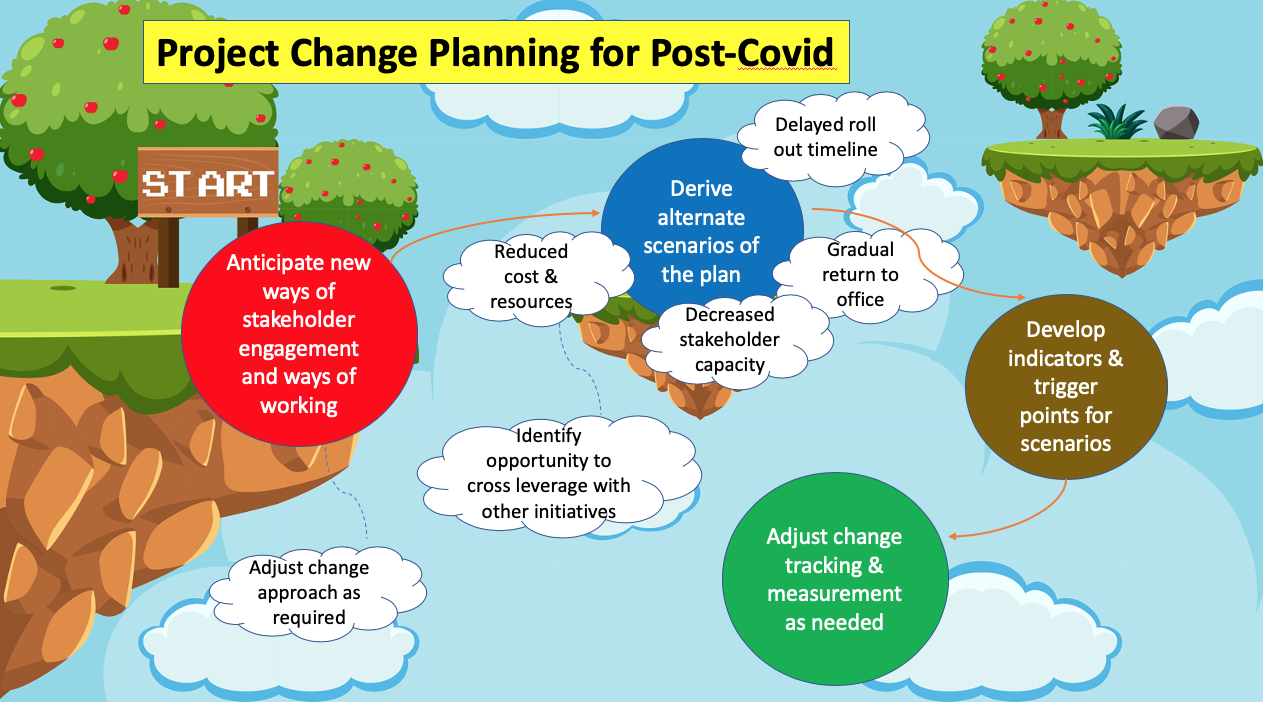


The disruption caused by COVID-19 accelerated a reckoning that many organisations had long been deferring: the traditional assumptions embedded in project change planning were no longer adequate for the environments their workforces now inhabited. Remote and hybrid work created new communication barriers. Employees experiencing personal crisis – health anxiety, caring responsibilities, financial stress – had substantially less cognitive and emotional capacity available for change adoption than standard readiness models assumed. And the pace of change required to respond to rapidly shifting market conditions compressed timelines that change planning had historically built around slower cycles of organisational decision-making.
The lessons from this period are not solely historical. The volatility, uncertainty, complexity, and ambiguity that characterised the pandemic environment has become, in many sectors, the permanent condition. Organisations that rebuilt their change planning frameworks in response to COVID – adapting for distributed workforces, compressed timelines, and reduced employee capacity – found that those adaptations were not temporary workarounds but genuine improvements to how change could be planned and delivered. The question is which adaptations to embed permanently and which assumptions to discard.
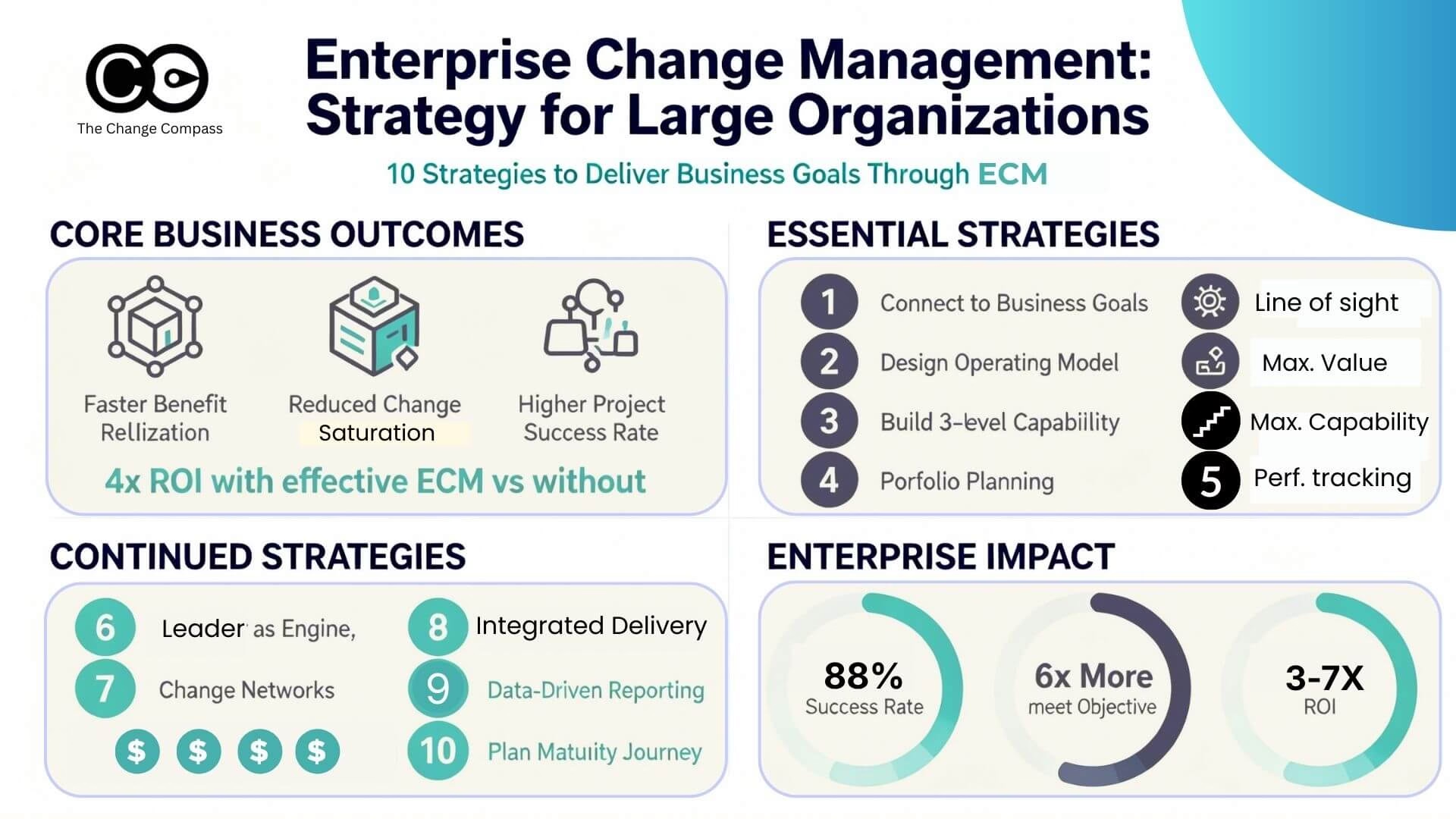
Download the Change Project Planning infographic for a visual summary of the key considerations in planning for change in complex environments.
Recalibrating capacity assumptions in change planning
Standard project change plans are typically built around an implicit assumption of baseline employee capacity – the idea that the workforce has a certain quantum of cognitive and emotional resource available to absorb change on top of their regular operational responsibilities. This assumption is often generous under normal conditions. During periods of significant environmental disruption, it becomes dangerously inaccurate.
The most important lesson from change planning during COVID was that capacity assumptions need to be explicit, evidence-based, and continuously reviewed – not embedded as invisible defaults in a project timeline. Organisations that treated employee capacity as a fixed input to their change plans consistently found that their readiness assessments were overstated and their adoption timelines were unrealistic. Those that built explicit capacity checks into their planning cycles – regularly asking whether the people they were asking to change had the bandwidth to do so – were able to sequence their change activities more realistically and provide targeted support where capacity was most constrained.
Gartner research on employee change capacity found that the average employee could support approximately three major changes at once before experiencing significant change fatigue. This figure is lower than most organisations assume when building their change portfolios, and it applies even under normal conditions. In periods of elevated stress or disruption, the threshold is lower still. Effective change planning in complex environments requires building explicit capacity ceilings into the plan and designing the change schedule around them.
Redesigning stakeholder engagement for distributed environments
The shift to remote and hybrid work fundamentally altered the logistics and dynamics of stakeholder engagement. In-person workshops, town halls, and informal corridor conversations that had previously been reliable channels for building understanding and commitment became unavailable, insufficient, or ineffective when translated to virtual formats without redesign. Organisations that simply moved their existing engagement activities online without adapting them for the different dynamics of virtual interaction found that their engagement quality declined significantly.
Effective stakeholder engagement in distributed environments requires several specific adaptations. Sessions need to be shorter – the cognitive load of sustained virtual meetings is substantially higher than in-person equivalent, and engagement quality typically degrades beyond 90 minutes regardless of the facilitator’s skill. Participation mechanisms need to be redesigned – the spontaneous contributions that flow naturally in a room of people are suppressed in virtual settings, requiring deliberate structure to ensure that the views of those less comfortable with virtual participation are captured. And asynchronous engagement mechanisms – digital comment tools, recorded briefings with structured feedback channels, written consultation processes – become more important as primary channels rather than supplements to in-person interaction.
The adaptation that has most durably survived the return to hybrid work is the recognition that not all stakeholders need to be engaged in the same way at the same time. Tiered engagement models – distinguishing between stakeholders who need deep involvement in change design, those who need thorough briefing, and those who need adequate communication – allow change teams to direct their limited engagement resource towards the interactions that most influence change outcomes, rather than designing the same engagement approach for every part of the affected population.
Compressing and iterating the change planning cycle
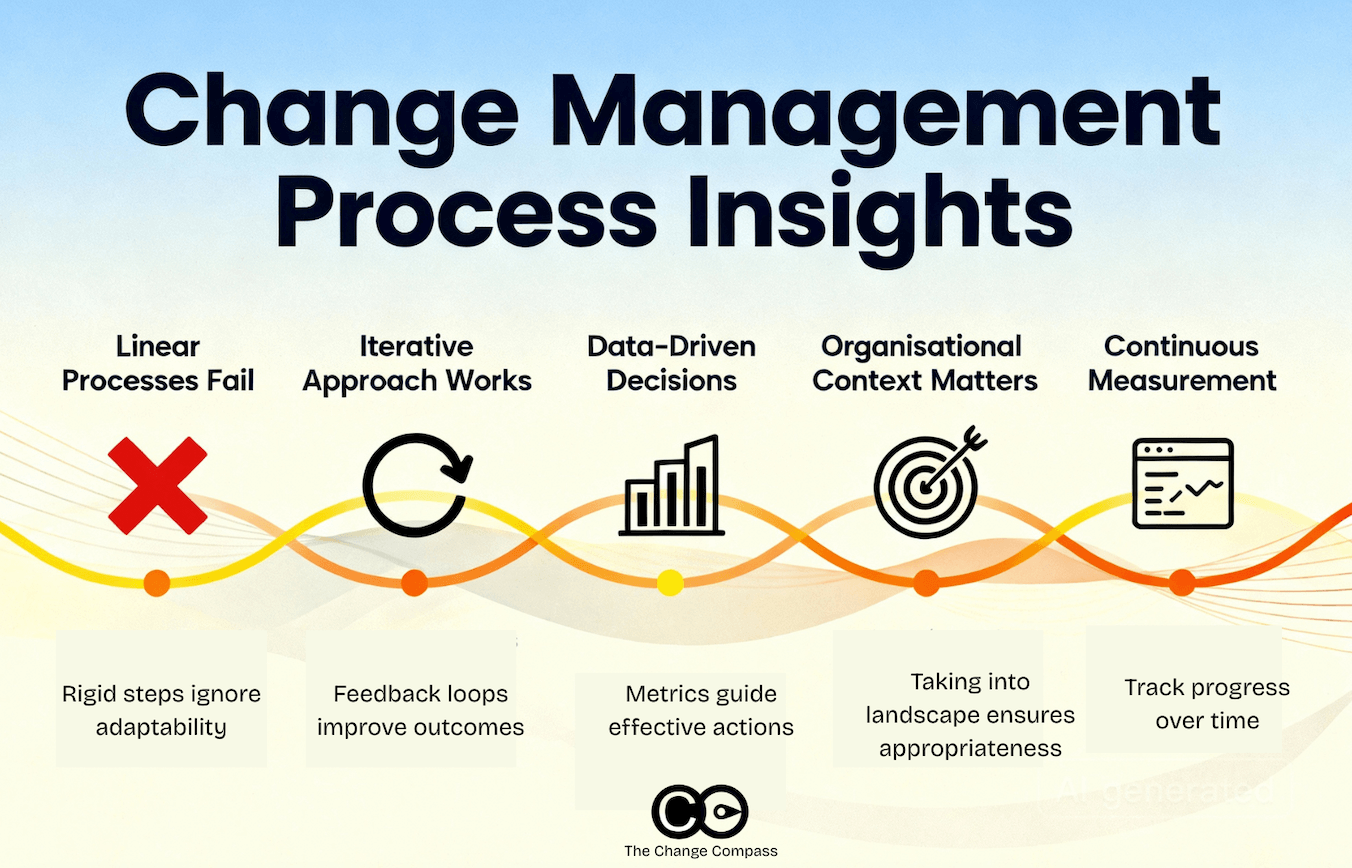
One of the most consequential adaptations in change project planning has been the shift from linear, milestone-based planning to more iterative models that can absorb the frequent directional changes that complex environments produce. Traditional change plans were designed around a stable change scope and a predictable timeline – assumptions that do not hold in environments where regulatory conditions, market dynamics, or operational realities shift in ways that require the change scope to evolve during delivery.
Iterative change planning does not mean abandoning structure. It means designing the change plan around shorter planning horizons – typically 90-day rolling plans – with quarterly reviews that allow the scope, sequencing, and resourcing to be adjusted based on what has been learned in the preceding period. This approach acknowledges that the most current information about what is working and what is not is generated during implementation, not during the initial planning phase, and that effective change management requires mechanisms to incorporate that information into the plan rather than treating the original plan as binding regardless of what the evidence shows.
McKinsey research on transformation outcomes found that the ability to make in-flight adjustments – responding to early signals that the change is not landing as expected rather than waiting for post-implementation reviews – was one of the most significant predictors of transformation success. Iterative change planning creates the governance structures and decision cadences that make such adjustments possible.
Building psychological safety into the change plan
Change planning has traditionally focused on the logistics of change delivery – what activities need to happen, in what sequence, with what resources. The psychological dimensions of the change experience – how employees feel about the change, what anxieties it generates, what support they need to move from uncertainty to commitment – have been treated as inputs to the communication and engagement plan rather than as structural elements of the change plan itself.
The pandemic made the limitations of this approach impossible to ignore. Employees navigating significant personal stress while being asked to adopt major organisational changes needed more than information and training. They needed environments in which expressing uncertainty, asking questions, and raising concerns was genuinely safe – where doing so was treated as productive engagement with the change rather than as resistance to be managed. Organisations that created this psychological safety – through leader behaviours, through explicit acknowledgment that the transition was difficult, and through genuine responsiveness to concerns rather than simply addressing them in FAQ documents – consistently achieved better adoption outcomes than those that treated the psychological dimension as a communication challenge to be solved with messaging.
Research on psychological safety published in Harvard Business Review found that teams in high psychological safety environments were significantly more likely to engage with new challenges, surface problems early, and recover from setbacks – all of which are critical to successful change adoption. Building psychological safety into the change plan means designing specific mechanisms for creating it: regular team check-ins where uncertainty can be expressed, visible leadership acknowledgment of difficulty, and governance processes that reward surfacing problems rather than concealing them.
Portfolio visibility as a change planning requirement
One of the most durable insights from change management during complex periods is that effective change project planning cannot be done in isolation from the portfolio in which the project sits. A change plan that is internally coherent and well-resourced may still be set up to fail if it is landing on an employee group that is simultaneously absorbing two other major changes, navigating a structural reorganisation, and contending with elevated operational pressure.
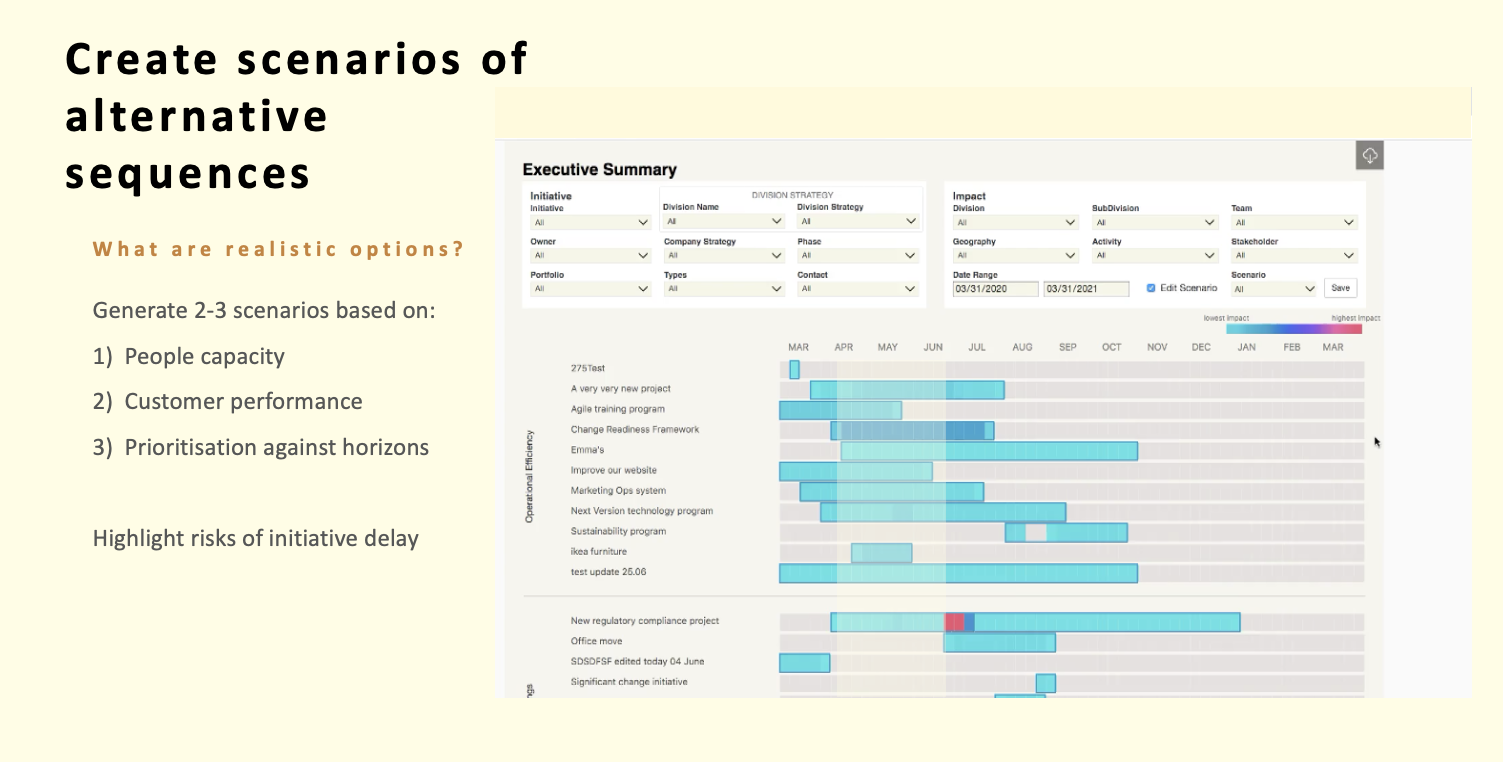
Portfolio-level visibility – understanding the cumulative change load on specific employee groups across all concurrent programmes – is a prerequisite for realistic change project planning rather than an optional enhancement. Without it, plans are built around optimistic assumptions about capacity and timing that experience consistently contradicts. Platforms like The Change Compass provide this portfolio visibility, enabling change leaders to see the cumulative change picture for any employee group and to design their project-level change plans with an accurate view of the context in which they will need to land.
The organisations that navigated change most effectively during COVID – and that have sustained that effectiveness in the years since – are those that treated portfolio visibility as a foundational planning input rather than a governance luxury. They knew which teams were overloaded before they planned additional changes, they could model the timing implications of competing change demands, and they had the governance authority to adjust programme timelines based on what the portfolio data showed. This capability, more than any single change methodology or communication approach, is what distinguishes organisations with genuinely mature change management from those that are still managing change one programme at a time.
Frequently asked questions
How did COVID change project change planning?
COVID forced organisations to recalibrate several foundational assumptions in project change planning. These included: assumptions about employee capacity for change (significantly reduced by stress, caring responsibilities, and disruption); assumptions about stakeholder engagement logistics (requiring fundamental redesign for virtual environments); assumptions about planning stability (requiring more iterative approaches as change scope evolved rapidly); and assumptions about the independence of individual change projects from the broader portfolio context. Many of the adaptations made during the pandemic have proven to be genuine improvements rather than temporary workarounds.
What does psychological safety have to do with change planning?
Psychological safety – the sense that one can express uncertainty, raise concerns, and ask questions without negative consequences – is a significant enabler of successful change adoption. In environments where employees do not feel safe expressing their concerns about a change, those concerns drive underground rather than disappearing, producing passive non-compliance at critical implementation moments. Building psychological safety into the change plan means designing specific mechanisms – leader behaviours, team check-in structures, governance processes that reward surfacing problems – that create conditions for honest engagement with the change rather than just compliance with its requirements.
Why is portfolio visibility essential for project change planning?
Effective project change planning requires an accurate view of the context in which the change will land – including the cumulative change load on the affected employee groups from all concurrent programmes. Without portfolio visibility, change plans are built around optimistic capacity assumptions that the actual change experience consistently contradicts. Teams that appear to have adequate readiness on individual programme assessments may be severely overloaded when their full portfolio of concurrent changes is accounted for. Portfolio visibility is therefore a foundational planning input, not an optional governance enhancement.
How should change planning adapt for hybrid workforces?
Hybrid work requires deliberate adaptation of several change planning elements. Stakeholder engagement activities need to be redesigned – shorter sessions, explicit participation mechanisms for virtual settings, asynchronous options for those less comfortable with live virtual interaction. Communication strategies need to account for the different information environments of office and remote employees. And tiered engagement models – matching the depth of engagement to the impact of the change on each stakeholder group – become more important for allocating limited engagement resource towards the interactions that most influence outcomes.