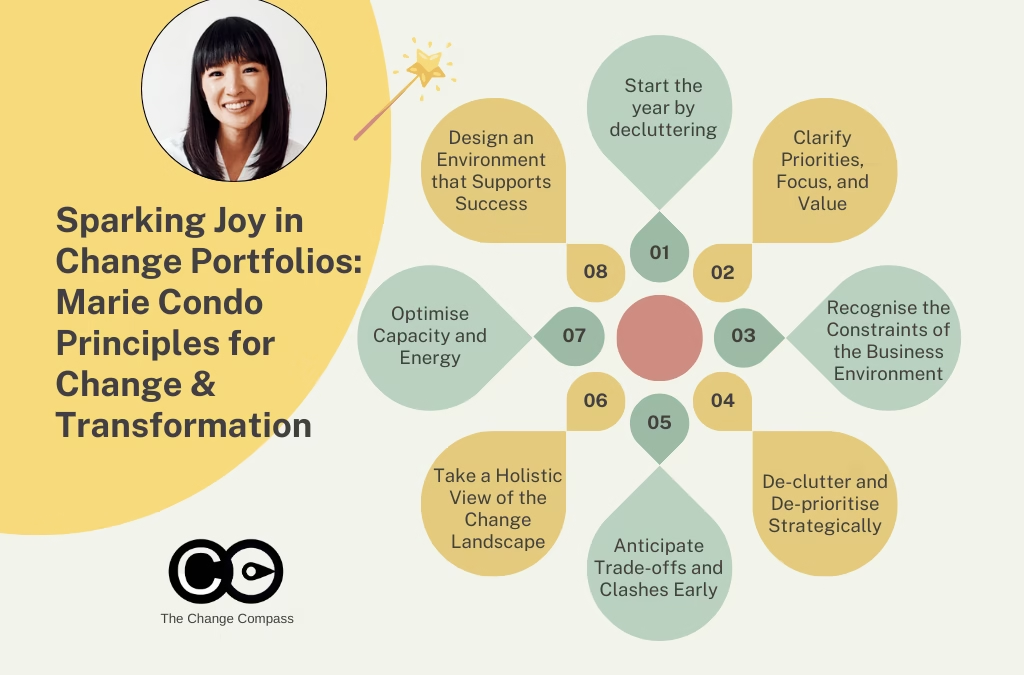
As the new year begins, it’s a natural time to reflect, refocus, and set the stage for success. For senior change and transformation professionals, this is an opportune moment to assess the upcoming portfolio of initiatives. Taking inspiration from Marie Kondo’s principles of decluttering and creating joy, we can apply these ideas to optimise our change portfolios and ensure they are designed for impact, sustainability, and value.
1. Start the Year by Decluttering
Just as Marie Kondo advises starting with a clean slate by letting go of unnecessary items, the new year offers the perfect chance to reassess the change portfolio. Decluttering is not just about removing excess; it’s about making deliberate, strategic decisions to create space for what truly matters. Many organisations find themselves burdened by legacy projects, overlapping initiatives, and unnecessary complexity. These elements consume valuable resources and dilute focus, ultimately jeopardising the success of the portfolio as a whole.
To start the decluttering process, take time to systematically review all initiatives. Begin by cataloging everything currently in progress or planned for the upcoming year. This exercise will reveal the true scope of commitments and help identify initiatives that may no longer align with the organisation’s strategic priorities. From there, engage with key stakeholders to challenge assumptions and uncover opportunities to streamline. By proactively identifying what can be paused, combined, or retired, you free up capacity for the initiatives that deliver the greatest value.
Your next PI (Program Increment) Planning will be a great opportunity to do this. As you work with other teams to assess scheduling and alignment, use this opportunity to align with stakeholder to cull and re-prioritise as required. It may be a good idea to do this prior to the PI Planning session to ensure the session is tight and focused.
Decluttering is not just about removing initiatives; it’s about creating space for the initiatives that truly matter. This exercise can involve:
Conducting a Portfolio Audit: List all current and planned initiatives. Categorize them by strategic importance, urgency, and expected impact.
Engaging Stakeholders: Facilitate discussions with leaders and project owners to challenge the status quo. Ask critical questions: Does this initiative serve a pressing need? Can its objectives be achieved through another project?
Identifying Redundancies: Often, multiple initiatives address overlapping goals. Combining efforts can streamline resources and improve focus.
2. Clarify Priorities, Focus, and Value
One of the key principles of joyful organisation is clarity. In the context of change management, clarity means ensuring that every initiative in the portfolio has a clearly defined purpose, aligns with organizational priorities, and delivers measurable value. Without this clarity, portfolios risk becoming overcrowded and unfocused, leading to wasted resources and frustrated teams.
Take a step back to evaluate each initiative against the organisation’s strategic goals. This process should involve critical questions such as: Does this initiative support our long-term vision? What specific problems does it solve? How does it fit into the broader transformation journey? Answering these questions will help identify initiatives that lack focus or fail to deliver meaningful value.
Clarity also requires a shared understanding across the organisation. Leaders, teams, and stakeholders must be aligned on what matters most. Misaligned priorities can lead to confusion, duplication of efforts, and competing demands on resources. By fostering open communication and establishing clear criteria for decision-making, you can ensure that everyone is working toward the same goals.
Creating clarity requires tools and structured processes:
Use Priority Matrices: Tools like the Eisenhower Matrix or impact-effort grids can help categorise initiatives based on their urgency and value. To read more about the Eisenhower Matrix visit this Forbes article
Define Metrics of Success: For each initiative, identify clear KPIs that demonstrate its contribution to the organisation’s goals. This helps maintain focus and provides a benchmark for future evaluations.
Communicate Priorities Clearly: Ensure that leadership and teams are aligned on what matters most. A shared understanding of priorities reduces the risk of misaligned efforts.
3. Recognise the Constraints of the Business Environment
Unlike a personal decluttering exercise, most organisations cannot afford to focus on just a few initiatives due to the fast-paced and ever-changing nature of the business world. New market demands, technological advancements, and regulatory changes often force organisations to pivot or expand their priorities mid-year. This makes it critical to design a change landscape that can accommodate both planned and emergent needs.
A well-structured portfolio balances transformational initiatives with business-as-usual (BAU) activities, ensuring that both long-term and short-term goals are addressed. However, achieving this balance requires careful planning and the ability to adapt. Organisations must be prepared to reassess priorities and make adjustments without derailing progress.
Designing the change landscape involves creating a comprehensive view of all initiatives, their interdependencies, and their impact on resources. This view should be regularly updated to reflect changes in the business environment. Scenario planning can also be invaluable, allowing organisations to explore potential outcomes and identify strategies for adapting to new challenges.
The optimal change landscape for your impacted stakeholders is one that is not cluttered, but one that is tight, focused and considered. It is not just about avoiding change saturation. It is about designing the right energy, focus, momentum and capacity.
Designing the change landscape involves:
Mapping the Portfolio: Visualise all initiatives, their timelines, and dependencies. Tools like Gantt charts or Kanban boards can help create a comprehensive view
Scenario Planning: Consider different scenarios based on potential changes in the business environment. How will the portfolio adapt if priorities shift mid-year?
Building Flexibility: Design the portfolio to accommodate adjustments without derailing progress. This might mean reserving resources for unforeseen priorities or having contingency plans for high-risk initiatives.
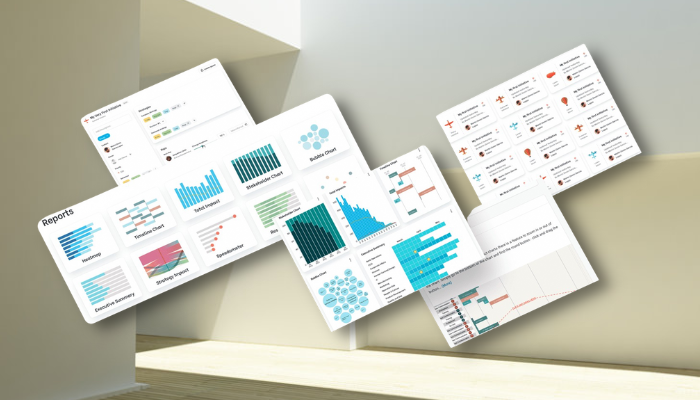
To do all these can be taxing. Check out The Change Compass for a view of your initiative impacts on people in terms of capacity and involvement. It also allows you to design and visualise different scenarios of different initiative sequences. You can easily see the forecasted capacity of various teams and be able to leverage AI insights on key risks.
4. De-clutter and De-prioritise Strategically
It’s common for certain initiatives to linger in the portfolio simply because they are pet projects of influential leaders. While these may have merit, it’s essential to make deliberate choices about what stays and what goes. Without these hard decisions, portfolios can become bloated, stretching resources too thin and compromising the success of high-priority initiatives.
Facilitating open conversations with stakeholders is key to successful de-prioritisation. This requires a combination of diplomacy and data-driven insights. By presenting clear evidence of an initiative’s impact (or lack thereof), you can shift the conversation from emotion to evidence. It’s also important to address the organisational culture around failure and closure. Retiring an initiative should be seen as a strategic decision rather than a failure.
Strategies for effective de-prioritization include:
Data-Driven Decision Making: Use data to demonstrate the potential ROI of each initiative. This helps shift conversations from emotion to evidence.
Transparent Communication: Be honest about why certain initiatives are being deprioritised. Transparency builds trust and reduces resistance.
Celebrate Closure: For initiatives that are retired, acknowledge the effort invested and celebrate the learnings. This reinforces a culture of continuous improvement.
5. Anticipate Trade-offs and Clashes Early
One of the most common pitfalls in change management is waiting until conflicts arise before addressing them. Portfolio clashes, resource shortages, and stakeholder fatigue can often be predicted well in advance. However, many organisations fail to have the necessary conversations early enough, leading to last-minute crises that disrupt progress. Having conversations too late means your initiative stakeholders are already invested given the significant effort and resources put in. This means it makes it even harder to change committed timelines, even when there are significant risks.
Proactively anticipating trade-offs requires a combination of foresight, tools, and collaborative discussions. Change impact assessments, capacity planning, and regular portfolio reviews are invaluable in identifying potential bottlenecks and saturation points. Additionally, creating forums for open dialogue allows stakeholders to surface concerns and explore solutions before issues escalate.
By anticipating challenges ahead of time, you create a smoother path for change initiatives to succeed. Key practices include:
Regular Portfolio Reviews: Establish a cadence for reviewing the portfolio. These reviews should assess progress, identify emerging risks, and recalibrate priorities as needed.
Engaging Cross-Functional Teams: Include representatives from impacted teams in decision-making. Their insights can help identify potential clashes that might be overlooked.
Scenario Analysis: Model different scenarios to understand how changes in one initiative might ripple across the portfolio. This foresight enables proactive adjustments.
6. Take a Holistic View of the Change Landscape
Change portfolios often focus on big-ticket initiatives, but employees experience all changes—big or small—as part of the same landscape. Every new tool, process, or initiative adds to the cognitive and emotional load of employees. Failing to account for this cumulative impact can lead to burnout, disengagement, and resistance to change.
Taking a holistic view means looking beyond the high-profile initiatives to include BAU initiatives, operational changes, and even cultural events like town halls or roadshows. All these elements compete for employees’ time and energy. By considering the full scope of activities, you can create a more realistic and empathetic plan that supports employee well-being.
Everything that takes time, focus, or mental energy should be part of the portfolio view. This holistic approach ensures realistic planning and reduces the risk of burnout. Practical steps include:
Creating a Change Calendar: Map all change-related activities, including BAU tasks and cultural events, to understand their cumulative impact on employees.
Conducting Employee Impact Assessments: Gather feedback from employees to understand how various initiatives affect their workload and well-being.
Prioritizing Communication: Ensure employees have a clear understanding of what’s coming and how it fits into the broader organisational goals.
7. Optimise Capacity and Energy
While most portfolios focus on deliverables, the real enabler of success is the energy and capacity of those who drive and experience change. Key considerations include:
Assessing the available capacity in impacted teams.
Designing sequences of change that maximize energy levels (e.g., scheduling major initiatives after quieter periods).
Factoring in recovery time after high-stress periods or significant releases.
By aligning the portfolio to the energy rhythms of the organisation, you increase the likelihood of successful adoption and sustained change. Specific strategies include:
Workload Balancing: Ensure no team or individual is overburdened. Distribute responsibilities equitably and provide support where needed.
Energy Mapping: Identify periods of high energy and focus within the organisation. Schedule demanding initiatives during these times to maximise success.
Encouraging Breaks: Build in time for reflection and recovery. Whether it’s a pause after a major release or regular team check-ins, these moments are crucial for maintaining momentum.
8. Design an Environment that Supports Success
Finally, creating the right environment for change is essential. Just as Marie Kondo encourages designing spaces that spark joy, change professionals should design portfolios that:
Foster collaboration and open communication.
Provide the necessary tools, resources, and support for employees.
Build a culture of adaptability and resilience.
‘Joy’ for the organisation is one that is balanced with achieving business objects and optimal people experience during change and transformation
A well-designed change environment creates the conditions for initiatives to thrive and for employees to embrace new ways of working. Consider:
Investing in Change Capability: Provide training and resources to build change management skills across the organisation.
Creating Feedback Loops: Establish mechanisms for continuous feedback and improvement. This ensures the portfolio remains aligned with evolving needs.
Celebrating Successes: Recognise and reward achievements, both big and small. Celebrating progress reinforces a positive change culture.
Applying Marie Kondo’s principles to change portfolio management allows organisations to focus on what truly matters, let go of what doesn’t, and create a change landscape that sparks energy and engagement. By decluttering, prioritising, and designing for capacity, senior change professionals can position their organisations for success in the year ahead. Take this opportunity to curate a portfolio that not only drives transformation but also brings clarity, purpose, and joy to the journey.
Remember, a well-organised change portfolio is not just about achieving organisational goals—it’s about creating an environment where people thrive, adapt, and contribute their best. Let this be the year your change portfolio truly sparks joy.
Change managers are not just facilitators of change transition; they are strategic partners who must understand and navigate complex organisational landscapes. One key skill that is often under-emphasised in this role is analytical capability. By adopting a strategic consultant’s mindset and employing robust analytical skills, change managers can significantly enhance their effectiveness throughout the project lifecycle. Let’s explore how change managers can leverage analytical skills at each phase of the project lifecycle, emphasising frameworks like MECE and TOSCA to drive successful change initiatives.
The Importance of an Analytical Lens
Change management involves facilitating transitions while ensuring that stakeholders are engaged and informed. However, to do this effectively, change managers must analyse complex data sets, identify patterns, and make informed decisions based on evidence. This analytical lens can be applied through every stage of the project lifecycle: commencement, planning, execution, monitoring, and closure.
Gone are the days when change practitioners are making recommendations ‘from experience’ or based on stakeholder input or feedback. For complex transformation, stakeholders now (especially senior stakeholders) demand a more rigorous, data-driven approach to drive toward solid change outcomes.
1. Project Commencement Phase
At the project commencement phase, the groundwork is laid for the entire change initiative. Change managers need to scan the organizational environment through the lens of impacted stakeholders, gathering relevant information and data.
Example: Consider a company planning to implement a new customer relationship management (CRM) system. The change manager should begin by analysing the existing state of customer interactions, assessing how the change will impact various departments such as sales, marketing, and customer service. This involves conducting stakeholder interviews, reviewing existing performance metrics, and gathering feedback from employees.
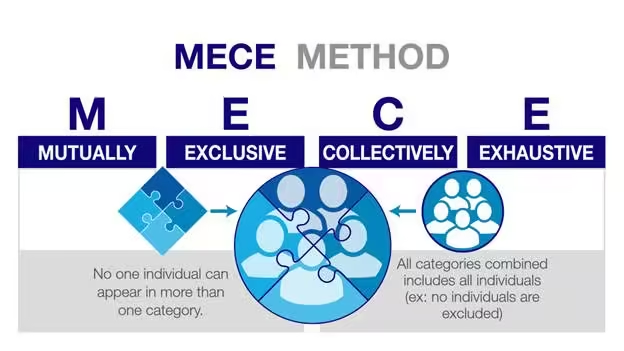
Using a MECE (Mutually Exclusive, Collectively Exhaustive) framework, the change manager can categorize stakeholder concerns into distinct groups—such as operational efficiency, user experience, and integration with existing systems—ensuring that all relevant factors are considered. By identifying these categories, the change manager can articulate a clear vision and define the desired end state that resonates with all stakeholders.
The above is from Caseinterview.com
Hypothesis: Sales Team Will Resist the New CRM System Due to Lack of Training and User-Friendliness
Step 1: Identify the Hypothesis
Hypothesis: The sales team will resist the new CRM system because they believe it is not user-friendly and they fear insufficient training.
Step 2: Break Down the Hypothesis into MECE Categories
To validate this hypothesis, we’ll break it down into specific categories that are mutually exclusive and collectively exhaustive. We’ll analyse the reasons behind the resistance in detail.
Categories:
User Experience Issues
Complexity of the Interface
Navigation Difficulties
Feature Overload
Training and Support Concerns
Insufficient Training Programs
Lack of Resources for Ongoing Support
Variability in Learning Styles
Change Management Resistance
Fear of Change in Workflow
Previous Negative Experiences with Technology
Concerns About Impact on Performance Metrics
Step 3: Gather Data for Each Category
Next, we need to collect data for each category to understand the underlying reasons and validate or refute our hypothesis.
Category 1: User Experience Issues
Data Collection:
Conduct usability testing sessions with sales team members.
Administer a survey focusing on user interface preferences and pain points.
Expected Findings:
High rates of confusion navigating the new interface.
Feedback indicating that certain features are not intuitive.
Category 2: Training and Support Concerns
Data Collection:
Survey the sales team about their current training needs and preferences.
Review existing training materials and resources provided.
Expected Findings:
Many team members express a need for more hands-on training sessions.
A lack of available resources for ongoing support after the initial rollout.
Category 3: Change Management Resistance
Data Collection:
Conduct focus groups to discuss fears and concerns regarding the new system.
Analyse historical data on previous technology implementations and employee feedback.
Expected Findings:
Employees voice concerns about how the CRM will change their current workflows.
Negative sentiments stemming from past technology rollouts that were poorly managed.
Step 4: Analyse Data Within Each Category
Now that we have gathered the data, let’s analyse the findings within each MECE category.
Analysis of Findings:
User Experience Issues:
Complexity of the Interface: Usability tests reveal that 70% of sales team members struggle to complete certain tasks in the CRM.
Navigation Difficulties: Survey responses show that 80% find one step of the navigation counterintuitive, leading to frustration.
Training and Support Concerns:
Insufficient Training Programs: Surveys indicate that only 40% of employees feel adequately trained to use this part of the new system.
Lack of Resources for Ongoing Support: Focus groups reveal that team members are unsure where to seek help after the initial training.
Change Management Resistance:
Fear of Change in Workflow: Focus group discussions highlight that 60% of participants fear their productivity will decrease with the new system, at least during the post Go Live period.
Previous Negative Experiences: Historical data shows that past technology rollouts had mediocre adoption rates due to insufficient support, reinforcing current fears.
Step 5: Develop Actionable Recommendations
Based on the analysis of each category, we can create targeted recommendations to address the concerns raised.
Recommendations:
User Experience Issues:
Conduct additional usability testing with iterative feedback loops to refine the CRM interface before full rollout.
Simplify the navigation structure based on user feedback, focusing on the most frequently used features.
Training and Support Concerns:
Develop a comprehensive training program that includes hands-on workshops, tutorials, and easy-to-access online resources.
Establish a dedicated support team to provide ongoing assistance, ensuring team members know whom to contact with questions.
Change Management Resistance:
Implement a change management strategy that includes regular communication about the benefits of the new system, addressing fears and expectations.
Share success stories from pilot programs or early adopters to demonstrate positive outcomes from using the CRM.
By following this detailed step-by-step analysis using the MECE framework, the change manager can thoroughly investigate the hypothesis regarding the sales team’s resistance to the new CRM system. This structured approach ensures that all relevant factors are considered, enabling the development of targeted strategies that address the specific concerns of stakeholders. Ultimately, this increases the likelihood of successful change adoption and enhances overall organizational effectiveness.
Data-Driven Decision Making:
At this stage, change managers should work closely with the project sponsor and project manager to determine effective positioning. A data-driven approach allows the change manager to form a hypothesis about how the change will impact stakeholders. For instance, if data suggests that the sales team is particularly resistant to change, the manager might hypothesize that this resistance stems from a lack of understanding about how the new CRM will enhance their workflow.
2. Planning Phase
Once the project is initiated, the planning phase requires detailed strategy development. Here, analytical skills are essential for conducting stakeholder analysis and impact assessments.
Example: In our CRM implementation scenario, the change manager must analyse the data collected during the commencement phase to identify the specific impacts on different departments. This involves grouping and sorting the data to prioritize which departments require more extensive support during the transition.
Using the TOSCA (Target, Objectives, Strategy, Constraints, Actions) framework provides a structured approach to guide the change management process for the CRM implementation. This framework helps clarify the overall vision and specific steps needed to achieve successful adoption. Below is a detailed exploration of each component:
1. Target
Definition: The target is the overarching goal of the change initiative, articulating the desired end state that the organization aims to achieve.
Application in CRM Implementation:
Target: Improve customer satisfaction and sales efficiency.
This target encapsulates the broader vision for the CRM system. By focusing on enhancing customer satisfaction, the organization aims to create better experiences for clients, which is crucial for retention and loyalty. Improving sales efficiency implies streamlining processes that enable sales teams to work more effectively, allowing them to close deals faster and serve customers better.
2. Objectives
Definition: Objectives are specific, measurable outcomes that the organization intends to achieve within a defined timeframe.
Application in CRM Implementation:
Objectives: Increase customer retention by 20% within a year.
This objective provides a clear metric for success, enabling the organization to track progress over time. By setting a 20% increase in customer retention as a target, the change manager can align training, support, engagement and system adoption with this goal. This objective also allows for measurable evaluation of the CRM’s impact on customer relationships and retention efforts.
3. Strategy
Definition: The strategy outlines the high-level approach the organization will take to achieve the objectives. It serves as a roadmap for implementation.
Application in CRM Implementation:
Strategy: Implement phased training sessions for each department, with tailored support based on the unique impacts identified.
This strategy emphasizes a thoughtful and structured approach to training, recognizing that different departments may face distinct challenges and needs when adapting to the new CRM. By rolling out training in phases, the organization can focus on one department at a time, ensuring that each team receives the specific support they require. Tailoring the training content based on the unique impacts identified earlier in the MECE analysis helps maximize engagement and effectiveness, addressing concerns about usability and fostering greater adoption of the CRM.
4. Constraints
Definition: Constraints are the limitations or challenges that may impact the successful implementation of the strategy. Recognizing these upfront allows for better planning and risk management.
Application in CRM Implementation:
Constraints: Limited budget and time restrictions.
Acknowledging these constraints is critical for the change manager. A limited budget may affect the types of training resources that can be utilized, such as hiring external trainers or investing in advanced learning technologies. Time restrictions might necessitate a more rapid rollout of the CRM system, which could impact the depth of training provided. By recognizing these constraints, the change manager can plan more effectively and prioritize key areas that will deliver the most value within the available resources.
5. Actions
Definition: Actions are the specific steps that will be taken to implement the strategy and achieve the objectives.
Application in CRM Implementation:
Actions: Develop a communication plan that includes regular updates and feedback mechanisms.
This action focuses on the importance of communication throughout the change process. A well-structured communication plan ensures that all stakeholders, particularly the sales team, are kept informed about the implementation timeline, training opportunities, and how their feedback will be incorporated into the process. Regular updates foster transparency and help build trust, while feedback mechanisms (such as surveys or suggestion boxes) allow team members to voice concerns and share their experiences. This two-way communication is essential for addressing issues promptly and reinforcing a culture of collaboration and continuous improvement.
By applying these frameworks, change managers can make informed recommendations that align with organizational objectives. This structured approach helps ensure that all relevant factors are accounted for and that stakeholders feel included in the planning process.
3. Execution Phase
As the project moves into the execution phase, the change manager must remain agile, continually collecting organizational data to confirm or reject the hypotheses formed during the planning stage.
Example: In an agile setting, where iterative processes are key, the change manager should implement mechanisms for ongoing feedback. For instance, after each sprint of CRM implementation, the manager can gather data from users to assess how well the system is being received. Surveys, usage analytics, and focus groups can provide rich insights into user experiences and pain points.
This ongoing data collection allows change managers to adjust their strategies in real-time. If feedback indicates that certain features of the CRM are causing confusion, the change manager can pivot to provide additional training or resources targeted specifically at those areas. This iterative feedback loop is akin to the work of strategic consultants, who continuously assess and refine their approaches based on empirical evidence.
Example in Practice: Imagine a situation where the sales team reports difficulties with the new CRM interface, leading to decreased productivity. The change manager can analyse usage data and user feedback to pinpoint specific issues. This data-driven insight can guide the development of targeted training sessions focusing on the problematic features, thus addressing concerns proactively and fostering user adoption.
4. Monitoring Phase
Monitoring the change initiative is crucial for ensuring long-term success. Change managers need to analyse performance metrics to evaluate the effectiveness of the implementation and its impact on the organization.
Example: For the CRM project, key performance indicators (KPIs) such as sales conversion rates, customer satisfaction scores, and employee engagement levels should be monitored. By employing data visualization tools, change managers can easily communicate these metrics to stakeholders, making it clear how the change initiative is progressing.
A fact-based approach to analysing these metrics helps in making informed decisions about any necessary adjustments. If, for instance, customer satisfaction scores are declining despite an increase in sales, the change manager may need to investigate further. This might involve conducting interviews with customers or analysing customer feedback to identify specific areas for improvement.
Suppose the organization observes a drop in customer satisfaction scores following the CRM implementation. The change manager could work with other stakeholders to conduct a root cause analysis using customer feedback and service interaction data to identify patterns, such as longer response times or unresolved issues. By addressing these specific problems, the change manager can refine the CRM processes and enhance overall service quality.
5. Closure Phase
The closure phase involves reflecting on the outcomes of the change initiative and drawing lessons for future projects. This is where the analytical skills of change managers can shine in assessing the overall impact of the change.
Example: After the CRM system has been fully implemented, the change manager should conduct a comprehensive review of the project along with the project team (retro). This involves analysing both qualitative and quantitative data to evaluate whether the initial objectives were met. Surveys can be distributed to employees to gather feedback on their experiences, while sales data can be analysed to determine the financial impact of the new system.
Using frameworks like MECE can help in categorizing the lessons learned. For instance, feedback could be sorted into categories such as user experience, operational efficiency, and overall satisfaction, allowing the change manager to develop clear recommendations for future initiatives.
Lessons Learned: If the analysis shows that certain departments adapted more successfully than others, the change manager could investigate the factors contributing to this variance. For example, departments that received more personalized support and training may have demonstrated higher adoption rates. This insight can inform strategies for future change initiatives, emphasizing the importance of tailored support based on departmental needs.
Building Relationships with Senior Leaders
In addition to the technical aspects of change management, the ability to communicate effectively with senior leaders is crucial. Seasoned change managers must clearly understand organizational objectives and be able to articulate how the change initiative contributes to these goals.
Example: During discussions with senior leadership, a change manager along with the rest of the project team can present data showing how the CRM system has improved customer retention rates and increased sales. By positioning this information in an easily understandable and rigorous manner, the change manager demonstrates the value of the initiative and its alignment with broader organizational objectives.
Effective communication ensures that leaders remain engaged and supportive throughout the change process, increasing the likelihood of success. By continuously linking the change initiative to organizational goals, change managers can build trust and credibility with stakeholders at all levels.
Leveraging Analytical Frameworks
Throughout the project lifecycle, incorporating structured analytical frameworks can enhance the decision-making process. Here are two key frameworks that change managers can leverage:
MECE Framework
MECE (Mutually Exclusive, Collectively Exhaustive) helps in breaking down complex information into manageable parts without overlap. By ensuring that all categories are covered without redundancy, change managers can identify all relevant factors affecting the change initiative.
TOSCA Framework
TOSCA (Target, Objectives, Strategy, Constraints, Actions) provides a comprehensive roadmap for change initiatives. By clearly defining each component, change managers can develop coherent strategies that align with organizational goals. This framework not only clarifies the change strategy but also ensures that all team members understand their roles in achieving the objectives.
Continuous Learning and Adaptation
Change management is not a static process; it requires continuous learning and adaptation. As organizations evolve, change managers must stay attuned to emerging trends and best practices in the field. This involves seeking feedback, conducting post-project evaluations, and staying updated on analytical tools and methodologies.
Change managers can attend workshops, participate in industry conferences, and engage with professional networks to enhance their analytical skills and learn from peers. By sharing experiences and insights, change managers can refine their approaches and incorporate new strategies that drive successful change.
The Transformative Power of Analytical Skills
The role of a change manager is multifaceted and requires a broad range of skills. However, one skill that stands out as particularly critical is the ability to think analytically. By adopting a strategic consultant’s mindset and applying analytical skills at each phase of the project lifecycle, change managers can significantly enhance their effectiveness.
From project commencement to closure, employing frameworks like MECE and TOSCA allows change managers to approach challenges in a structured way, making informed decisions that drive successful change. Continuous data collection, stakeholder engagement, and effective communication with senior leaders are essential components of this analytical approach.
In an era where organizations must adapt quickly to change, the ability to analyse complex data sets and derive actionable insights will distinguish successful change managers from the rest. Emphasizing this critical skill not only positions change managers as strategic partners within their organizations but also ensures that change initiatives lead to lasting, positive transformations.
As change practitioners, let us elevate our analytical capabilities and drive impactful change with confidence and clarity. By embracing this essential skill, we can navigate the complexities of organizational change and lead our teams toward a successful future.
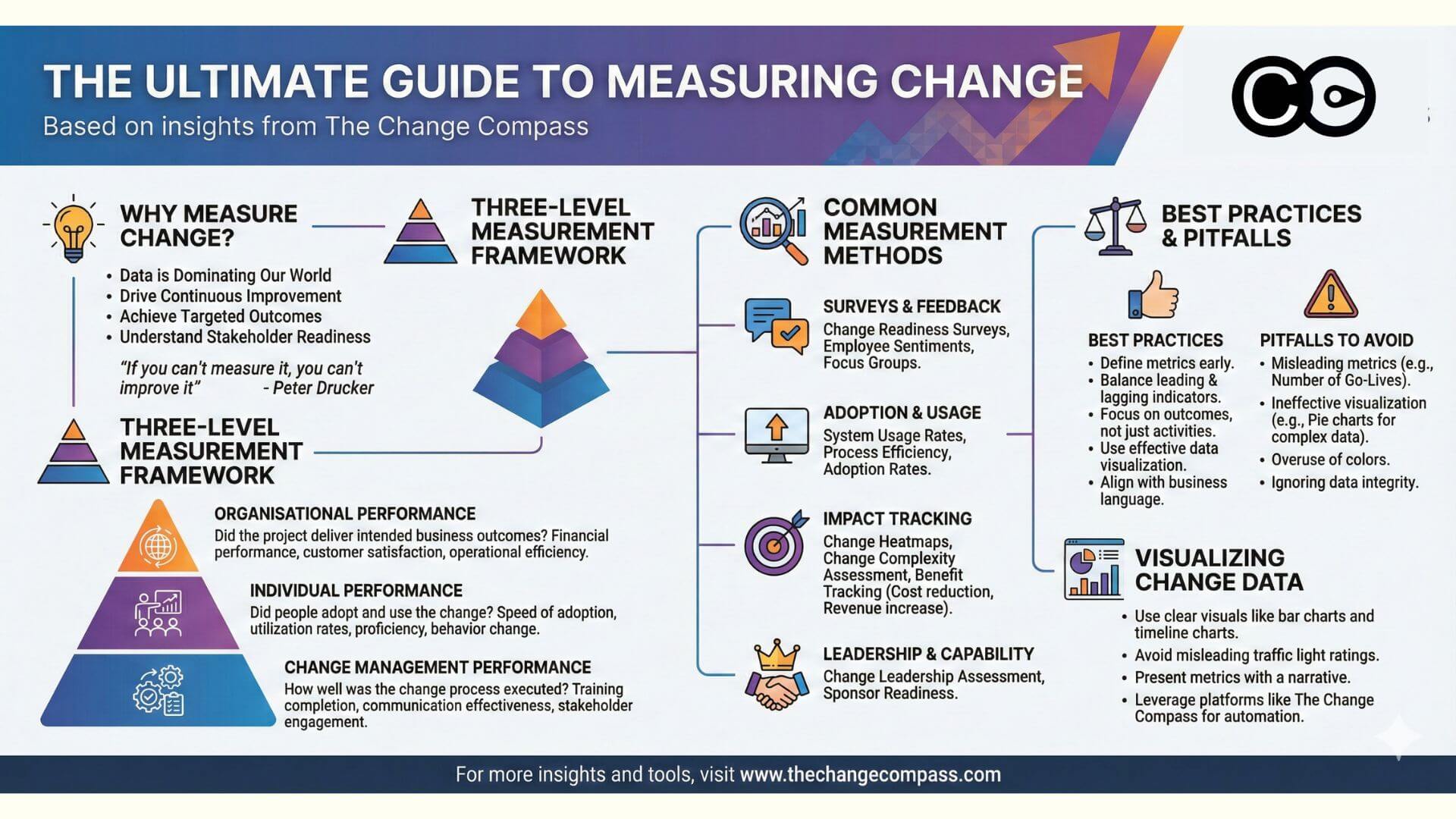
Change measurement translates organisational impact into quantifiable data through surveys, analytics dashboards, and AI-powered tools. Organisations that measure change readiness and adoption rates are 78% more likely to meet project objectives. This guide covers six project-level methods, seven business-level measures, and three enterprise-level frameworks across the Plan-Execute-Realise lifecycle.
A lot of change practitioners are extremely comfortable with saying that change management is about attitudes, behaviours, and feelings and therefore we cannot measure them. This metaphor that change management is ‘soft’ extends into areas such as leadership and employee engagement whereby it may not be easy to measure and track things. However, is it really that because something is harder to measure and less black and white that there is less merit in measuring these?
“If you can’t measure it you can’t improve it” Peter Drucker
The ‘why’ behind a lot of industry change in our day and age comes from the fact that data is now dominating our world. Data is a central part of everything that is changing in our world. Since we are now more reliant on the internet for information, the data that can be collected through our digital interactions around our lives are now driving change. Home assistant Alexa from Amazon can recognize our voices and tell us what we want to know. We can be identified through street cameras. Our Google usage leads to better-targeted advertisements and product promotions. Our Facebook usage leads to a deep understanding of our preferences and lifestyles, and therefore we become targetted by advertisements for what we may find value in (according to Facebook data and algorithms).
So if our world is surrounded by data, why are we not measuring it in managing change? To answer this question let’s look at what we are or are not measuring.
These are some of the common ways in which change is often measured in projects:
Project methods intro
1. Change readiness surveys – What do readiness surveys actually measure?
Change readiness surveys are 5-10 question pulse assessments (Likert + open text) sent via SurveyMonkey/Microsoft Forms at pre-launch, mid-execution, and post-launch. They benchmark stakeholder preparedness, with 92% accuracy when combined with behavioural observations. Top organisations survey quarterly.
Change readiness surveys are usually online surveys sent by a project owner to understand how stakeholder groups are feeling about the change at different points in time throughout the project. It can be in the form on a Likert scale or free text. Most results are summarized into a quantitative scale of the degree in which the group is ready for change. A simple SurveyMonkey could be set up to measure stakeholder readiness for change. ChangeTracking (now part of Accenture) is a comprehensive online tool that measures the change journey and readiness of stakeholder groups throughout the initiative.
2. Training evaluation surveys – How do you prove training ROI?
These evaluations are normally based on participant satisfaction across various categories such as content, instructor effectiveness, usefulness, etc. In a face-to-face training format, these surveys are normally paper-based so as to increase the completion rate. For online or virtual training, ratings may be completed by the user at the conclusion or after the session.
3. Communications metrics – Which comms metrics matter most?
One way in which communications may be measured is the ‘hit rate’ or the number of users/audience that views the article/material/page. This may be easily tracked using Google Analytics that not only tracks number of views per page but also viewership by the time of day/week as well as audience demographic information as such gender and geographical locations.
4. Employee sentiments/culture surveys – What reveals change resistance early?
There are some organisations that measure employee sentiments or culture over the year and often there are questions that are linked to change. These surveys tend to be short and based on a Likert scale with less open-ended questions for qualitative feedback. Since these surveys are often sent across the entire organisation they are a ‘catch-all’ yardstick and may not be specific to particular initiatives.
5. Change heatmaps – When do heatmaps fail (and what works better)?
Some organisations devise change heatmaps on excel spreadsheets to try and map out the extent to which different business units are impacted by change. This artifact speaks to the amount of change and often leads to discussions concerning the capacity that the business has to ‘handle/digest’ change. The problem with most heatmaps is that they are usually categorized and rated by the creator of the artifact (or a limited number of people making judgments), and therefore subject to bias. Data that is based on 1 person’s opinions also tend not to have as much weight in a decision-making forum.
6. Change benefit tracking – How do you track post-launch ROI?
In addition to typical change management measures, there are various initiatives-specific measures that focus on the actual outcome and benefit of the change with the goal of determining to what extent the change has taken place. Some example of this includes:
System usage rates
Cost reduction
Revenue increase
Transaction speed
Process efficiency
Speed of decision making
Customer satisfaction rate
Employee productivity rate
Incidents of process violation
Non-initiative based change management measures
There are two other measures that are used within an organisational vs. initiative-specific context, change leadership assessment and change maturity assessment. In the next section, we will discuss these two areas.
Change leadership assessment
David Miller from Changefirst wrote about 3 types of change leaders.:
1. The sponsor whose role is to drive the initiative to success from the beginning to the end. This involves possessing competencies in rallying and motivating people, building a strong network of sponsors and communicating clearly to various stakeholder groups.
2. The influencer whose role is to leverage their network and influence to market and garner the traction required to make the initiative successful. Four types of influencers as identified by Changefirst includes:
a) Advocates who are great at promoting and advocating the benefits of the change
b) Connectors who are able to link and leverage people across a part of the organisation to support the change
c) Controllers who have control over access to information and people and these could include administrators and operations staff
d) Experts who are viewed by others in the organisation as being technically credible
3. The change agent is someone who is tasked with supporting the overall change in various ways, including any promotional activities, gaging different parts of the organisation on the change and be able to influence, up, down and sideways across the organisation to drive a successful change outcome.
Whilst there isn’t one industry standard tool for assessing change leadership competencies and capabilities. There are various change leadership assessment tools offered by Changefirst as well as other various smaller consulting firms. One of the most comprehensive change leadership assessment tools is by ChangeTracking is the Change Capacity Assessment which is a self-assessment with the broad categories being Goal Attainment, Flexibility, Decision Making, and Relationship Building.
Some of the key competencies critical in change leadership have been called out by Pagon & Banutal (2008), and include:
Goal attainment
Assessing organisational culture and climate
Change implementation
Motivating and influencing others
Adaptability
Stakeholder management
Collaboration
Build organisational capacity and capability for change
Maneuvering around organisational politics
Change maturity assessment
Organisations are increasingly realising that managing change initiative by initiative is no longer going to cut it as it does not enable organisational learning and growth. Initiatives come and go and those who rely on contractor change managers often find that their ability to manage change as an organisation does not mature much across initiatives.
Change maturity assessment is focused on building change capability across the organisation across different dimensions, whether it be project change management or change leadership. The goal of conducting a change maturity assessment is to identify areas in which there may be a capability gap and therefore enable structured planning to close this gap.
There are 2 major change maturity assessment models available in the market. The first is by Prosci and the second is by the Change Management Institute. To read more about change maturity assessment read out article A New Guide for Improving Change Management Maturity, where we outline how to improve change maturity throughout different business units across the organisation.
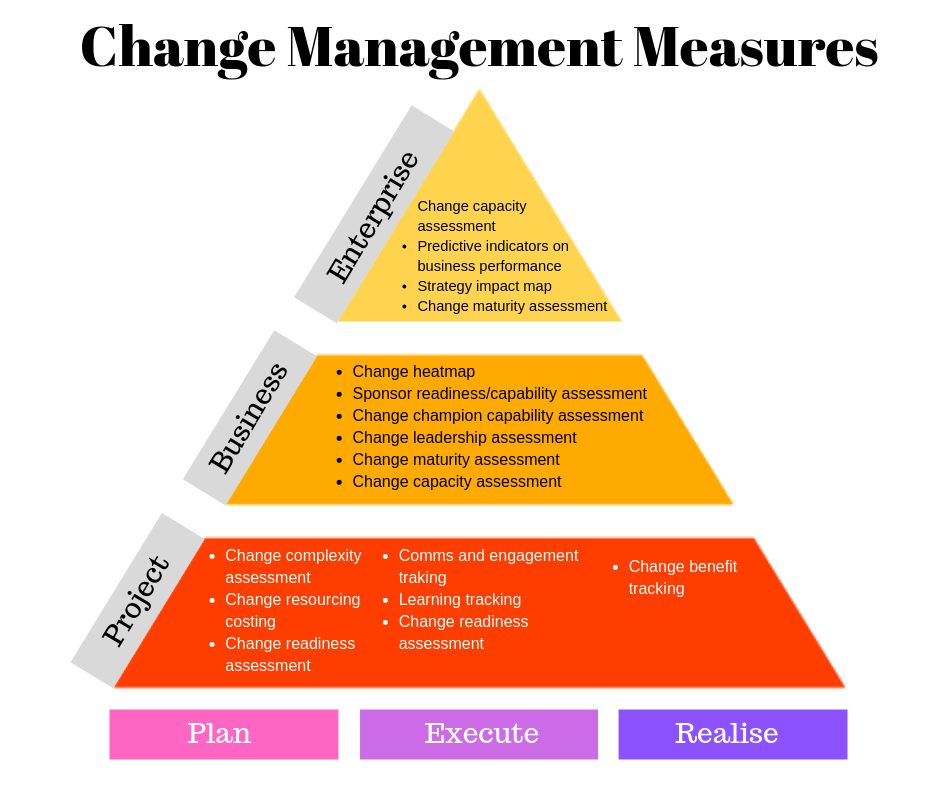
A comprehensive model of Change Management Measures
In this diagram various change management measures are represented along two axes, one being the different phases of the initiative lifecycle, and the other being different organisational levels of project, business and enterprise in which change management measures fall into.
Project level measures
‘Plan’ phase
In this phase of the project, the team is discovering and scoping what the project involves and what the change is. As a result, the details are not known clearly at the commencement of the phase. Later in the phase the scope becomes much clearer and the team starts to plan what activities are required to implement the change.
The change complexity assessment evaluates how complex the project is. It looks at how many people could be impacted, what the size of the impact could be, how many business units are impacted, whether multiple systems and processes are impacted, etc.
Change resourcing costing. At the planning phase of the project cost required for the change management stream of the work is required. This includes such as any contractors, communication campaigns, learning cost, travel, and administration cost, just to name a few.
Change readiness assessment is usually conducted prior to the change and during the change. Usually, the same set of questions is asked of various stakeholder groups to assess their readiness for change.
‘Execute’ phase
The execute phase is one of the most critical parts of the project. Activities are in full flight and the project is busy iterating and re-iterating changes to ensure successful execution to achieve project goals.
Communication and engagement tracking. Effective engagement of stakeholders in the change is absolutely critical. Stakeholder interviews, surveys, communication readership rates are all ways in which engagement may be tracked.
Learning tracking. Measuring learning is critical since it tracks to what extent the new competencies and skills have been acquired through learning interventions. Typical measurements include course tests or quizzes in addition to course evaluations. On the job performance may also be used to track learning outcomes and to what extent learning has been applied in the work setting.
Change readiness assessment continues to be critical to track during the execution phase of the project
‘Realise’ phase
In this phase of the project the change has ‘gone live’ and most project activities have been completed. It is anticipated in this phase that the ‘change’ occurs and that the benefits can then be tracked and measured.
Change benefit tracking measures and tracks the extent to which the targeted benefits and outcomes have been achieved. Some of these measures may be ‘hard’ quantitative measures whilst others may be ‘soft’ measures that are more behavioural.
Business level measures
Business level measures are those that measure to what extent the business has the right ability, capacity, and readiness for the change.
Change heatmaps can help to visualize which part of the business is most impacted by 1 project or multiple projects. The power of the change heatmap is in visualizing which part of the business is the most impacted, and to compare the relative impacts across businesses. As the number of change initiatives increase so would the complexity of the change. When facing this situation organisations need to graduate from relying on excel spreadsheets to using more sophisticated data visualization tools to aid data-based decision making. To read more about change heatmaps and why this is not the only way to understand business change impact, go to The Death of the Change Heatmap.
Sponsor readiness/capability assessment can be a critical tool to help identify any capability gaps in the sponsor so that effort may be taken to support the sponsor. A strong and effective sponsor can make or break a change initiative. Early engagement and support of the sponsor are critical. Both Prosci, as well as Changefirst, have sponsor competency assessment offerings.
Change champion capability assessment. Change champion or change agent are critical ‘nodes’ in which to drive and support change within the organisational network. A lot of change champions are appointed only for one particular initiative. Having a business-focus change champion network means that their capability can be developed over time, and they can support multiple initiatives and not just one. Assessing and supporting change champion capability would also directly translate to better change outcomes.
Change leadership and change maturity assessment – refer to the previous section
Change capacity assessment.
In an environment where there is significant change happening concurrently, careful planning and sequencing of change in balance with existing capacity are critical. There are several aspects of change capacity that should be called out in the measurement process:
Different parts of the business can have different capacity for change. Those parts of the business with better change capability, and perhaps with better change leadership, are often able to receive and digest more changes than other businesses that do not possess the same level of capability.
Some businesses are much more time-sensitive and therefore their change capacity needs to be measured with more granularity. For example, call centre staff capacity is often measured in terms of minutes. Therefore, to effectively plan for their change capacity, the impacts of change needs to be quantified and articulated in a precise, time-bound context so that effective resourcing can be planned in advance.
The change tolerance or change saturation level for business needs careful measurement in combination with operational feedback to determine. For example, it could be that last month a part of the business experienced significant change impact across several initiatives happening at the same time. The operational indicators were that there was some impact on customer satisfaction, productivity, and there were negative sentiments reported by staff that there was too much change to handle. This could mean that the change tolerance level may have been exceeded. With the right measurement of change impact levels for that part of the business, next time this level of change is seen, previous lessons may be utilized to plan for this volume of change. Utilise measurement and data visualization tools such as the Change Compass to track change capacity.
Enterprise level change measures
At an enterprise level, many of the business unit level measures are still applicable. However, the focus is comparing across different business units to sense-make what each part of the business is going through and if the overall picture is aligned with the intentions and the strategic direction of the organisation. For example, typical questions include:
Is it surprising that one part of the business is undergoing significant change whilst another is not?
Is there a reason that one business unit is focused on a few very large changes whilst for other business units there is a larger set of changes each with smaller impacts?
Is the overall pace of change optimum according to strategic intent? Does it need to speed up or slow down?
What is the process to govern, report and make decisions on enterprise level change, prioritization, sequencing and benefit realization?
Is there one business unit that is able to manage change more effectively, faster with greater outcomes? How can other business units leverage any internal best practices?
As mentioned in the Change Management Measures diagram, some enterprise level change measures include:
Change capacity assessment – Does one business unit’s change capacity limits mean that we are not able to execute on a critical strategy within the allocated time? How do we create more capacity? Ways in which to create more capacity could include more resources such as staff, or initiative funding, more time is given, or more talent to lead initiatives
Change maturity assessment – At an enterprise level, the concern is with the overall change maturity of the organisation. How do we implement enterprise level interventions to build change maturity through programs, networks, and exchanges, such as:
Enterprise change capability programs
Enterprise change analytics and measurement tools
Enterprise change methodology
Enterprise network of change champions
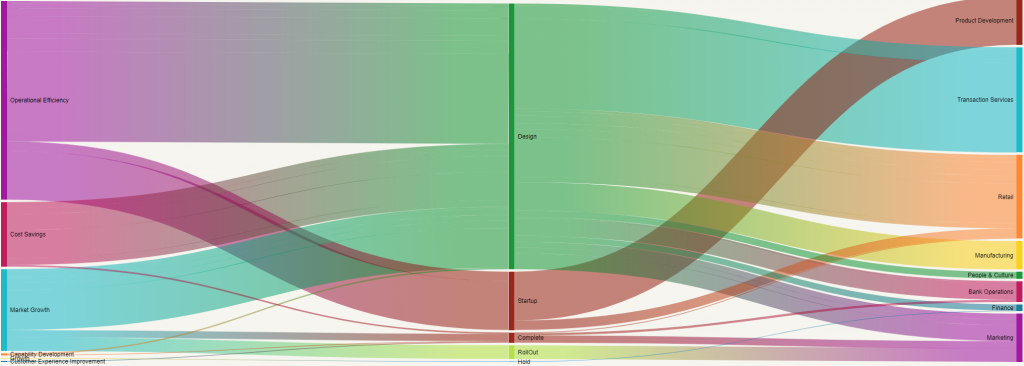
Strategy impact map – Change management need not be focused only on project execution or business unit capability. It can also demonstrate value at an enterprise level by focusing on strategy execution (which by definition is change). The way in which different strategies exert impact on various business units may be visualized to help stakeholder understand which initiatives within which strategic intent impact which business units. To illustrate this please refer to the below diagram which is an example of a strategy impact map. In this diagram, each of the organisation’s strategy is displayed with different initiatives branching out of each strategy. The width of each initiative correlates with the level of impact that the initiative has on the business over a pre-determined period of time. Therefore, the width of each strategy also indicates the overall relative impact on the business.
This data visualization artifact can be valuable for business leaders and strategic planning functions as it depicts visually how the implementation of various strategies is impacting business units. This helps planners to better understand strategy implementation impacts, potential risks and opportunities, and balancing change pace with strategy goals at various points in time.
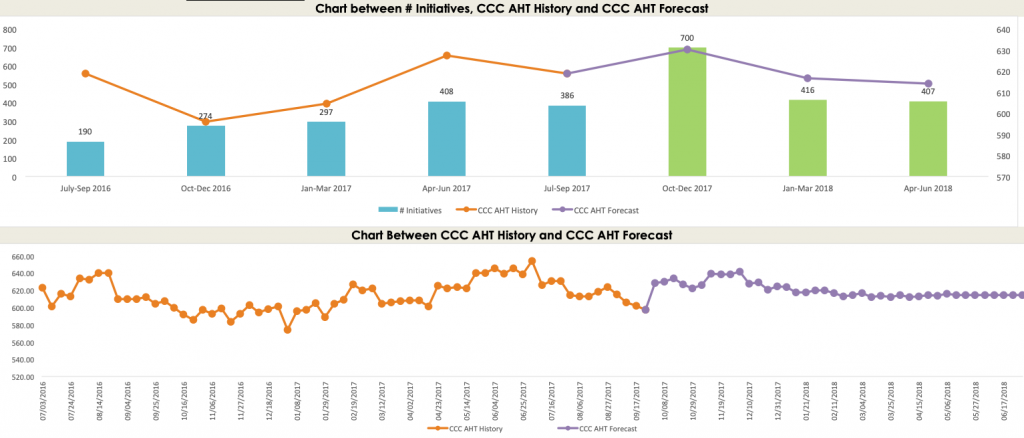
Predictive indicators on business performance – We started this article talking about how data is all around us and we also need to better manage change using data. With quantitative data on change impact, it is possible to ascertain any correlations with operational business indicators such as customer satisfaction, service availability, etc. For those business indicators where there is a significant correlation, it is possible to hence use predictive reporting to forecast performance indicator trends, given planned change impacts.
In the below graph you can see an example of this whereby using historical data it is possible to establish correlations and therefore forecast future impact on business indicators. This example is focused on the customer contact centre (CCC) and key business indicator of average handling time (AHT) is utilized as an illustration.
This type of predictive performance forecasting is extremely valuable for organisations undergoing significant change and would like to understand how change may impact their business performance. By demonstrating the impact on business indicators, this puts the importance of managing change at the front and centre of the decision-making table. At The Change Compass, we are developing this type of measurement and reporting function. This is the frontier for change management – to be established as a key business-driving function (versus a standard back-office function).
Change can be measured and this article has outlined various operational and strategic ways in which change measurement can demonstrate significant value. Most corporate functions cannot exist without data and analytics. For example, Human Resources relies on people and pay data. Marketing cannot function without measurement of channel and campaign effectiveness. For Information Technology, pretty much everything is measured from system usage, to cost, to efficiency. It is time we start utilizing data to better visualize change to better plan and make business decisions.
References:
Miller, David (2011) Successful Change. How to implement change through people. Changefirst Ltd.
Pagon & Banutal (2008) Leadership Competencies for Successful Change Management. Study Report. University of Maribor.
Frequently Asked Questions (FAQ)
What are the most important change management metrics to track? Focus on adoption rates, readiness scores, communication engagement, and benefit realisation metrics tailored to project phases and business capacity.
How do you measure change readiness effectively? Combine pulse surveys with behavioural indicators and sponsor assessments. Balance frequency with depth for actionable insights. Read “Beyond the Survey: A Strategic Lens on Change Readiness Assessment.”
Why replace change heatmaps with other visuals? Heatmaps introduce subjectivity bias. Timeline charts and capacity dashboards provide clearer decision-making data. See “The Death of the Change Heatmap.”
What role does AI play in change measurement? AI enables real-time sentiment analysis, predictive capacity planning, and automated risk detection across initiatives. Platforms integrate natural language queries for instant insights.
How many change metrics should organisations track? Target 8-15 core metrics aligned with strategic objectives across project, business, and enterprise levels to maintain focus and actionability.
What enterprise-level change metrics matter most? Strategy impact mapping, cross-business capacity analysis, and predictive performance forecasting linking change volume to operational outcomes.
How to Measure Change Management Effectively: A 5-Step Framework
Measuring change management effectively requires a framework that covers the full lifecycle of the change – from pre-change baseline through to sustained adoption tracking. The five steps below reflect the approach used by experienced change practitioners and data-driven change teams.
Step 1 – Establish a Change Measurement Framework: Define what you are measuring and why before selecting metrics. A change measurement framework should cover three levels: activity metrics (what the change team is doing), readiness metrics (how prepared people are), and adoption metrics (whether people have actually changed their behaviour).
Step 2 – Set a Baseline Before the Change: Measure the current state before the change is implemented. Without a baseline, it is impossible to demonstrate the impact of the change management effort or to identify where readiness is lowest.
Step 3 – Track Readiness at Key Milestones: Conduct readiness assessments at defined milestones – typically at the start of the programme, 30-60 days before go-live, and at go-live. Readiness assessments should cover awareness, understanding, capability, and commitment for each affected stakeholder group.
Step 4 – Measure Adoption After Go-Live: Track adoption metrics in the weeks and months after go-live. Key indicators include system usage rates, process compliance, error rates, workaround behaviour, and performance recovery back to baseline.
Step 5 – Report and Act on Measurement Data: Use measurement data to drive decisions – not just to report status. When adoption is lagging in a specific group, use the data to identify the barrier and target an intervention.
The role of change managers has been left out of the various agile methodologies. This is even though most fully acknowledge the importance of change management in the success of initiatives. Does this mean that the agile teams should and can take on the role of change managers? While most of you reading this article may have change practitioners in the organisations, there are plenty of organisations that run agile teams without change managers in the team.
Is it that in agile environments, change management responsibilities are distributed across team members rather than centralised in a single role? After all the agile team is self-organising and has shared accountability?
For organisations that do not have change managers in agile teams, they are still able to deliver valuable and continuous changes. The difference is in how effective the agile team is in delivering a solution where:
A range of stakeholders are continuously engaged effectively and therefore have high levels of readiness
Stakeholders’ readiness for the pace and design of agile is taken into account and various education/engagement sessions are designed as required
They’re able to identify the various behavioural changes required in fully adopting the change
Stakeholders continuously track and reinforce adoption
The team is aware of the change landscape of impacted stakeholders and can work with them respectively to design and deliver in a way that maximises adoption in a targeted way
It is quite difficult for a small agile team to have all these skillsets. You can equally place the same argument for Business Analysts. Even if the team does not have this role, they could equally undertake a lot of the tasks that a Business Analyst would typically undertake in an agile project, however, maybe not at the same level of professionalism and rigor.
In a small agile team of cross-functional specialists, by design each member is a specialist in his/her functional domain, whether it is testing, software development, operations, etc. It would be rare for a domain specialist to have such a breadth of skillsets to include a range of change management skills. Of course, this is not impossible, but difficult for a team to possess.
An agile team is by design focused on delivering. By design, the agile team is laser-focused on its iteration work and delivering to the schedule at the right quality. It does not have a lot of capacity to devote itself to working with a wide range of stakeholders as a result. The change manager, on the other hand, is by design focused on the world of the stakeholders as well as what the agile team is delivering and designing a series of steps for the changes to take place or a people and organisational perspective.
Moreover, beyond project change management skills, organisations that have a myriad of self-organising agile teams require greater air-traffic control at a portfolio and enterprise level. Whilst this may be fulfilled from a portfolio management perspective, attention should also be paid to change portfolio management. Within a fast-paced change environment, the capacity stakeholders across the organisation have for the changes, and the overall prioritisation and sequencing for these changes are paramount.
Without this, changes may fall off the radar, superseded by other competing changes delivered by other agile teams. Alternatively, change saturation fatigue may be a result. In fact, there is increasing evidence that this is prevalent across organisations. Stakeholders’ capacity for change is limited and must be managed effectively to ensure the right changes are adopted.
If change management so critical to agile changes let’s delve into the essential role that change managers play within agile teams, breaking down their contributions across the four typical phases of an agile initiative: Define, Build, Test, and Deploy.
Define Phase
During the Define phase, agile teams lay the groundwork for the project by identifying objectives, scope, and initial requirements. For change managers, this phase is critical for assessing the scope and complexity of the change and determining the necessary resources and support structures.
Key Activities for Change Managers in the Define Phase:
1. Assessing Change Size and Complexity: Change managers evaluate the magnitude of the change and its potential impact on various parts of the organization. This assessment helps in tailoring change management strategies to address specific needs.
2. Resource Planning: Identifying the required business and change support resources is essential. This includes assembling a team of change champions, communication specialists, and trainers who will help facilitate the change.
3. Strategic Planning: Developing a comprehensive plan that outlines key activities and tactics to engage stakeholders and drive successful change. This plan acts as a roadmap for the entire change management process.
Build Phase
In the Build phase, agile teams start developing the solution. Change managers intensify their efforts to understand the potential impacts of the change and begin engaging stakeholders.
Key Activities for Change Managers in the Build Phase:
1. Detailed Stakeholder Assessments: Conducting thorough assessments to identify how different stakeholders will be affected by the change. Understanding these impacts is crucial for tailoring communication and training efforts.
2. Initiating Stakeholder Engagement: Early engagement with stakeholders to communicate the vision, goals, and expected outcomes of the change. This engagement helps in building awareness and buy-in from the outset.
3. Scenario Planning: Since the exact nature of the change may not be fully defined, change managers work with various scenarios to anticipate potential challenges and opportunities. This flexibility allows for adaptive communication and engagement strategies.
Test Phase
The Test phase is where agile teams validate the solution through testing and feedback. For change managers, this phase is pivotal for ensuring stakeholders are prepared for the upcoming changes.
Key Activities for Change Managers in the Test Phase:
1. Collaborating on Testing Processes: Working closely with agile teams to determine how stakeholders can be involved in testing. This may include business testers, change champions, or end-users who provide valuable feedback.
2. Designing Communication Content and Learning Interventions: Developing and rolling out communication materials and training programs to prepare stakeholders for the change. These interventions are tailored based on feedback from testing.
3. Engaging Stakeholders Through Various Channels: Utilizing demos, team briefings, and other engagement channels to keep stakeholders informed and involved throughout the testing process.
Deploy Phase
The Deploy phase marks the transition of the solution into the live environment. Change managers play a crucial role in ensuring a smooth transition and full adoption of the change.
Key Activities for Change Managers in the Deploy Phase:
1. Ensuring Readiness: Before deployment, change managers gather evidence that stakeholders are ready for the change. This involves assessing training completion, communication effectiveness, and overall preparedness.
2. Executing Engagement Strategies: During deployment, change managers leverage various engagement channels to support the transition. This includes continued communication, support hotlines, and face-to-face interactions to address any concerns.
3. Monitoring and Feedback: Establishing performance metrics to monitor the adoption and effectiveness of the change. Feedback is collected and analyzed to make necessary adjustments and integrate the change into business-as-usual operations.
Key Differences in Change Management for Agile Teams
While the core principles of change management remain consistent, their application within agile teams introduces unique challenges and opportunities. Here are some key differences:
Proactive Integration in Cross-Functional Teams
Change managers actively contribute to the progress of agile teams by embedding themselves within the cross-functional team structure. This close collaboration ensures that change management activities are aligned with the development process, allowing for more effective and timely interventions.
Flexibility and Adaptation
In agile environments, the content and nature of changes may evolve throughout the project lifecycle. Change managers must remain flexible, working with scenarios and adaptable communication strategies to respond to shifting requirements and stakeholder needs.
Continuous Feedback and Engagement
Ongoing stakeholder engagement and continuous feedback are cornerstones of effective change management in agile teams. Regular check-ins, feedback loops, and open communication channels help to identify and address concerns early, ensuring smoother transitions and higher adoption rates.
Iterative Planning and Adjustment
The iterative nature of agile projects necessitates continuous review and adjustment of change management plans. Change managers must be prepared to tweak strategies, update communication materials, and refine training programs based on real-time feedback and evolving project dynamics.
Practical Tips for Change Managers in Agile Teams
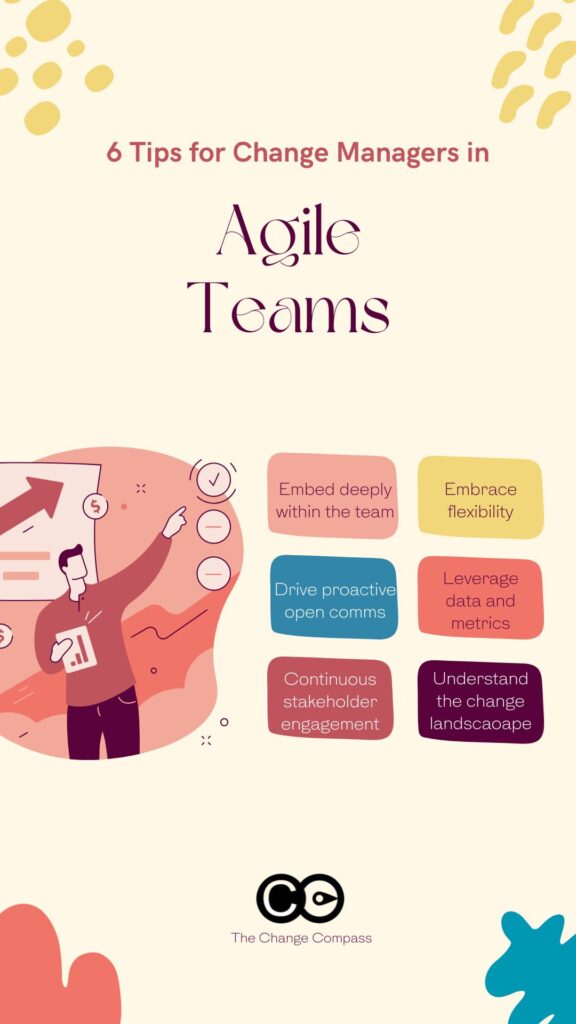
1. Embed Yourself in the Team: Become an integral part of the agile team to gain a deeper understanding of the project dynamics and build strong relationships with team members.
2. Embrace Flexibility: Be prepared to pivot and adapt your change management strategies as the project evolves. Flexibility is key to staying relevant and effective. Come up with scenarios such as communication materials and engagement tactics as needed.
3. Drive Proactive Open Communication: Create an environment where stakeholders feel comfortable sharing feedback and concerns. This openness will help you address issues promptly and maintain trust. Note that stakeholders may need learning interventions to truly understand and adjust to agile ways of working.
4. Leverage Data and Metrics: Use data and performance metrics to monitor the effectiveness of your change management efforts. Data does not just apply to the rest of the agile team. Change management data is no less valuable. This will help you make informed decisions and demonstrate the value of your work. To read more about how to measure change check out our practical guide here.
5. Continuous Stakeholder Engagement: Engage with stakeholders early and often. Building strong relationships and maintaining regular communication will increase the likelihood of successful change adoption.
6. Understand the Change Landscape: Since the change manager’s role is to adopt a people lens, it is critical to see from the impacted stakeholder’s perspective the range of changes they are or will be going through. Change that is designed in a vacuum will not be successful.
Change managers play a pivotal role in the success of agile teams, ensuring that changes are effectively adopted and integrated into the organization. By understanding the unique dynamics of agile projects and adopting flexible, proactive, and iterative approaches, change managers can significantly enhance the readiness and adoption of changes. Their efforts not only support the agile team but also drive the overall success of the organization in navigating an increasingly intense landscape of changes.
As the global landscape continues to evolve, so too does the field of change management. The year 2024 promises a shift in the way organizations approach change, driven by a combination of economic factors, continued technological advancements, and the ever-increasing need for adaptability. In this article, we explore the background factors influencing the upcoming changes, and delve into seven key predictions that are set to reshape the realm of change management in the coming year.
Background
Inflation Continue to Drop: A Ray of Economic Hope
One of the pivotal factors shaping the economic landscape in 2024 is the anticipated drop in inflation. After grappling with economic uncertainties, organizations can breathe a sigh of relief as the pressure from rising costs eases. This economic respite paves the way for strategic investments and initiatives, creating a conducive environment for change.
Avoiding Recession: Building Resilience Through Change
The specter of recession has loomed large in recent years, casting a shadow on organizational stability. However, as we step into 2024, the concerted efforts to avoid recession is forecasted to have paid off. Organizations have become more resilient, honing their ability to weather economic storms through strategic change initiatives. This backdrop sets the stage for a transformative year in change management.
Key Predictions
Agile Change as Business as Usual
In 2024, the concept of Agile Change is no longer a mere ‘work in progress’ but rather an integral part of Business as Usual (BAU). Organizations have recognized the need for agility in the face of rapid change, and Agile change methodologies have transitioned from experimental to foundational. This shift represents a change in mindset, emphasizing iterative processes, collaboration, and responsiveness to evolving circumstances. After more than 10 years of agile project methodology in the market place, agile change practices are starting to become ‘the norm’.
The Rise of Adaptive/Hybrid Change Models
Building on the previous point, agility applies beyond at an ‘intra-methodology’ perspective, but also how change approaches and methodologies need to be mixed and matched to work.
The increasing pace of change demands a more flexible approach from change practitioners. The dichotomy between structure and flexibility, innovation and process-focused strategies, gives rise to adaptive and hybrid change models. The emergence of terms like “wagile” (a fusion of waterfall and agile) underscores the need for a balanced approach that combines the best of both worlds. Organizations must strike a delicate balance between structure and flexibility to navigate the complexity of modern change initiatives.
For example, in regulated business functions there may need to be quite rigid planning of exactly when the changes must take place as well as the level of consultation and engagement required. However, the actual design of different engagement, positioning and employee involvement strategies may be tested in an iterative way.
Expanding Skill Sets for Change Practitioners
To meet business needs change practitioners will need to have a broader range of skills beyond ‘people skills’. In 2024, the demand for change professionals with a broader skill set encompassing strategic thinking, digital/data literacy, and business acumen will continue to be on the rise. As change initiatives become more complex, practitioners must equip themselves with multifaceted skills to address the diverse challenges that emerge during the change process.
For example, stakeholders are increasingly looking for data for reporting purposes to get a clearer sense of how changes are tracking. Beyond sentiments and opinions, stakeholders are looking for adoption indicators as well as precise indications of the nature of impacts across the employee population.
The Ascendance of Change Portfolio Management
Change portfolio management will continue to gain increasing visibility and importance in 2024. Organizations are recognizing the need to manage change initiatives collectively, aligning them with strategic objectives. The holistic oversight provided by change portfolio management enables organizations to prioritize, monitor, and evaluate change initiatives in a comprehensive manner, ensuring that resources are optimally allocated for maximum impact.
Whilst stakeholders may not be clear of the differences between transformation, portfolio management and change portfolio management, they are clearer of the benefits required in managing people impacts, against the need to maximise business performance and change adoption.
Leveraging Change Data for Informed Decision-Making
In the evolving landscape of change management, data is no longer just a nice-to-have; it’s a necessity. In 2024, the norm becomes leveraging change data to make informed decisions. Organizations recognize the value of data analytics in understanding the impact of change, identifying patterns, and proactively addressing challenges. This data-driven approach enhances the efficacy of change initiatives and provides a foundation for continuous improvement.
It is no longer that the expectation for data-led decision making rests in project functions such as technical development, business analysis, testing and user-experience. Change management teams are also expected to demonstrate the impact of their work through data.
Increasing Use of Software in Change Implementation
The leverage of software in change implementation should see an uptick in 2024, along with general increase in software usage rates in organisations. Organizations are leveraging technology to streamline and enhance various aspects of the change management process. From change project management tools, change measurement platforms, as well as change portfolio management tools the role of software can accelerate the pace of change initiatives and supports the realisation of benefits.
AI for Change: From Wait-and-See to Full Adoption
Artificial Intelligence (AI) for change management is no longer a ‘wait-and-see’ proposition; it’s a reality in 2024. In 2023 a lot of users have sat on the fence as others argue about the risks in using AI and data security. The launch of Microsoft Co-pilot and the continued adoption of Chat GPT 4 signal a paradigm shift in how organizations approach AI. Users will over time be used to asking a chat bot, using prompts to form analysis and other AI features to augment their work. Advanced AI change tools can also assist in decision-making, predictive analytics, and even virtual facilitation, revolutionizing the efficiency and effectiveness of change processes.
In addition, there will be significant interest in change management tools that have incorporated AI features, from data and trend analysis, risk analysis to recommendations on change approaches.
As organizations navigate the complexities of 2024, change management emerges as a critical linchpin for success. The predictions outlined in this article reflect an emerging shift in the approach to managing change, from the integration of Agile methodologies to the widespread adoption of AI. Change practitioners must equip themselves with a versatile skill set to thrive in this dynamic environment, where strategic thinking, digital literacy, and adaptability are paramount. As we stand on the cusp of a transformative year, organizations that embrace these predictions are poised not only to weather the winds of change but to harness them for sustained success.