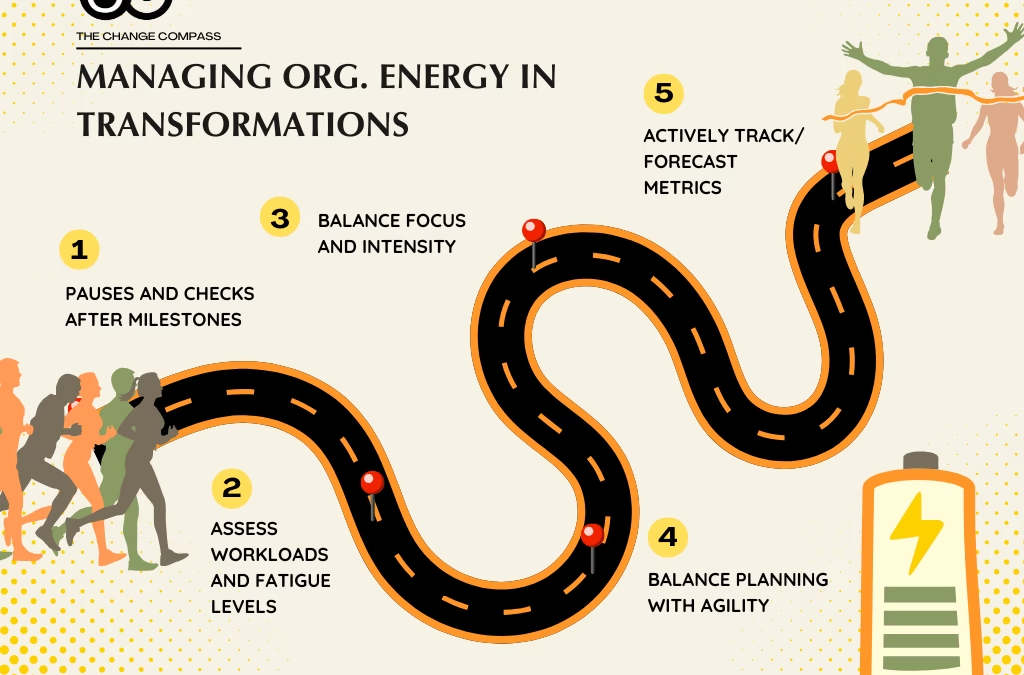
Successful transformation is not just about having a clear strategy, the right technology, or a strong leadership team—it is about managing organisational energy effectively. Like a marathon, transformation requires a well-paced approach, allowing for the right breathing space at key milestones. Without careful attention to energy levels, organisations risk burnout, disengagement, and failure to sustain long-term change.
Understanding Organisational Energy
Organisational energy is the collective capacity of employees to take action, drive change, and sustain momentum. It encompasses physical, emotional, and cognitive dimensions, each playing a critical role in how teams navigate transformation. Unlike resources such as time and budget, energy is dynamic—it can be depleted through excessive demands or replenished through strategic interventions.
The Marathon Mindset: Pacing and Breathing Spaces
Transformation is a long journey, not a sprint. Like seasoned marathon runners, organisations must be intentional about pacing and ensuring adequate recovery points along the way. Leaders often push for rapid results, but sustained transformation requires:
Phased Implementation: Breaking down transformation into manageable phases with defined milestones.
Strategic Pauses: Allowing teams to absorb changes, reflect on progress, and recalibrate before moving to the next stage.
Energy Checks: Regularly assessing engagement levels, stress indicators, and feedback to adjust the pace accordingly.
Neglecting these aspects leads to fatigue, resistance, and disengagement—ultimately derailing transformation efforts.
Awareness of Existing Capabilities and Change History
Before embarking on a transformation journey, organisations must understand their baseline. Awareness of existing capabilities, ways of working, and historical transformation experiences provides predictive indicators of how change should be approached.
Key Considerations:
Past Change Successes and Failures: What has worked and what hasn’t? Understanding past patterns helps anticipate potential resistance or enablers.
Current Workload and Fatigue Levels: Are employees already stretched with existing initiatives? Overloading teams will compromise focus and execution quality.
Organisational Culture: Some cultures thrive on rapid change, while others require gradual adoption. Aligning transformation efforts with cultural realities is critical.
By assessing these factors, leaders can tailor transformation strategies to fit the organisation’s energy levels and capacity.
Building Organisational Stamina: Start Small, Scale Up
Just as athletes build endurance through progressive training, organisations must strengthen their transformation muscle over time. This means introducing smaller changes first to test resilience and capability before scaling up to more complex shifts.
How to Build Organisational Stamina:
Start with Pilot Initiatives: Test new ways of working in controlled environments before expanding.
Gradually Increase Complexity: Move from small process improvements to larger-scale changes, ensuring teams adapt successfully at each stage.
Celebrate Early Wins: Recognising progress builds confidence and motivation to tackle bigger challenges.
Provide Learning Opportunities: Equip teams with skills and tools that enhance adaptability and readiness for change.
Leaders who adopt this progressive approach foster a resilient workforce that can sustain transformation efforts over time.
Teams with good change leaders or those teams with significant experience with change tend to be more able to work with greater volumes of change as well as greater complexity of change. With each change initiative, with the right structure, routines (including retro), the team’s capability can be built to be ready for larger, more complex transformations.
Balancing Focus and Intensity
Attention is a finite resource. When teams are bombarded with multiple initiatives, priorities become diluted, and execution suffers. Managing focus effectively is essential to maintaining high performance during transformation.
Strategies for Maintaining Focus:
Limit Concurrent Initiatives: Prioritise the most critical changes and sequence others to avoid overload.
Establish Clear Priorities: Ensure alignment across leadership to prevent conflicting demands on teams.
Monitor Workload and Stress Levels: Pay close attention to employee well-being and adjust intensity as needed.
Encourage Deep Work: Create space for teams to focus without constant distractions or shifting priorities.
When focus is scattered, transformation efforts lose momentum. By managing cognitive load, leaders enable employees to fully engage with and execute changes effectively.
The Importance of a Clear Plan
While agile methodologies emphasise adaptability, having a structured plan provides essential clarity for employees navigating complex change. Transformation without a roadmap leads to uncertainty, anxiety, and resistance. This does not necessarily mean that plans are locked in stone and cannot be changed. In contrast to this, having a plan provides a frame of reference, and expectations can be set that details including timeline may shift but that the high level approach remains the same.
Why a Clear Plan Matters:
Provides Direction: Employees need to know where the organisation is headed and how they fit into the journey.
Reduces Uncertainty: Even if adjustments are made, a baseline plan offers reassurance and stability.
Enhances Engagement: When people understand the “why” and “how” of transformation, they are more likely to commit.
Prepares for Change: Last-minute changes create confusion and stress—early planning allows for smoother transitions.
Balancing Planning with Agility
While plans must be flexible, abandoning structure altogether creates chaos. Leaders should:
Communicate a High-Level Roadmap: Outline key phases and milestones without overloading with unnecessary detail.
Adapt Plans Responsively: Incorporate feedback and lessons learned, adjusting course without losing sight of long-term goals.
Engage Employees in Planning: Co-creation fosters ownership and reduces resistance.
A well-structured transformation plan provides clarity and confidence, making it easier for teams to adapt and sustain change.
To ensure the optimal management of organisational energy, measurement is essential. Organisations need clear yardsticks to assess energy levels, performance, and transformation progress, allowing leaders to make informed adjustments when needed. Without measurement, it is impossible to determine whether teams are operating at an optimal pace or experiencing fatigue and disengagement.
Key Metrics to Track:
Change Impact Data: Understanding the magnitude of transformation on various teams helps adjust implementation approaches.
Balance Energy Demand and Supply: Leaders should prioritize work strategically, focusing on high-impact initiatives while minimizing unnecessary demands. Simultaneously, they should inspire teams by articulating a compelling vision that connects the various dots across changes
Change Readiness Assessments: Gauging employees’ preparedness for change ensures the right support mechanisms are in place.
Sentiment Analysis: Regular pulse surveys and feedback loops help identify resistance, concerns, and engagement levels.
Performance Metrics: Tracking productivity, efficiency, and key deliverables helps align transformation with business outcomes.
Adoption Rates: Measuring how well new processes, tools, or ways of working are being integrated ensures long-term sustainability.
By continuously monitoring these indicators, leaders can fine-tune transformation efforts, ensuring that momentum is sustained while preventing burnout and resistance.
Leading with Energy Management
The success of any transformation effort hinges on how well organisational energy is managed. Leaders must act as stewards of energy—pacing initiatives appropriately, building stamina, maintaining focus, and providing clear direction.
By treating transformation like a marathon—strategically balancing intensity with recovery, testing capabilities before scaling, and ensuring clarity—organisations can sustain momentum and achieve lasting success. Managing organisational energy is not just a leadership responsibility; it is the foundation for thriving in an ever-evolving business landscape.
Transformation and change professionals often find themselves in the position of defending the value of change management. Despite the critical role that change management plays in ensuring successful project outcomes, many stakeholders remain sceptical. Some view it as a discretionary cost rather than an essential function. Many change management centres of excellences have faced the axe or at least been downsized.
This scepticism can be exacerbated by comments that dismisses roles such as change managers as unnecessary. In Australia, there are even comments by a politician that positions such as change manager “do nothing to improve the lives of everyday Australians”. The context of this comment was targeting positions related cultural, diversity and inclusions advisors, along the same lines as that driven by Trump in the United States. This has upset a lot of change professionals as you can imagine.
To counter this, Change Management Centres of Excellence (CoEs) must move beyond advocacy and education to proactively demonstrate their tangible value. Let’s explore practical approaches to proving the value of change management, ensuring its sustained recognition and investment.
1. Leverage Empirical Research to Support Your Case
There is substantial research demonstrating that change management interventions lead to improved project outcomes. Change practitioners can use these studies as evidence to substantiate their value. For example:
Prosci Research has consistently shown that projects with excellent change management are significantly more likely to achieve their objectives compared to those with poor change management. According to the Best Practices in Change Management study, 88% of participants with excellent change management met or exceeded objectives, while only 13% of those with poor change management met or exceeded objectives. This means that projects with excellent change management were approximately seven times more likely to meet objectives than those with poor change management (Source).
Even implementing fair change management practices can lead to a threefold improvement in project outcomes (Source).
McKinsey found that transformation initiatives are 5.8 times more successful if CEOs communicate a compelling change story, and 6.3 times more successful when leaders share messages about change efforts with the rest of the organisation (Source).
By framing change management as an evidence-based discipline, Change CoEs can strengthen their credibility and influence senior stakeholders. Furthermore, sharing industry benchmarks and case studies showcasing successful change management implementations can add weight to the argument.
2. Calculate the Financial Value of Managing a Change Portfolio
Executives prioritize financial metrics, making it essential to quantify the financial impact of change management. This article How to calculate the financial value of managing a change portfolio provides a structured approach to calculating the financial value of managing a change portfolio. Some key financial considerations include:
Productivity Gains: Effective change management reduces employee resistance and increases adoption rates, leading to quicker realization of benefits. For instance, if a new system is introduced, strong change management ensures employees use it efficiently, eliminating productivity dips.
Cost Avoidance: Poorly managed change efforts can lead to rework, delays, and even project failures, incurring significant costs. For example, a failed system implementation due to lack of change management could require millions in additional investments to correct issues and retrain employees.
Revenue Acceleration: When changes are adopted swiftly and efficiently, organisations can capitalize on new opportunities faster. In industries such as retail, banking, and technology, time-to-market is critical. The faster employees and customers adapt to new changes, the sooner the organisation can generate revenue from those changes.
Risk Mitigation: Resistance and poor change adoption can lead to compliance risks, reputational damage, and disengagement, all of which have financial implications. A compliance failure due to lack of engagement in a new regulatory process could lead to fines and reputational loss.
To make this more tangible, Change CoEs should create financial models that quantify the cost of failed change initiatives versus successful ones. They can also track and report savings from avoided risks and improved efficiency, linking these directly to the organisation’s bottom line.
3. Demonstrate Value Through Behaviour Change
One of the most effective ways to prove the impact of change management is by tracking behaviour change. Change is not successful unless employees adopt new ways of working, and this can be measured using:
Adoption Metrics: Track usage rates of new systems, tools, or processes. For instance, if a company implements a new CRM system, measuring login frequency, data entry consistency, and feature utilization can indicate successful adoption.
Performance Data: Compare key performance indicators (KPIs) before and after change implementation. If a new customer service protocol is introduced, tracking customer satisfaction scores and response times will provide tangible insights into its effectiveness.
Employee Surveys: Gauge sentiment and readiness for change. Pulse surveys can reveal how confident employees feel about a transformation and whether they understand its purpose and benefits.
Stakeholder Feedback: Capture qualitative insights from leaders and frontline employees. Executives often rely on direct feedback from managers to gauge whether changes are being embraced or resisted.
By presenting a clear narrative that links change management efforts to observable behaviour shifts, Change CoEs can make their value more tangible. It is also beneficial to conduct longitudinal studies, tracking behaviour change over time to ensure sustained impact.
Imagine being able to present a set of behaviour metrics that are forward looking measures for benefit realisation. This can position favourably the tangible value of change management activities and approaches.
Customer Experience Improvements: Measure customer satisfaction before and after change initiatives. If a change initiative improves customer interactions, metrics such as Net Promoter Score (NPS) and retention rates will reflect its impact.
Employee Engagement and Retention: Effective change management reduces uncertainty and anxiety, leading to better engagement and lower attrition. Organisations that manage change well see lower absenteeism and stronger workforce commitment.
Organisational Agility: Organisations with strong change management capabilities adapt faster to market disruptions. Companies that successfully embed change management in their DNA are more resilient during economic downturns or competitive shifts.
Cultural Transformation: Change management plays a key role in shaping corporate culture, which influences long-term business success. For example, embedding a culture of continuous learning can make future change initiatives easier to implement.
By framing change management as a driver of strategic outcomes, rather than just an operational function, Change CoEs can enhance their perceived value.
5. Position change as a key part of risk management
Demonstrating the value of change management through risk management is a powerful approach for the Change CoE. By highlighting how effective change management mitigates various risks associated with organisational change, you can justify its importance and secure necessary support and resources.
This is particularly useful and important for the financial services sector where risk is now the front and centre of attention for most senior leaders, with the increasingly intense regulatory environment and scrutiny by regulators.
Risk in Change
Change initiatives inherently carry risks that can impact an organisation’s operations, culture, and bottom line. Effective change management helps identify and address these risks proactively. By implementing a robust change risk management framework, organisations can adapt their overall risk management strategies to cover change-related risks throughout the project lifecycle. This approach allows for early identification of potential obstacles, enabling timely interventions and increasing the likelihood of successful change implementation.
Delivery Risk
Change management plays a crucial role in mitigating delivery risks associated with project implementation. While project managers typically focus on schedule, cost, and quality risks, change managers can identify and manage risks that are delivered into the business as a result of the change. By working closely with project managers, change professionals can introduce processes to minimize the potential business impact of these delivered risks during project delivery. This collaboration ensures that the project not only delivers the required change but does so with minimal disruption to the organisation.
Quantifying Risk Mitigation
To further demonstrate the value of change management, it’s essential to quantify its contribution to risk mitigation. By adapting the organisation’s risk assessment matrix or tools, change managers can determine the probability and potential impact of each identified risk. This analysis allows for prioritization of risks and implementation of appropriate mitigation strategies.
By tracking how change management interventions reduce the likelihood or impact of these risks, you can provide tangible evidence of its value to senior leadership. By framing change management as a critical component of risk management, you can shift the conversation from justifying its existence to showcasing its indispensable role in ensuring successful organisational transformations. This not only demonstrates the value of change management but also aligns it with broader organisational goals of risk reduction and strategic success.
6. Proactively Measure and Track Value Delivery
Tracking and reporting the tangible value created by change management is essential. Organisations frequently undergo leadership transitions, and new decision-makers may question the need for a Change CoE. A well-documented history of impact ensures continuity and ongoing investment.
McKinsey research indicated that Transformations that provide both initiative-level and program-level views of progress through relevant metrics are 7.3 times more likely to succeed (Source).
To achieve this:
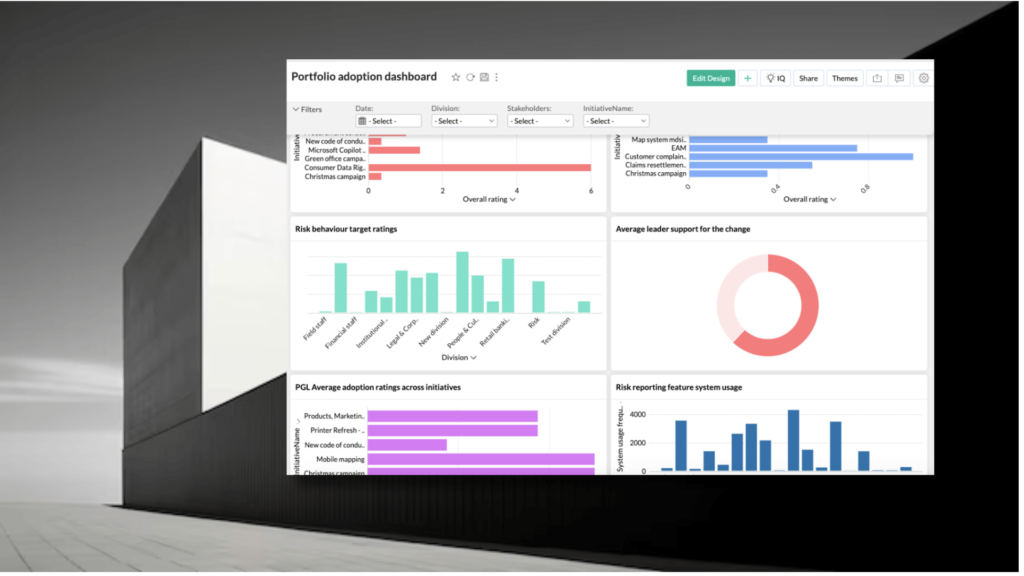
Develop a Change Management Dashboard: Use KPIs to track adoption rates, employee readiness, and impact on business metrics.
Create Case Studies: Document success stories with before-and-after comparisons. Case studies should include challenges, change management interventions, and final outcomes.
Conduct Quarterly Impact Reviews: Regularly present insights to senior leaders. Demonstrating trends and ongoing improvements ensures continued executive buy-in.
Link Change Efforts to Strategic Priorities: Show how change management enables key business goals, such as revenue growth, market expansion, or operational efficiency.
7. Shift from Education to Results-Driven Influence
While stakeholder education is important, it has limitations. Many executives have preconceived notions about change management. Rather than relying solely on relationship-building, focus on delivering results that speak for themselves. Key strategies include:
Pilot Programs: Run small-scale change initiatives with measurable impact. If an executive is sceptical, a successful pilot can turn them into an advocate. It is highly unlikely that executives will not want to see metrics that indicate how effective a change initiative is progressing.
Strategic Partnerships: Align with key business units to co-own change success. Partnering with Finance, HR, Risk, Operations and IT leaders can reinforce the business value of change management.
Agile Change Management: Deliver incremental wins to showcase immediate value. Iterative, feedback-driven approaches ensure continuous improvement and visibility.
Change management professionals must move beyond justification and actively prove their worth. By leveraging empirical research, financial calculations, behaviour tracking, alternative value measures, and proactive reporting, Change CoEs can secure their place as indispensable business functions. In a world where scepticism towards roles like change management persists, the best defence is a compelling, evidence-based demonstration of impact.
Frequently Asked Questions
How do you calculate change management ROI?
Change management ROI is typically calculated by comparing the cost of the change management investment against the value protected or created through better adoption. The most rigorous approach uses the business case baseline – the expected outcomes if the change is adopted on plan – and measures variance between that baseline and actual outcomes. For example, if a system implementation expected to deliver a 15% productivity gain achieves only 9% due to poor adoption, the difference represents quantifiable value at risk.
What metrics best prove the value of change management to executives?
Executives respond most to financial framing and risk language. The strongest evidence combines adoption rate data showing what percentage of the impacted population is using the change, a comparison to benchmark outcomes from similar changes – Prosci research shows changes with excellent change management are six times more likely to meet objectives – and a risk quantification showing the cost of a delayed or failed implementation relative to the change management investment.
What if leadership does not believe change management makes a difference?
Start with data rather than advocacy. Prosci’s Best Practices in Change Management research – spanning over 50,000 practitioners and projects – consistently shows that initiatives rated excellent for change management are six times more likely to meet objectives than those rated poor. Presenting this external benchmark depersonalises the argument and shifts the conversation from opinion to evidence. Following this with a specific calculation of value at risk for the current initiative is typically more persuasive than general arguments for the discipline.
Do We Really Need a View of Changes Across the Organisation?
As the pace of change accelerates, senior leaders are increasingly asking for a comprehensive view of changes happening across the organisation. However, not everyone sees the need for this. Some change practitioners focus solely on project-level implementation, while others concentrate on developing change capability or leadership. So, is a broad organisational view of change necessary? The short answer is yes—and here’s why.
Why is a View of Changes Important?
1. Understanding Change is Key to Improving It
Managing change effectively requires a clear understanding of what is changing. Without visibility into the scope and nature of changes, how can we improve them? Imagine if Finance attempted to manage an organisation’s finances without access to financial data. The same principle applies to change management—without insights into ongoing changes, making informed improvements to how change is managed becomes impossible or at least ineffective.
A holistic view also helps identify patterns and systemic issues that may not be visible when looking at changes in isolation. For example, if multiple teams are experiencing resistance to similar types of change, it may indicate an underlying cultural or structural issue rather than a problem with individual initiatives.
2. Avoiding a Myopic View
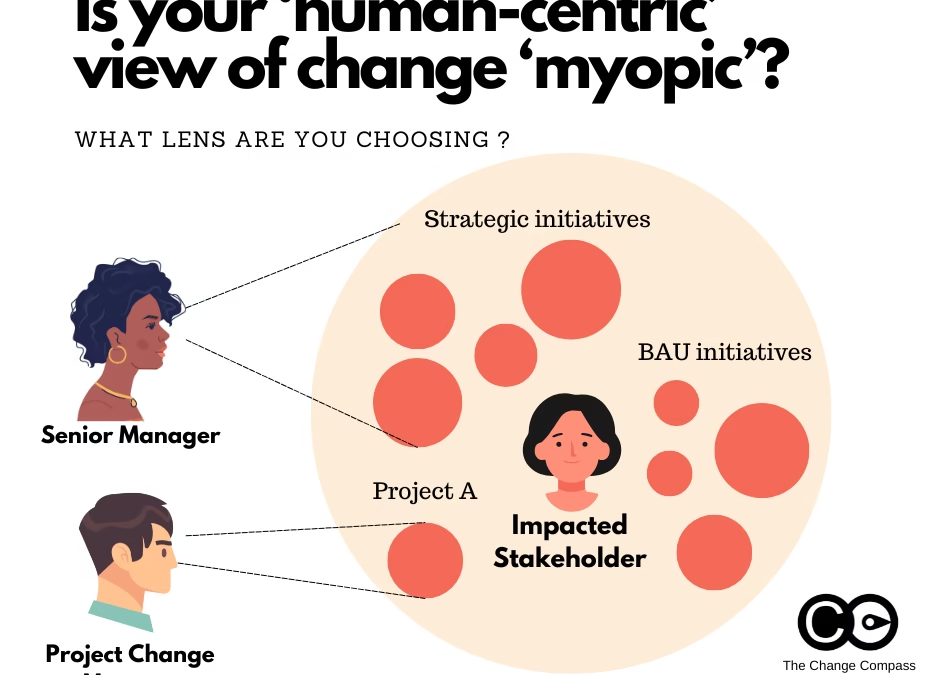
Many change practitioners operate at the project level, focusing on the change they are driving without visibility into other initiatives. This narrow focus can lead to conflicting priorities, resource constraints, and stakeholder fatigue. A fragmented approach often results in duplication of effort, where multiple teams work on similar initiatives without coordination, wasting time and resources.
A lack of visibility can also cause bottlenecks. For instance, two major transformation projects requiring input from the same group of employees may create undue pressure, leading to burnout and decreased productivity. With an organisational view, leaders can identify these risks in advance and implement measures to mitigate them, such as staggering implementation timelines or providing additional support.
3. Taking a Human-Centred Approach
A human-centred approach to change means viewing change from the perspective of impacted stakeholders rather than just from a project lens. Employees and customers experience multiple changes together, not in isolated silos. To design change experiences that work, we must understand the overall change landscape and how it affects people’s daily work and interactions.
Without a consolidated view, employees may feel overwhelmed by frequent, disconnected changes. This often leads to change fatigue, disengagement, and resistance. By considering how multiple changes intersect, organisations can design more coherent and supportive transition experiences for their people, improving adoption rates and overall satisfaction.
There are some who would rather not use the term ‘change fatigue’. Sure. Other labels may be used instead. However, not acknowledging its existence does not mean that it does not exists. We can choose to not label and not address the impacts of multiple changes. By doing this it will not magically go away. This is not going to help the business perform better and reach its targets.
4. Supporting Leadership in Managing Business Performance
Leaders are concerned about how changes impact business performance. Without a consolidated view of what is changing, how those changes interact, and their organisational impact, it is difficult to provide meaningful insights. A structured view of change enables leaders to make informed decisions, mitigate risks, and optimise the overall change portfolio to support business objectives.
For example, if an organisation is rolling out a new customer relationship management (CRM) system while simultaneously restructuring its sales teams, leaders need to assess whether these initiatives will complement or hinder each other. Without this awareness, they may inadvertently introduce inefficiencies, such as duplicate training efforts or conflicting performance expectations.
5. Enhancing Organisational Readiness for Change
A key benefit of having a comprehensive view of change is improving organisational readiness. Readiness is not just about preparing individuals for a specific change but ensuring the organisation as a whole is capable of absorbing and adapting to continuous transformation.
An organisation that understands its change landscape can proactively assess its capacity for change at any given time. If several major initiatives are running concurrently, leaders can evaluate whether the organisation has the resources, cultural maturity, and leadership alignment to support them. Without this visibility, companies risk overloading employees and creating resistance due to excessive, poorly timed changes.
Furthermore, readiness assessments can identify gaps in capability, such as the need for additional training, clearer communication, or adjustments in leadership support. When organisations have a clear view of upcoming changes, they can put proactive measures in place, such as phased rollouts, targeted engagement efforts, or reinforcement mechanisms, to ensure smoother transitions and greater adoption success.
6. How an Integrated View of Change Supports Business Readiness
An integrated view of change enables organisations to move beyond reactive change management and embrace proactive change readiness. By mapping all significant transformations across the business, leaders can anticipate challenges, synchronise efforts, and prepare employees more effectively.
For example, if a company is implementing a new enterprise resource planning (ERP) system while also shifting to a hybrid work model, an integrated change view allows decision-makers to assess whether these changes will create conflicting demands on employees. Instead of overwhelming teams with simultaneous process and technology shifts, adjustments can be made to stagger rollouts, align training programs, and provide tailored support.
Additionally, when businesses have a comprehensive perspective on change, they can implement readiness initiatives such as leadership coaching, employee engagement strategies, and resilience-building programs well in advance. This ensures that by the time changes take effect, the organisation is not just aware of them but fully prepared to embrace and sustain them. An integrated approach fosters a culture of adaptability, making the business more resilient in the face of continuous transformation.
Addressing Common Concerns: “It’s Too Complicated”
A frequent argument against establishing an organisation-wide change view is that it is too complex and resource-intensive. However, this does not need to be the case.
1. Start Small and Scale Gradually
Instead of attempting a whole-organisation approach from the outset, begin with a stakeholder lens. Understand how changes impact specific stakeholder groups, then expand to teams, departments, and eventually the entire organisation. This phased approach ensures manageable progress without overwhelming stakeholders.
One way to do this is by focusing on a single high-impact function, such as IT or HR, and mapping their change landscape before expanding outward. By demonstrating value in a contained environment, it becomes easier to gain buy-in for broader adoption.
2. Begin with Basic Data
There is no need to start with an elaborate data set. A simple list of initiatives is enough to begin forming a picture. Over time, additional data points—such as timelines, affected stakeholders, and interdependencies—can be added to enhance visibility and analysis.
Many organisations already have elements of this data scattered across different departments. Consolidating this information in a central repository can be a quick win that provides immediate value without requiring extensive new processes.
3. Take an Agile, Iterative Approach
Building a change view incrementally allows for continuous refinement and adaptation. By adopting an agile mindset, practitioners can deliver immediate value while progressively enhancing the data set. This approach ensures that the effort remains practical and sustainable while demonstrating benefits to stakeholders at each stage.
Using lightweight collaboration tools, such as shared spreadsheets or simple dashboard software, can help kickstart the process without significant investment in complex change management platforms.
Once you progress to a more sophisticated level where you need AI support and advanced dashboarding, check out Change Compass.
The Benefits of an Organisational View of Change
1. Improved Stakeholder Experience
By understanding the cumulative impact of multiple changes, organisations can better manage stakeholder experiences. Employees are often subject to change saturation when faced with numerous uncoordinated initiatives. A holistic view enables better sequencing and pacing of change to ensure smoother transitions.
2. Enhanced Risk Management
Without an overarching view, risks associated with overlapping initiatives may go unnoticed until issues arise. Identifying potential bottlenecks and conflicts early helps in designing mitigating strategies before problems escalate. Risks may include program delivery risk, operational risk, benefit realisation risk and various people risks.
3. Better Resource Allocation
Organisations often face resource constraints, whether in terms of budget, personnel, or time. A consolidated view helps leaders prioritise initiatives effectively, ensuring that resources are allocated to high-impact changes while minimising inefficiencies.
4. Strengthened Leadership Decision-Making
Leaders require data-driven insights to make informed strategic decisions. A comprehensive change landscape provides clarity on what is happening across the organisation, empowering leaders to align transformation efforts with business objectives.
Practical Steps to Establish an Organisation-Wide Change View
Step 1: Identify Key Stakeholders
Begin by engaging stakeholders across the organisation to understand their concerns and expectations. These may include senior executives, department heads, project managers, and frontline employees.
Step 2: Map Current and Upcoming Changes
Compile a list of all ongoing and planned initiatives. Categorise them by business function, timeline, impacted teams, and strategic priority. This will create an initial snapshot of the change landscape.
Step 3: Identify Interdependencies
Assess how different initiatives interact with each other. Are there overlapping resource requirements? Do changes in one area impact another? Recognising these dependencies enables better coordination and minimises disruption.
Step 4: Develop a Change Portfolio View
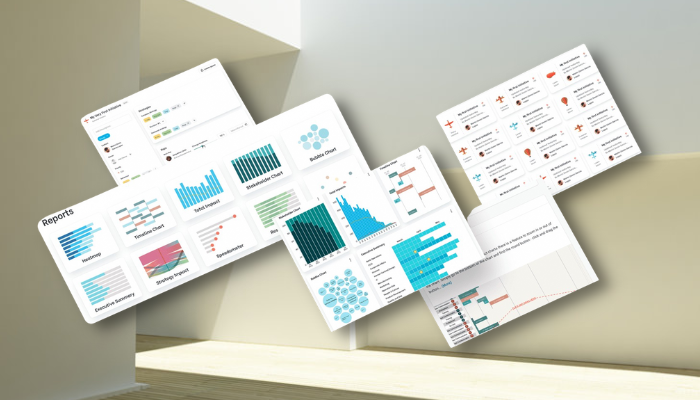
Use visualisation tools to represent the collected data in a meaningful way. Heatmaps, Gantt charts, and stakeholder impact matrices can help illustrate the overall change picture.
Step 5: Implement Governance Structures
Establish governance mechanisms to continuously update and refine the change portfolio. This may involve periodic reviews, a centralised change coordination team, or designated change champions within each department.
Step 6: Communicate Insights Effectively
Share findings with stakeholders in a digestible format. Providing clarity on how changes align with organisational priorities fosters engagement and encourages proactive collaboration.
Future Trends in Organisational Change Visibility
1. Increased Use of Digital Tools
Advanced analytics, AI-driven insights, and dashboard visualisation tools are making it easier to track and analyse change across an organisation in real-time.
2. Integration with Business Strategy
Change management is increasingly being embedded within broader business strategy execution and performance metrics tracking, ensuring alignment with long-term goals.
3. Greater Focus on Employee Experience
Organisations are recognising the importance of measuring change from an employee perspective. This includes sentiment analysis, real-time feedback loops, and adaptive communication strategies.
A comprehensive view of change across an organisation is not just a ‘nice-to-have’—it is essential for effective change management. It enables better decision-making, reduces unintended consequences, and enhances the overall employee experience. While establishing such a view may seem complex, taking a pragmatic, step-by-step approach makes it achievable and valuable.
For experienced change and transformation professionals, this shift in perspective is not just about managing change—it’s about leading it effectively in an increasingly dynamic world.
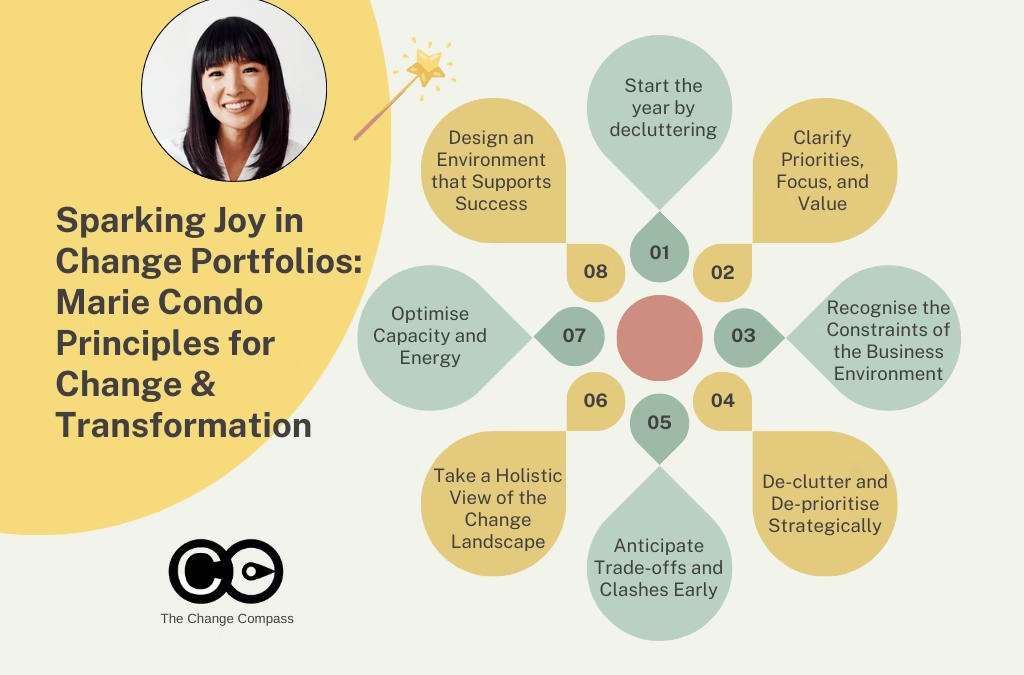
As the new year begins, it’s a natural time to reflect, refocus, and set the stage for success. For senior change and transformation professionals, this is an opportune moment to assess the upcoming portfolio of initiatives. Taking inspiration from Marie Kondo’s principles of decluttering and creating joy, we can apply these ideas to optimise our change portfolios and ensure they are designed for impact, sustainability, and value.
1. Start the Year by Decluttering
Just as Marie Kondo advises starting with a clean slate by letting go of unnecessary items, the new year offers the perfect chance to reassess the change portfolio. Decluttering is not just about removing excess; it’s about making deliberate, strategic decisions to create space for what truly matters. Many organisations find themselves burdened by legacy projects, overlapping initiatives, and unnecessary complexity. These elements consume valuable resources and dilute focus, ultimately jeopardising the success of the portfolio as a whole.
To start the decluttering process, take time to systematically review all initiatives. Begin by cataloging everything currently in progress or planned for the upcoming year. This exercise will reveal the true scope of commitments and help identify initiatives that may no longer align with the organisation’s strategic priorities. From there, engage with key stakeholders to challenge assumptions and uncover opportunities to streamline. By proactively identifying what can be paused, combined, or retired, you free up capacity for the initiatives that deliver the greatest value.
Your next PI (Program Increment) Planning will be a great opportunity to do this. As you work with other teams to assess scheduling and alignment, use this opportunity to align with stakeholder to cull and re-prioritise as required. It may be a good idea to do this prior to the PI Planning session to ensure the session is tight and focused.
Decluttering is not just about removing initiatives; it’s about creating space for the initiatives that truly matter. This exercise can involve:
Conducting a Portfolio Audit: List all current and planned initiatives. Categorize them by strategic importance, urgency, and expected impact.
Engaging Stakeholders: Facilitate discussions with leaders and project owners to challenge the status quo. Ask critical questions: Does this initiative serve a pressing need? Can its objectives be achieved through another project?
Identifying Redundancies: Often, multiple initiatives address overlapping goals. Combining efforts can streamline resources and improve focus.
2. Clarify Priorities, Focus, and Value
One of the key principles of joyful organisation is clarity. In the context of change management, clarity means ensuring that every initiative in the portfolio has a clearly defined purpose, aligns with organizational priorities, and delivers measurable value. Without this clarity, portfolios risk becoming overcrowded and unfocused, leading to wasted resources and frustrated teams.
Take a step back to evaluate each initiative against the organisation’s strategic goals. This process should involve critical questions such as: Does this initiative support our long-term vision? What specific problems does it solve? How does it fit into the broader transformation journey? Answering these questions will help identify initiatives that lack focus or fail to deliver meaningful value.
Clarity also requires a shared understanding across the organisation. Leaders, teams, and stakeholders must be aligned on what matters most. Misaligned priorities can lead to confusion, duplication of efforts, and competing demands on resources. By fostering open communication and establishing clear criteria for decision-making, you can ensure that everyone is working toward the same goals.
Creating clarity requires tools and structured processes:
Use Priority Matrices: Tools like the Eisenhower Matrix or impact-effort grids can help categorise initiatives based on their urgency and value. To read more about the Eisenhower Matrix visit this Forbes article
Define Metrics of Success: For each initiative, identify clear KPIs that demonstrate its contribution to the organisation’s goals. This helps maintain focus and provides a benchmark for future evaluations.
Communicate Priorities Clearly: Ensure that leadership and teams are aligned on what matters most. A shared understanding of priorities reduces the risk of misaligned efforts.
3. Recognise the Constraints of the Business Environment
Unlike a personal decluttering exercise, most organisations cannot afford to focus on just a few initiatives due to the fast-paced and ever-changing nature of the business world. New market demands, technological advancements, and regulatory changes often force organisations to pivot or expand their priorities mid-year. This makes it critical to design a change landscape that can accommodate both planned and emergent needs.
A well-structured portfolio balances transformational initiatives with business-as-usual (BAU) activities, ensuring that both long-term and short-term goals are addressed. However, achieving this balance requires careful planning and the ability to adapt. Organisations must be prepared to reassess priorities and make adjustments without derailing progress.
Designing the change landscape involves creating a comprehensive view of all initiatives, their interdependencies, and their impact on resources. This view should be regularly updated to reflect changes in the business environment. Scenario planning can also be invaluable, allowing organisations to explore potential outcomes and identify strategies for adapting to new challenges.
The optimal change landscape for your impacted stakeholders is one that is not cluttered, but one that is tight, focused and considered. It is not just about avoiding change saturation. It is about designing the right energy, focus, momentum and capacity.
Designing the change landscape involves:
Mapping the Portfolio: Visualise all initiatives, their timelines, and dependencies. Tools like Gantt charts or Kanban boards can help create a comprehensive view
Scenario Planning: Consider different scenarios based on potential changes in the business environment. How will the portfolio adapt if priorities shift mid-year?
Building Flexibility: Design the portfolio to accommodate adjustments without derailing progress. This might mean reserving resources for unforeseen priorities or having contingency plans for high-risk initiatives.
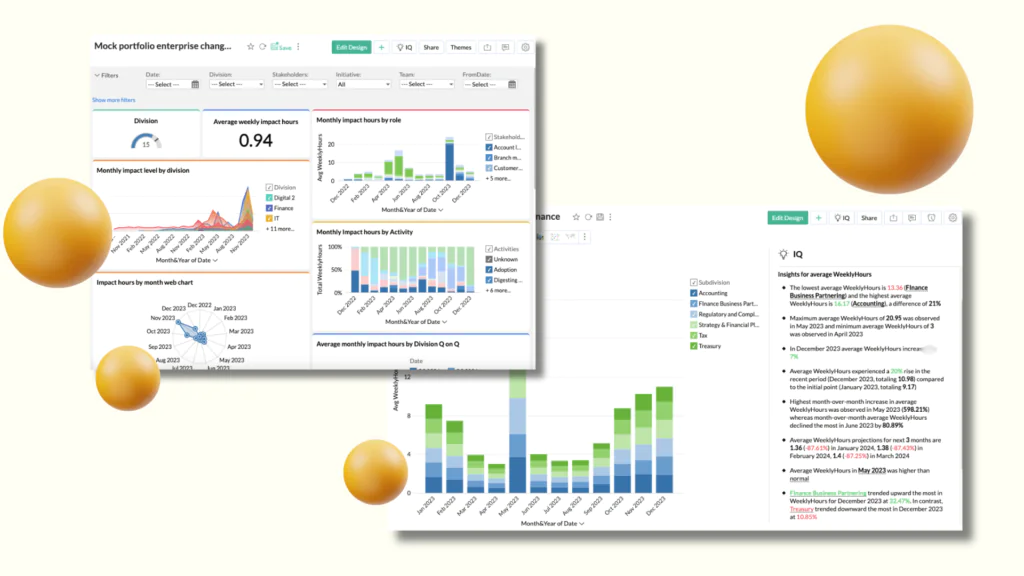
To do all these can be taxing. Check out The Change Compass for a view of your initiative impacts on people in terms of capacity and involvement. It also allows you to design and visualise different scenarios of different initiative sequences. You can easily see the forecasted capacity of various teams and be able to leverage AI insights on key risks.
4. De-clutter and De-prioritise Strategically
It’s common for certain initiatives to linger in the portfolio simply because they are pet projects of influential leaders. While these may have merit, it’s essential to make deliberate choices about what stays and what goes. Without these hard decisions, portfolios can become bloated, stretching resources too thin and compromising the success of high-priority initiatives.
Facilitating open conversations with stakeholders is key to successful de-prioritisation. This requires a combination of diplomacy and data-driven insights. By presenting clear evidence of an initiative’s impact (or lack thereof), you can shift the conversation from emotion to evidence. It’s also important to address the organisational culture around failure and closure. Retiring an initiative should be seen as a strategic decision rather than a failure.
Strategies for effective de-prioritization include:
Data-Driven Decision Making: Use data to demonstrate the potential ROI of each initiative. This helps shift conversations from emotion to evidence.
Transparent Communication: Be honest about why certain initiatives are being deprioritised. Transparency builds trust and reduces resistance.
Celebrate Closure: For initiatives that are retired, acknowledge the effort invested and celebrate the learnings. This reinforces a culture of continuous improvement.
5. Anticipate Trade-offs and Clashes Early
One of the most common pitfalls in change management is waiting until conflicts arise before addressing them. Portfolio clashes, resource shortages, and stakeholder fatigue can often be predicted well in advance. However, many organisations fail to have the necessary conversations early enough, leading to last-minute crises that disrupt progress. Having conversations too late means your initiative stakeholders are already invested given the significant effort and resources put in. This means it makes it even harder to change committed timelines, even when there are significant risks.
Proactively anticipating trade-offs requires a combination of foresight, tools, and collaborative discussions. Change impact assessments, capacity planning, and regular portfolio reviews are invaluable in identifying potential bottlenecks and saturation points. Additionally, creating forums for open dialogue allows stakeholders to surface concerns and explore solutions before issues escalate.
By anticipating challenges ahead of time, you create a smoother path for change initiatives to succeed. Key practices include:
Regular Portfolio Reviews: Establish a cadence for reviewing the portfolio. These reviews should assess progress, identify emerging risks, and recalibrate priorities as needed.
Engaging Cross-Functional Teams: Include representatives from impacted teams in decision-making. Their insights can help identify potential clashes that might be overlooked.
Scenario Analysis: Model different scenarios to understand how changes in one initiative might ripple across the portfolio. This foresight enables proactive adjustments.
6. Take a Holistic View of the Change Landscape
Change portfolios often focus on big-ticket initiatives, but employees experience all changes—big or small—as part of the same landscape. Every new tool, process, or initiative adds to the cognitive and emotional load of employees. Failing to account for this cumulative impact can lead to burnout, disengagement, and resistance to change.
Taking a holistic view means looking beyond the high-profile initiatives to include BAU initiatives, operational changes, and even cultural events like town halls or roadshows. All these elements compete for employees’ time and energy. By considering the full scope of activities, you can create a more realistic and empathetic plan that supports employee well-being.
Everything that takes time, focus, or mental energy should be part of the portfolio view. This holistic approach ensures realistic planning and reduces the risk of burnout. Practical steps include:
Creating a Change Calendar: Map all change-related activities, including BAU tasks and cultural events, to understand their cumulative impact on employees.
Conducting Employee Impact Assessments: Gather feedback from employees to understand how various initiatives affect their workload and well-being.
Prioritizing Communication: Ensure employees have a clear understanding of what’s coming and how it fits into the broader organisational goals.
7. Optimise Capacity and Energy
While most portfolios focus on deliverables, the real enabler of success is the energy and capacity of those who drive and experience change. Key considerations include:
Assessing the available capacity in impacted teams.
Designing sequences of change that maximize energy levels (e.g., scheduling major initiatives after quieter periods).
Factoring in recovery time after high-stress periods or significant releases.
By aligning the portfolio to the energy rhythms of the organisation, you increase the likelihood of successful adoption and sustained change. Specific strategies include:
Workload Balancing: Ensure no team or individual is overburdened. Distribute responsibilities equitably and provide support where needed.
Energy Mapping: Identify periods of high energy and focus within the organisation. Schedule demanding initiatives during these times to maximise success.
Encouraging Breaks: Build in time for reflection and recovery. Whether it’s a pause after a major release or regular team check-ins, these moments are crucial for maintaining momentum.
8. Design an Environment that Supports Success
Finally, creating the right environment for change is essential. Just as Marie Kondo encourages designing spaces that spark joy, change professionals should design portfolios that:
Foster collaboration and open communication.
Provide the necessary tools, resources, and support for employees.
Build a culture of adaptability and resilience.
‘Joy’ for the organisation is one that is balanced with achieving business objects and optimal people experience during change and transformation
A well-designed change environment creates the conditions for initiatives to thrive and for employees to embrace new ways of working. Consider:
Investing in Change Capability: Provide training and resources to build change management skills across the organisation.
Creating Feedback Loops: Establish mechanisms for continuous feedback and improvement. This ensures the portfolio remains aligned with evolving needs.
Celebrating Successes: Recognise and reward achievements, both big and small. Celebrating progress reinforces a positive change culture.
Applying Marie Kondo’s principles to change portfolio management allows organisations to focus on what truly matters, let go of what doesn’t, and create a change landscape that sparks energy and engagement. By decluttering, prioritising, and designing for capacity, senior change professionals can position their organisations for success in the year ahead. Take this opportunity to curate a portfolio that not only drives transformation but also brings clarity, purpose, and joy to the journey.
Remember, a well-organised change portfolio is not just about achieving organisational goals—it’s about creating an environment where people thrive, adapt, and contribute their best. Let this be the year your change portfolio truly sparks joy.
Change management practitioners are often tasked with ensuring that transitions are smooth and successful. However, to truly excel in this role, it’s crucial to embrace a systems thinking approach—an understanding that organisations are complex, interconnected systems where every change, including new core business processes and new processes, can create ripple effects throughout. One of the most potent tools for fostering systems thinking is the use of change data within change portfolio management. Here, we will focus on how change data can build interconnectedness across the organisation, enhance the management of change initiatives, and ultimately improve business results.
What is systems change management and why is it important?
Systems change management involves a strategic approach to transforming complex systems, addressing underlying issues rather than just symptoms, including important internal processes. It’s crucial for fostering sustainable development, enhancing organizational efficiency, and driving innovation. By understanding interconnections within systems, organizations can implement effective solutions that lead to long-term positive impacts.
The below are some of the core principles in Systems Thinking and how they may be applied to change portfolio management through data and analysis.
Principle 1: Interconnectedness
At the core of systems thinking is the principle of interconnectedness. Organisations are not merely a collection of individual parts; rather, they consist of various components that interact in complex ways. When change is initiated in one area, it can have unintended consequences in another. For instance, a change in the sales strategy might impact customer service processes, employee motivation, and even supply chain operations. By recognising these interconnected relationships, practitioners can make more informed decisions that take the broader organisational context into account.
In fact, change impact assessment is the process of identifying and ascertaining the linkages across the system. With each change, the various impacts across different processes, people working to support those processes and the systems involved in the processes.
Principle 2: Feedback Loops
Another fundamental aspect of systems thinking is the identification and understanding of feedback loops. These loops can be either reinforcing (positive) or balancing (negative). A reinforcing feedback loop occurs when a change in one part of the system leads to further changes in the same direction, creating a cycle of growth or enhancement. For example, an increase in employee training may lead to improved performance, which in turn boosts morale and reduces turnover, further enhancing overall productivity.
Conversely, balancing feedback loops act to stabilize the system. They can dampen the effects of change, preventing extremes from occurring. Recognising these feedback mechanisms allows practitioners to leverage positive feedback loops to enhance desired outcomes while being vigilant against the negative loops that may emerge, which could undermine the change initiatives.
Here is an example of a feedback loop –
Goal: Prevent stagnation or failure by adjusting strategies based on real-time feedback.
Use case: Ensuring that deviations or resistance are managed effectively to keep the change on track.
How it works:
Collect data from employee surveys, performance metrics, and feedback sessions to understand what’s working or not.
Identify points of resistance and take corrective actions (e.g., additional training or clarifying leadership vision).
Example: If employees express frustration with new tools, gather input and refine the rollout to address concerns.
Collect data from employee surveys, performance metrics, and feedback sessions to understand what’s working or not.
Identify points of resistance and take corrective actions (e.g., additional training or clarifying leadership vision).
Example: If employees express frustration with new tools, gather input and refine the rollout to address concerns.
What are key benefits of feedback loops?
Increased adaptability: Ensures the organisation can react to unforeseen challenges during implementation.
Engaged workforce: Employees feel more involved when they see their feedback incorporated into the process.
Sustainable change: Continuous feedback ensures that change efforts stay relevant, preventing them from losing momentum or being abandoned.
Principle 3: Causality
Systems thinking also emphasizes understanding causality—how different components of the organisation influence one another. This perspective is vital in change management, as it shifts the focus from merely addressing symptoms of problems to exploring their root causes. This can be applied throughout the change lifecycle ranging from understanding the impacts across the organisation, through to anticipating resistance and motivation levels to support the change.
Here is an example of applying the principle of causality in systems thinking
Change Initiative: Implementing a New KPI-Based Evaluation System
Initial Cause: Leaders decide to replace the existing subjective performance reviews with measurable KPIs to improve accountability.
Direct Effect: Employees shift their focus to achieving their KPIs.
This change seems positive—employees now have clear, measurable targets to meet.
Ripple Effects Across the System:
Short-term unintended outcome: Employees may begin to focus only on achieving their KPIs, ignoring tasks that are not directly rewarded, such as collaboration or innovation.
Behavioural impact: Some employees might feel micromanaged or disengaged if they view the new system as rigid or unfair.
Team dynamics: Competitive behaviour between employees could increase, reducing collaboration and creating silos.
Long-term Causal Feedback:
Lower collaboration can negatively affect innovation and employee morale, leading to attrition of high performers.
A balancing feedback loop emerges when HR notices a decline in collaboration scores and recommends revising KPIs to include teamwork-related metrics.
Principle 4: Holistic Perspective
Adopting a holistic perspective is crucial in systems thinking. Instead of viewing the organisation as a set of isolated parts, practitioners should consider the organisation as a dynamic whole. This approach enables better problem-solving and decision-making by considering all relevant factors and their interactions. A holistic view facilitates a deeper understanding of how changes in one area may impact others, ultimately leading to more sustainable and effective change initiatives.
For example, An organisation is running several parallel initiatives under a broader digital transformation effort, including:
CRM System Implementation
Agile Ways of Working Initiative
Cloud Migration for Core IT Systems
Employee Upskilling Program on Digital Tools
Application of Holistic Perspective
Identifying InterdependenciesThe CRM system needs to integrate with both legacy IT infrastructure and future cloud platforms, incorporating new features to enhance user experience.
The agile transformation affects how teams work, influencing the success of the CRM project and cloud migration by demanding faster collaboration cycles.
The upskilling program needs to ensure employees are trained not only in new digital tools but also on agile practices and cloud-based platforms.
Avoiding Initiative SilosWithout a holistic view, each project might focus only on its own goals, causing schedule conflicts (e.g., IT resources are overbooked for the cloud migration and CRM deployment).
Teams might experience change fatigue if initiatives are rolled out simultaneously without coordination. For example, employees may struggle to participate in the upskilling program while also meeting deadlines for the agile rollout.
Portfolio-Level Governance and PrioritizationUsing a holistic lens, the portfolio management team can sequence projects logically. For example:
First: Migrate critical systems to the cloud to ensure the CRM implementation has a stable foundation.
Second: Begin the agile transformation to align working methods before launching cross-functional CRM initiatives.
Third: Schedule employee upskilling to ensure readiness before key milestones in the CRM and cloud projects.
Optimizing Resources and Reducing RisksViewing the portfolio holistically allows management to optimize resource allocation (e.g., sharing skilled IT personnel across cloud and CRM projects efficiently).
By aligning initiatives, the company mitigates the risk of conflicting efforts and reduces change fatigue through coordinated communication and engagement plans.
The CRM system needs to integrate with both legacy IT infrastructure and future cloud platforms.
The agile transformation affects how teams work, influencing the success of the CRM project and cloud migration by demanding faster collaboration cycles.
The upskilling program needs to ensure employees are trained not only in new digital tools but also on agile practices and cloud-based platforms.
Without a holistic view, each project might focus only on its own goals, causing schedule conflicts (e.g., IT resources are overbooked for the cloud migration and CRM deployment).
Teams might experience change fatigue if initiatives are rolled out simultaneously without coordination. For example, employees may struggle to participate in the upskilling program while also meeting deadlines for the agile rollout.
Using a holistic lens, the portfolio management team can sequence projects logically. For example:
First: Migrate critical systems to the cloud to ensure the CRM implementation has a stable foundation.
Second: Begin the agile transformation to align working methods before launching cross-functional CRM initiatives.
Third: Schedule employee upskilling to ensure readiness before key milestones in the CRM and cloud projects.
First: Migrate critical systems to the cloud to ensure the CRM implementation has a stable foundation.
Second: Begin the agile transformation to align working methods before launching cross-functional CRM initiatives.
Third: Schedule employee upskilling to ensure readiness before key milestones in the CRM and cloud projects.
Viewing the portfolio holistically allows management to optimize resource allocation (e.g., sharing skilled IT personnel across cloud and CRM projects efficiently).
By aligning initiatives, the company mitigates the risk of conflicting efforts and reduces change fatigue through coordinated communication and engagement plans.
Principle 4: Emergence
Finally, the concept of emergence in systems thinking highlights how complex behaviours can arise from simple interactions among components. The principle of emergence in systems thinking refers to the idea that when individual elements interact, new patterns or behaviours emerge that were not predictable by examining the parts alone. In change portfolio management, this means that the outcomes of managing multiple change initiatives may be different—often more complex or unexpected—than the sum of each individual change project. Emergent behaviours can create both opportunities and risks.
Scenario: Managing a Sustainability Transformation Portfolio
A large organisation launches several interconnected initiatives to become a more sustainable enterprise:
Carbon Reduction Initiative – Shift to renewable energy and reduce emissions.
Sustainable Supply Chain Project – Engage suppliers on environmental standards.
Green Product Innovation Program – Develop eco-friendly products.
Employee Engagement Initiative – Promote green behaviours among employees.
Application of Emergence
Unexpected Synergies EmergeEmployees participating in the engagement initiative start identifying operational inefficiencies, such as excess waste, leading to additional cost savings.
The green product innovation program creates a culture of experimentation that spills over into other departments, resulting in improved collaboration and faster innovation cycles across the organisation, beyond sustainability-focused efforts.
Emergent Risks and Complex InteractionsSuppliers struggling to meet new sustainability requirements may delay the sustainable supply chain project, impacting both product launches and company operations.
Employees feel overwhelmed by the number of sustainability programs and resist further change, creating unexpected resistance that spreads to unrelated initiatives, such as digital transformation efforts.
New Opportunities Emerge from InteractionsAs cross-functional teams work together, new business models emerge. For example, sales and product teams discover that green products appeal to a new customer segment, leading to revenue growth opportunities not originally anticipated in the change portfolio plan.
Collaborations with suppliers in the supply chain project uncover the potential for joint ventures focused on sustainable technology.
Employees participating in the engagement initiative start identifying operational inefficiencies, such as excess waste, leading to additional cost savings.
The green product innovation program creates a culture of experimentation that spills over into other departments, resulting in improved collaboration and faster innovation cycles across the organisation, beyond sustainability-focused efforts.
Suppliers struggling to meet new sustainability requirements may delay the sustainable supply chain project, impacting both product launches and company operations.
Employees feel overwhelmed by the number of sustainability programs and resist further change, creating unexpected resistance that spreads to unrelated initiatives, such as digital transformation efforts.
As cross-functional teams work together, new business models emerge. For example, sales and product teams discover that green products appeal to a new customer segment, leading to revenue growth opportunities not originally anticipated in the change portfolio plan.
Collaborations with suppliers in the supply chain project uncover the potential for joint ventures focused on sustainable technology.
It may not be possible to forecast or anticipate all types of employee behaviours and reactions to new changes introduced. However, engaging your stakeholders and involving them in the change process may help you identify these in advance.
The Role of Change Data in Building Systems-Thinking Within Change Portfolio Management
Change portfolio management involves overseeing a collection of change initiatives and ensuring that they align with the organisation’s strategic objectives. The integration of change data into this process can significantly enhance systems thinking capabilities.
Creating a Data-Driven Culture
One of the first steps in leveraging change data is to establish a data-driven culture. Practitioners should promote the importance of data in decision-making processes across the organisation. By providing visibility of the changes that are upcoming, they can empower employees at all levels to utilize change data in their daily work. This cultural shift fosters an environment where data becomes a common language, allowing for clearer communication about changes and their potential impacts. However, do note that different type of employees may require different type of data.
Mapping Change Initiatives
Using change data, organisations can create visual maps of their change initiatives. These maps can illustrate how different initiatives are interconnected and highlight the dependencies between them. For example, a visual representation can show how key performance indicators link to a new software implementation, relying on training programs or how changes in one department may impact others. By visualizing these relationships, practitioners can better assess the potential ripple effects of changes and make more informed decisions.
Monitoring and Analysing Feedback Loops
By actively monitoring change data, organisations can identify and analyse feedback loops in real-time and enhance user adoption. This ongoing audit analysis allows practitioners to quickly respond to emerging trends or unintended consequences, including potential performance improvements. For instance, if data shows a decline in employee productivity following a process change, practitioners can investigate and implement corrective actions before the situation worsens. By understanding these feedback loops, organisations can not only react to changes but also proactively shape their outcomes.
Causal Analysis
Incorporating change data into causal analysis enables organisations to identify the root causes of issues. Practitioners can use data analytics to explore the relationships between different components of the organisation, leading to a clearer understanding of how changes impact various outcomes. This data-driven approach allows for more targeted interventions, ensuring that efforts are directed towards addressing the underlying issues rather than merely treating surface-level symptoms.
Holistic Change Portfolio Assessment
When practitioners evaluate their change portfolio, they should adopt a holistic approach that considers the interplay between various initiatives within the change management process. By analysing change data in aggregate, organisations can identify patterns and trends that may not be visible when examining initiatives in isolation. This holistic assessment allows practitioners to prioritise initiatives that align with broader organisational goals, ultimately leading to more effective change management.
Fostering Collaborative Environments
Change data can also be a catalyst for fostering collaborative environments. By sharing insights and findings from change initiatives, organisations can create a culture of collaboration where change agents help teams learn from one another’s experiences. This exchange of information can lead to emergent solutions that drive innovation and improve the process of change outcomes. Additionally, collaborative tools and platforms can be leveraged to facilitate communication and knowledge sharing across departments.
Building Connectedness Across the Organisation
The integration of change data across different types of changes into change portfolio management fosters interconnectedness within the organisation. By emphasising the importance of data and encouraging collaboration, practitioners can create a more cohesive organisational culture that embraces change.
Enhancing Communication
Clear communication is essential for effective change management. Change data provides a foundation for effective communication about initiatives and their impacts to key stakeholders. Practitioners can use data visualizations and reports to communicate progress, challenges, and successes, fostering a sense of shared understanding across the organisation.
Breaking Down Silos
Change data can also help break down silos within the organisation. By sharing data and insights across departments, practitioners can encourage collaboration and foster a sense of unity. This interconnectedness enhances problem-solving capabilities, as diverse teams bring different perspectives to the table, leading to more innovative solutions. Issues may be pre-empted if stakeholders can pick up on impacts that may be missed for example.
Aligning Goals and Objectives
When change initiatives are informed by change data, it becomes easier to align goals and objectives across the organisation. Practitioners can use data to ensure that all initiatives are working towards the same strategic objectives, reducing the likelihood of conflicting priorities. This alignment creates a more focused approach to change management, ultimately leading to improved business results.
Improving Business Results Through Systems Thinking
The application of systems thinking through change data in change portfolio management can lead to substantial improvements in business results. By fostering interconnectedness, enhancing communication, and breaking down silos, organisations can create a more agile and responsive environment.
Increased Agility
Organisations that embrace systems thinking and utilize change data are better equipped to respond to changes in the external environment. By understanding the interconnectedness of their initiatives, practitioners can pivot quickly in response to emerging trends or challenges. This agility is essential in today’s fast-paced business landscape.
Enhanced Employee Engagement
When employees see their work as part of a larger, interconnected system, they are more likely to feel engaged and motivated. By involving employees in the change process and using data to demonstrate the impact of their contributions, organisations can foster a sense of ownership and commitment to change initiatives.
Improved Decision-Making
Systems thinking promotes better decision-making by encouraging practitioners to consider the broader context of their actions. When decisions are informed by change data, organisations can identify potential consequences and make choices that align with their strategic goals. This improved decision-making ultimately leads to more successful change outcomes.
Sustainable Change Initiatives
Finally, the application of systems thinking and change data can lead to more sustainable change initiatives. By focusing on root causes, leveraging feedback loops, and fostering collaboration, organisations can implement changes that are not only effective in the short term but also sustainable over time. This sustainability is crucial for long-term business success.
Change data is a powerful lever that change management practitioners and business leaders can use to foster systems thinking within their organisations. By recognising the interconnectedness of change initiatives, understanding feedback loops, exploring causality, adopting a holistic perspective, and nurturing environments for emergence, organisations can improve their approach to change management solutions. Through these efforts, practitioners can build connectedness across the organisation, ultimately enhancing how change is managed and driving improved business results, as well as ensuring the success of that change. Embracing systems thinking in change portfolio management is not just a best practice; it’s a necessity for organisations seeking to thrive in an ever-evolving business landscape.
Frequently Asked Questions
What is systems thinking in change management?
Systems thinking in change management is the practice of looking at an organisation as an interconnected system rather than a collection of independent parts. It means recognising that a change in one part of the organisation will have ripple effects on other parts, that employee responses to change are influenced by the full portfolio of changes they are experiencing simultaneously, and that the outcomes of change initiatives emerge from the interaction of many factors rather than from any single cause.
How does change data support a systems thinking approach?
Change data makes the interconnections in an organisational system visible. When you can see which employee groups are affected by multiple simultaneous changes, how change load is distributed across the organisation, and where feedback loops between initiatives are creating conflicting messages, you can make much more informed decisions about sequencing, prioritisation, and support.
What are the four systems thinking principles most useful in change management?
The four principles most applicable are: feedback loops (monitoring how people are responding and adjusting based on what you learn); emergence (recognising that adoption outcomes emerge from the collective response of many people); interconnectedness (understanding how your change is linked to other changes happening simultaneously); and non-linearity (accepting that small interventions can sometimes have large impacts depending on the specific dynamics of the system).