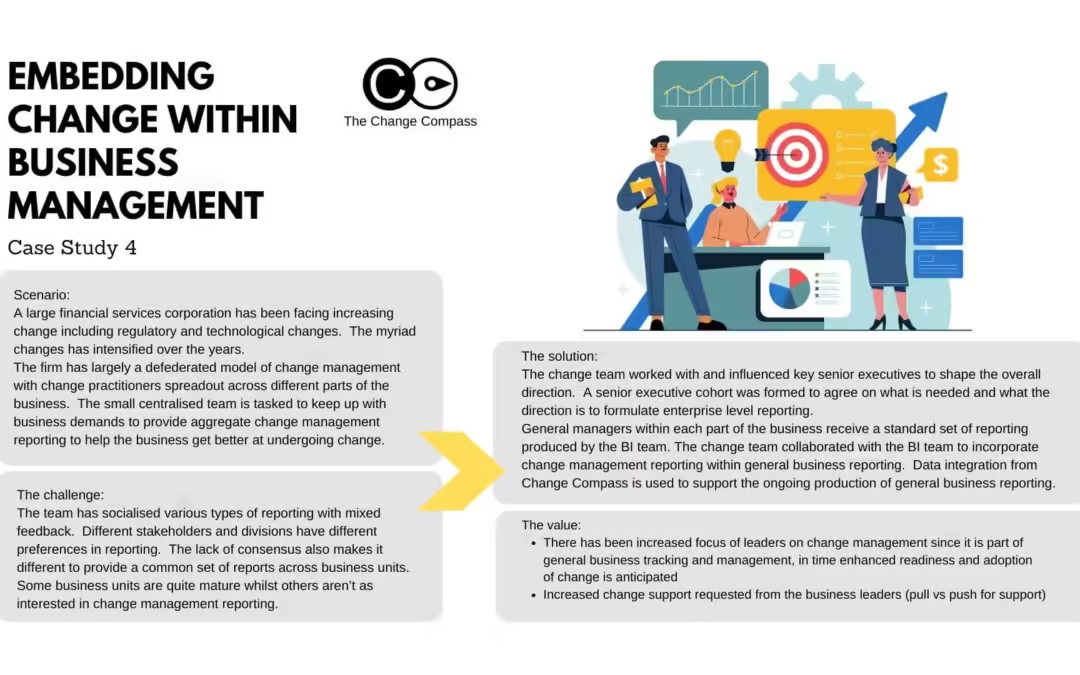
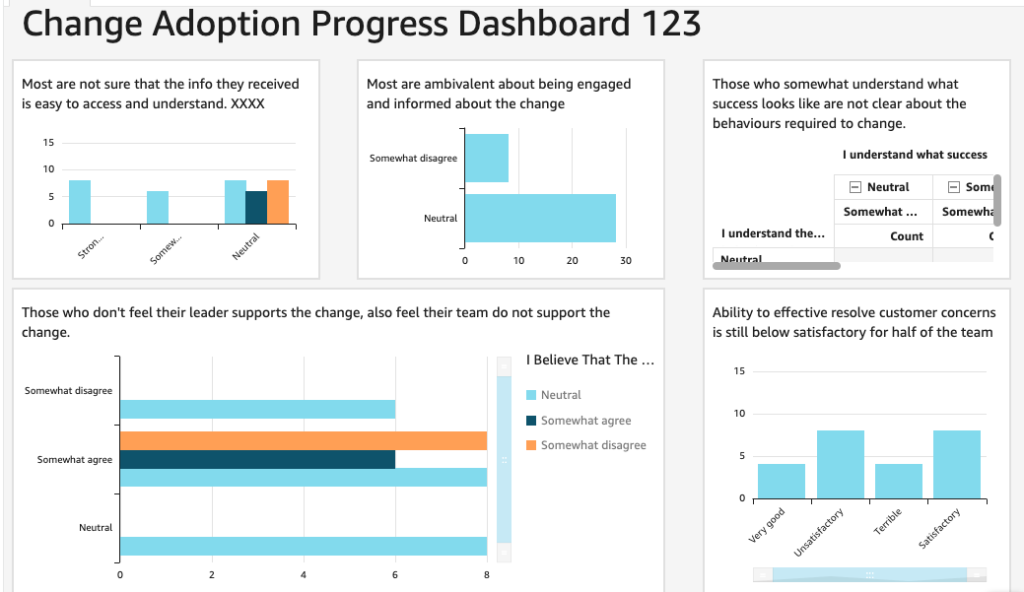
In the rapidly evolving landscape of financial services, organisations face significant challenges due to regulatory and technological changes. A large financial services corporation has recognised the need for an integrated approach to change management reporting, embedding it within general business reporting to enhance organisational agility and effectiveness. This case study outlines the firm’s journey, challenges faced, solutions implemented, and the resulting value derived from this strategic initiative.
Background
The corporation operates under a defederated model of change management, where change practitioners are distributed across various business units. This structure has led to inconsistent change management practices and reporting, complicating the ability to provide comprehensive insights into organisational change efforts. As regulatory demands and technological advancements have intensified, the need for cohesive change management reporting became paramount.
Challenges
The primary challenges encountered by the centralized change management team included:
Diverse Reporting Preferences: Different stakeholders and divisions within the organization exhibited varying preferences for reporting formats and metrics. This lack of consensus hindered the development of a standardized reporting framework.
Maturity Disparities: Business units displayed varying levels of maturity in their change management practices, with some units showing strong interest while others remained indifferent.
Feedback Variability: Initial attempts to socialize various reporting types received mixed feedback, complicating efforts to establish a unified approach.
Solution Implementation
To address these challenges, the change management team adopted a multi-faceted strategy:
Executive Engagement: The team actively engaged with senior executives to align on the direction for change management reporting. A senior executive cohort was formed to define essential reporting needs and establish a common vision.
Collaboration with Business Intelligence (BI) Team: The change management team partnered with the BI team to integrate change management metrics into existing general business reports. This collaboration ensured that change management insights were included in routine business tracking.
Data Integration: Utilising data from Change Compass facilitated the ongoing production of comprehensive reports that combined operational metrics with change management insights.
Value Realized
The integration of change management reporting into general business reporting yielded several significant benefits:
Increased Leadership Focus: By embedding change metrics within standard business reports, leaders began to prioritize change management as part of their strategic oversight. This shift is expected to enhance readiness and adoption of future changes across the organization.
Proactive Change Support: Business leaders increasingly requested support for change initiatives, indicating a transition from a push model (where support is offered) to a pull model (where support is actively sought).
Enhanced Reporting Consistency: The establishment of a standardized set of reports improved clarity and consistency in how change initiatives were tracked and communicated across business units.
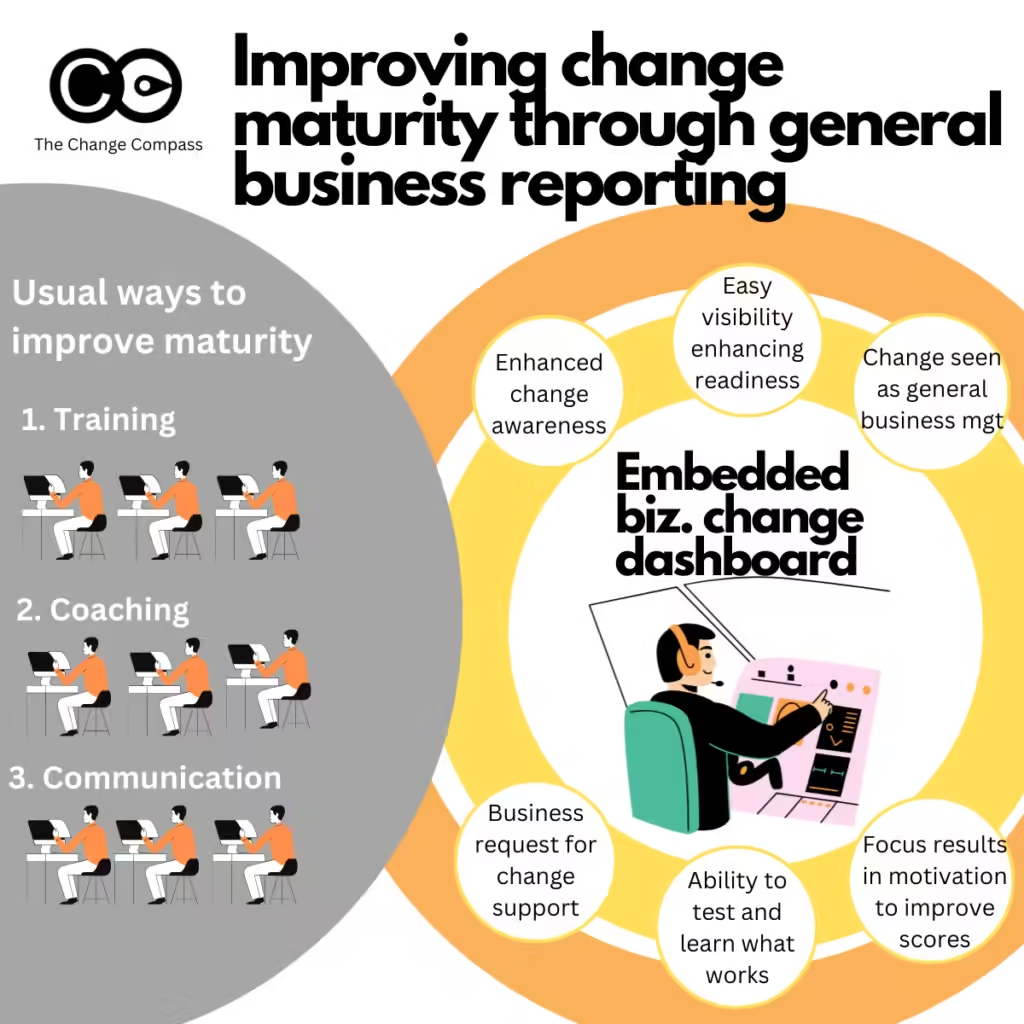
Change management Maturity: Enhancing change management maturity within the business is general done through capability development and coaching. However, this case showcases that embedding change management within general business management is a strategic way to raise awareness, visibility, and through this enhance the business’ efforts to improve the management of change.
This case study illustrates how a large financial services corporation successfully embedded change management reporting into its general business reporting framework. By engaging senior leadership, collaborating with data teams, and standardising metrics, the organisation not only improved its reporting capabilities but also fostered a culture that values proactive engagement with change initiatives. As a result, the firm is better positioned to navigate future changes while ensuring that it meets regulatory demands and capitalizes on technological advancements.
As a change management practitioner, your mission is to guide organisations through change, building their ability to manage transitions effectively and sustainably. A major part of this work often involves helping organisations develop their “change maturity” — the capacity to continuously and successfully deliver change. Many experienced change practitioners focus on moving organisations along this maturity curve, seeing it as a vital part of creating a culture that embraces and sustains transformation.
However, in this pursuit, there’s a potential risk: becoming too fixated on achieving “change maturity” can cloud your judgment about what the organisation really needs. You may find yourself caught up in the desire to build structured change processes, educate stakeholders on every change theory, or create complex frameworks to assess and elevate change capability. While these elements are important, an over-reliance on them can impede progress. In some cases, your organisation might be more capable of managing change than you think, but your approach could be holding them back.
There are several common areas where change practitioners may become too focused on change maturity — and how this focus can actually hinder their ability to support successful, meaningful change. We’ll delve into how overemphasising change terminology, processes, structures, and risk-averse approaches can become obstacles to progress. By understanding and addressing these potential pitfalls, you can better align your support with the unique needs and readiness of your organisation, enabling a smoother, more effective path to support successful change.
Are You Too Quick to Label Your Organisation as Change Immature?
One of the first traps experienced change practitioners might fall into is quickly labeling their organisation as “change immature.” It’s tempting to assess an organisation’s change capability through the lens of formal change frameworks and models, but by doing so, you may be discounting their informal ability to adapt to change.
In other words, is your ‘label’ placed on the organisation a potential self-fulfilling prophecy? For example, if you see the organisation as mildly change mature, your approach and lens may all be geared around this label and expectation.
Organisations that have not formally defined their change management processes or have not made concerted efforts to assess their change maturity might seem “immature” on the surface. But that doesn’t mean they lack the inherent capacity to change. In many cases, businesses have evolved and navigated transitions without formal change models in place, relying on their leadership, adaptability, and problem-solving capabilities.
Example: Mislabeling the Organisation’s Maturity
Consider a large, successful organisation with a history of navigating mergers, market shifts, and product innovation. While this company may have never formalised a change management function or assessed its change maturity, its survival and success prove that it has navigated complex changes in the past. You, as the change practitioner, might arrive and see that the business lacks a formal change methodology like Prosci or Kotter, so you label them as immature. As a result, you might start recommending a highly cautious, structured approach to “bring them up to speed.”
However, this label can lead to unnecessary delays. Rather than imposing new structures or over-engineering the process, it could be more effective to build on the organisation’s existing ways of working. The business may already have the right instincts, and simply needs to refine its approach to handle more formalised, larger-scale change efforts.
This cautious approach of assuming immaturity often leads to missed opportunities for progress. It slows down the pace of change and leaves businesses feeling that they are incapable of handling large-scale change without significant external help.
Change Terminology and Concepts: Over-Education vs. Practical Implementation
Another common pitfall is becoming too focused on educating stakeholders about change management concepts and frameworks, rather than focusing on practical implementation. It’s easy for experienced change practitioners to get caught up in explaining the intricacies of change theories, but the reality is that many stakeholders may not need or want this level of detail.
Stakeholders, especially those in senior leadership positions, are often more interested in results than in the underlying change management theories. Spending too much time educating them on ADKAR, Kotter’s 8-step process, or Lewin’s model can divert attention from the critical issue: how to implement the change in their specific organisational context.
Using and coaching your stakeholders on implementing change without change methodology is a skill, but one that can be critical.
Example: Change Concepts vs. Actionable Strategies
Imagine working on a digital transformation project where the leadership team is eager to see results. Instead of diving straight into how the change will be implemented, you spend the first few weeks educating the leaders on the theory behind change management, explaining why each stage of the ADKAR model is important and why a structured approach is necessary. While these concepts are valuable, the leadership team is left feeling overwhelmed by jargon and disconnected from the practicalities of the change they need to deliver.
A more effective approach in this situation might be to focus on practical, actionable strategies that are action-based learning. Instead of over-explaining change concepts, walk stakeholders through the steps they need to take, provide them with tools to manage resistance, and give them clear, real-time metrics on progress. In many cases, stakeholders don’t need an in-depth lesson on change theory—they need guidance on how to lead change within their teams, how to prepare and engage effectively, and how to overcome resistance.
Even if you don’t focus on education, and instead label them as change immature. This in itself can be dangerous and unhelpful. As a result you don’t implement the right approaches to support the change required to achieve their business goals.
While it’s essential to help stakeholders understand the principles behind change, overemphasis on theoretical knowledge can take the focus away from delivering the change itself.
Processes and Structures: Building New or Leveraging Existing?
One of the hallmarks of a maturing change organisation is the establishment of formal structures and processes to support change. Communities of practice, change champion networks, formalised governance bodies, and change management offices all play vital roles in building long-term change capability. However, there’s a risk of becoming too focused on building these structures rather than finding ways to work within the current framework of the organisation.
When faced with the task of improving change capability, many practitioners instinctively begin to build new structures from scratch. However, this can add complexity and create parallel processes that the business may not be equipped to handle. Sometimes, rather than introducing new structures, the better approach is to refine and optimise existing business processes and forums to embed change more naturally.
Example: Building New Structures vs. Leveraging Existing Ones
Consider an organisation that already has strong cross-functional governance in place for operational projects. Instead of introducing a new change champion network, you could work with the existing project governance structures to ensure change management principles are integrated into these meetings. By adapting existing forums to include change discussions, you avoid creating extra layers of complexity and leverage routines that are already familiar to the business.
The challenge is to balance the need for formal change structures with the desire to minimise disruption to current workflows. Often, the most effective approach is to enhance existing structures rather than building entirely new ones. This also helps to prevent the perception that change management is an “additional burden” rather than an integrated part of business operations.
‘Babying’ Your Stakeholders: Are You Doing the Change for Them?
As a change practitioner, it’s natural to want to help stakeholders navigate the complexities of change. But there’s a fine line between supporting your stakeholders and doing the change for them. When you step in to handle every aspect of the change process, you risk undermining your stakeholders’ ability to build their own change capability.
The goal of change management is to empower the business to manage change independently. If you are too involved in managing the change, you can inadvertently create dependency, where stakeholders rely on you to handle resistance, communications, or decision-making. This not only stifles their growth but also prevents the organisation from building a sustainable, internal capacity for change.
Example: Over-Involvement vs. Coaching for Capability Building
Suppose you’re leading a change initiative in a large organisation, and you find yourself handling most of the communications, solving problems that arise, and managing resistance from teams. While you may feel that you’re helping, the reality is that your stakeholders are becoming overly dependent on you to manage the change.
A more effective approach is to take a coaching stance. Rather than doing the change for them, help your stakeholders learn how to anticipate resistance, communicate effectively, and manage change within their teams. Offer guidance and support, but resist the temptation to take over. When you empower stakeholders to lead the change themselves, you help them build the confidence and skills they need to manage future changes more independently.
The key is to recognise when your involvement is crossing the line from support into doing the change for them. The more you can coach and mentor your stakeholders, the more resilient and capable the organisation will become.
Setting the Bar Too Low for Your Organisation
The COVID-19 pandemic demonstrated something profound about people and organisations: they are capable of changing far more quickly than we might have thought. Practically overnight, organisations adapted to remote working, adopted new technologies, and restructured their operations. This rapid adaptation showed that many organisations have far more resilience and capacity for change than we often give them credit for.
But in the post-pandemic world, are you still setting the bar too low for your organisation? Are you approaching change cautiously because you assume the business is not capable of rapid adaptation? If so, you may be underestimating their ability to handle larger-scale change or more ambitious transformation initiatives.
Example: Underestimating Organisational Capacity
Imagine working with an organisation that wants to implement a large-scale digital transformation. You might assume that because the business has not undertaken such a significant change before, they will need to move cautiously, taking small steps toward change maturity. However, given the right leadership support, clear communication, and resources, the organisation might be able to implement the transformation far more quickly and effectively than anticipated.
The key is to challenge your assumptions about the organisation’s capacity for change. Instead of setting the bar too low and taking overly cautious steps, consider where you can stretch the organisation’s potential. Businesses often have far more adaptability and resilience than we might assume, and by aiming higher, you can help them achieve more ambitious outcomes. Again, COVID was a clear demonstration of what can be possible.
Caution vs. Progress: Finding the Right Balance
One of the biggest challenges for change practitioners is finding the right balance between caution and progress. In many cases, particularly with organisations that are newer to structured change management, a cautious approach may feel like the safest route. But taking overly cautious steps can prevent the organisation from achieving the level of change it needs to succeed.
The other side of the equation is pushing too hard, too fast. While organisations may have a greater capacity for change than we give them credit for, they also need time to adapt and build their change capability. The trick is to strike the right balance between ambitious progress and thoughtful pacing, especially iterative paced learning.
Example: Caution vs. Ambition in Portfolio-Level Change
Consider an organisation that is managing a portfolio of change initiatives. One approach is to take small, incremental steps to build change capability, slowly rolling out new processes and frameworks. While this approach may feel safe, it can prevent the business from keeping up with the volume and pace of change it needs to manage.
A more ambitious approach might involve embedding change management principles directly into business planning, governance, and decision-making. By integrating change management into existing processes, the organisation can manage a high volume of change more effectively without creating new silos or delays. This approach pushes the organisation to operate at a higher level, while still allowing time for adaptation and learning.
Adjusting Your Lens on Change Maturity
While change maturity is an important goal for any organisation, becoming too fixated on achieving it can inadvertently cloud your judgment and therefore negatively impact outcomes. Overemphasising change models, frameworks, and cautious steps can slow down the pace of change and underestimate the organisation’s capacity to evolve. As a change management practitioner, your role is not just to assess change maturity but to empower the organisation to grow and adapt.
By adjusting your lens and focusing on the organisation’s immediate needs and strengths, you can support more effective, sustainable change. This means balancing formal change processes with practical implementation, empowering stakeholders to lead the change themselves, and setting higher expectations for what the organisation can achieve.
The goal is not just to build change maturity, but to help the organisation experience navigating change in a way gives them confidence and meets their business goals.
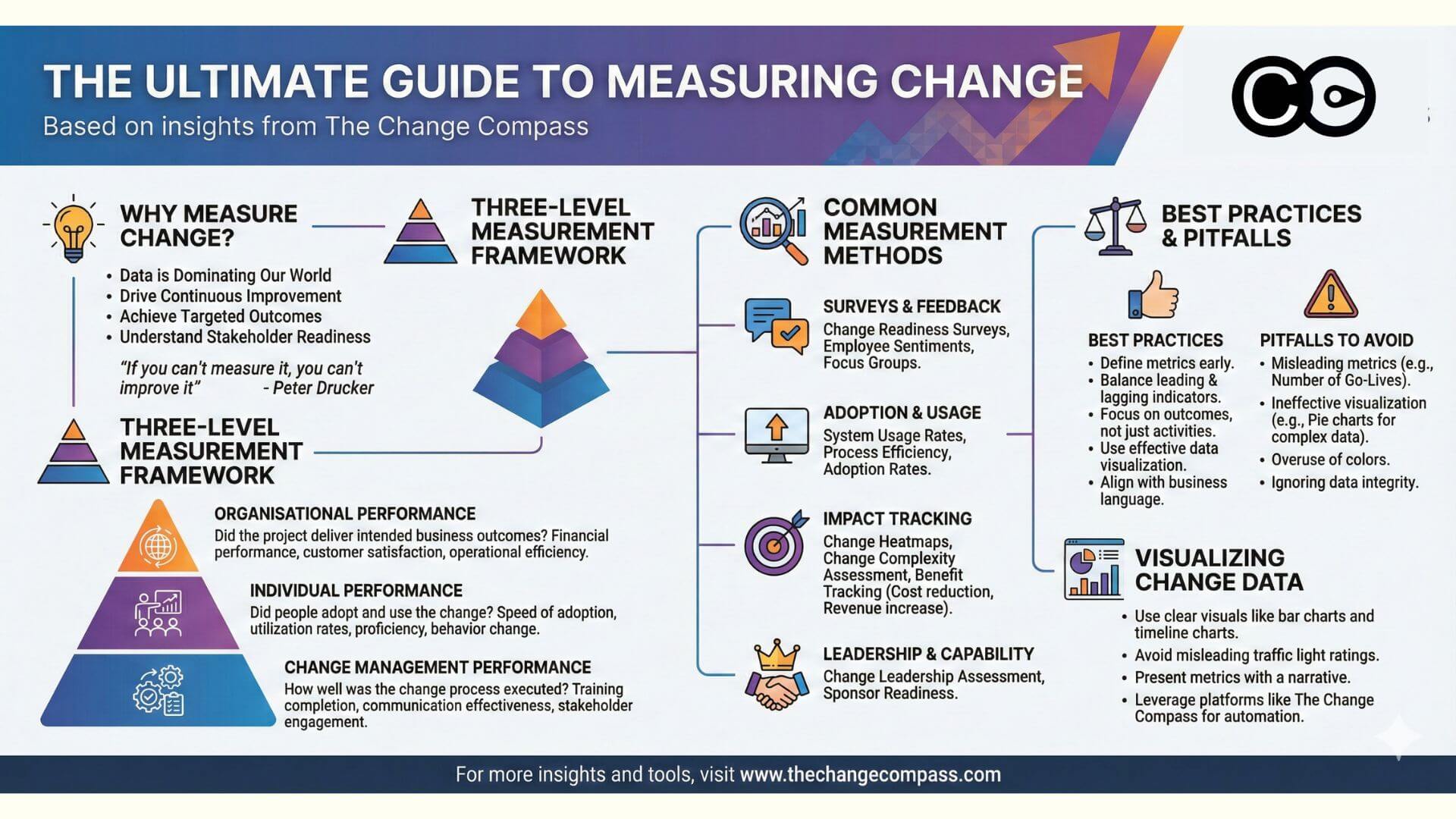
Measuring change management is the practice of capturing whether an organisation’s change activities are landing as intended across a portfolio of initiatives. It covers three distinct layers: project-level metrics that show whether individual initiatives are on track, business-level metrics that show whether the outcomes promised in the business case are being achieved, and enterprise-level metrics that show whether the organisation as a whole is becoming more capable of absorbing change. A complete framework reports on all three. Without measurement at each layer, change management becomes a series of activities with no defensible link to business value.
Most organisations can tell you how many people attended the training and how many emails the project sent. Far fewer can show that the change they paid for is happening in daily work. That gap is now visible at the top of the house: Prosci’s 2026 analysis of ERP programmes found that activity measures such as training completion and communications sent say little about whether people can actually use the new system, and that organisations with poor metrics succeeded less often than those with no formal metrics at all.
This guide is for the senior change, HR and transformation leaders who have to answer the question “is it working?” in a steering committee, not a workshop. It argues for one layered measurement system instead of a pile of surveys, sets out the six project-level methods most teams already use (and where each one breaks), walks through the measures that belong at project, business and enterprise level, and gives you a five-step framework and a reporting cadence. It is also the hub for our measurement cluster: each sub-topic gets a short answer here and a link down to the guide that covers it in full.
Change can be measured because behaviour, readiness, capacity and benefits all leave evidence in data your organisation already collects; the real question is which of that evidence you choose to look at, and whether it measures activity or outcomes.
A lot of change practitioners are comfortable saying that change management is about attitudes, behaviours and feelings, and therefore cannot be measured. That “soft” framing extends into areas such as leadership and employee engagement, where tracking is certainly harder. But harder to measure and less black and white is not the same as less worth measuring. The old maxim that you cannot improve what you do not measure, often attributed to Peter Drucker, applies as much to how people move through a change as it does to inventory or cash.
Data is already changing everything around us
The reason so much industry change happens now is that data has become a central part of how the world runs. We rely on the internet for information, and the data collected through our digital interactions drives decisions about us. A home assistant such as Amazon’s Alexa recognises our voices and answers what we ask. Street cameras can identify us. Our Google usage shapes the advertisements and product promotions we see, and our Facebook usage builds a detailed picture of our preferences and lifestyles, so that we are targeted with what the platform’s algorithms think we will value.
So if our world is surrounded by data, why are we not measuring it when managing change? To answer that, it helps to look at what is, and is not, being measured today.
Activity metrics versus outcome metrics
The most common weakness in change reporting is a dashboard built from activity metrics. Training completion, newsletter opens and workshop attendance are easy to collect, which is why they dominate. They tell you what the change team did, not what the workforce did as a result.
Prosci’s current guidance is to measure what it calls the human factors of return on investment: speed of adoption, ultimate utilisation (whether the people who should use the new process actually do) and proficiency (how well they perform afterwards). It also recommends three to five metrics per initiative, each with a purpose, an owner and a threshold that triggers action. Our guide to five metrics leaders actually use goes deep on that short list. As a working rule:
Activity metrics (sessions run, emails sent, pages viewed) manage the change team’s own workload.
Outcome metrics (speed of adoption, proficiency, sustained use, benefit delivered) show whether the change is landing.
Report both, but never let the first stand in for the second in front of a steering committee.
Six common ways to measure change at project level
Most projects measure change with a mix of six methods: readiness surveys, training evaluations, communications metrics, sentiment or culture surveys, change heatmaps and benefit tracking. Each is useful, and each has a known blind spot that the three-level model later in this guide is designed to cover.
1. Change readiness surveys: What do they actually measure?
Change readiness surveys are short pulse assessments, usually a handful of Likert-scale questions plus a free-text box, sent at pre-launch, mid-execution and post-launch. They benchmark how prepared each stakeholder group feels. They work best when combined with behavioural observation, and when repeated at set points so scores are comparable over time.
In practice, readiness surveys are online surveys sent by a project owner to understand how stakeholder groups feel about the change at different points in the project, in the form of a Likert scale or free text. Most results are summarised into a quantitative scale showing the degree to which a group is ready for change. A simple survey built in SurveyMonkey or Microsoft Forms is enough to start measuring stakeholder readiness. ChangeTracking is a more comprehensive online tool that measures the change journey and the readiness of stakeholder groups throughout an initiative. For the full method, including how to go beyond the survey, read our guide to measuring change readiness with data, not just surveys.
2. Training evaluation surveys: How do you prove training return?
Training evaluations capture participant satisfaction across categories such as content, instructor effectiveness and usefulness. They are the cheapest measure to collect and the weakest proof of change, because satisfaction is not capability and capability is not behaviour.
These evaluations are normally based on participant satisfaction across those categories. In a face-to-face format they are often paper-based to lift the completion rate. For online or virtual training, ratings are completed by the learner at the end of, or shortly after, the session. To turn training from a satisfaction exercise into evidence, add a knowledge check at the end and an on-the-job application check a few weeks later (covered under learning tracking below).
3. Communications metrics: Which ones matter most?
The most useful communications metrics show reach and attention rather than volume. The simplest is the “hit rate”, the number of users in the audience who view the article, material or page, tracked alongside the time of day and week they viewed it.
This is easy to track using Google Analytics, which reports views per page as well as viewership by time of day, day of week, audience demographics and location. Treat reach as a floor, not a finish line: a message that was opened has not necessarily been understood, and a message that was understood has not necessarily changed anyone’s behaviour. Pair readership data with a short comprehension check in your pulse survey.
4. Employee sentiment and culture surveys: What reveals resistance early?
Organisation-wide sentiment and culture surveys are a catch-all yardstick: they reveal broad trends in how people feel, and can surface resistance early, but they are rarely specific to any one initiative.
Some organisations measure employee sentiment or culture across the year, and there are often questions linked to change. These surveys tend to be short and Likert-based, with few open-ended questions for qualitative feedback. Because they go across the entire organisation, they cannot isolate the effect of a particular programme. The stakes of the underlying engagement are real, though: Gallup estimates that low engagement cost the world economy roughly US$10 trillion in lost productivity, about 9% of global GDP. Use the annual survey as a trend signal, and add two or three change-specific pulse questions for each major initiative so the signal is attributable.
5. Change heatmaps: When do they fail, and what works better?
A change heatmap shows how much change each business unit is absorbing, and it starts useful discussions about capacity. Its weakness is that it is usually rated by one or two people, so it carries their judgement and is hard to defend in a decision forum.
Some organisations build heatmaps in Excel to map the extent to which different business units are affected by change. The artefact speaks to the amount of change and often leads to discussion of the capacity the business has to handle and digest it. The problem with most heatmaps is that they are categorised and rated by the creator of the artefact (or a limited number of people making judgements), and are therefore subject to bias. Data based on one person’s opinion also tends not to carry much weight in a decision-making forum. The case for moving to quantified impact over time is made in The death of the change heatmap.
6. Change benefit tracking: How do you track post-launch value?
Benefit tracking measures whether the targeted outcome of the change has actually happened. It is the only one of the six methods that connects directly to the business case, which is why it deserves the most rigour.
Beyond typical change management measures, there are initiative-specific measures that focus on the actual outcome and benefit of the change, with the goal of determining the extent to which the change has taken place. Examples include:
System usage rates
Cost reduction
Revenue increase
Transaction speed
Process efficiency
Speed of decision making
Customer satisfaction rate
Employee productivity rate
Incidents of process violation
Define each benefit, its baseline, its owner and its measurement date before launch. The change management ROI guide shows how to turn these benefits into a business case executives accept.
Measuring change leadership and change maturity
Two measures sit outside any single initiative: change leadership assessment, which looks at the people who drive change, and change maturity assessment, which looks at the organisation’s overall capability to manage it. Both are used at business and enterprise level rather than inside one project.
Change leadership assessment
Change leadership is measured by assessing how well the sponsors, influencers and change agents around an initiative carry out their roles. The evidence is strong that this is worth the effort: in Prosci’s 12th edition benchmarking data, projects with extremely effective sponsors met their objectives 79% of the time, against 27% for projects with extremely ineffective sponsors.
David Miller of Changefirst wrote about three types of change leader:
The sponsor, whose role is to drive the initiative to success from beginning to end. This involves competencies in rallying and motivating people, building a strong network of sponsors and communicating clearly to different stakeholder groups.
The influencer, whose role is to use their network and influence to market the change and build the traction required for success. Changefirst identifies four types of influencer:
Advocates, who are great at promoting the benefits of the change.
Connectors, who link people across parts of the organisation to support the change.
Controllers, who control access to information and people, and can include administrators and operations staff.
Experts, who are viewed by others in the organisation as technically credible.
The change agent, who is tasked with supporting the overall change in various ways, including promotional activities, engaging different parts of the organisation on the change and influencing up, down and sideways across the organisation to drive a successful outcome.
There is no single industry standard tool for assessing change leadership competencies and capabilities. Changefirst and various smaller consulting firms offer change leadership assessments. One of the most comprehensive is ChangeTracking’s Change Capacity Assessment, a self-assessment organised around four broad categories: Goal Attainment, Flexibility, Decision Making and Relationship Building. Both Prosci and Changefirst also offer sponsor competency assessments.
Pagon and Banutal (2008) called out the key competencies critical in change leadership:
Goal attainment
Assessing organisational culture and climate
Change implementation
Motivating and influencing others
Adaptability
Stakeholder management
Collaboration
Building organisational capacity and capability for change
Manoeuvring around organisational politics
A practical way to use the list is as a short self-assessment and 360 for sponsors and champions at the start of a major programme, then to target support at the two or three competencies where the gap is widest.
Change maturity assessment
Change maturity assessment measures how well the organisation manages change as a repeatable capability, across dimensions such as project change management and change leadership, so that capability gaps can be found and closed in a structured way.
Two major change maturity assessment models are widely used in the market: one from Prosci and one from the Change Management Institute. To read more, see our article A New Guide for Improving Change Management Maturity, where we outline how to improve change maturity across business units. At enterprise level, maturity is lifted through programmes, networks and shared tools, which we cover in the enterprise section below.
The three-level model: Project, business and enterprise measures
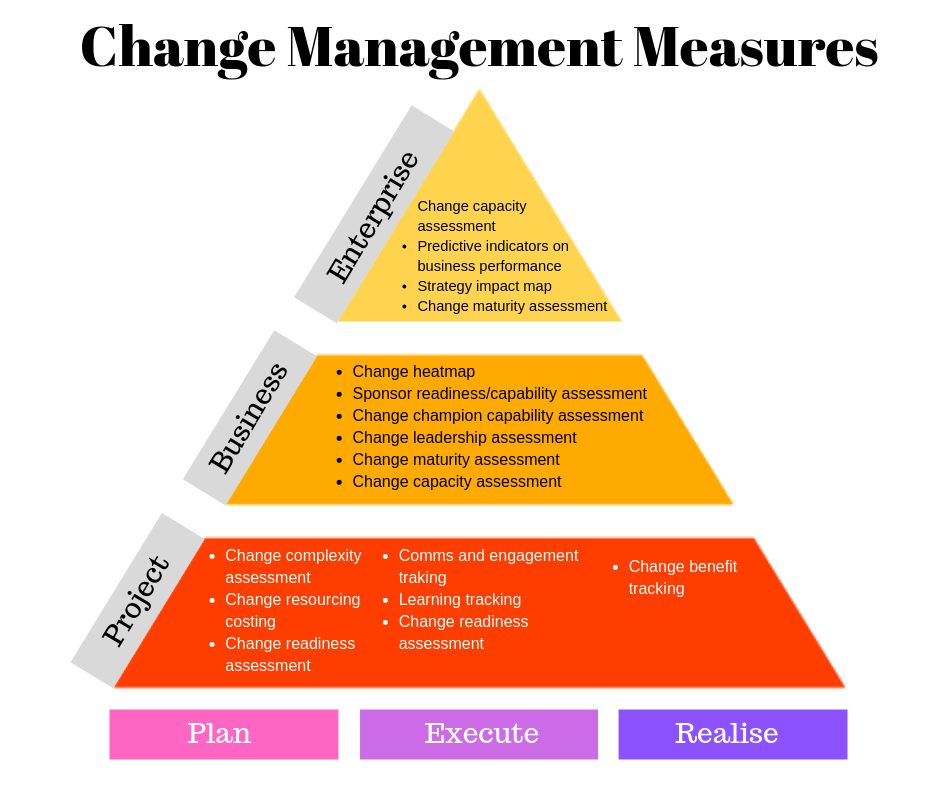
A comprehensive model of change management measures organises every metric on two axes: the phase of the initiative lifecycle (Plan, Execute, Realise) and the organisational level the metric speaks to (project, business, enterprise). Each layer answers a different question for a different audience, which is why reporting the same metric to all three audiences is the reason so many change dashboards are ignored.
In the diagram, change management measures are plotted along two axes: the different phases of the initiative lifecycle, and the organisational levels of project, business and enterprise into which the measures fall. A project manager needs to know whether stakeholders are ready ahead of go-live. A business unit head needs to know whether a team has room for another change this quarter. A CEO needs to know whether the portfolio of change is pointed at the strategy.
Project-level measures
Project-level measurement answers whether one initiative is on track to land: it measures complexity and cost during planning, readiness, engagement and learning during execution, and benefits after go-live.
‘Plan’ phase
In this phase the team is discovering and scoping the project and the change, so details are not clear at the start. Later in the phase the scope sharpens and the team starts planning the activities needed to implement the change. Measurement here is about sizing:
Change complexity assessment. Evaluates how complex the project is: how many people could be affected, the size of the impact, how many business units are involved, and whether multiple systems and processes are touched.
Change resourcing costing. During planning, the cost of the change management stream is established. This includes contractors, communication campaigns, learning costs, travel and administration, to name a few.
Change readiness assessment. Usually conducted before and during the change. The same set of questions is asked of each stakeholder group to assess readiness. A baseline taken after launch cannot show movement, so the first reading belongs here.
‘Execute’ phase
The execute phase is one of the most critical parts of the project. Activities are in full flight and the team is iterating on the change to achieve project goals. Four measures carry most of the weight:
Communication and engagement tracking. Effective engagement of stakeholders is critical. Stakeholder interviews, surveys and communication readership rates are all ways of tracking engagement.
Learning tracking. Measuring learning tracks the extent to which new competencies and skills have been acquired through learning interventions. Typical measures include course tests or quizzes in addition to course evaluations. On-the-job performance can also be used to track learning outcomes and the extent to which learning has been applied at work.
Change readiness assessment. It continues to be critical during execution. Re-measure at fixed points: at kick-off, 30 to 60 days before go-live and at go-live, using the same questions for each group.
Sponsor activity. A short check of visible communication, barrier removal and reinforcement is among the cheapest measures to run, and the Prosci data above shows how much sponsor effectiveness matters.
‘Realise’ phase
In this phase the change has gone live and most project activities have been completed. It is anticipated that the change occurs and that benefits can now be tracked and measured.
Change benefit tracking measures and tracks the extent to which the targeted benefits and outcomes have been achieved. Some of these measures are hard quantitative measures; others are soft measures that are more behavioural, such as process compliance, workarounds and incident rates.
Business-level measures
Business-level measurement shows whether a part of the organisation has the right ability, capacity and readiness for the change, and whether the changes landing on it are being adopted.
Adoption. Adoption is where change management is either proved or exposed. Gartner HR research published in July 2025 found that just 32% of business leaders reported that the last change they led achieved healthy change adoption by employees. Good adoption measurement draws on more than one source: system data on usage and feature depth, process compliance, error and rework rates, team leader observation and customer feedback, tracked over time rather than as a single post-launch snapshot. Two companion guides carry the detail: how to measure change adoption covers the method, including the shape of the adoption curve, and the change adoption metrics framework lists which metrics suit system implementations, compliance programmes and restructures.
Change heatmaps. Heatmaps help to visualise which part of the business is most affected by one project or by several, and to compare relative impact across businesses. As the number of initiatives increases, so does the complexity of change, and organisations need to graduate from spreadsheets to more capable data visualisation tools to support data-based decisions. To read more about why a heatmap is not the only way to understand business change impact, go to The death of the change heatmap.
Sponsor readiness and capability assessment. A critical tool for identifying capability gaps in the sponsor so that support can be provided. A strong and effective sponsor can make or break an initiative, so early engagement and support are essential. Both Prosci and Changefirst offer sponsor competency assessments.
Change champion capability assessment. Change champions and change agents are critical nodes for driving and supporting change in the organisational network. Many champions are appointed for one initiative only. A business-focused champion network means capability can be developed over time and used across multiple initiatives, and assessing and supporting champion capability translates directly into better change outcomes.
Change leadership and change maturity assessment. Covered in the previous section.
Change capacity assessment. Where significant change is happening concurrently, careful planning and sequencing of change against existing capacity is critical.
Change capacity and saturation in more detail
Capacity is the business-level measure most often guessed rather than measured. Three aspects should be called out in the measurement process:
Different parts of the business have different capacity for change. Areas with better change capability, and perhaps better change leadership, are often able to receive and digest more change than businesses without the same capability.
Some businesses are far more time-sensitive and so their capacity needs to be measured with more granularity. Call centre staff capacity, for example, is often measured in minutes. To plan effectively for their capacity, the impacts of change need to be quantified in a precise, time-bound way so resourcing can be planned in advance, in hours per role rather than “high, medium, low”.
Change tolerance or saturation level needs careful measurement in combination with operational feedback. Say that last month a part of the business experienced significant change impact across several initiatives at once, and the operational indicators showed an impact on customer satisfaction and productivity, with staff reporting that there was too much change to handle. The change tolerance level may have been exceeded. With the right measurement of change impact levels for that part of the business, the lesson can be used to plan for the same volume of change next time.
Enterprise-level measurement compares change across business units and initiatives to show whether the total load and direction of change match strategic intent, and whether the organisation is getting better at absorbing it.
At enterprise level, many of the business-unit measures still apply. The focus shifts to comparing across business units, to make sense of what each part of the business is going through and whether the overall picture is aligned with the organisation’s intentions and strategic direction. Typical questions include:
Is it surprising that one part of the business is undergoing significant change while another is not?
Is there a reason one business unit is focused on a few very large changes while others carry a larger set of changes with smaller impacts?
Is the overall pace of change right for the strategic intent? Does it need to speed up or slow down?
What process governs, reports and makes decisions on enterprise-level change prioritisation, sequencing and benefit realisation?
Is one business unit managing change more effectively, faster and with greater outcomes? How can other business units adopt its internal best practices?
Does one business unit’s capacity limit mean the organisation cannot execute a critical strategy in the allocated time? If so, how do you create more capacity? Options include more resources such as staff, additional initiative funding, more time, or more talent to lead initiatives.
Change maturity assessment at enterprise level
At enterprise level the concern is the overall change maturity of the organisation. The question is how to implement enterprise-level interventions that build maturity through programmes, networks and exchanges, such as:
Enterprise change capability programmes
Enterprise change analytics and measurement tools
Enterprise change methodology
An enterprise network of change champions
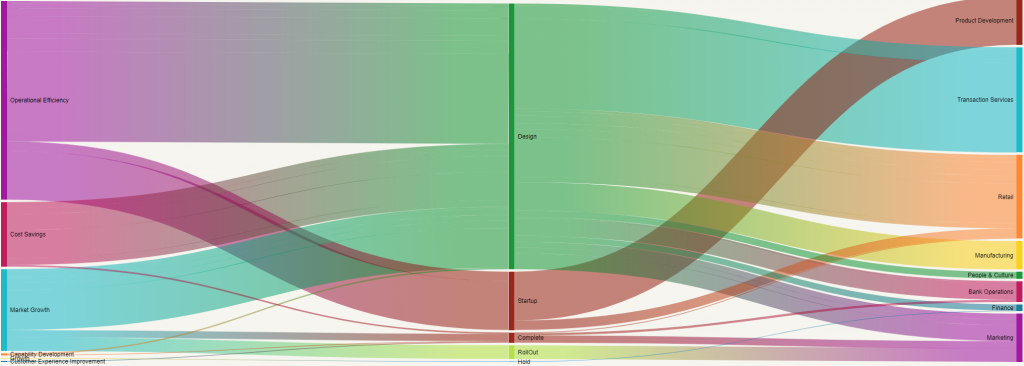
Strategy impact mapping
Change management need not focus only on project execution or business-unit capability. It can also demonstrate value at enterprise level by focusing on strategy execution, which by definition is change. A strategy impact map visualises how different strategies exert impact on business units, so stakeholders can see which initiatives within which strategic intent affect which business units. In the example below, each of the organisation’s strategies is displayed with its initiatives branching out. The width of each initiative reflects the level of impact it has on the business over a pre-determined period, so the width of each strategy also shows its overall relative impact.
This data visualisation can be valuable for business leaders and strategic planning functions because it shows how the implementation of different strategies is affecting business units. It helps planners understand strategy implementation impacts, potential risks and opportunities, and balance the pace of change against strategy goals at various points in time.
Predictive indicators on business performance
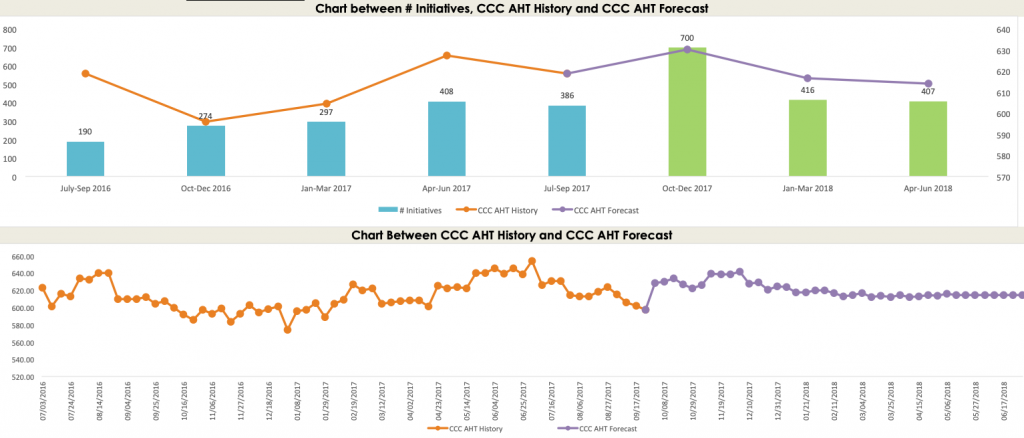
We started this guide by noting that data is all around us and that we should use it to manage change better. With quantitative data on change impact, it is possible to test for correlations with operational business indicators such as customer satisfaction and service availability. Where a significant correlation exists, predictive reporting can forecast the trend of those performance indicators given planned change impacts.
In the graph below, historical data is used to establish correlations and forecast future impact on business indicators. The example focuses on the customer contact centre, with average handling time as the key business indicator. If heavy change periods consistently coincide with longer handling times, the business can adjust sequencing before the next peak.
This type of predictive performance forecasting is extremely valuable for organisations undergoing significant change that want to understand how it may affect business performance. By demonstrating the impact on business indicators, it puts the importance of managing change at the front and centre of the decision-making table. At The Change Compass we are developing this type of measurement and reporting function. It is the frontier for change management: being established as a business-driving function rather than a standard back-office one.
Building the measurement system: A five-step framework
A measurement system is a short list of defined metrics, a baseline, a reporting rhythm and an owner for each number; without all four, the data does not change any decision. The five steps below cover the full lifecycle, from pre-change baseline through to sustained adoption tracking, and reflect the approach used by experienced change practitioners and data-driven change teams.
Establish a change measurement framework. Define what you are measuring and why before selecting metrics. A framework should cover three kinds of metric: activity metrics (what the change team is doing), readiness metrics (how prepared people are) and adoption metrics (whether people have actually changed their behaviour). Choose a short list across the three levels, three to five per initiative plus a few portfolio measures.
Set a baseline before the change. Measure the current state before the change is implemented. Without a baseline it is impossible to demonstrate the impact of the change management effort or to identify where readiness is lowest.
Track readiness at key milestones. Conduct readiness assessments at defined points, typically at the start of the programme, 30 to 60 days before go-live and at go-live. Assessments should cover awareness, understanding, capability and commitment for each affected stakeholder group.
Measure adoption after go-live. Track adoption in the weeks and months after go-live. Key indicators include system usage rates, process compliance, error rates, workaround behaviour and performance recovery back to baseline.
Report and act on the data. Use measurement to drive decisions, not just to report status. When adoption lags in a specific group, use the data to identify the barrier and target an intervention.
Cadence and governance
Match the cadence to the decision. Readiness is measured at milestones; adoption weekly, then monthly after go-live; capacity and change load monthly or quarterly alongside planning forums. Name who owns each metric, who reviews it and what happens when a threshold is crossed. Every chart on a dashboard should have a question, a threshold and an owner. Our guide to designing a change adoption dashboard shows how to build the view itself.
Data integrity before you present
A single visible error in a change dashboard is enough for a steering committee to discount the rest. Reconcile counts to source systems, state the sample size and response rate for any survey, keep definitions stable between reporting periods and flag where a figure is an estimate. It is better to show fewer metrics you can defend than many you cannot.
Telling the story
Numbers move decisions when they are framed against something leaders already care about: a milestone, a benefit, a risk. Lead with the decision you need, show the two or three numbers that justify it, and keep the detail one click away. A number plus an action (“adoption in the claims team is 20 points behind, and the barrier is the approval step”) is a briefing; a number alone is a report. Our follow-on guide, measuring change management outcomes, extends this reporting approach.
Where digital tools fit
Manual measurement stops scaling when the number of concurrent initiatives grows: survey results sit in one place, impact assessments in a spreadsheet and adoption data in a third system, and nobody can see the portfolio. Survey tools such as SurveyMonkey and Microsoft Forms, and web analytics such as Google Analytics, remain useful for the project-level methods above. A purpose-built change intelligence platform such as Change Compass brings impact, capacity and adoption data into one model, so the business and enterprise measures (load by business unit, saturation, predictive links to operational indicators) become routine reporting rather than a quarterly analysis project.
Which guide to read for which question
This page is the map; the guides below are the depth. Each answers one question completely, and between them they cover every sub-topic summarised above.
The best measurement systems begin with a single question that a senior leader is already asking, such as “will this go-live hold our service levels?” or “which division cannot take another change this quarter?”. Pick the three to five numbers that would answer it, set a baseline this week, and put the first reading in front of the sponsor within a month. A small set of metrics with owners and thresholds beats a comprehensive scorecard that nobody acts on.
From there, extend upward. Add business-level capacity and adoption views once the project metrics are stable, then portfolio and strategy views as the enterprise starts asking comparative questions. Change can be measured, and the methods in this guide show operational and strategic ways in which measurement demonstrates real value. Most corporate functions cannot exist without data and analytics. Human Resources relies on people and pay data. Marketing cannot function without measurement of channel and campaign effectiveness. For Information Technology, almost everything is measured, from system usage to cost to efficiency. It is time to use data to visualise change, plan better and make business decisions with the same standing.
Frequently asked questions
What is change management measurement?
Change management measurement is the practice of tracking whether change activities are producing the intended behaviour and business results. It works at three levels: project metrics (readiness, engagement, learning), business metrics (adoption, capacity, benefits) and enterprise metrics (portfolio load, strategy impact, maturity). Reporting on all three lets you link change effort to the outcomes in the business case.
What are the most important change management metrics to track?
Focus on adoption rates, readiness scores, communication engagement and benefit realisation, tailored to the project phase and the business unit’s capacity. Prosci recommends three to five metrics per initiative, each with a purpose, an owner and an action threshold, with a handful of portfolio measures added on top.
How do you measure change readiness effectively?
Combine pulse surveys with behavioural indicators and sponsor assessments, and repeat the same questions at fixed milestones so results are comparable. Balance frequency with depth so that the results are actionable. Read our guide to measuring change readiness with data, not just surveys for the full method.
Why replace change heatmaps with other visuals?
Heatmaps introduce subjectivity bias because they are usually rated by one or two people. Timeline charts and capacity dashboards built from quantified impact give clearer, more defensible data for decisions. See The death of the change heatmap.
What role does AI play in change measurement?
AI supports sentiment analysis of free-text feedback, predictive capacity planning and automated risk detection across initiatives, and some platforms offer natural-language queries for instant answers. Its value depends on the quality of the underlying data: it speeds up analysis of well-defined metrics, but it cannot compensate for a missing baseline or unclear definitions.
What enterprise-level change metrics matter most?
Strategy impact mapping, cross-business capacity analysis and predictive performance forecasting that links change volume to operational outcomes. Together they show whether the pace and direction of change match strategic intent, and whether the organisation is getting better at absorbing it.
How often should change be measured?
Match the cadence to the decision. Readiness is usually checked at the start, before go-live and at go-live. Adoption is tracked weekly or fortnightly in the first months after launch, then monthly. Portfolio measures such as change load and capacity are reviewed monthly or quarterly alongside planning and governance forums.
References
Miller, D. (2011). Successful Change: How to implement change through people. Changefirst Ltd.
Pagon, M. and Banutal, A. (2008). Leadership Competencies for Successful Change Management. Study report, University of Maribor.
This guide focuses on the complete measurement framework, design, run, and report change measurement end-to-end. Three closely related guides on this site each cover a distinct angle, pick the one that matches what you need now:
Every large organisation generates significant volumes of change management data. Readiness assessments, impact analyses, stakeholder surveys, adoption trackers, change plans, training records. Most of it is created at the project level, used briefly, and then archived when the project closes. The insight it could generate, about what kinds of change land well, which stakeholder groups are consistently resistant, how cumulative load affects adoption, which interventions work in your culture, largely disappears.
This disposal of valuable data is one of the most common and least-discussed limitations of how organisations currently approach change management. When change data is managed tactically, it serves only the project that created it. When it is managed strategically, it becomes an organisational asset that improves the quality of change decisions across the portfolio, year on year.
Capgemini Invent’s 2023 change management study, surveying 1,175 professionals globally, found that high data maturity in change programmes correlates with a 27% improvement in change success rates, and that data-driven leadership adds a further 23% lift. The research is unambiguous: how you manage change management data is a meaningful predictor of transformation outcomes.
This article is about making that shift, from tactical, project-level data management to strategic change data management that builds cumulative intelligence about how change works in your organisation.
The four common failure modes of change data management
Most organisations do not set out to manage change data poorly. The failure modes are structural, rooted in how change management work is organised rather than individual capability gaps.
Data collection is ad hoc and project-specific. When each project team designs their own impact assessment templates, readiness survey questions, and adoption tracking approaches, the data produced is genuinely useful within that project and largely useless outside it. There is no consistent taxonomy, no standard scales, and no common definitions. When you try to ask a cross-portfolio question , “which of our business units consistently shows lower adoption rates?” , the data cannot answer it because it was never designed to be aggregated.
Data lacks factual grounding. A significant proportion of change data is perception-based, reflecting what change managers think about stakeholder readiness or impact severity rather than what the evidence shows. Heat maps built on subjective ratings, readiness assessments scored by the project team rather than the affected employees, and impact analyses that reflect project plan assumptions rather than actual operational context all share this weakness. The data is not wrong, exactly, but its evidential basis is thin and rarely documented. When challenged by senior stakeholders, it is difficult to defend.
Visualisation obscures rather than reveals. The way change data is visualised has a substantial effect on whether it drives decisions. A heat map that shows everything as amber is not a useful risk management tool; it has simply translated uncertainty into colour. Visualisations that use the wrong chart type for the underlying data pattern, or that present too many variables at once, or that aggregate data in ways that mask important distribution effects, are actively misleading even when the underlying data is sound.
Data is not retained as an asset. When a programme closes, its change data typically closes with it. The lessons embedded in three years of readiness assessments, adoption surveys, and stakeholder feedback are lost. The next programme team starts from scratch, repeating the same diagnostic work, making the same assumptions, and potentially encountering the same predictable resistance that a prior team navigated successfully. This waste is invisible because no one tracks the cost of reinventing the wheel, but it is substantial.
What strategic change management data management actually means
Strategic change management data management is the practice of designing, collecting, governing, and preserving change data as a reusable organisational asset rather than a project-level administrative product. It has five characteristics that distinguish it from tactical data management.
Consistent taxonomy and definitions
A strategic approach starts with agreement on what you are measuring and how. What does ‘high impact’ mean in your organisation’s context? How is change readiness defined and at what granularity? What are the stages of adoption your organisation recognises, and what observable behaviours characterise each stage? These definitions need to be documented, agreed by change leadership, and applied consistently across every programme in the portfolio.
This sounds straightforward but is often contentious, because standardisation requires programme teams to give up some flexibility in how they approach impact assessment and readiness measurement. The benefit, however, is that every new dataset generated becomes immediately comparable with every prior dataset, and portfolio-level analytics become possible.
Portfolio-level collection and aggregation
Individual programme data is useful to the programme team. Portfolio-level data, aggregated across all active and historical programmes, is useful to the change function leadership, to HR, to business unit heads, and to the executive team. Strategic change data management designs data collection with portfolio aggregation in mind from the outset, not as an afterthought.
The questions that portfolio-level change data can answer are categorically more strategic than those accessible from project-level data. Which business units are accumulating unsustainable change load this quarter? Which change types consistently generate higher resistance in your culture? Which combinations of interventions correlate with faster adoption in your organisation specifically? These are the questions that allow a change function to operate proactively rather than reactively.
Fact-based data quality standards
Strategic change data management requires documented standards for what constitutes adequate evidence for different data types. Stakeholder impact ratings should be supported by operational analysis, not solely by project team estimation. Readiness assessments should include both leader perceptions and employee-level indicators, because they frequently diverge. Adoption metrics should triangulate system usage data, survey data, and direct observation rather than relying on a single source.
This does not mean perfection is required before data can be used. It means being explicit about the evidential basis of data and the uncertainty that attaches to it. A readiness rating of 65% that is based on a 40-respondent employee survey is meaningful. The same rating based on a change manager’s estimate without respondent data should be labelled and treated differently.
Retention and longitudinal analysis
One of the most underexploited opportunities in change management is longitudinal analysis of your organisation’s own change history. If your organisation has been running significant change programmes for five or more years, and if that data has been retained in a structured format, you have the basis for genuinely organisation-specific benchmarks.
What percentage of employees in your operations function were typically at target adoption six months after a technology rollout in the past? What does the readiness trajectory typically look like for a business unit facing a structural reorganisation? These organisation-specific patterns are more useful for planning purposes than generic research benchmarks, because they reflect your culture, your leadership style, and your workforce characteristics.
A governance structure for change data
Strategic change data management requires governance: clear ownership, defined data standards, review cycles, and access controls. Without governance, standards erode over time as programme teams revert to their preferred approaches, data quality degrades, and the portfolio view becomes unreliable.
Governance for change data does not need to be elaborate. A data steward role within the change function, clear standards documentation, a quarterly review of data quality across the portfolio, and a defined retention policy are sufficient for most large organisations. The key is that someone is accountable for the quality of the organisational change data asset, not just the quality of their own programme’s data.
AI and automation: what they add to strategic change data management
The intersection of artificial intelligence and change management data is generating genuine capability improvements, particularly in the speed of synthesis and the detection of patterns that manual analysis would miss.
Capgemini’s concept of Intelligent Data-Driven Change Management (IDCM) combines human emotional intelligence with algorithmic insights to support change decisions. In practical terms, this means AI that can monitor multiple data streams simultaneously (survey results, system usage, engagement metrics, communication analytics) and surface signals that warrant human attention, rather than requiring change managers to manually synthesise all of this information.
Key AI applications in strategic change data management include:
Natural language processing of stakeholder feedback and open survey responses, identifying sentiment patterns and emerging concerns at scale without manual qualitative coding
Anomaly detection in adoption curves, flagging when a stakeholder group’s trajectory deviates significantly from expected patterns
Predictive modelling of adoption outcomes based on historical programme data, adjusted for current programme characteristics and context
Automated generation of executive summaries from portfolio data, reducing the reporting burden on change teams while improving reporting consistency
It is important to be clear about what AI does not replace. It does not replace the judgment required to understand why a stakeholder group is resistant, the relationship-building required to address that resistance, or the strategic thinking required to sequence programmes effectively. AI in change management is most valuable as a signal amplifier, drawing human attention to where it is most needed. The strategic framework within which those signals are interpreted remains a human responsibility.
Building a change data ecosystem
For organisations ready to move beyond ad-hoc data management, a change data ecosystem is the infrastructure that makes strategic change data management operational.
A change data ecosystem has three layers. The collection layer is where data enters the system: programme impact assessments, readiness surveys, adoption tracking, training completion, and communication analytics. The aggregation layer is where programme-level data is normalised, consolidated, and stored in a format that enables cross-programme analysis. The decision layer is where the data is used: executive dashboards, portfolio risk views, programme intervention decisions, and historical benchmarks.
Platforms like The Change Compass are purpose-built for this architecture, specifically for the challenge of visualising cumulative change load and adoption status across a complex change portfolio. The value of purpose-built change management software, compared to using general-purpose business intelligence tools, is that the data models and analytical frameworks are pre-configured for change management use cases. You are not building the methodology from scratch; you are applying it.
The shift from reporting to decision intelligence
The ultimate destination of strategic change management data management is decision intelligence: a state where change data actively informs decisions about sequencing, resourcing, intervention design, and programme prioritisation in real time rather than retrospectively.
This virtuous cycle is what mature change functions are beginning to achieve. They use data to improve programmes, which generates better data, which improves the next generation of programmes. The cumulative knowledge advantage this creates over time is significant and durable.
Getting there requires investment in the governance, tooling, and cultural change described in this article. But the starting point is simpler than it might appear. Pick one consistent definition. Apply it across your active programmes. Retain the data when those programmes close. Review what the combined data tells you at the end of the year. You will have begun the shift from tactical to strategic change data management, and the first cycle of learning will show you exactly why it matters.
Frequently asked questions
What is strategic change management data?
Strategic change management data is change-related information that is designed, collected, and governed as an organisational asset rather than a project-level administrative record. It includes readiness assessments, adoption metrics, impact analyses, and stakeholder data that are standardised across programmes and retained for portfolio-level analysis and longitudinal learning.
Why is change management data difficult to manage strategically?
The primary challenge is that change work is traditionally organised at the project level, where data serves only the immediate programme. Creating strategic value from change data requires cross-programme standardisation, governance ownership, and retention infrastructure, none of which emerge naturally from project-centric delivery structures.
How does data maturity affect change management outcomes?
Capgemini Invent’s research found that organisations with high data maturity in their change programmes achieve 27% higher success rates. The mechanism is that mature data management enables faster, more targeted interventions, better portfolio decisions, and more credible reporting to executive stakeholders, all of which directly improve adoption outcomes.
What role does AI play in change management data?
AI tools in change management primarily serve as pattern recognition and signal amplification tools. They can process large volumes of survey data, monitor multiple data streams simultaneously, and flag anomalies in adoption curves that warrant human attention. They do not replace the judgment, relationship, and strategic capabilities of change practitioners; they help those capabilities operate at a scale that manual analysis cannot support.
How should change data be governed?
Effective governance for change data requires a designated data steward, documented standards for data definitions and collection methods, a quality review cycle (typically quarterly), and a retention policy that specifies how long data from completed programmes is preserved and in what format. Governance does not need to be complex, but it does need to be explicit and owned.
Where should an organisation start in managing change data more strategically?
Start with taxonomy. Agree on consistent definitions for impact rating, readiness scoring, and adoption stages across your active change portfolio. Apply those definitions in your next programme cycle. Retain the data when programmes close. Then, at the end of a 12-month cycle, review the combined dataset and ask what questions it can answer that you could not previously answer. The value of the investment will be visible in the first year.
References
Capgemini Invent. Change Management Study 2023. https://www.capgemini.com/insights/research-library/change-management-study-2023/
Capgemini. Data-Driven Change Management is Crucial for Successful Transformation. https://www.capgemini.com/news/press-releases/data-driven-change-management-is-crucial-for-successful-transformation/
ResearchGate. The Role of Change Management in Enhancing Data-Driven Decision Making: Insights from Business Intelligence Initiatives (2024). https://www.researchgate.net/publication/384017092_The_Role_of_Change_Management_in_Enhancing_Data-Driven_Decision_Making_Insights_from_Business_Intelligence_Initiatives
Prosci. The Correlation Between Change Management and Project Success. https://www.prosci.com/blog/the-correlation-between-change-management-and-project-success
Panorama Consulting. Top Organizational Change Management Trends for 2025. https://www.panorama-consulting.com/top-change-management-trends-for-2025/
Change management is often seen as a ‘soft’ discipline that is more an ‘art’ than science. However, successful change management, like managing a business, relies on having the right data to understand if the journey is going in the right direction toward change adoption. The data can inform whether the objectives will be achieved or not.
Data science has emerged to be one of the most sought-after skills in the marketplace at the moment. This is not a surprise because data is what powers and drives our digital economy. Data has the power to make or break companies. Companies that leverages data can significant improve customer experiences, improve efficiency, improve revenue, etc. In fact all facets of how a company is run can benefit from data science. In this article, we explore practical data science techniques that organizations can use to improve change outcomes and achieve their goals more effectively.
Improved decision making
One of the significant benefits of using data science in change management is the ability to make informed decisions. Data science techniques, such as predictive analytics and statistical analysis, allow organizations to extract insights from data that would be almost impossible to detect or analyse manually. This enables organizations to make data-driven decisions that are supported by empirical evidence rather than intuition or guesswork.
Increased Efficiency
Data science can help streamline the change management process and make it more efficient. By automating repetitive tasks, such as data collection, cleaning, and analysis, organizations can free up resources and focus on more critical aspects of change management. Moreover, data science can provide real-time updates and feedback, making it easier for organizations to track progress, identify bottlenecks, and adjust the change management plan accordingly.
Improved Accuracy
Data science techniques can improve the accuracy of change management efforts by removing bias and subjectivity from decision-making processes. By relying on empirical evidence, data science enables organizations to make decisions based on objective facts rather than personal opinions or biases. This can help reduce the risk of errors and ensure that change management efforts are based on the most accurate and reliable data available.
Better Risk Management
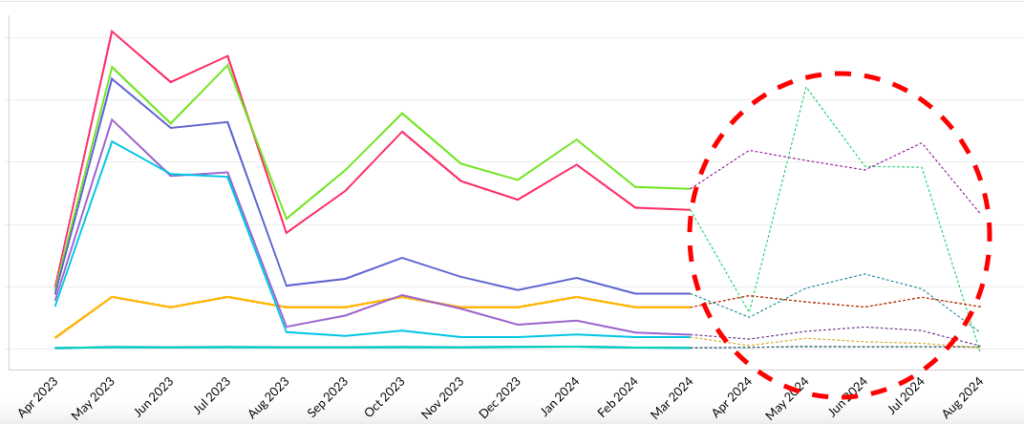
Data science can help organizations identify potential risks and develop contingency plans to mitigate those risks. Predictive analytics can be used to forecast the impact of change management efforts and identify potential risks that may arise during the transition. For example, change impacts across multiple initiatives against seasonal operations workload peaks and troughs.
Enhanced Communication
Data science can help facilitate better communication and collaboration between stakeholders involved in the change management process. By presenting data in a visual format, such as graphs, charts, and maps, data science can make complex information more accessible and understandable to all stakeholders. This can help ensure that everyone involved in the change management process has a clear understanding of the goals, objectives, and progress of the transition.
Key data science approaches in change management
Conduct a Data Audit
Before embarking on any change management initiative, it’s essential to conduct a data audit to ensure that the data being used is accurate, complete, and consistent. For example, data related to the current status or the baseline, before change takes place. A data audit involves identifying data sources, reviewing data quality, and creating a data inventory. This can help organizations identify gaps in data and ensure that data is available to support the change management process. This includes any impacted stakeholder status or operational data.
During a data audit, change managers should ask themselves the following questions:
What data sources from change leaders and key stakeholders do we need to support the change management process?
Is the data we are using accurate and reliable?
Are there any gaps in our data inventory?
What data do we need to collect to support our change management initiatives, including measurable impact data?
Using Predictive Analytics
Predictive analytics is a valuable data science technique that can be used to forecast the impact of change management initiatives. Predictive analytics involves using historical data to build models that can predict the future impact of change management initiatives. This can help organizations identify potential risks and develop proactive strategies to mitigate those risks.
Change managers can use predictive analytics to answer the following questions:
What is the expected impact of our change management initiatives?
What are the potential risks associated with our change management initiatives?
What proactive strategies can we implement to mitigate those risks?
How can we use predictive analytics to optimize the change management process?
Leveraging Business Intelligence
Business intelligence is a data science technique that involves using tools and techniques to transform raw data into actionable insights. Business intelligence tools can help organizations identify trends, patterns, and insights that can inform the change management process. This can help organizations make informed decisions, improve communication, and increase the efficiency of change management initiatives.
Change managers can use business intelligence to answer the following questions:
What insights can we gain from our data?
What trends and patterns are emerging from our data?
How can we use business intelligence to improve communication and collaboration among stakeholders?
How can we use business intelligence to increase the efficiency of change management initiatives?
Using Data Visualization
Data visualization is a valuable data science technique that involves presenting data in a visual format such as graphs, charts, and maps. Data visualization can help organizations communicate complex information more effectively and make it easier for stakeholders to understand the goals, objectives, and progress of change management initiatives. This can improve communication and increase stakeholder engagement in the change management process.
Change managers can use data visualization to answer the following questions:
How can we present our data in a way that is easy to understand?
How can we use data visualization to communicate progress and results to stakeholders?
How can we use data visualization to identify trends and patterns in our data?
How can we use data visualization to increase stakeholder engagement in the change management process?
Monitoring and Evaluating Progress
Monitoring and evaluating progress is a critical part of the change management process. Data science techniques, such as statistical analysis and data mining, can be used to monitor progress and evaluate the effectiveness of change management initiatives. This can help organizations identify areas for improvement, adjust the change management plan, and ensure that change management initiatives are achieving the desired outcomes.
Change managers can use monitoring and evaluation techniques to answer the following questions:
How can we measure the effectiveness of our change management initiatives? (e.g. employee engagement, customer satisfaction, business outcomes, etc.) And what method do we use to collect the data? E.g. surveys or focus groups?
What data do we need to collect to evaluate the change initiative progress?
How can we use statistical analysis and data mining to identify areas for improvement?
How can we use monitoring of ongoing support or continuous improvement?
The outlined approaches are some of the key ways in which we can use data science to manage the change process. Change practitioners should invest in their data science capability and adopt data science techniques to drive effective change management success. Stakeholders will take more notice of change management status and they may also better understand the value of managing change. Most importantly, data helps to achieve change objectives.