Managing multiple change initiatives is not a new concept nor is it new to organizations. What is perhaps ‘newer’ is how change practitioners are using data to manage multiple changes. Change practitioners that manage a portfolio of initiatives used to focus on building capability in various arenas from employee capability, leadership capability, through to the effectiveness of engagement and learning channels. However, using business and change management data to help companies is just as critical.
Is change management becoming more important?
Yes, change management is increasingly vital in today’s fast-paced business environment. Organizations face constant shifts in technology, market demands, and workforce dynamics, which impact their business processes. Effectively managing these changes helps minimize resistance, enhances employee engagement, and ensures smoother transitions, ultimately leading to improved performance and sustainability in a competitive landscape.
In this article, we will explore the top five challenges associated with the current approaches to managing multiple change initiatives, including the implementation of the change due to lack of resources and insufficient resources. We explore these common approaches and critique key challenges, along with alternatives.
Change heatmaps have become a popular tool for classifying departments based on the impact of a change initiative. However, two key issues often arise with this approach: the oversimplification of the traffic light classification system and the lack of granularity at the department level.
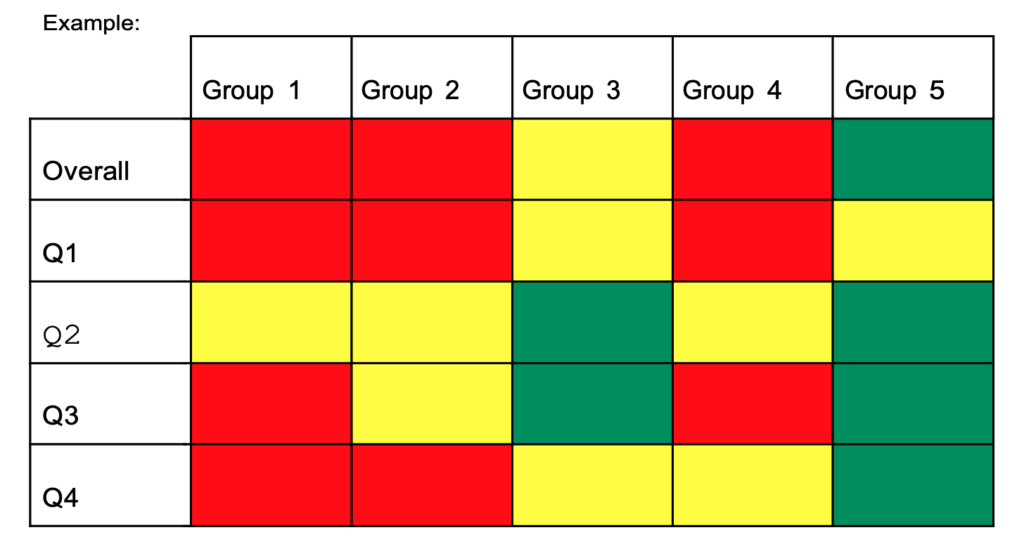
One of the most common ways to visually depict the impact of multiple changes is to use the heatmap. This is normally using a 3-point rating system (high, medium, low) to determine the level of impact across the various departments across the organisation. Whilst the rating process is an easy exercise, there are some very serious challenges:
Even for the 3 level rating system the change practitioner may be challenged with how this rating is determined and what it is based on. Not every team within the same department may be equally impacted
There may be different impacts for different roles within the same team and department
The impact may be different depending on whether the focus is on employees, customers, process, system or partner
Typically most use a monthly rating scale. However, for busy organisations with lots of changes, the change volume may go up and down within the same month. With one rating it oversimplifies what actually happens throughout the month
With only 3 levels of ratings, a lot of departments end up having the same rating level for months, meaning there is not much they can do with this data.
In Summary, the summarised monthly rating for one department indicates medium-level change. But at what time of the month, for what role, for what team, and for what type of impact?
The below is an example of a change heatmap from the University of California, Berkeley.
a. Traffic Light Classification Too Simplistic:
The traditional red, yellow, and green traffic light system used in change heatmaps is a simple way to communicate the status of a department’s readiness for change. However, this simplicity can be misleading. Red may indicate a problem, but it does not provide insights into the nature or severity of the issue. Likewise, green may suggest readiness, but it might hide underlying complexities or dependencies.
Even for the 3 level rating system the change practitioner may be challenged with how this rating is determined and what fact it is based on. Also, the impact may be different depending on whether the focus is on employees, customers, process, system or partner. Typically most use a monthly rating scale. However, for busy organisations with lots of changes, the change volume may go up and down within the same month. With one rating it oversimplifies what actually happens throughout the month. Even if the singular departmental rating is split into rating by initiative, this does not provide an aggregate department-level rating that is aggregated based on logic.
To overcome this challenge, organizations need a more nuanced classification system that takes into account the specific issues within each category. This could involve incorporating additional colours or using a numerical scale to better represent the diversity and complexity of challenges within each department.
b. Department Level Not Granular Enough:
While change heatmaps provide a high-level overview, they often lack the granularity required to understand the specific challenges within each department. Different teams within a department may be impacted differently, and a broad classification may not capture these variations.
To address this issue, organizations should consider adopting a more detailed classification system that breaks down each department into its constituent parts. This granular approach allows for a more targeted and effective change management strategy, addressing specific issues at the team and role levels.
In Summary, the singular monthly rating for one department indicates medium-level change. But at what time of the month, for what role, for what team, and for what type of impact?
2) Using Project Milestone Roadmap to Sequence Impacts
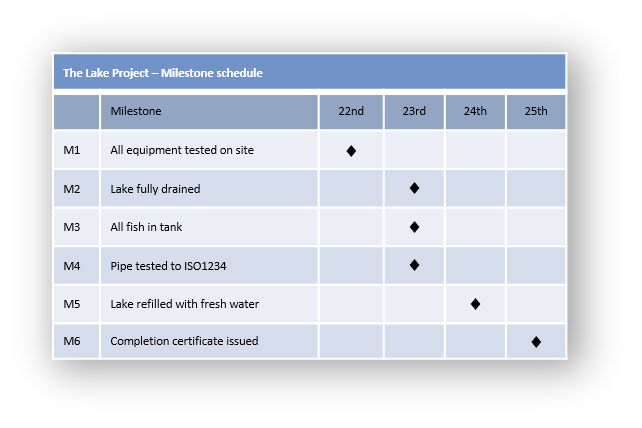
Project milestone roadmaps are commonly used to sequence the impacts of change initiatives. However, this approach faces challenges in terms of the sufficiency of milestones and the difficulty of overlaying multiple capacity considerations.
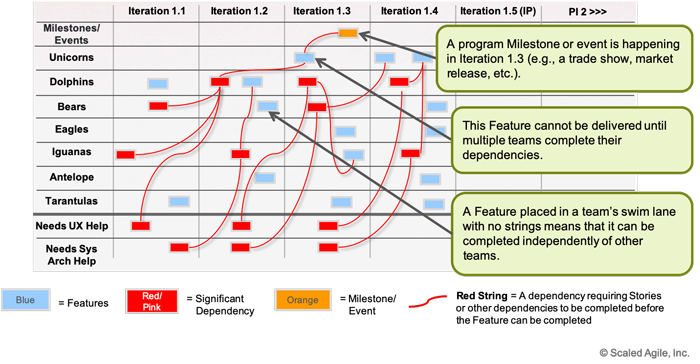
Below is an example from Praxis Framework.
a. Milestones Are Not Sufficient vs Overall Aggregate Impact Levels:
While project milestones provide a structured timeline for change initiatives, they may not capture the full scope of the impact on the organization. Engaging key stakeholders is essential during this process, as milestones often focus on project-specific tasks and may overlook broader organizational changes that occur concurrently. For example, adoption may require months and is not a single point-in-time milestone per se.
To overcome this limitation, organizations should supplement milestone roadmaps with an overall aggregate impact assessment. This holistic view ensures that the sequence of milestones aligns with the broader organizational objectives and minimizes conflicts between concurrent initiatives.
b. Difficulty of Overlaying Multiple Capacity Considerations:
Managing multiple change initiatives requires a delicate balance of resources, and overlaying capacity considerations can be challenging due to the scope of the change. Project milestone roadmaps may not adequately address the interdependencies and additional resources needed due to the resource constraints that arise when multiple initiatives are in progress simultaneously.
To enhance capacity planning, organizations should invest in advanced project management tools that allow for the dynamic adjustment of timelines based on resource availability. This ensures a realistic and achievable sequencing of impacts, taking into account the organization’s overall capacity.
3) Relying Purely on Excel and PowerPoint to Manage Multiple Change Initiatives
While Excel and PowerPoint are ubiquitous tools in the business world, relying solely on them to manage multiple change initiatives presents challenges related to the agile nature of changes and the difficulty of having interactive data-based conversations. This is especially the case that most change initiatives are digital changes, and yet they are been managed using non-digital means? How can change practitioners ‘be the change’ when they are using dated ways of driving digital change?
a. Agile Nature of Changes Means Ongoing Updates Are Required:
Change initiatives are inherently dynamic, and their requirements can evolve rapidly, especially in response to market shifts. Excel and PowerPoint, while useful for static reporting, lack the real-time collaborative capabilities needed to accommodate the agile nature of changes while maintaining the status quo.
To address this challenge, organizations should consider adopting change management and collaboration tools that enable real-time updates and collaboration. Cloud-based platforms provide the flexibility to make ongoing adjustments, ensuring that stakeholders are always working with the latest information.
b. Difficulty of Having Interactive Data-Based Conversations and Federated Model of Change Data:
Excel and PowerPoint may struggle to facilitate interactive discussions around change data. As organizations increasingly operate in a federated model, with dispersed teams working on different aspects of change initiatives, a more collaborative and integrated approach is essential.
Implementing dedicated change management platforms that support interactive data-based discussions can enhance collaboration and provide a centralized repository for change-related information. This ensures that all stakeholders have access to the latest data, fostering a more transparent and collaborative change management process.
4) Preparing Business Operations Readiness for the Amount of Change
Preparing business operations for a significant amount of change requires a strategic approach that incorporates capacity and time considerations while maintaining granularity in data.
a. Using Business Operations Speak: Capacity, resources, time.
Business operations readiness is often discussed in terms of capacity and time. However, the challenge lies in translating these concepts into actionable plans. Capacity planning involves understanding the organization’s ability to absorb change without compromising existing operations, while time considerations are crucial for ensuring a smooth transition without disruptions.
Change practitioners need to distill the ‘ask of the business’ in business speak. Business stakeholders may not be interested in the various classifications of change or the varying degrees of cultural changes involved. What they are interested in is what you want from my team, how much time you need them to dedicate, and for what team members, so that they can plan accordingly.
b. Granularity of Data:
The granularity of data is essential for effective business operations readiness. Generic metrics may not capture the specific needs and challenges of individual departments or teams, leading to oversights that can impact the success of change initiatives.
Implementing a comprehensive data collection and analysis strategy that considers the unique requirements of each business unit ensures a more accurate understanding of operational readiness. This granularity allows organizations to tailor change management strategies to specific needs, enhancing the likelihood of successful implementation.
5) Getting Executive Engagement and Decision Making
Ensuring executive engagement and decision-making is critical for the success of change initiatives. However, achieving this engagement poses its own set of challenges.
To overcome this challenge, organizations should:
Establish Clear Governance and Engagement Channels:
Ensure that there is in place a clear governance bodies making decisions on the overall control of successful change initiatives across the organisation, focusing on the success of the change. A robust communication strategy ensures that communication channels between change management teams and executives are also well-defined and effective. Regular updates and transparent reporting on the progress and challenges of change initiatives build trust and encourage executive engagement.
Align Change Initiatives with Strategic Objectives:
Demonstrate the alignment of change initiatives with key performance indicators related to the organization’s strategic goals and objectives. Executives are more likely to engage when they see how a particular change contributes to the overall success of the organization and its growth.
Provide Decision-Making Frameworks:
Equip executives with decision-making frameworks that guide them through the complexities of change initiatives. Clearly defined criteria for evaluating the success of a change, along with potential risks and mitigation strategies, empower executives to make informed decisions.
Highlight the Business Impact:
Clearly articulate the business impact of change initiatives. Executives are more likely to engage when they understand the tangible benefits and potential risks associated with a particular change. Use data and analytics to support the business case for change.
Offer Ongoing Support and Education:
Ensure that executives have the necessary support and training to navigate the complexities of change management at all levels of the organization. This includes providing relevant information, resources, and sufficient time to help them make informed decisions and actively participate in the change process, especially regarding new processes. Creating ‘bite-sized’ and summarised insights is key for executives.
Effectively managing multiple change initiatives is a complex task that requires a holistic and adaptive approach. By addressing the challenges of change management, including change management obstacles associated with classification, sequencing, tool reliance, business operations readiness, and executive engagement, organizations can enhance their change management strategies and increase the likelihood of successful outcomes, ultimately maintaining a competitive edge. Embracing innovative tools, fostering collaboration, and maintaining a strategic focus on organizational goals are key elements in overcoming these challenges and navigating the ever-evolving landscape of change.
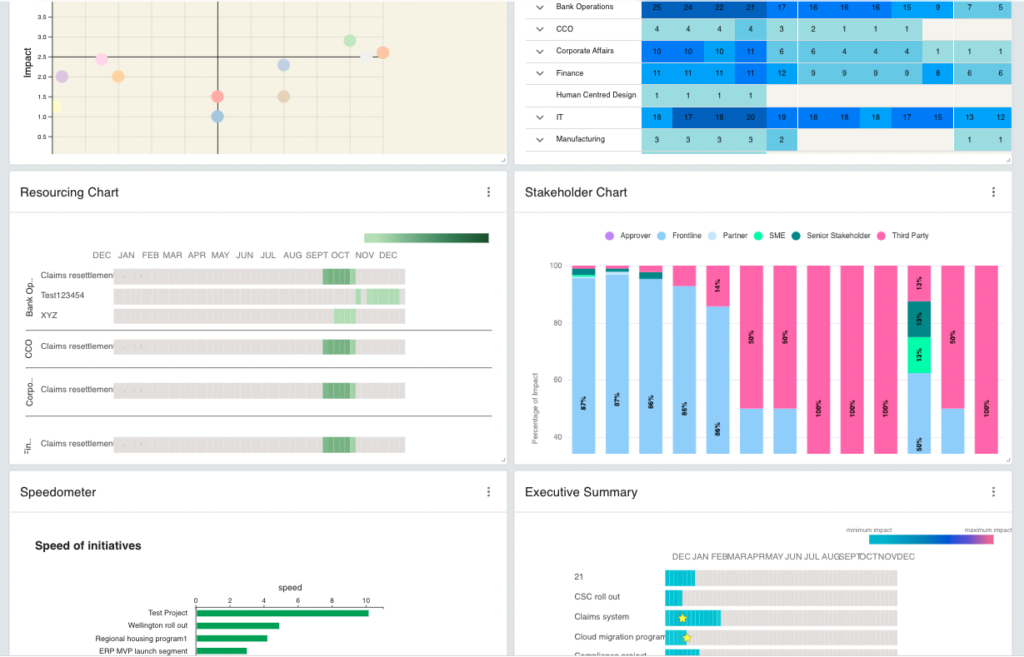
In this article, we’ve stressed the importance of data. You may wonder about the amount of time and effort required to establish all the various points mentioned in the article and if this is even doable. Well, using Excel and other static non-digital ways of managing change data will mean a significant volume of work, and even then it may not provide a clear picture that gives you the various cuts of data required to drive meaningful conversations. Resort to automation provided by change management software such as The Change Compass to assist in data capture, data analysis, and dashboard generation.
So what is the role that change managers play in managing product changes during the agile product delivery process? What are the actions, approaches, deliverables and considerations required for change professionals in an agile environment?
So what is the role that change managers play in managing product changes during the agile product delivery process? What are the actions, approaches, deliverables and considerations required for change professionals in an agile environment?
We will address these in this article.
What is agile product delivery?
According to Scaled Agile, agile product delivery is a “customer-centric approach to defining, building, and releasing a continuous flow of valuable products and services to customers and users”.
Agile product delivery forms a core part of agile project delivery. Each project is delivering a particular product and this is concerned about delivering innovative products and services with the right solutions at the right time.
The mechanics within each product delivery add up to determine the overall project outcome. Therefore, the design of agile product delivery practices is absolutely crucial in achieving overall project goals. Let’s now examine some of these practices in detail.
Customer centricity vs project centricity
In agile methodology the end customer is the number one focus. In various organisations ‘customer’ may be used for various internal stakeholder groups. Yes, often projects may be delivering solutions that are only benefiting internal employee groups. However, the end goal for agile is focused on the end external customer.
This means, whatever solutions or benefits that the project is bringing to the internal stakeholder group, ideally these would support the organisation’s work in benefiting the end customer. In all aspects of prioritisation and discussions of solution design, the focus must always be on the end customer.
The role of the change manager in customer-centricity is to plan out and execute on the change process according to what supports the end customer and enhances customer satisfaction. If the change has a direct impact on the customer, this means engaging the customer (as needed through marketing groups) and considering customer feedback. And if the impact is more on internal stakeholders, thinking still needs to be applied to facilitate the engagement, readiness, and adoption of the change so as to benefit the end customer.
Even when you’re working on internal stakeholders, being customer-centric means:
Putting yourself into the customers’ shoes – Using customer insights, analytics, and data to inform insights about customer preferences
Focusing on the whole product vs individual features – Taking a holistic view of what is in the interest of customers, the design of the overall change should take into account how customers interact with the overall service or product
Designing change to the customer lifetime value – Most organisations would have a mapping of the value delivered to the customer across different phases across time.
Develop on cadence in agile change management
Agile teams have ongoing, structured routines that help them develop solutions on a regular basis. Within each iteration (a standard, fixed timebox where the team delivers incremental value) the team aims to deliver according to plan.
The Change Manager needs to understand the broader plan and milestones of key outcomes delivered by the project, as well as when each iteration will occur. From this project plan, a clear change management team plan detailing the overall approach in engaging stakeholders based on the impact of the change that will be delivered and the frequency and nature of communication should be formed.
Careful attention needs to be placed on setting the expectation with stakeholders on the clarity of readiness of developed solutions. A lot of stakeholders may not be comfortable with how fast solutions may be iterated and that the solution outcome may not be known until, often, closer to the release date. Addressing the stakeholder expectations of release cadence is critical to ensure that there is no misalignment.
Program Increments (PIs) informed the larger timebox of what will be delivered, whilst each iteration delivers a smaller set of solutions. From a stakeholder engagement perspective, there needs to be a balance of painting a clear overall story of what will be delivered within the overall PI, balanced by particular details contained within each iteration.
Working in program increments
To add value as a change manager across a program increment it is critical that you examine the overall program as a whole system. By addressing potential friction points across the work of each agile team and each iteration, the overall program solution starts to take shape. Your job is to interpret what this means to stakeholders and decipher this into engagement and readiness activities.
Sequencing and planning
The schedule of agile releases is mainly determined based on agile team resourcing and delivery deadlines.
Throughout the iterations, how do the release timings impact stakeholders against their existing business-as-usual demands as well as potential releases from other projects? This is a key contribution of the Change Manager in ensuring that change impact release plans are optimised from the perspective of the receiving business. How frequently should communication updates be undertaken for various stakeholder groups given the pace of the releases? Again, the design of this forms a critical part of the overall change plan.
Change delivery also forms a central part of agile team delivery. Change deliverables are often dependent on other agile team members. For example, to deliver change impact assessment you need the finalised solution to be defined by the Business Analyst. In order to deliver the right level of communication briefing to business stakeholders, you need to set the expectation of the timing and minimum information required.
Overall vision and narrative
Is there a clear overall vision and narrative from which individual release communications can build on top of? It’s critical to paint a clear picture of what the end state looks like without the nuances of the mechanics of the solution (as these will not be known at the beginning of the program).
Release on demand
Release on demand is a practice and a process whereby new functionality is deployed as needed based on stakeholder needs. Depending on the change impact of the feature the change manager needs to be ready to send communications and updates as needed, sometimes within a short notice period.
Note that not all releases necessarily require communications for users. And depending on the type of change being released different formats of communication may be leveraged. For example, system changes may benefit from within-app notifications versus emails or other forms of update.
Communications and engagement may also be bundled as necessary to provide a packet of updates to stakeholder groups versus constant and continuous updates. The change manager needs to examine the nature of change impacts and stakeholder needs to determine the right tactic to be used.
Release design
Change impact sizing and design is a critical role taken by the change manager. From change impact assessment, the change manager needs to consider the impact of the overall size of the change impact from a business stakeholder perspective. Where possible, a packet of change may need to be de-scoped to be broken into smaller pieces of change if this is going to be easier for adoption in consultation with stakeholders. On the other hand, many changes may also be bundled together into a larger change release, again based on optimal stakeholder adoption considerations. This form a critical part of lean flow design.
Bugs in agile change management
The change manager has a role to play in setting expectations with stakeholders that with agile system releases that go fast and constant, there should be an expectation that bugs are probably unavoidable. Ensure that users are clear in terms of how to highlight bugs, the documentation process for these issues, and how they will be kept in the loop as each bug is addressed.
On the other hand, bugs may be so disruptive that an effective roll-back approach must be in place in case the change did not land well, particularly when adding new tools. Effective communication content and processes, including discussions about implementing job security, need to be in place to manage this risk. This is a critical part of ongoing agile change management.
BAU integration
With frequent releases, care needs to be given to how the change projects will be adopted and embedded within the impacted business as a part of business-as-usual workflows. For smaller changes, such as hiring a new team member or launching a new product, this may not be critical, but for larger change impacts, the change manager needs to weave each change into a coherent, overall change approach that minimizes disruptions and includes post-release adoption strategies. This includes embedding roles and responsibilities, tracking, and reporting mechanisms.
Automation in agile change management
A part of agile is about delivering fast as frequently as possible. To support this automation of any part of the development process is encouraged where possible. For the change manager in product teams, various digital tools, including change management software, should be leveraged by product managers to support the continuous improvement and deployment of their communication skills. This includes scheduled digital communication, tracking of audience responses, knowledge article views, and digital versions of the single view of change.
Measurement in agile change management
Measurement is a critical part of agile change management. Without the right key performance indicators (KPIs) and metrics to indicate how the change is progressing, it is difficult to know if the trajectory is heading in the right direction towards the end state. A clear set of measurements needs to be in place to measure constant, and continuous change releases.
For ambitious organisations undergoing constant transformations, effective change management is no longer a “nice-to-have” function; it’s a critical enabler for organisational success. As organisations face increasing complexity, digital transformation, and shifting market demands, the need for high-performing change management teams has never been greater. We see this not only in the increasing number of change management professionals hired year after year, but also in the number of organisations that have established change teams. Yet, building and leading such teams requires thoughtful planning, strategic alignment, and continuous development.
What is the role of a change management team within an organization?
A change management team plays a crucial role in guiding organizations through transitions. They assess the impact of changes, develop strategies for implementation, and support employees throughout the process. By ensuring effective communication and training, they help minimize resistance and foster a smoother adaptation to new systems or practices.
Let’s explores how senior change leaders can pragmatically approach the challenge of creating and sustaining high-performing change teams. We will address the critical components: delivering foundational value, aligning services with business priorities, assembling the right skills mix, demonstrating value to senior leaders, and nurturing the team’s growth and adaptability.
For any change management team, delivering on core responsibilities—what we might call “bread-and-butter” work—is non-negotiable. This foundational layer includes supporting initiatives through roles such as doer, advisor, and coach.
Why It Matters
Without effective delivery of these baseline change activities, a change team risks being perceived as ineffectual, which can undermine its ability to gain organisational trust and expand its remit. For example, if a team fails to facilitate smooth transitions for a large ERP implementation, it will struggle to advocate for strategic roles like change portfolio management.
Best Practices
Role Fluidity: Team members should be adept at switching between executor, advisor, and coach, depending on project needs. For example:
Doer: Crafting communication plans or conducting impact assessments to achieve the desired future state.
Advisor: Guiding project leaders on resistance management strategies.
Coach: Equipping sponsors with the skills to champion change.
Add Measurable Value: Clearly articulate the impact of core activities. Metrics such as adoption rates, speed-to-productivity as a starting point post-change, and stakeholder satisfaction can demonstrate the team’s contribution to project success.
Collaborative Engagement: Build strong relationships with project managers, sponsors, and functional leaders. Their endorsement is crucial for long-term credibility.
2. Getting the Service Mix Right
While core delivery is essential, the broader range of services a change team offers can set it apart. However, not all services are equally valued by senior leaders, nor are they always aligned with organisational priorities.
Key Service Areas
Change Champion Network Development: Empowering a distributed group of change agents to reinforce change locally.
Change Project Delivery: Executing change management tasks within specific initiatives.
Change Deployment Coaching: Guiding teams during go-live phases to sustain momentum.
Change Leadership Development: Coaching leaders to embed leadership skills and change management as a core capability.
Communication Support: Ensuring timely, targeted, and transparent messaging.
Change Portfolio Management: Overseeing change impacts across initiatives to manage saturation and optimize benefits.
Governance Design: Establishing structures and processes to guide change effectively.
Aligning Services with Business Priorities
Change Saturation Management: In a heavily loaded initiative environment, prioritizing the types of changes in change portfolio management helps mitigate operational risks and ensures benefit realization.
Agile Transformation: If agility is the organisational focus, the change team should specialize in scaled agile practices, supporting iterative delivery models and coaching on agile mindsets.
Change Saturation Management: In a heavily loaded initiative environment, prioritizing change portfolio management helps mitigate operational risks and ensures benefit realization.
Engage senior leaders to identify which services align most closely with the organisation’s strategic goals. This alignment ensures that the team’s contributions are recognized as essential rather than discretionary.
The Challenge of Over-Focusing on Methodology in Change Teams
Change management methodologies provide an essential foundation for developing a shared understanding of new processes, tools, and best practices. They enable consistency, structure, and a degree of predictability in how change initiatives are supported. However, when change teams become overly focused on methodology, it can result in a rigid and insular approach that diminishes their ability to address the business’s most pressing challenges.
The Risks of Methodology-Driven Approaches
An excessive emphasis on methodology often shifts the team’s focus inward, prioritizing process perfection over business impact. This can manifest as an overuse of templates, theoretical frameworks, and “one-size-fits-all” solutions that fail to account for the nuances of the organisation or the unique demands of specific initiatives. For example, insisting on completing a detailed change impact assessment for every project, regardless of scale, can delay progress and frustrate stakeholders who need swift, actionable insights.
This insularity can also lead to a disconnect between the change team and business stakeholders. Leaders and teams on the ground may perceive the change team as out of touch with operational realities, focusing on delivering “change management artifacts” rather than practical solutions that align with a shared vision of the real-world challenges. In fast-paced or high-pressure environments, this misalignment risks eroding trust and marginalizing the change team’s role.
A Pragmatic Alternative: Stakeholder-Focused, Evidence-Driven Change
Rather than being bound by methodology, high-performing change teams adopt a business stakeholder-focused approach combined with evidence and data-driven practices. This pragmatic mindset places business needs at the centre, using methodology as a flexible guide rather than a rigid framework.
Stakeholder Focus: Engage directly with business leaders and teams to understand their priorities, pain points, and desired outcomes. For example, a senior leader driving a rapid digital transformation may value quick wins and adaptability over comprehensive documentation. Tailoring the approach to these needs ensures the change team delivers value where it matters most.
Evidence and Data-Driven Approaches: Leverage data to identify what works and where to focus efforts. For instance, analysing adoption metrics, employee feedback, and performance KPIs can guide targeted interventions that yield measurable benefits. This approach also reinforces credibility with data-driven executives who prioritize ROI and tangible outcomes.
Dynamic Flexibility: Treat methodologies as a toolkit rather than a blueprint. Select and adapt tools to fit the specific context, whether it’s a cultural shift requiring storytelling and leadership coaching or a technology rollout needing structured training and communication plans.
The Payoff
By balancing methodological discipline with a pragmatic, stakeholder-cantered approach, change teams can position themselves as indispensable partners to the business. They demonstrate agility, relevance, and an unwavering focus on delivering outcomes that matter most. This approach not only strengthens the team’s impact but also enhances its reputation as a value-adding function critical to organisational success.
3. Assembling the Right Skills Mix
High-performing change teams require a blend of tactical expertise and strategic acumen.
Skill Types and Their Roles
Doers: Strong executors who thrive on delivering tangible outputs such as plans, training materials, or stakeholder maps.
Strategists: Analytical thinkers who assess organisational readiness, map interdependencies, and develop long-term approaches.
Connectors: Relationship builders who excel in stakeholder engagement and influence.
Coaches: Practitioners skilled in developing leadership capabilities and fostering cultural shifts.
Team Composition Tips
Balance Is Key: A team overly focused on execution may miss strategic opportunities, while one that’s too strategic risks losing touch with operational realities.
Flexible Hiring Models: Use a mix of permanent staff and contractors to adjust capacity based on demand. For example, during a merger, bring in experienced change contractors to handle the surge in activity.
Cross-Skilling: Encourage team members to develop multiple capabilities. For instance, a project-focused doer can learn coaching techniques to support leadership development.
4. Demonstrating Value to Senior Leaders
A change management team’s success is often assessed by its ability to demonstrate value in ways that resonate with executives.
Why This Is Crucial
Senior leaders control the budget and influence the perception of the function. If the team’s impact is not clearly tied to organisational success, it risks being deprioritised, particularly in times of financial pressure.
Strategies for Executive Engagement
Speak Their Language: Frame the team’s contributions in terms of business outcomes—cost savings, faster time-to-market, or improved employee retention.
Example: Instead of stating, “We conducted 20 training sessions,” say, “Our training program resulted in a 30% reduction in time-to-productivity for new systems.”
Prioritize Strategic Contributions: Focus on high-impact services like change portfolio management, which directly affect operational resilience and benefit optimization. Ensure that support resources are readily available during this process to enhance effectiveness.
Visualize Success: Use dashboards or scorecards to track and communicate metrics such as initiative adoption rates, change saturation levels, and benefit realization.
5. Nurturing, Motivating, and Developing the Team
Building a high-performing team is not a one-time effort; it requires ongoing attention to culture, engagement, and professional growth.
Key Practices
Measurement and Feedback: Regularly assess team performance through metrics, stakeholder feedback, and self-assessments. Use these insights to identify strengths and improvement areas.
Situational Leadership: Tailor your leadership style to the needs of individual team members.
Example: A novice practitioner may require hands-on guidance, while a seasoned professional benefits more from empowerment and strategic challenges.
Recognition and Reward: Celebrate successes—both individual and collective. Recognize achievements in team meetings, emails to leadership, or formal awards.
Development Opportunities: Invest in training, and cross-functional assignments. For example, a team member focused on project delivery could benefit from a course in portfolio management.
Foster Psychological Safety: Encourage open dialogue, idea-sharing, and risk-taking without fear of blame. This is critical for innovation and resilience during challenging periods.
6. Overcoming Common Challenges
Building and leading high-performing change teams is fraught with obstacles, but proactive strategies can mitigate these risks.
Challenge: Balancing Demand and Capacity
When multiple initiatives demand simultaneous support, the team can become overstretched.
Solution: Implement a tiered support model, where high-priority projects receive full support, and lower-priority ones get advisory services.
Challenge: Gaining Buy-In for Strategic Services
Executives may undervalue strategic offerings like change portfolio management.
Solution: Pilot a portfolio management framework for a specific division, demonstrate its benefits, and then scale.
Challenge: Retaining Talent in a Competitive Market
Experienced change practitioners are in high demand.
Solution: Foster a compelling employee value proposition, including career progression, meaningful work, and a supportive culture.
Case Study: Building a High-Performance Change Team During a Merger
Scenario: A global manufacturing company underwent a merger, leading to significant cultural and operational integration challenges.
Approach:
Core Delivery First: The team focused on ensuring smooth transitions for critical systems (ERP, payroll) to build credibility.
Strategic Pivot: As the merger progressed, they introduced a change portfolio management framework to coordinate initiatives and avoid saturation.
Tailored Skill Development: Team members received targeted training in M&A-specific change management, enhancing their ability to address unique challenges.
Executive Engagement: The team provided a dashboard linking adoption metrics to merger goals, securing ongoing leadership support.
Outcome: The team was recognised as a critical enabler of the merger, with their scope expanded to include leadership development for post-merger integration.
Building and leading a high-performance change management team is as much about strategy and alignment as it is about delivery and culture. By focusing on the foundational “bread-and-butter” work, aligning services with business priorities, fostering a balanced skills mix, demonstrating measurable value, and nurturing team growth, senior practitioners can create teams that are not only effective but indispensable to organisational success.
For those leading change teams, remember: your success is ultimately reflected in the impact you create for the business. Ensure your contributions are visible, valuable, and aligned with what matters most to your stakeholders.
When I was a kid, I used to love my Walkman. I’d create mixed tapes of my favorite songs and share them with friends, spending hours discussing our favorite tracks. The rewind button on my Walkman got a lot of use, and I couldn’t imagine anything ever replacing it. But, of course, it did. Several times over. First, Walkman models with higher fidelity came out, followed by slimmer versions, and then tapes gave way to mini-disc players. Eventually, CD players emerged as the new standard. After a few generations of iPods, we now have phones and watches that have made the Walkman nearly obsolete.
Change is inevitable and, in today’s world, business leaders must recognize that it’s happening at an unprecedented pace. Technological advancements, innovation, and globalization are driving this accelerated rate of change. Companies, no matter the industry, must continually adapt to remain competitive. For instance, Apple, once a small player in the mobile phone industry, has now become the world’s largest smartphone manufacturer, displacing giants like Motorola, Nokia, and RIM. Utilities are grappling with changes due to grid modernization, fluctuating commodity prices, and the shift toward renewable energy sources. Financial services companies, including those involved in financial accounting, are dealing with a myriad of challenges, from regulatory changes to the cost of maintaining IT infrastructure and growing competition in the digital banking sphere.
This wave of change isn’t confined to a few industries but extends to telecommunications, certain government departments, and healthcare, among others. Companies across the board are facing an array of transformative initiatives.
In today’s dynamic business environment, change managers must focus on managing multiple successful change management initiatives, particularly at an enterprise-wide scale, as it is a complex challenge. Organizations must ensure that these changes engage the entire team, are well-coordinated, align with overall business goals, and positively impact employee performance and customer experience.
Change initiatives are essentially projects that require employees—and in some cases, customers—to adapt to new processes, tools, or behaviors through a systematic approach as part of the strategic plan for successful change initiatives. Whether it involves adopting a new system interface, understanding a new product, or adhering to a revised company policy, these initiatives necessitate behavioral changes. However, the challenge lies in the fact that these initiatives often cut across multiple departments within an organization.
For instance, a new IT system rollout impacts not only the IT department but also influences how other departments operate. Similarly, a new HR policy affects the entire organization, while changes to a product’s features can impact marketing, sales, and customer support teams. The ripple effect of these changes means that rarely does an initiative impact just one department—it often affects many areas of the organization, sometimes leading to conflicting priorities and confusion.
However, here’s the challenge: these change initiatives often affect multiple departments within an organization. For example, a new IT system rollout impacts the IT department but also influences how other departments work. A new HR policy influences the entire organization, while changes in a product’s features affect the marketing, sales, and customer support teams.
The consequence is that change initiatives rarely affect just one department; they have a ripple effect across the organization. In some cases, an initiative might even contradict another department’s efforts, leading to confusion and inefficiency.
To manage these changes effectively, organizations must gain a holistic view of all ongoing initiatives, including the company culture and corporate culture as well as organizational culture. This means understanding what changes are happening, when they’re happening, and how they’ll impact different employee and customer groups, which will ultimately improve the chances of success.
A Unified View of Change
The challenge for large organizations is to create an integrated view of all change initiatives, particularly during the implementation process, to sustain outcomes for the long term. For smaller companies or industries with relatively stable environments, spreadsheets might suffice. But for larger, more complex organizations, including senior executives, with operations spanning different regions and functions, a more rigorous approach is necessary, as constant transformation has become a top priority.
Sadly, many large organizations still rely on standalone spreadsheets that require extensive manual effort for data collection, verification, analysis, and reporting. These spreadsheets often focus on cost, timeline, and resource data but tend to overlook a crucial piece of the puzzle: change impact data, which reveals how employees and customers are affected by an initiative.
Imagine the sheer volume of changes a sizable financial services company may face in a year. There could be over 10 legislative changes, countless business improvement initiatives, multiple restructuring efforts, numerous technology updates, and various divisional policy changes. And this is just the beginning. The overall list of change initiatives can be overwhelming.
When I talked to colleagues in divisional operations, they often expressed their difficulties in keeping track of changes. They struggled to understand what changes were happening, which department was driving them, which teams were affected, the timing of these changes, the nature of the impact, and the size of the impact.
With each department maintaining separate spreadsheets or, worse, not having any centralized system, the result was continuous disruptions to employee performance and operational efficiency. Imagine a scenario where one department pushes its call center to sell a product, while another department sends out notices stating that the same product is nearing end-of-life. The resulting confusion affects not only employee performance but also the customer experience.
For organizations dealing with a multitude of changes, how can they create an integrated view of all change initiatives, regardless of whether they involve legislative, technological, policy, strategic, or product changes?
Utilizing Technology for Change Management
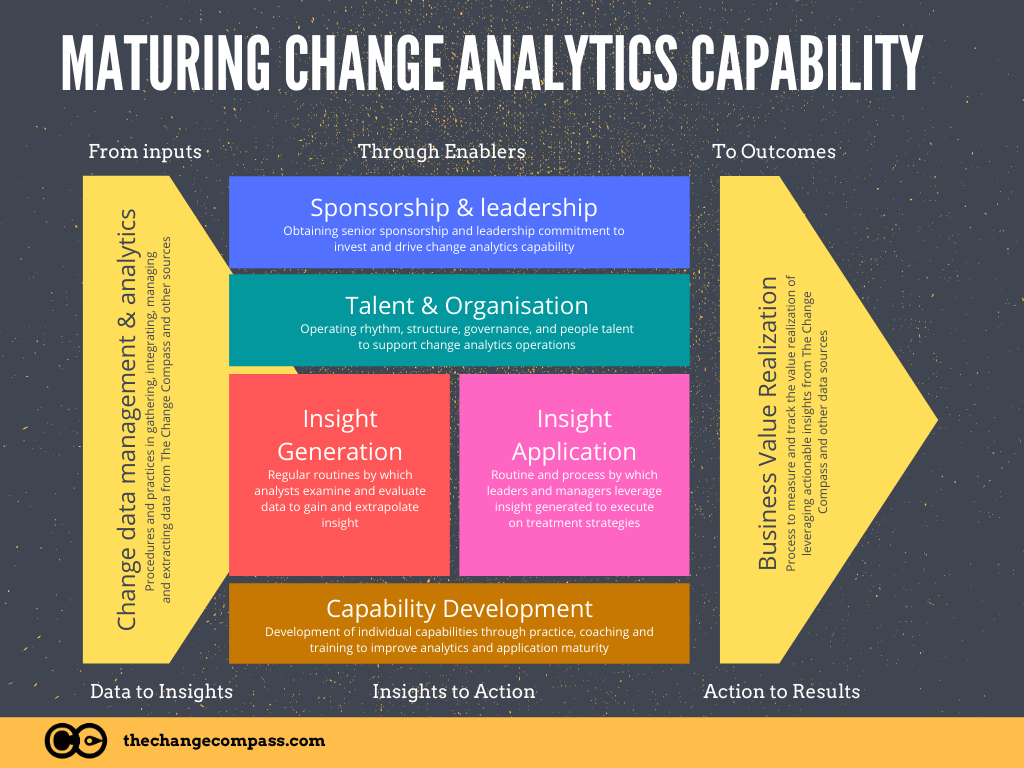
To effectively manage the complexity of numerous change initiatives, organizations can benefit from an online tool. The tool should help reduce complexity, enhance communication, and improve risk management. Here are the key characteristics such a tool should have:
Ease of Administration: The tool should be simple for both those driving change and key stakeholders receiving it. It should efficiently capture essential data related to people’s change impacts, including key performance indicators relevant to the project’s success.
Focused on Impact Data: While the tool should cover essential project and business data, its primary focus should be on collecting key impact data. This data complements existing data, enhancing the overall change management strategy.
Effective Reporting Tools: The tool should offer effective and flexible reporting tools. These help operational managers, project management offices (PMOs), and senior managers plan for people’s readiness for change initiatives.
Analysis Capabilities: The tool should include analysis features to identify change risks. These analyses could include change loading and timing issues, which might necessitate reprioritization of initiatives.
Customization: Each organization is unique in terms of its departments, types of changes, and reporting requirements. The tool should be adaptable to accommodate these differences.
However, the effectiveness of any tool depends on how well people use it. An effective tool for presenting a sequence of changes the company is undertaking should be complemented by two crucial aspects:
1. Establishing Processes and Governance to Embed the Tool
Successfully embedding a portfolio management tool across an organization requires establishing a clear operating rhythm and consistent processes for its use. Each division should have defined roles and responsibilities to ensure that the tool is effectively utilized and that data is accurately entered and maintained.
For instance, in the digital marketing department, specific roles should be designated to coordinate product changes, ensuring that every relevant update is promptly entered into the tool. These roles might also include responsibilities for analyzing the data provided by the tool to optimize product launch strategies, aligning them with other ongoing initiatives, and avoiding conflicts.
As organizations adopt an integrated view of change initiatives, it becomes increasingly important to establish an enterprise-level governance body or committee. This governance body should oversee the ongoing development, deployment, and usage of the tool, ensuring it continues to meet the evolving needs of the organization.
The committee should be composed of representatives from various departments, including IT, marketing, HR, and operations, to address the diverse needs of stakeholders across the organization. This body would regularly review the strategic implications of the tool’s data, discuss risks associated with change delivery, and prioritize initiatives based on their potential impact.
By maintaining this operating rhythm, organizations can ensure that the tool becomes an integral part of their change management processes and the company’s culture, driving better coordination, reducing risks, and enhancing decision-making at both the strategic and operational levels.
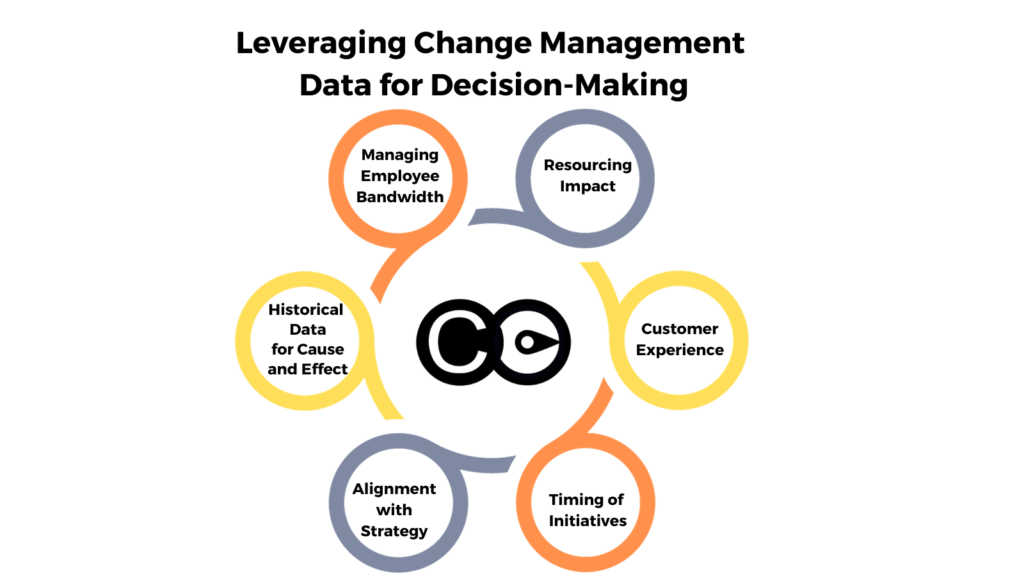
Once an organization has established an integrated view of its change initiatives through a robust portfolio management tool, the focus shifts to leveraging this data to inform critical business decisions. The data generated by the tool can be instrumental in guiding decisions related to various aspects of change management, such as enhancing the organization’s competitive advantage.
Employee Capacity Management: The tool provides visibility into the number and scale of ongoing initiatives, enabling leaders to assess whether employees have the capacity to absorb additional changes without experiencing burnout or a decline in productivity. By understanding the cumulative impact of these initiatives, the organization can plan and stagger changes to ensure sustainable workload levels.
Resource Allocation: With a comprehensive view of all change initiatives, organizations can make more informed decisions about how to allocate resources effectively in their organizational leadership. The tool allows leaders to prioritize initiatives that align with strategic goals and allocate resources to those with the greatest potential impact.
Customer Experience Management: The data can also help anticipate the potential effects of various initiatives on customer experience. By identifying and mitigating risks early, organizations can ensure that changes do not negatively impact customer satisfaction or loyalty.
Timing and Sequencing of Initiatives: The tool enables organizations to analyze the timing and sequencing of change initiatives to minimize disruptions and conflicts. This strategic approach ensures that initiatives are rolled out in a manner that optimizes their impact while minimizing operational risks.
Strategic Alignment: By providing real-time insights into how ongoing initiatives align with the overall business strategy, the tool supports decision-making that engages team members and ensures every change initiative contributes to the organization’s long-term objectives.
Moreover, the tool’s ability to capture and analyze historical data is invaluable. By examining past initiatives, organizations can gain insights into optimal change capacity and identify patterns or trends that inform future decision-making. This historical perspective enables organizations to predict and plan for change more effectively.
Implementing an enterprise-level change management tool not only provides a comprehensive view of all change initiatives but also significantly enhances the organization’s overall change management capability. As processes and internal processes are refined to support the tool, the organization becomes more agile, resilient, and capable of managing change effectively, ultimately driving better business outcomes.
In this article, we’ve emphasized the importance of understanding what is changing and having an integrated view of initiatives. To experience the transformative power of The Change Compass, join our Weekly Demo every Tuesday to enhance your business performance.
In 2022, the average employee experienced ten planned enterprise changes simultaneously. In 2016, that number was two. Gartner’s research on change fatigue documents what happened next: employee willingness to support change collapsed from 74% to 43% in the same period.
That collapse is not a cultural problem. It is a process problem. The change management process most organisations still use was designed for a world where major transformation happened once every few years. It was built on linear, sequential logic: assess, plan, deploy, embed. Each phase completes before the next begins. Business as usual is suspended while the change happens. Then it resumes.
That model has been structurally broken for some time. The organisations that are still using it are not just inefficient , they are actively making change harder for their employees. This article examines why the traditional change management process fails in a high-velocity environment, what a modern iterative approach looks like, and how to make the shift without starting from scratch.
Why the waterfall change management process struggles at pace
The traditional change management process borrows its logic from waterfall project management: define requirements, plan in detail, execute in order, hand over to operations. Its appeal is its clarity. Everyone knows where they are in the process. Progress can be tracked against a plan.
The problem is that this logic assumes a level of environmental stability that no longer exists in most large organisations. By the time a twelve-month change programme has completed its planning phase and is ready to deploy, the business conditions that informed the design have often shifted. Stakeholders who were engaged at the start have moved on. The technology landscape has changed. A new leadership priority has landed. The organisation that was going to receive this change is not the same organisation that commissioned it.
McKinsey research on agile organisations consistently finds that organisations using iterative methodologies succeed at significantly higher rates than those using linear approaches. The mechanism is straightforward: iterative approaches build in the capacity to learn and adjust, rather than treating every deviation from the plan as a failure.
The second structural problem with the traditional change management process is that it treats adoption as a phase rather than a continuous state. The “embedding” phase at the end of a waterfall change programme is meant to lock in new behaviours after go-live. But adoption does not work this way. Behaviour change is not a state you reach , it is something you continuously maintain, reinforce, and measure. A process that treats embedding as a finite activity will almost always underinvest in it.
The three levels of the modern change management process
Before redesigning the change management process, it helps to be clear about what a change management process is actually trying to achieve. McKinsey’s framework for change identifies three levels of ambition, each of which calls for a different process:
Level 1: Compliance
The goal is that people adopt new procedures, processes, or tools. This is the most transactional form of change management and requires the shortest change process. Communication, training, and structured support are the primary mechanisms.
Level 2: Mobilisation
The goal is preparing employees for broader shifts that require new behaviours and ways of working. This requires more sustained engagement, leadership involvement, and reinforcement over a longer period.
Level 3: Transformation
The goal is improving performance and organisational health by embedding new management practices that change the way the organisation operates. This is the most complex form of change and cannot be managed through a linear, time-bounded process. It requires continuous measurement, iteration, and leadership commitment over years, not months.
Most organisations apply the same process regardless of which level they are operating at. The result is that compliance-level changes get over-engineered, and transformation-level changes get under-resourced.
What a modern, iterative change management process looks like
An iterative change management process is not simply a faster version of the waterfall model. It is a fundamentally different design. Rather than completing each phase before beginning the next, it runs phases in parallel, builds feedback loops into the process, and treats each sprint or cycle as an opportunity to adjust.
Here is what each stage looks like in practice:
Stage 1: Orientation and framing (weeks 1-3)
Rather than a comprehensive upfront planning phase, orientation focuses on the essential questions: who is affected, how significantly, what are the non-negotiables, and what can flex? The output is a lightweight change canvas rather than a detailed change management plan. The canvas captures impact, stakeholder profile, key risks, and the initial hypothesis for the change approach.
This stage should be done with the project team, not after the project team has finished its planning.
Change management activity is structured in four-to-six-week cycles, each with a clear focus and a measurable outcome. A cycle might focus on leader alignment, a specific stakeholder group’s readiness, or the training design for a particular module.
Each cycle ends with a short retrospective: what did we learn? what changed in the environment? what needs to adjust? This retrospective is not a sign of failure , it is how the process gets smarter over time.
Key activities within each cycle include:
Stakeholder pulse checks (short surveys or structured conversations)
Review of adoption indicators (early usage data, support ticket patterns, manager feedback)
Communication and engagement delivery against the current cycle’s priorities
Adjustment of the next cycle’s plan based on what was learned
Stage 3: Go-live support (weeks surrounding each release)
Go-live in an iterative environment is not a one-time event. Multiple releases may occur across the programme’s life. For each release, the change process focuses on:
Ensuring the affected groups are ready (not just informed)
Having reinforcement mechanisms in place at the team level
Monitoring adoption metrics from day one, not week four
This is the stage most waterfall processes either skip or treat as complete once training has been delivered. In an iterative model, adoption management continues until adoption indicators demonstrate genuine embedding, not just initial usage.
Adoption management activities include:
Regular adoption reporting to programme and business leadership
Targeted intervention for groups or roles showing lagging adoption
Reinforcement through leadership visibility and peer recognition
Updating supporting materials as practice evolves
The five principles that separate modern change management from the waterfall approach
Beyond the structural shift to iterative cycles, modern change management rests on five principles that distinguish it from its waterfall predecessor.
1. Start with impact, not activity. Traditional change processes generate activity plans: communication sent, training delivered, workshops run. Modern change management starts with impact data: which groups are most affected, how severely, and what does that mean for how they need to be supported? Activity follows from impact analysis, not from a template.
2. Measure behaviour, not completion. Sending a communication is not the same as people understanding the change. Delivering training is not the same as people being able to do their jobs differently. Modern change management tracks behavioural indicators , adoption rates, usage patterns, manager confidence, stakeholder sentiment , not just activity completion.
3. Run change management with the project, not after it. The persistent failure of change programmes that “bolt on” change management late is well-documented. Prosci’s research on change management timing consistently shows that early involvement in programme design, not just programme delivery, produces materially better outcomes.
4. Treat leaders as active participants, not passive sponsors. The role of executive sponsorship in change outcomes is one of the most consistently supported findings in the research literature. But modern change management goes further than securing a sponsor name on a communications template. It designs for active, visible leadership engagement at the moments that matter most to employees , particularly during transitions that affect role security, team structure, or ways of working.
5. Manage the portfolio, not just the programme. The Gartner finding that employees experienced an average of ten simultaneous changes underscores the problem with programme-level change management in isolation. Modern change management requires a portfolio view , tracking cumulative change load across the employee population and making explicit decisions about sequencing, pacing, and priority.
Common failure modes in the modern change management process
Even organisations that have adopted an iterative model run into predictable failure modes.
Iterations without real retrospectives. Running four-week cycles is not the same as running iterative change management. The value comes from the disciplined retrospective that follows each cycle , the honest assessment of what is working, what is not, and what needs to change. Organisations that go through the motions of iteration without genuine reflection get the overhead without the benefit.
Confusing speed with agility. Moving faster through the same linear process is not agility. Agility is the capacity to adjust direction based on new information. A team that compresses a twelve-month waterfall plan into six months is not running an iterative process , it is running a compressed linear one.
Under-resourcing the analytical function. An iterative change management process produces more data than a waterfall one. Adoption metrics, stakeholder pulse results, usage data, and portfolio load information all need to be collected, analysed, and acted on. Without the analytical capacity to do this, the feedback loops that make iteration valuable cannot function.
How digital tools support an iterative change management process
Iterative change management generates a data challenge that manual processes cannot easily handle. Change practitioners need to track adoption across multiple concurrent releases, monitor stakeholder sentiment across different groups, and maintain a real-time picture of cumulative change load.
This is where purpose-built change management platforms add operational value. Tools like Change Compass allow change teams to consolidate portfolio-level change data, track adoption metrics in real time, and generate the reporting that keeps programme teams and business leaders aligned on what is actually happening on the ground. For organisations running iterative change management at scale, this kind of digital infrastructure is not optional , it is what makes the process sustainable.
Making the shift: where to start
If your organisation is currently running a waterfall change management process and you want to move to an iterative model, here is a practical starting point.
Choose one active programme and run the next delivery phase as an iterative cycle rather than a phase-gate sequence. Define a four-to-six-week cycle, set one measurable adoption goal for that cycle, run a structured retrospective at the end, and adjust the next cycle based on what you learn.
You do not need to redesign your entire change methodology before starting. The iterative model is self-improving , each cycle builds the evidence base for the next one. What you do need is the leadership support to treat a retrospective’s findings as actionable, not defensive.
The organisations that have moved farthest toward modern change management are those that started with a small, visible experiment and used its results to make the case for broader adoption. That is, itself, an iterative approach.
Frequently asked questions
What is a change management process?
A change management process is the structured approach an organisation uses to plan, deliver, and embed change , covering everything from initial impact assessment through to adoption monitoring after go-live. A modern change management process is iterative rather than linear, running short cycles with feedback loops rather than sequential phases that must complete before the next begins.
What is the difference between agile and waterfall change management?
Waterfall change management completes each phase , planning, communication, training, embedding , in sequence before moving to the next. Agile or iterative change management runs these activities in parallel cycles, typically four to six weeks long, with a retrospective at the end of each cycle to assess what is working and adjust the next cycle’s plan. The iterative model handles environmental change better and tends to produce better adoption outcomes.
Why do change management processes fail?
The most common failure modes are: late involvement of change practitioners in programme design, treating adoption as a final phase rather than an ongoing state, measuring activity completion rather than behaviour change, and failing to manage cumulative change load across the employee population. Organisations that run change management as a project-level add-on rather than a portfolio-level discipline are particularly vulnerable.
How long should a change management process take?
Duration depends on the scale and complexity of the change. A compliance-level change might require a process of two to three months. A major transformation that requires genuine behaviour change and cultural shift may require sustained change management activity over two to three years. The mistake is applying a fixed time horizon to a change before assessing what level of change it actually requires.
How do you measure a change management process?
Effective measurement combines leading indicators , stakeholder readiness assessments, manager confidence surveys, early adoption rates , with lagging indicators , business performance metrics, sustained usage data, quality outcomes. The key shift from traditional measurement is tracking what people are actually doing differently, not what change management activities have been completed.