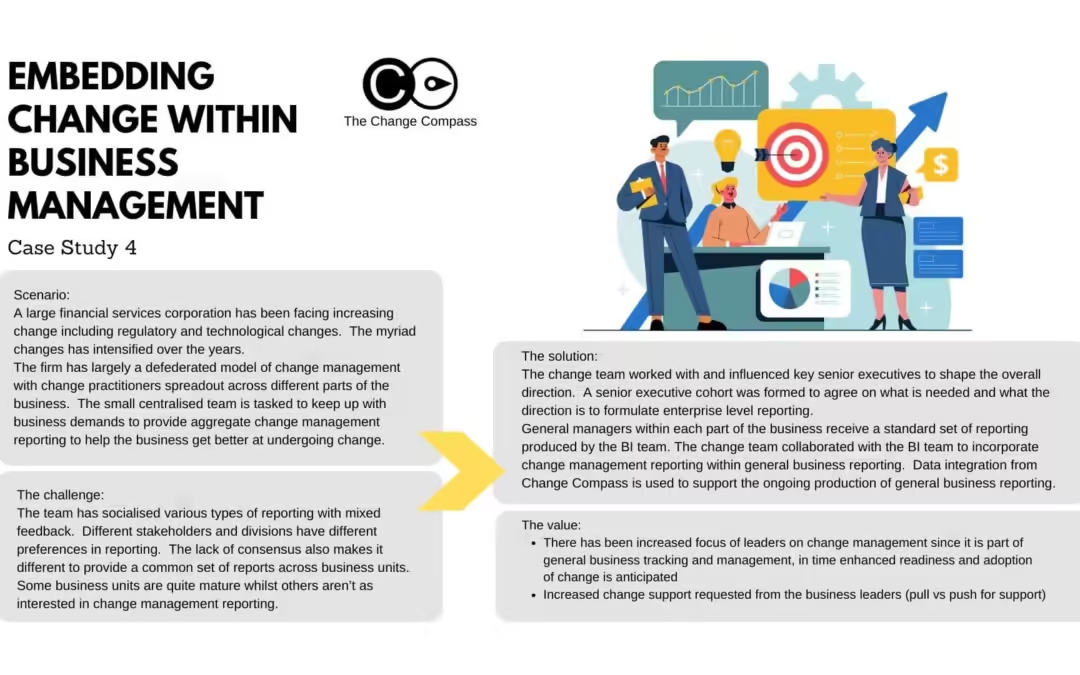
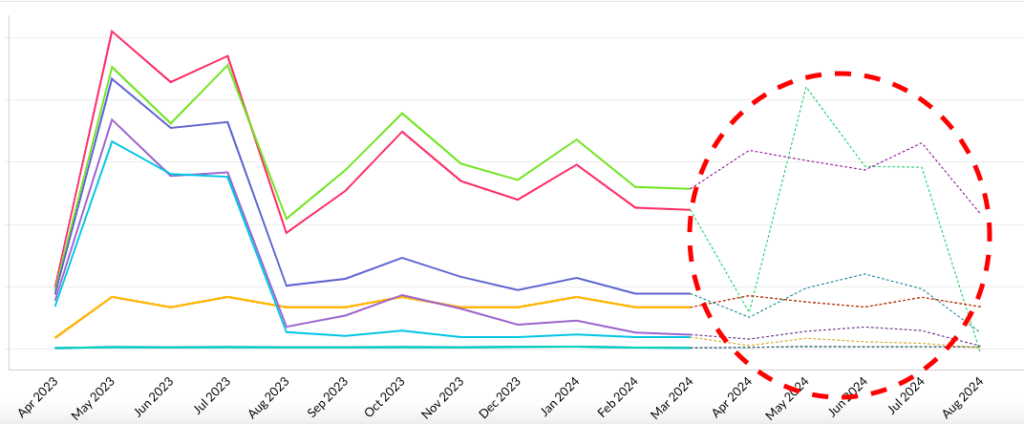
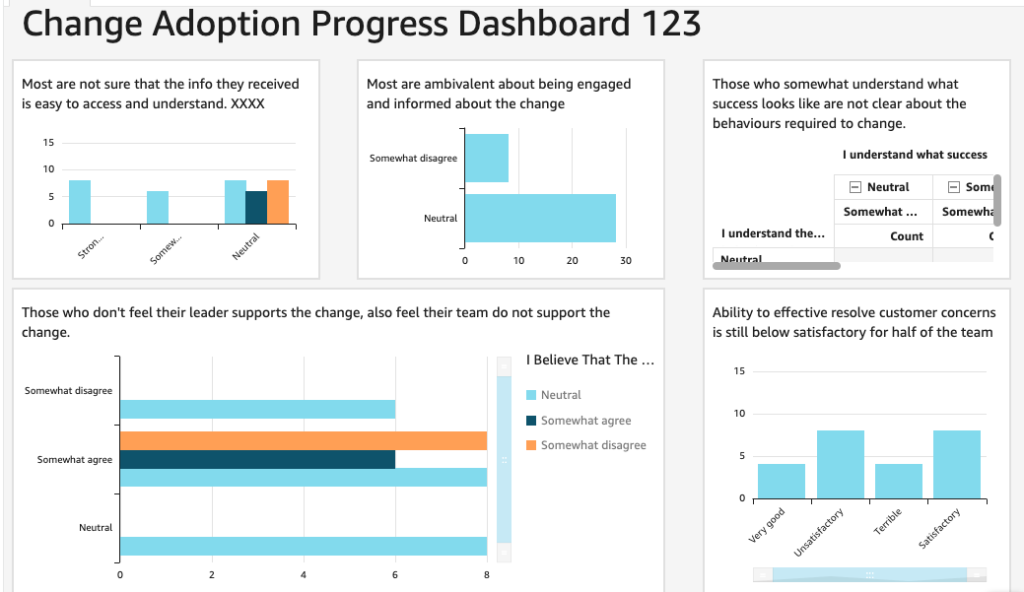
In the rapidly evolving landscape of financial services, organisations face significant challenges due to regulatory and technological changes. A large financial services corporation has recognised the need for an integrated approach to change management reporting, embedding it within general business reporting to enhance organisational agility and effectiveness. This case study outlines the firm’s journey, challenges faced, solutions implemented, and the resulting value derived from this strategic initiative.
Background
The corporation operates under a defederated model of change management, where change practitioners are distributed across various business units. This structure has led to inconsistent change management practices and reporting, complicating the ability to provide comprehensive insights into organisational change efforts. As regulatory demands and technological advancements have intensified, the need for cohesive change management reporting became paramount.
Challenges
The primary challenges encountered by the centralized change management team included:
Diverse Reporting Preferences: Different stakeholders and divisions within the organization exhibited varying preferences for reporting formats and metrics. This lack of consensus hindered the development of a standardized reporting framework.
Maturity Disparities: Business units displayed varying levels of maturity in their change management practices, with some units showing strong interest while others remained indifferent.
Feedback Variability: Initial attempts to socialize various reporting types received mixed feedback, complicating efforts to establish a unified approach.
Solution Implementation
To address these challenges, the change management team adopted a multi-faceted strategy:
Executive Engagement: The team actively engaged with senior executives to align on the direction for change management reporting. A senior executive cohort was formed to define essential reporting needs and establish a common vision.
Collaboration with Business Intelligence (BI) Team: The change management team partnered with the BI team to integrate change management metrics into existing general business reports. This collaboration ensured that change management insights were included in routine business tracking.
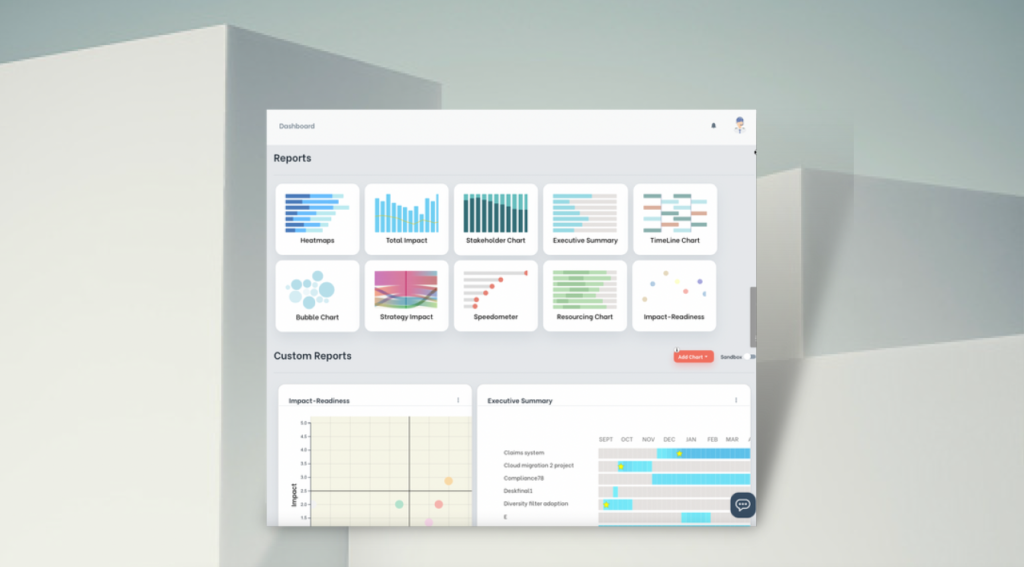
Data Integration: Utilising data from Change Compass facilitated the ongoing production of comprehensive reports that combined operational metrics with change management insights.
Value Realized
The integration of change management reporting into general business reporting yielded several significant benefits:
Increased Leadership Focus: By embedding change metrics within standard business reports, leaders began to prioritize change management as part of their strategic oversight. This shift is expected to enhance readiness and adoption of future changes across the organization.
Proactive Change Support: Business leaders increasingly requested support for change initiatives, indicating a transition from a push model (where support is offered) to a pull model (where support is actively sought).
Enhanced Reporting Consistency: The establishment of a standardized set of reports improved clarity and consistency in how change initiatives were tracked and communicated across business units.
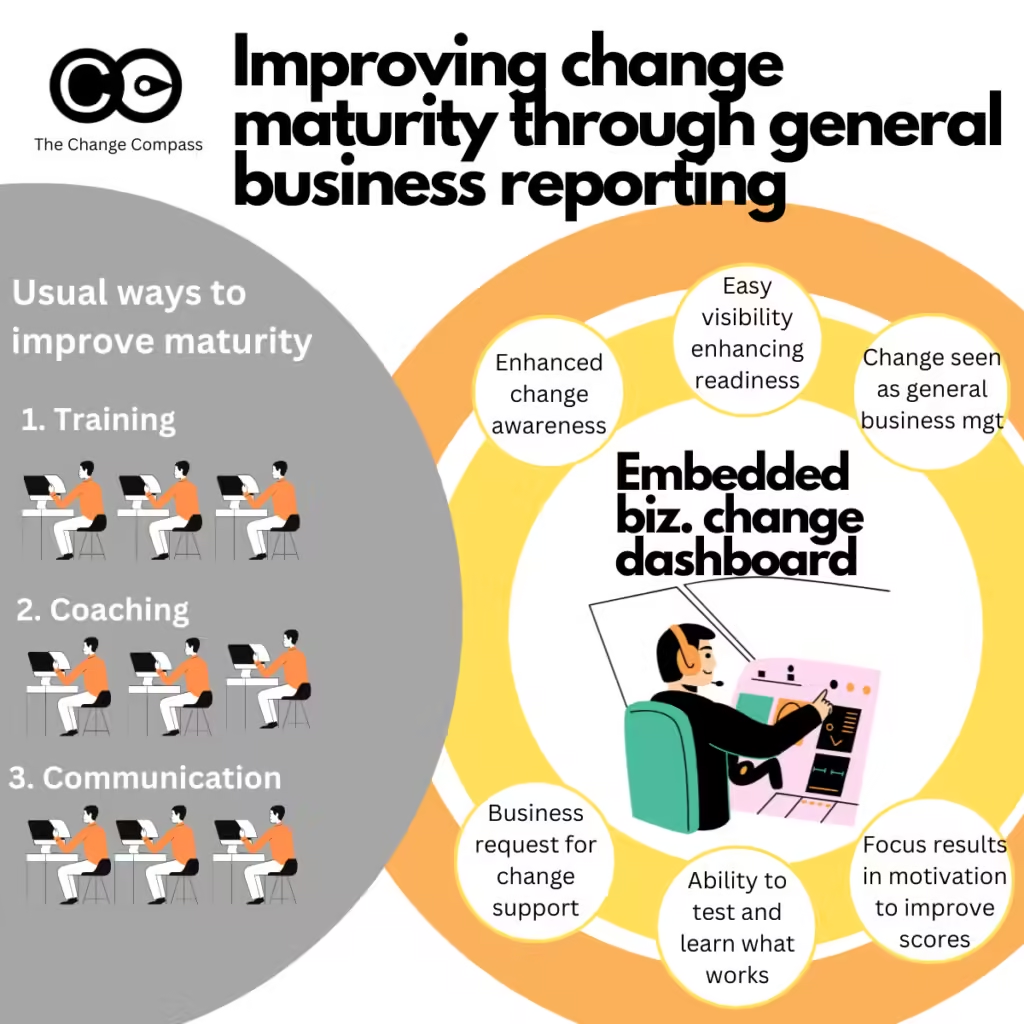
Change management Maturity: Enhancing change management maturity within the business is general done through capability development and coaching. However, this case showcases that embedding change management within general business management is a strategic way to raise awareness, visibility, and through this enhance the business’ efforts to improve the management of change.
This case study illustrates how a large financial services corporation successfully embedded change management reporting into its general business reporting framework. By engaging senior leadership, collaborating with data teams, and standardising metrics, the organisation not only improved its reporting capabilities but also fostered a culture that values proactive engagement with change initiatives. As a result, the firm is better positioned to navigate future changes while ensuring that it meets regulatory demands and capitalizes on technological advancements.
As a change management practitioner, your mission is to guide organisations through change, building their ability to manage transitions effectively and sustainably. A major part of this work often involves helping organisations develop their “change maturity” — the capacity to continuously and successfully deliver change. Many experienced change practitioners focus on moving organisations along this maturity curve, seeing it as a vital part of creating a culture that embraces and sustains transformation.
However, in this pursuit, there’s a potential risk: becoming too fixated on achieving “change maturity” can cloud your judgment about what the organisation really needs. You may find yourself caught up in the desire to build structured change processes, educate stakeholders on every change theory, or create complex frameworks to assess and elevate change capability. While these elements are important, an over-reliance on them can impede progress. In some cases, your organisation might be more capable of managing change than you think, but your approach could be holding them back.
There are several common areas where change practitioners may become too focused on change maturity — and how this focus can actually hinder their ability to support successful, meaningful change. We’ll delve into how overemphasising change terminology, processes, structures, and risk-averse approaches can become obstacles to progress. By understanding and addressing these potential pitfalls, you can better align your support with the unique needs and readiness of your organisation, enabling a smoother, more effective path to support successful change.
Are You Too Quick to Label Your Organisation as Change Immature?
One of the first traps experienced change practitioners might fall into is quickly labeling their organisation as “change immature.” It’s tempting to assess an organisation’s change capability through the lens of formal change frameworks and models, but by doing so, you may be discounting their informal ability to adapt to change.
In other words, is your ‘label’ placed on the organisation a potential self-fulfilling prophecy? For example, if you see the organisation as mildly change mature, your approach and lens may all be geared around this label and expectation.
Organisations that have not formally defined their change management processes or have not made concerted efforts to assess their change maturity might seem “immature” on the surface. But that doesn’t mean they lack the inherent capacity to change. In many cases, businesses have evolved and navigated transitions without formal change models in place, relying on their leadership, adaptability, and problem-solving capabilities.
Example: Mislabeling the Organisation’s Maturity
Consider a large, successful organisation with a history of navigating mergers, market shifts, and product innovation. While this company may have never formalised a change management function or assessed its change maturity, its survival and success prove that it has navigated complex changes in the past. You, as the change practitioner, might arrive and see that the business lacks a formal change methodology like Prosci or Kotter, so you label them as immature. As a result, you might start recommending a highly cautious, structured approach to “bring them up to speed.”
However, this label can lead to unnecessary delays. Rather than imposing new structures or over-engineering the process, it could be more effective to build on the organisation’s existing ways of working. The business may already have the right instincts, and simply needs to refine its approach to handle more formalised, larger-scale change efforts.
This cautious approach of assuming immaturity often leads to missed opportunities for progress. It slows down the pace of change and leaves businesses feeling that they are incapable of handling large-scale change without significant external help.
Change Terminology and Concepts: Over-Education vs. Practical Implementation
Another common pitfall is becoming too focused on educating stakeholders about change management concepts and frameworks, rather than focusing on practical implementation. It’s easy for experienced change practitioners to get caught up in explaining the intricacies of change theories, but the reality is that many stakeholders may not need or want this level of detail.
Stakeholders, especially those in senior leadership positions, are often more interested in results than in the underlying change management theories. Spending too much time educating them on ADKAR, Kotter’s 8-step process, or Lewin’s model can divert attention from the critical issue: how to implement the change in their specific organisational context.
Using and coaching your stakeholders on implementing change without change methodology is a skill, but one that can be critical.
Example: Change Concepts vs. Actionable Strategies
Imagine working on a digital transformation project where the leadership team is eager to see results. Instead of diving straight into how the change will be implemented, you spend the first few weeks educating the leaders on the theory behind change management, explaining why each stage of the ADKAR model is important and why a structured approach is necessary. While these concepts are valuable, the leadership team is left feeling overwhelmed by jargon and disconnected from the practicalities of the change they need to deliver.
A more effective approach in this situation might be to focus on practical, actionable strategies that are action-based learning. Instead of over-explaining change concepts, walk stakeholders through the steps they need to take, provide them with tools to manage resistance, and give them clear, real-time metrics on progress. In many cases, stakeholders don’t need an in-depth lesson on change theory—they need guidance on how to lead change within their teams, how to prepare and engage effectively, and how to overcome resistance.
Even if you don’t focus on education, and instead label them as change immature. This in itself can be dangerous and unhelpful. As a result you don’t implement the right approaches to support the change required to achieve their business goals.
While it’s essential to help stakeholders understand the principles behind change, overemphasis on theoretical knowledge can take the focus away from delivering the change itself.
Processes and Structures: Building New or Leveraging Existing?
One of the hallmarks of a maturing change organisation is the establishment of formal structures and processes to support change. Communities of practice, change champion networks, formalised governance bodies, and change management offices all play vital roles in building long-term change capability. However, there’s a risk of becoming too focused on building these structures rather than finding ways to work within the current framework of the organisation.
When faced with the task of improving change capability, many practitioners instinctively begin to build new structures from scratch. However, this can add complexity and create parallel processes that the business may not be equipped to handle. Sometimes, rather than introducing new structures, the better approach is to refine and optimise existing business processes and forums to embed change more naturally.
Example: Building New Structures vs. Leveraging Existing Ones
Consider an organisation that already has strong cross-functional governance in place for operational projects. Instead of introducing a new change champion network, you could work with the existing project governance structures to ensure change management principles are integrated into these meetings. By adapting existing forums to include change discussions, you avoid creating extra layers of complexity and leverage routines that are already familiar to the business.
The challenge is to balance the need for formal change structures with the desire to minimise disruption to current workflows. Often, the most effective approach is to enhance existing structures rather than building entirely new ones. This also helps to prevent the perception that change management is an “additional burden” rather than an integrated part of business operations.
‘Babying’ Your Stakeholders: Are You Doing the Change for Them?
As a change practitioner, it’s natural to want to help stakeholders navigate the complexities of change. But there’s a fine line between supporting your stakeholders and doing the change for them. When you step in to handle every aspect of the change process, you risk undermining your stakeholders’ ability to build their own change capability.
The goal of change management is to empower the business to manage change independently. If you are too involved in managing the change, you can inadvertently create dependency, where stakeholders rely on you to handle resistance, communications, or decision-making. This not only stifles their growth but also prevents the organisation from building a sustainable, internal capacity for change.
Example: Over-Involvement vs. Coaching for Capability Building
Suppose you’re leading a change initiative in a large organisation, and you find yourself handling most of the communications, solving problems that arise, and managing resistance from teams. While you may feel that you’re helping, the reality is that your stakeholders are becoming overly dependent on you to manage the change.
A more effective approach is to take a coaching stance. Rather than doing the change for them, help your stakeholders learn how to anticipate resistance, communicate effectively, and manage change within their teams. Offer guidance and support, but resist the temptation to take over. When you empower stakeholders to lead the change themselves, you help them build the confidence and skills they need to manage future changes more independently.
The key is to recognise when your involvement is crossing the line from support into doing the change for them. The more you can coach and mentor your stakeholders, the more resilient and capable the organisation will become.
Setting the Bar Too Low for Your Organisation
The COVID-19 pandemic demonstrated something profound about people and organisations: they are capable of changing far more quickly than we might have thought. Practically overnight, organisations adapted to remote working, adopted new technologies, and restructured their operations. This rapid adaptation showed that many organisations have far more resilience and capacity for change than we often give them credit for.
But in the post-pandemic world, are you still setting the bar too low for your organisation? Are you approaching change cautiously because you assume the business is not capable of rapid adaptation? If so, you may be underestimating their ability to handle larger-scale change or more ambitious transformation initiatives.
Example: Underestimating Organisational Capacity
Imagine working with an organisation that wants to implement a large-scale digital transformation. You might assume that because the business has not undertaken such a significant change before, they will need to move cautiously, taking small steps toward change maturity. However, given the right leadership support, clear communication, and resources, the organisation might be able to implement the transformation far more quickly and effectively than anticipated.
The key is to challenge your assumptions about the organisation’s capacity for change. Instead of setting the bar too low and taking overly cautious steps, consider where you can stretch the organisation’s potential. Businesses often have far more adaptability and resilience than we might assume, and by aiming higher, you can help them achieve more ambitious outcomes. Again, COVID was a clear demonstration of what can be possible.
Caution vs. Progress: Finding the Right Balance
One of the biggest challenges for change practitioners is finding the right balance between caution and progress. In many cases, particularly with organisations that are newer to structured change management, a cautious approach may feel like the safest route. But taking overly cautious steps can prevent the organisation from achieving the level of change it needs to succeed.
The other side of the equation is pushing too hard, too fast. While organisations may have a greater capacity for change than we give them credit for, they also need time to adapt and build their change capability. The trick is to strike the right balance between ambitious progress and thoughtful pacing, especially iterative paced learning.
Example: Caution vs. Ambition in Portfolio-Level Change
Consider an organisation that is managing a portfolio of change initiatives. One approach is to take small, incremental steps to build change capability, slowly rolling out new processes and frameworks. While this approach may feel safe, it can prevent the business from keeping up with the volume and pace of change it needs to manage.
A more ambitious approach might involve embedding change management principles directly into business planning, governance, and decision-making. By integrating change management into existing processes, the organisation can manage a high volume of change more effectively without creating new silos or delays. This approach pushes the organisation to operate at a higher level, while still allowing time for adaptation and learning.
Adjusting Your Lens on Change Maturity
While change maturity is an important goal for any organisation, becoming too fixated on achieving it can inadvertently cloud your judgment and therefore negatively impact outcomes. Overemphasising change models, frameworks, and cautious steps can slow down the pace of change and underestimate the organisation’s capacity to evolve. As a change management practitioner, your role is not just to assess change maturity but to empower the organisation to grow and adapt.
By adjusting your lens and focusing on the organisation’s immediate needs and strengths, you can support more effective, sustainable change. This means balancing formal change processes with practical implementation, empowering stakeholders to lead the change themselves, and setting higher expectations for what the organisation can achieve.
The goal is not just to build change maturity, but to help the organisation experience navigating change in a way gives them confidence and meets their business goals.
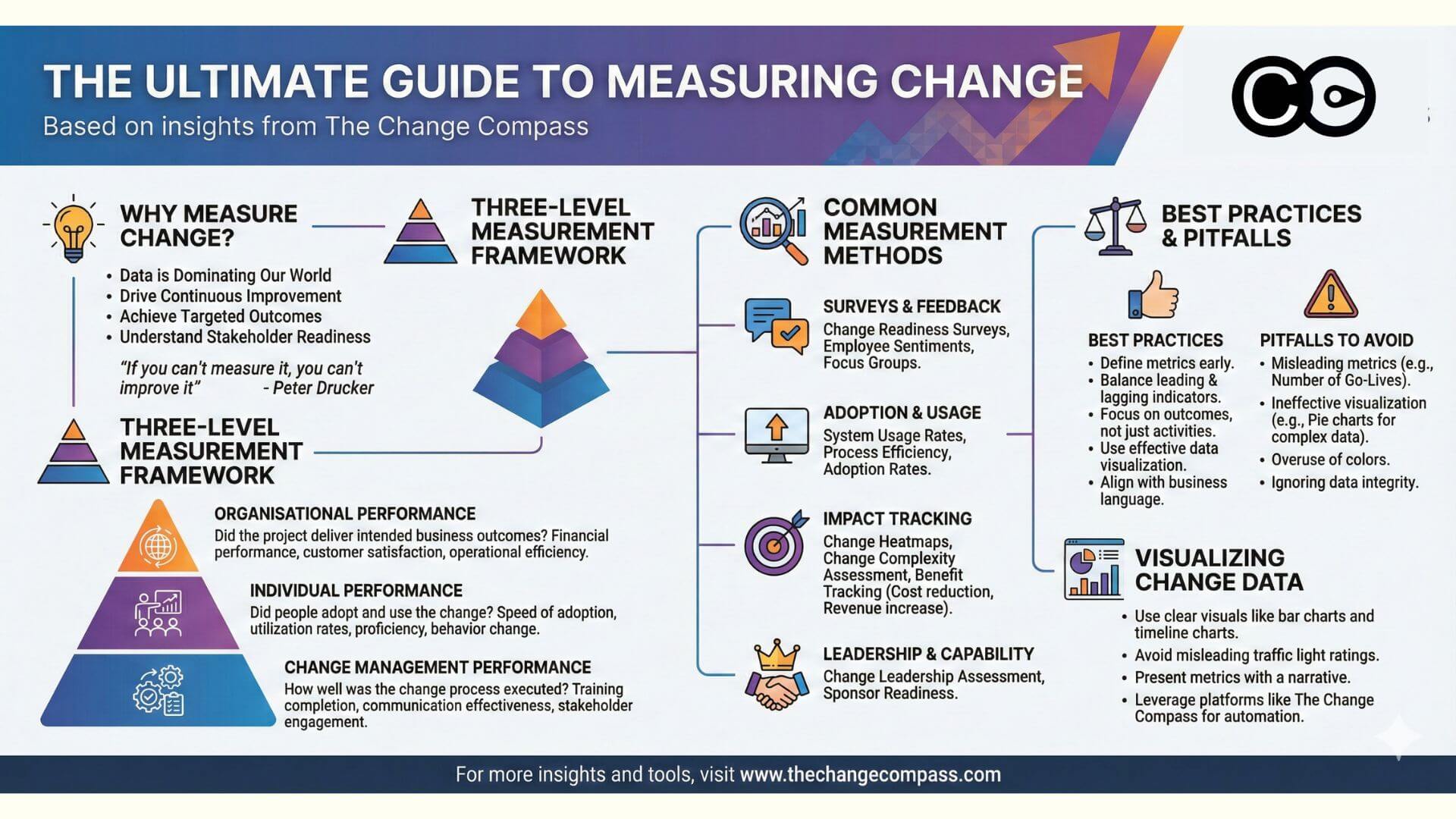
Change measurement translates organisational impact into quantifiable data through surveys, analytics dashboards, and AI-powered tools. Organisations that measure change readiness and adoption rates are 78% more likely to meet project objectives. This guide covers six project-level methods, seven business-level measures, and three enterprise-level frameworks across the Plan-Execute-Realise lifecycle.
A lot of change practitioners are extremely comfortable with saying that change management is about attitudes, behaviours, and feelings and therefore we cannot measure them. This metaphor that change management is ‘soft’ extends into areas such as leadership and employee engagement whereby it may not be easy to measure and track things. However, is it really that because something is harder to measure and less black and white that there is less merit in measuring these?
“If you can’t measure it you can’t improve it” Peter Drucker
The ‘why’ behind a lot of industry change in our day and age comes from the fact that data is now dominating our world. Data is a central part of everything that is changing in our world. Since we are now more reliant on the internet for information, the data that can be collected through our digital interactions around our lives are now driving change. Home assistant Alexa from Amazon can recognize our voices and tell us what we want to know. We can be identified through street cameras. Our Google usage leads to better-targeted advertisements and product promotions. Our Facebook usage leads to a deep understanding of our preferences and lifestyles, and therefore we become targetted by advertisements for what we may find value in (according to Facebook data and algorithms).
So if our world is surrounded by data, why are we not measuring it in managing change? To answer this question let’s look at what we are or are not measuring.
These are some of the common ways in which change is often measured in projects:
Project methods intro
1. Change readiness surveys – What do readiness surveys actually measure?
Change readiness surveys are 5-10 question pulse assessments (Likert + open text) sent via SurveyMonkey/Microsoft Forms at pre-launch, mid-execution, and post-launch. They benchmark stakeholder preparedness, with 92% accuracy when combined with behavioural observations. Top organisations survey quarterly.
Change readiness surveys are usually online surveys sent by a project owner to understand how stakeholder groups are feeling about the change at different points in time throughout the project. It can be in the form on a Likert scale or free text. Most results are summarized into a quantitative scale of the degree in which the group is ready for change. A simple SurveyMonkey could be set up to measure stakeholder readiness for change. ChangeTracking (now part of Accenture) is a comprehensive online tool that measures the change journey and readiness of stakeholder groups throughout the initiative.
2. Training evaluation surveys – How do you prove training ROI?
These evaluations are normally based on participant satisfaction across various categories such as content, instructor effectiveness, usefulness, etc. In a face-to-face training format, these surveys are normally paper-based so as to increase the completion rate. For online or virtual training, ratings may be completed by the user at the conclusion or after the session.
3. Communications metrics – Which comms metrics matter most?
One way in which communications may be measured is the ‘hit rate’ or the number of users/audience that views the article/material/page. This may be easily tracked using Google Analytics that not only tracks number of views per page but also viewership by the time of day/week as well as audience demographic information as such gender and geographical locations.
4. Employee sentiments/culture surveys – What reveals change resistance early?
There are some organisations that measure employee sentiments or culture over the year and often there are questions that are linked to change. These surveys tend to be short and based on a Likert scale with less open-ended questions for qualitative feedback. Since these surveys are often sent across the entire organisation they are a ‘catch-all’ yardstick and may not be specific to particular initiatives.
5. Change heatmaps – When do heatmaps fail (and what works better)?
Some organisations devise change heatmaps on excel spreadsheets to try and map out the extent to which different business units are impacted by change. This artifact speaks to the amount of change and often leads to discussions concerning the capacity that the business has to ‘handle/digest’ change. The problem with most heatmaps is that they are usually categorized and rated by the creator of the artifact (or a limited number of people making judgments), and therefore subject to bias. Data that is based on 1 person’s opinions also tend not to have as much weight in a decision-making forum.
6. Change benefit tracking – How do you track post-launch ROI?
In addition to typical change management measures, there are various initiatives-specific measures that focus on the actual outcome and benefit of the change with the goal of determining to what extent the change has taken place. Some example of this includes:
System usage rates
Cost reduction
Revenue increase
Transaction speed
Process efficiency
Speed of decision making
Customer satisfaction rate
Employee productivity rate
Incidents of process violation
Non-initiative based change management measures
There are two other measures that are used within an organisational vs. initiative-specific context, change leadership assessment and change maturity assessment. In the next section, we will discuss these two areas.
Change leadership assessment
David Miller from Changefirst wrote about 3 types of change leaders.:
1. The sponsor whose role is to drive the initiative to success from the beginning to the end. This involves possessing competencies in rallying and motivating people, building a strong network of sponsors and communicating clearly to various stakeholder groups.
2. The influencer whose role is to leverage their network and influence to market and garner the traction required to make the initiative successful. Four types of influencers as identified by Changefirst includes:
a) Advocates who are great at promoting and advocating the benefits of the change
b) Connectors who are able to link and leverage people across a part of the organisation to support the change
c) Controllers who have control over access to information and people and these could include administrators and operations staff
d) Experts who are viewed by others in the organisation as being technically credible
3. The change agent is someone who is tasked with supporting the overall change in various ways, including any promotional activities, gaging different parts of the organisation on the change and be able to influence, up, down and sideways across the organisation to drive a successful change outcome.
Whilst there isn’t one industry standard tool for assessing change leadership competencies and capabilities. There are various change leadership assessment tools offered by Changefirst as well as other various smaller consulting firms. One of the most comprehensive change leadership assessment tools is by ChangeTracking is the Change Capacity Assessment which is a self-assessment with the broad categories being Goal Attainment, Flexibility, Decision Making, and Relationship Building.
Some of the key competencies critical in change leadership have been called out by Pagon & Banutal (2008), and include:
Goal attainment
Assessing organisational culture and climate
Change implementation
Motivating and influencing others
Adaptability
Stakeholder management
Collaboration
Build organisational capacity and capability for change
Maneuvering around organisational politics
Change maturity assessment
Organisations are increasingly realising that managing change initiative by initiative is no longer going to cut it as it does not enable organisational learning and growth. Initiatives come and go and those who rely on contractor change managers often find that their ability to manage change as an organisation does not mature much across initiatives.
Change maturity assessment is focused on building change capability across the organisation across different dimensions, whether it be project change management or change leadership. The goal of conducting a change maturity assessment is to identify areas in which there may be a capability gap and therefore enable structured planning to close this gap.
There are 2 major change maturity assessment models available in the market. The first is by Prosci and the second is by the Change Management Institute. To read more about change maturity assessment read out article A New Guide for Improving Change Management Maturity, where we outline how to improve change maturity throughout different business units across the organisation.
A comprehensive model of Change Management Measures
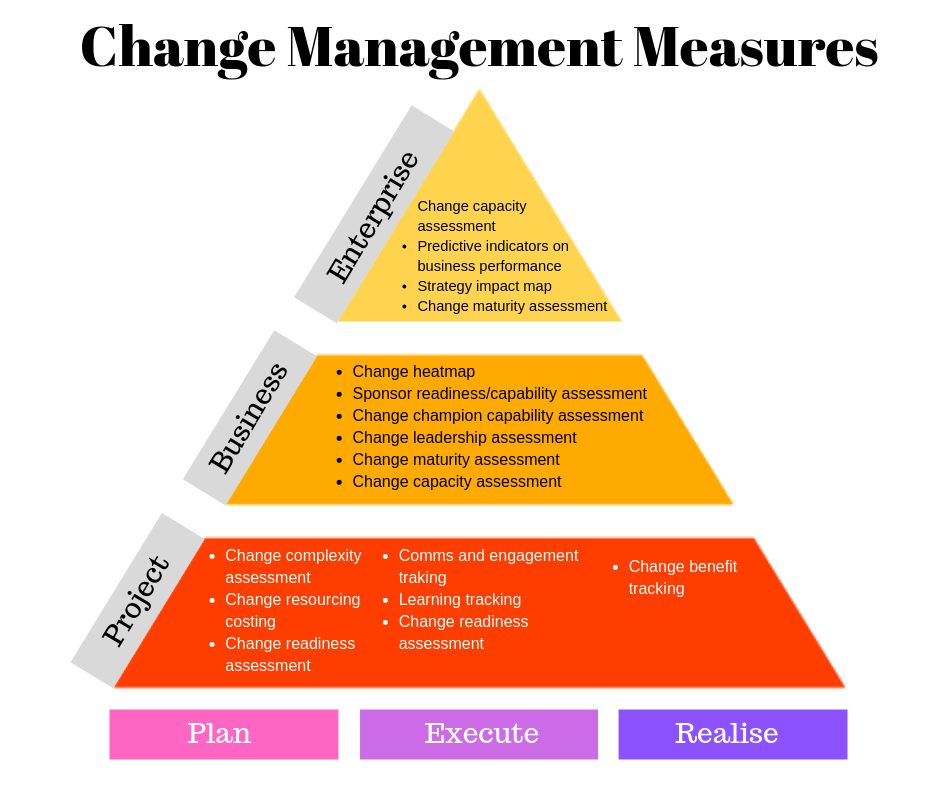
In this diagram various change management measures are represented along two axes, one being the different phases of the initiative lifecycle, and the other being different organisational levels of project, business and enterprise in which change management measures fall into.
Project level measures
‘Plan’ phase
In this phase of the project, the team is discovering and scoping what the project involves and what the change is. As a result, the details are not known clearly at the commencement of the phase. Later in the phase the scope becomes much clearer and the team starts to plan what activities are required to implement the change.
The change complexity assessment evaluates how complex the project is. It looks at how many people could be impacted, what the size of the impact could be, how many business units are impacted, whether multiple systems and processes are impacted, etc.
Change resourcing costing. At the planning phase of the project cost required for the change management stream of the work is required. This includes such as any contractors, communication campaigns, learning cost, travel, and administration cost, just to name a few.
Change readiness assessment is usually conducted prior to the change and during the change. Usually, the same set of questions is asked of various stakeholder groups to assess their readiness for change.
‘Execute’ phase
The execute phase is one of the most critical parts of the project. Activities are in full flight and the project is busy iterating and re-iterating changes to ensure successful execution to achieve project goals.
Communication and engagement tracking. Effective engagement of stakeholders in the change is absolutely critical. Stakeholder interviews, surveys, communication readership rates are all ways in which engagement may be tracked.
Learning tracking. Measuring learning is critical since it tracks to what extent the new competencies and skills have been acquired through learning interventions. Typical measurements include course tests or quizzes in addition to course evaluations. On the job performance may also be used to track learning outcomes and to what extent learning has been applied in the work setting.
Change readiness assessment continues to be critical to track during the execution phase of the project
‘Realise’ phase
In this phase of the project the change has ‘gone live’ and most project activities have been completed. It is anticipated in this phase that the ‘change’ occurs and that the benefits can then be tracked and measured.
Change benefit tracking measures and tracks the extent to which the targeted benefits and outcomes have been achieved. Some of these measures may be ‘hard’ quantitative measures whilst others may be ‘soft’ measures that are more behavioural.
Business level measures
Business level measures are those that measure to what extent the business has the right ability, capacity, and readiness for the change.
Change heatmaps can help to visualize which part of the business is most impacted by 1 project or multiple projects. The power of the change heatmap is in visualizing which part of the business is the most impacted, and to compare the relative impacts across businesses. As the number of change initiatives increase so would the complexity of the change. When facing this situation organisations need to graduate from relying on excel spreadsheets to using more sophisticated data visualization tools to aid data-based decision making. To read more about change heatmaps and why this is not the only way to understand business change impact, go to The Death of the Change Heatmap.
Sponsor readiness/capability assessment can be a critical tool to help identify any capability gaps in the sponsor so that effort may be taken to support the sponsor. A strong and effective sponsor can make or break a change initiative. Early engagement and support of the sponsor are critical. Both Prosci, as well as Changefirst, have sponsor competency assessment offerings.
Change champion capability assessment. Change champion or change agent are critical ‘nodes’ in which to drive and support change within the organisational network. A lot of change champions are appointed only for one particular initiative. Having a business-focus change champion network means that their capability can be developed over time, and they can support multiple initiatives and not just one. Assessing and supporting change champion capability would also directly translate to better change outcomes.
Change leadership and change maturity assessment – refer to the previous section
Change capacity assessment.
In an environment where there is significant change happening concurrently, careful planning and sequencing of change in balance with existing capacity are critical. There are several aspects of change capacity that should be called out in the measurement process:
Different parts of the business can have different capacity for change. Those parts of the business with better change capability, and perhaps with better change leadership, are often able to receive and digest more changes than other businesses that do not possess the same level of capability.
Some businesses are much more time-sensitive and therefore their change capacity needs to be measured with more granularity. For example, call centre staff capacity is often measured in terms of minutes. Therefore, to effectively plan for their change capacity, the impacts of change needs to be quantified and articulated in a precise, time-bound context so that effective resourcing can be planned in advance.
The change tolerance or change saturation level for business needs careful measurement in combination with operational feedback to determine. For example, it could be that last month a part of the business experienced significant change impact across several initiatives happening at the same time. The operational indicators were that there was some impact on customer satisfaction, productivity, and there were negative sentiments reported by staff that there was too much change to handle. This could mean that the change tolerance level may have been exceeded. With the right measurement of change impact levels for that part of the business, next time this level of change is seen, previous lessons may be utilized to plan for this volume of change. Utilise measurement and data visualization tools such as the Change Compass to track change capacity.
Enterprise level change measures
At an enterprise level, many of the business unit level measures are still applicable. However, the focus is comparing across different business units to sense-make what each part of the business is going through and if the overall picture is aligned with the intentions and the strategic direction of the organisation. For example, typical questions include:
Is it surprising that one part of the business is undergoing significant change whilst another is not?
Is there a reason that one business unit is focused on a few very large changes whilst for other business units there is a larger set of changes each with smaller impacts?
Is the overall pace of change optimum according to strategic intent? Does it need to speed up or slow down?
What is the process to govern, report and make decisions on enterprise level change, prioritization, sequencing and benefit realization?
Is there one business unit that is able to manage change more effectively, faster with greater outcomes? How can other business units leverage any internal best practices?
As mentioned in the Change Management Measures diagram, some enterprise level change measures include:
Change capacity assessment – Does one business unit’s change capacity limits mean that we are not able to execute on a critical strategy within the allocated time? How do we create more capacity? Ways in which to create more capacity could include more resources such as staff, or initiative funding, more time is given, or more talent to lead initiatives
Change maturity assessment – At an enterprise level, the concern is with the overall change maturity of the organisation. How do we implement enterprise level interventions to build change maturity through programs, networks, and exchanges, such as:
Enterprise change capability programs
Enterprise change analytics and measurement tools
Enterprise change methodology
Enterprise network of change champions
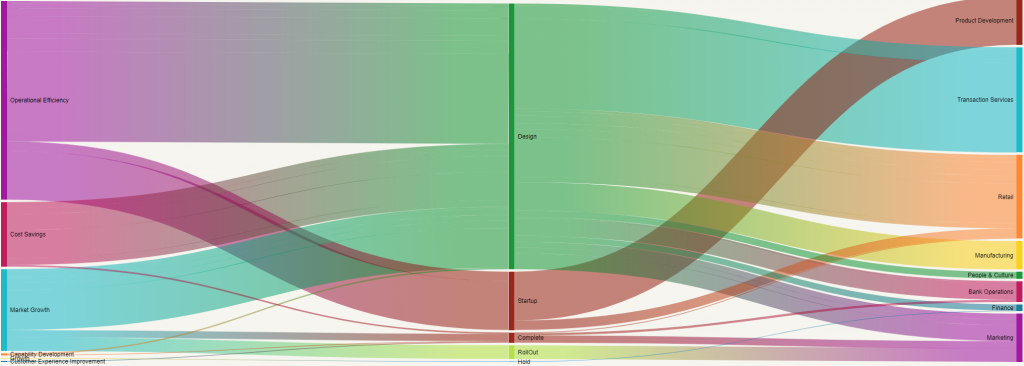
Strategy impact map – Change management need not be focused only on project execution or business unit capability. It can also demonstrate value at an enterprise level by focusing on strategy execution (which by definition is change). The way in which different strategies exert impact on various business units may be visualized to help stakeholder understand which initiatives within which strategic intent impact which business units. To illustrate this please refer to the below diagram which is an example of a strategy impact map. In this diagram, each of the organisation’s strategy is displayed with different initiatives branching out of each strategy. The width of each initiative correlates with the level of impact that the initiative has on the business over a pre-determined period of time. Therefore, the width of each strategy also indicates the overall relative impact on the business.
This data visualization artifact can be valuable for business leaders and strategic planning functions as it depicts visually how the implementation of various strategies is impacting business units. This helps planners to better understand strategy implementation impacts, potential risks and opportunities, and balancing change pace with strategy goals at various points in time.
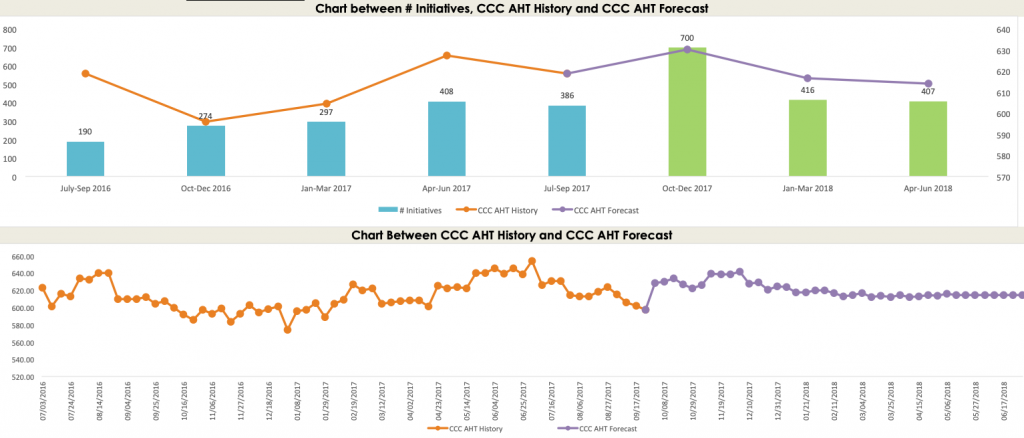
Predictive indicators on business performance – We started this article talking about how data is all around us and we also need to better manage change using data. With quantitative data on change impact, it is possible to ascertain any correlations with operational business indicators such as customer satisfaction, service availability, etc. For those business indicators where there is a significant correlation, it is possible to hence use predictive reporting to forecast performance indicator trends, given planned change impacts.
In the below graph you can see an example of this whereby using historical data it is possible to establish correlations and therefore forecast future impact on business indicators. This example is focused on the customer contact centre (CCC) and key business indicator of average handling time (AHT) is utilized as an illustration.
This type of predictive performance forecasting is extremely valuable for organisations undergoing significant change and would like to understand how change may impact their business performance. By demonstrating the impact on business indicators, this puts the importance of managing change at the front and centre of the decision-making table. At The Change Compass, we are developing this type of measurement and reporting function. This is the frontier for change management – to be established as a key business-driving function (versus a standard back-office function).
Change can be measured and this article has outlined various operational and strategic ways in which change measurement can demonstrate significant value. Most corporate functions cannot exist without data and analytics. For example, Human Resources relies on people and pay data. Marketing cannot function without measurement of channel and campaign effectiveness. For Information Technology, pretty much everything is measured from system usage, to cost, to efficiency. It is time we start utilizing data to better visualize change to better plan and make business decisions.
References:
Miller, David (2011) Successful Change. How to implement change through people. Changefirst Ltd.
Pagon & Banutal (2008) Leadership Competencies for Successful Change Management. Study Report. University of Maribor.
Frequently Asked Questions (FAQ)
What are the most important change management metrics to track? Focus on adoption rates, readiness scores, communication engagement, and benefit realisation metrics tailored to project phases and business capacity.
How do you measure change readiness effectively? Combine pulse surveys with behavioural indicators and sponsor assessments. Balance frequency with depth for actionable insights. Read “Beyond the Survey: A Strategic Lens on Change Readiness Assessment.”
Why replace change heatmaps with other visuals? Heatmaps introduce subjectivity bias. Timeline charts and capacity dashboards provide clearer decision-making data. See “The Death of the Change Heatmap.”
What role does AI play in change measurement? AI enables real-time sentiment analysis, predictive capacity planning, and automated risk detection across initiatives. Platforms integrate natural language queries for instant insights.
How many change metrics should organisations track? Target 8-15 core metrics aligned with strategic objectives across project, business, and enterprise levels to maintain focus and actionability.
What enterprise-level change metrics matter most? Strategy impact mapping, cross-business capacity analysis, and predictive performance forecasting linking change volume to operational outcomes.
There is now a lot of attention and focus on data. However, is the same applied to change management data? With the substantial financial investments companies make in change efforts, there’s a growing recognition of the need to leverage change management data strategically. Senior managers and executives are increasingly demanding data-driven insights to make informed business decisions. Here, we explore the challenges associated with change data, the strategic approaches to managing it effectively, and how incorporating it into the decision-making process can drive organizational success.
Common Challenges in Working with Change Data
Ad hoc and Tactical Approaches One common challenge in working with change data is the ad hoc and tactical nature of its collection. Often, data is gathered as needed, primarily at the project level. This can result in a fragmented view of change initiatives, making it challenging to derive meaningful insights. For instance, progress data may be limited to generic metrics such as the number of change impact sessions or completed training sessions, lacking depth and context.
Data Insufficiently Fact-Based Another prevalent issue is the creation of data that lacks a solid factual foundation. Change practitioners sometimes rely on gut-feel ratings or broad categories that are difficult to defend or substantiate infront of stakeholders. Heatmaps, a popular visualization tool, may be based on subjective assessments rather than objective, quantifiable measures, hindering the data’s credibility and utility.
Ineffective Data Visualizations Data visualizations play a crucial role in conveying information effectively. Unfortunately, some visualizations fall short of making a significant impact. Whether they are overly colorful, fail to use the right chart to highlight key points, or present data in a way that obscures the primary message, ineffective visualizations can impede the decision-making processes.
Seeking Easy Fixes Many change practitioners view working with data as a chore and opt for quick fixes. They may collect just enough data to generate a report or dashboard, neglecting the importance of a thorough understanding and management of the data. This short-sighted approach can compromise the quality and reliability of the insights derived from the data.
Strategic Approaches in Working with Change Data
Strategic approaches to manage change data can result in significant value for the organisation. Imagine the power of a range of change management data that highlights anything from impact levels, saturation risks, sentiments, adoption risks and benefit realization progress. Such is the power of change data, if managed effectively. What are some of these strategic approaches?
Managing Data as a Core Routine To address the challenges associated with ad hoc and tactical data collection, organizations must establish routines for managing change data. Monthly data reviews, updates, and audits create a disciplined approach to ensure the data remains accurate, relevant, and valuable. By making data management a core routine, organizations foster a culture of accountability and accuracy. This can be applied across a large program, a business unit, a portfolio of initiatives or across the enterprise.
Leveraging AI for Data Auditing and Cleansing Artificial Intelligence (AI) can play a pivotal role in auditing and cleansing change data. Platforms like The Change Compass offer features that automate these processes, reducing the likelihood of errors and ensuring data integrity. AI-driven tools can identify inconsistencies, outliers, and inaccuracies, providing a more reliable foundation for decision-making.
Linking Change Data with Other Business Sources The true power of change data emerges when it is connected with other relevant business data sources. By integrating change management data with project data, HR data, risk data, and operations data, organizations gain a holistic view of their business landscape. This interconnected approach allows for a comprehensive understanding of key business risks and opportunities, facilitating more informed decision-making.
Incorporating Data into Decision-Making Bodies Change data should not exist in isolation; it should be integrated into key decision-making forums and processes. From executive leadership forums and strategic planning sessions to portfolio planning and operational meetings, incorporating change data into these discussions ensures that insights derived from the data inform critical business decisions. This alignment helps organizations proactively address challenges and capitalize on opportunities.
While recognizing the strategic importance of change data is a significant step forward, change practitioners must actively implement practical measures to enhance their approach to change data management. Here are some recommendations to help change practitioners become more strategic in their utilization of change data:
Standardize/Routinize Data Collection Processes: o Develop standardized processes for collecting change data across different projects and initiatives. o Implement consistent data collection templates and methodologies to ensure uniformity and comparability of data across initiatives and business units
Invest in Training and Skill Development: o Provide training for change practitioners on data management best practices, including data collection, analysis, audit and interpretation. This is critical to drive data capability and maturity. o Foster a data-driven culture within the organization by equipping practitioners with the necessary skills to leverage data effectively.
Utilize Technology and Automation: o Embrace technological solutions, such as data analytics tools and AI-driven platforms, to automate data auditing, cleansing, and visualization processes. o Leverage technology to streamline data collection and reporting, reducing manual effort and minimizing the risk of errors.
Encourage Cross-Functional Collaboration: o Facilitate collaboration between change management teams and other departments, encouraging the sharing of data and insights. o Establish cross-functional teams to integrate change data with project data, HR data, and other relevant business sources.
Implement Data Governance Frameworks: o Develop and implement robust data governance frameworks to ensure the accuracy, security, and compliance of change data. o Define roles and responsibilities for data management within change initiatives, promoting accountability and ownership.
Enhance Data Visualization and Reporting: o Invest in training or hiring professionals with expertise in data visualization to create compelling and impactful reports. o Tailor visualizations to the audience, ensuring that key messages are communicated clearly and effectively.
Conduct Regular Data Reviews and Audits: o Establish a routine for regular data reviews, updates, and audits to maintain the accuracy and relevance of change data. o Use audits as an opportunity to identify and rectify data discrepancies or inconsistencies.
Integrate Change Data into Decision-Making Processes: o Actively participate in executive leadership forums, strategic planning sessions, and other decision-making bodies. o Present change data alongside other relevant business data to contribute to well-informed decision-making.
Measure and Communicate Value: o Develop metrics to measure the value generated by change initiatives and communicate these metrics to key stakeholders. o Regularly assess the impact of change data on decision-making processes and adjust strategies accordingly.
Seek Continuous Improvement: o Foster a culture of continuous improvement within the change management function. o Encourage practitioners to reflect on past experiences, learn from challenges, and refine their approach to change data management over time.
The strategic management of change data is not just a necessity but a critical component of achieving business success in today’s dynamic environment. By addressing common challenges and adopting strategic approaches, organizations can unlock the true potential of change data. As the business landscape continues to evolve, leveraging data-driven insights becomes a strategic imperative for navigating change, mitigating risks, and capitalizing on opportunities. Embracing change data as a strategic exercise positions organizations to not only survive but thrive in an ever-changing marketplace.
Change management is often seen as a ‘soft’ discipline that is more an ‘art’ than science. However, successful change management, like managing a business, relies on having the right data to understand if the journey is going in the right direction toward change adoption. The data can inform whether the objectives will be achieved or not.
Data science has emerged to be one of the most sought-after skills in the marketplace at the moment. This is not a surprise because data is what powers and drives our digital economy. Data has the power to make or break companies. Companies that leverages data can significant improve customer experiences, improve efficiency, improve revenue, etc. In fact all facets of how a company is run can benefit from data science. In this article, we explore practical data science techniques that organizations can use to improve change outcomes and achieve their goals more effectively.
Improved decision making
One of the significant benefits of using data science in change management is the ability to make informed decisions. Data science techniques, such as predictive analytics and statistical analysis, allow organizations to extract insights from data that would be almost impossible to detect or analyse manually. This enables organizations to make data-driven decisions that are supported by empirical evidence rather than intuition or guesswork.
Increased Efficiency
Data science can help streamline the change management process and make it more efficient. By automating repetitive tasks, such as data collection, cleaning, and analysis, organizations can free up resources and focus on more critical aspects of change management. Moreover, data science can provide real-time updates and feedback, making it easier for organizations to track progress, identify bottlenecks, and adjust the change management plan accordingly.
Improved Accuracy
Data science techniques can improve the accuracy of change management efforts by removing bias and subjectivity from decision-making processes. By relying on empirical evidence, data science enables organizations to make decisions based on objective facts rather than personal opinions or biases. This can help reduce the risk of errors and ensure that change management efforts are based on the most accurate and reliable data available.
Better Risk Management
Data science can help organizations identify potential risks and develop contingency plans to mitigate those risks. Predictive analytics can be used to forecast the impact of change management efforts and identify potential risks that may arise during the transition. For example, change impacts across multiple initiatives against seasonal operations workload peaks and troughs.
Enhanced Communication
Data science can help facilitate better communication and collaboration between stakeholders involved in the change management process. By presenting data in a visual format, such as graphs, charts, and maps, data science can make complex information more accessible and understandable to all stakeholders. This can help ensure that everyone involved in the change management process has a clear understanding of the goals, objectives, and progress of the transition.
Key data science approaches in change management
Conduct a Data Audit
Before embarking on any change management initiative, it’s essential to conduct a data audit to ensure that the data being used is accurate, complete, and consistent. For example, data related to the current status or the baseline, before change takes place. A data audit involves identifying data sources, reviewing data quality, and creating a data inventory. This can help organizations identify gaps in data and ensure that data is available to support the change management process. This includes any impacted stakeholder status or operational data.
During a data audit, change managers should ask themselves the following questions:
What data sources from change leaders and key stakeholders do we need to support the change management process?
Is the data we are using accurate and reliable?
Are there any gaps in our data inventory?
What data do we need to collect to support our change management initiatives, including measurable impact data?
Using Predictive Analytics
Predictive analytics is a valuable data science technique that can be used to forecast the impact of change management initiatives. Predictive analytics involves using historical data to build models that can predict the future impact of change management initiatives. This can help organizations identify potential risks and develop proactive strategies to mitigate those risks.
Change managers can use predictive analytics to answer the following questions:
What is the expected impact of our change management initiatives?
What are the potential risks associated with our change management initiatives?
What proactive strategies can we implement to mitigate those risks?
How can we use predictive analytics to optimize the change management process?
Leveraging Business Intelligence
Business intelligence is a data science technique that involves using tools and techniques to transform raw data into actionable insights. Business intelligence tools can help organizations identify trends, patterns, and insights that can inform the change management process. This can help organizations make informed decisions, improve communication, and increase the efficiency of change management initiatives.
Change managers can use business intelligence to answer the following questions:
What insights can we gain from our data?
What trends and patterns are emerging from our data?
How can we use business intelligence to improve communication and collaboration among stakeholders?
How can we use business intelligence to increase the efficiency of change management initiatives?
Using Data Visualization
Data visualization is a valuable data science technique that involves presenting data in a visual format such as graphs, charts, and maps. Data visualization can help organizations communicate complex information more effectively and make it easier for stakeholders to understand the goals, objectives, and progress of change management initiatives. This can improve communication and increase stakeholder engagement in the change management process.
Change managers can use data visualization to answer the following questions:
How can we present our data in a way that is easy to understand?
How can we use data visualization to communicate progress and results to stakeholders?
How can we use data visualization to identify trends and patterns in our data?
How can we use data visualization to increase stakeholder engagement in the change management process?
Monitoring and Evaluating Progress
Monitoring and evaluating progress is a critical part of the change management process. Data science techniques, such as statistical analysis and data mining, can be used to monitor progress and evaluate the effectiveness of change management initiatives. This can help organizations identify areas for improvement, adjust the change management plan, and ensure that change management initiatives are achieving the desired outcomes.
Change managers can use monitoring and evaluation techniques to answer the following questions:
How can we measure the effectiveness of our change management initiatives? (e.g. employee engagement, customer satisfaction, business outcomes, etc.) And what method do we use to collect the data? E.g. surveys or focus groups?
What data do we need to collect to evaluate the change initiative progress?
How can we use statistical analysis and data mining to identify areas for improvement?
How can we use monitoring of ongoing support or continuous improvement?
The outlined approaches are some of the key ways in which we can use data science to manage the change process. Change practitioners should invest in their data science capability and adopt data science techniques to drive effective change management success. Stakeholders will take more notice of change management status and they may also better understand the value of managing change. Most importantly, data helps to achieve change objectives.