In the world of scaled agile, “Release on Demand” is a concept that has profound implications for agile teams and their project approaches. It guides teams on how to release and deliver value when stakeholders and customers are truly ready to receive it. However, a crucial, often-overlooked factor in this concept is the role of change management. While Release on Demand has primarily been framed as a technical approach within the Scaled Agile Framework (SAFe), the readiness of people—including end-users, stakeholders, customers, and partners—forms an equally vital part of determining the demand for release.
As change management practitioners, understanding and actively shaping “Release on Demand” can significantly impact project outcomes. In this article, we’ll explore how change management can enhance this core SAFe concept through strategic timing, prioritisation, and thoughtful execution of each release. We’ll also discuss how to structure governance cadences to ensure operational and people readiness, going beyond the technical lens.
Understanding Release on Demand in SAFe
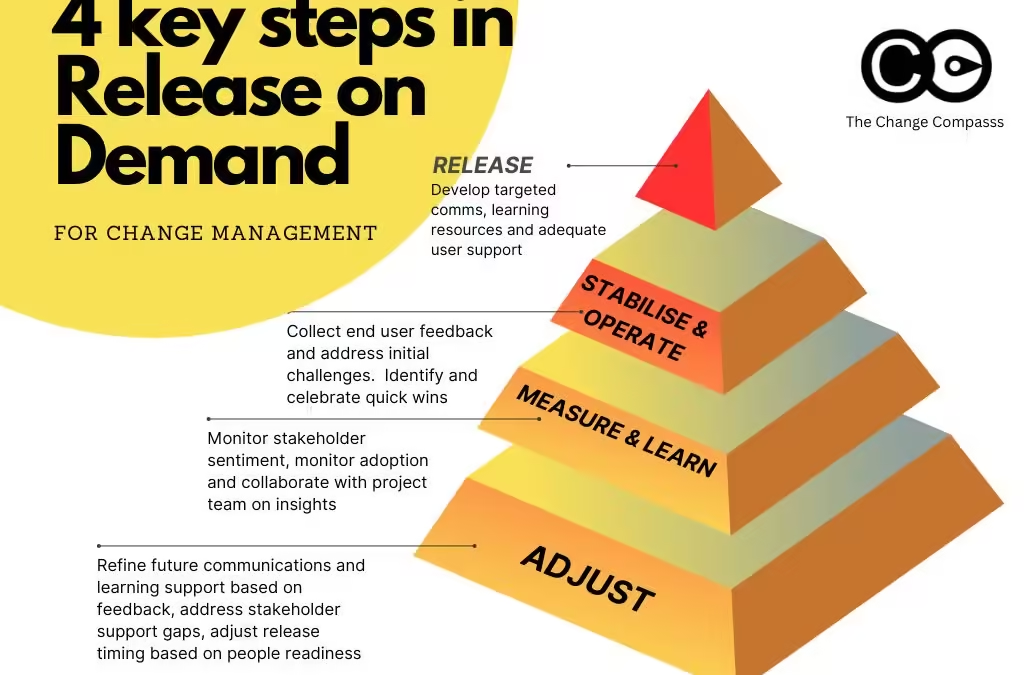
Within SAFe, Release on Demand means that project outputs or new functionality are delivered when the organisation, teams, and stakeholders are ready to adopt and benefit from it. It enables flexible delivery rather than a rigid release schedule. The four key activities for Release on Demand are:
Release – Delivering the product or change to users.
Stabilise and Operate – Ensuring the release is operationally sound and running smoothly.
Measure and Learn – Assessing the release’s impact and learning from the results.
Adjust – Making necessary improvements based on insights gained.
The goal of these activities is to minimise risk, gather user feedback, and optimise the release to maximise impact. While these steps seem straightforward, they demand thoughtful change management to ensure all stakeholders are prepared to support, use, and benefit from the release. Let’s delve deeper into how a change management approach can strengthen each of these activities.
People Readiness as the Core Demand Factor
The “demand” for a release is often misunderstood as being purely about project or market readiness. However, the reality is that it depends on multiple factors, including how ready people are to adopt the change. For any release to succeed, people readiness is crucial and requires focus on:
End-User Readiness: Ensuring that end-users are prepared for the new tools, processes, or functionalities. This could mean conducting user training, crafting support resources, and managing expectations.
Stakeholder Readiness: Stakeholders at all levels need to understand the change, its rationale, and its anticipated impact. This may involve regular briefings, updates, and even individual consultations.
Customer and Partner Readiness: For customer-facing or partner-facing releases, it’s essential to gauge external readiness as well. A clear communication plan and alignment of goals with partners or clients can smooth the path for a successful launch.
These readiness efforts form a significant part of the “demand” in Release on Demand and reflect the reality that people’s capacity to adapt often determines when a release will be genuinely effective.
The Broader Change Landscape
People readiness isn’t only determined by a single project or team but by the broader change landscape within an organisation. Multiple changes or ongoing initiatives can either enhance or inhibit readiness for a new release. For instance, if an organisation is already undergoing a significant digital transformation, adding another change may lead to overload and resistance.
Change practitioners should map the change landscape to identify concurrent changes and evaluate how these may impact readiness for Release on Demand. By assessing the timing and impact of other changes, change managers can:
Avoid change fatigue by spacing out initiatives.
Synchronize related changes to reduce redundancy.
Communicate the overall strategic direction to help stakeholders and users understand how individual changes fit into the bigger picture.
By accounting for these interdependencies, change management can improve people readiness and ensure the Release on Demand aligns with the organisation’s capacity to handle it.
Applying the Four Key Steps in Release on Demand
Let’s explore how change management activities can amplify each of the four Release on Demand steps:
1. Release: The release phase requires both technical and people preparation. Beyond deploying the technical elements, change management practitioners should:
Develop targeted communication plans to inform all affected stakeholders.
Offer targeted training sessions or resources that build users’ confidence and competence.
Ensure adequate support is in place for the transition, including help desks or peer mentoring.
2. Stabilise and Operate: After a release, it’s crucial to monitor adoption and support operational stability. The change team can:
Collect feedback from end-users and support staff on initial challenges and address these promptly.
Identify and celebrate quick wins that demonstrate the release’s value.
Work closely with operations teams to resolve any unforeseen issues that may inhibit adoption or cause frustration.
3. Measure and Learn: This step goes beyond tracking technical metrics and should also capture change-specific insights. Change management can contribute by:
Conducting surveys, interviews, or focus groups to gauge user and stakeholder sentiment.
Monitoring adoption rates and identifying any training gaps or knowledge shortfalls.
Collaborating with product or project teams to share insights that may refine or prioritisation subsequent releases.
4. Adjust: Based on insights gained from the Measure and Learn phase, change managers can advise on necessary adjustments. These might include:
Refining future communication and training plans based on user feedback.
Addressing any gaps in stakeholder support or sponsorship.
Adjusting the timing of subsequent releases to better align with people readiness.
The iterative nature of these four steps aligns well with agile methodologies, allowing change managers to continuously refine and enhance their approach.
The Critical Role of Sequencing, Prioritisation, and Timing
FFor change management practitioners, Release on Demand isn’t just about executing steps—it’s about doing so in the right sequence and at the right time. The impact of a release depends significantly on when it occurs, who is prepared for it, and how well each group’s readiness aligns with the release cadence and continuous integration.
Here are some tips to help change managers get the timing right:
Analyze stakeholder engagement levels: Regularly assess how engaged and ready stakeholders are, tailoring messaging and interventions based on their feedback and sentiment.
Prioritisation change activities based on impact: Not all releases will have the same impact, so change teams should focus resources on those that require the most user readiness efforts.
Create phased rollouts: If full-scale readiness across the board isn’t achievable, a phased rollout can provide users with time to adapt, while allowing the change team to address any emergent issues in stages.
By managing the release cadence thoughtfully, change managers can avoid the disruptions caused by hasty releases and ensure the deployment feels both manageable and meaningful for users.
Release governance in SAFe is often perceived as a predominantly technical or project-focused process. However, effective governance should encompass business operations and people readiness as well. Change management plays a pivotal role in designing governance cadences that account for these critical aspects.
To integrate change governance within release governance, change practitioners should:
Establish clear communication channels with project teams and product owners to ensure people readiness factors are consistently part of release discussions.
Implement a readiness checklist that includes technical, operational, and people readiness criteria. This checklist should be reviewed and signed off by relevant stakeholders before any release.
Maintain a cadence of review and feedback sessions where project teams, change managers, and stakeholders discuss readiness progress, key risks, and post-release outcomes.
This approach ensures that each release is evaluated from multiple perspectives, minimising disruption and maximising its potential for success.
The above is from Scaledagileframework.com
Developing a Change Cadence that Complements Agile Delivery
SAFe’s principle of “develop on cadence; release on demand” is central to effective agile delivery. For change management practitioners, developing a strong change cadence is equally important. This cadence, or rhythm of activities, aligns with the agile teams’ development cadence and helps build stakeholder momentum, maintain engagement, and reduce surprises.
Here’s how to develop a cadence that works in tandem with agile teams:
Planning Cadence: Hold regular planning sessions to align change activities with upcoming releases and identify readiness gaps. This could be quarterly for major releases or bi-weekly for smaller, iterative releases.
Execution Cadence: Establish a reliable cycle for change interventions, such as training, communication, and stakeholder meetings. This cadence helps stakeholders build expectations and fosters a predictable rhythm in change activities.
Feedback Cadence: Collect feedback at consistent intervals, aligning it with release intervals or sprint reviews. Consistent feedback keeps the change process agile and responsive to evolving needs.
A well-defined change cadence not only prepares users effectively but also reinforces trust and transparency in the change process.
Release on Demand may have originated as a technical concept within SAFe, but its success is deeply tied to how well people, stakeholders, and users are prepared for each release. For change management practitioners, Release on Demand is an opportunity to enhance the broader release process by prioritizing people readiness, orchestrating thoughtful sequencing, and establishing governance that prioritisations user success as much as project outcomes.
By proactively engaging in each of the four stages of Release on Demand—Release, Stabilise and Operate, Measure and Learn, and Adjust—change management can ensure releases are not just technically ready but fully integrated into the people and business context they serve. Embracing this role allows change managers to become essential partners in agile delivery, maximising the impact of each release for end-users, the organisation, and the overall success of the project.
Every change leader has seen the heat map. It sits in the deck, a grid of red, amber and green cells showing which business units are being hit hardest over the next 12 months. The leadership team glances at the red cells, nods gravely, and the meeting moves on. Decisions are made. Resources are allocated.
But here is the problem: the heat map may be the most widely used change planning tool in organisations today, and one of the most misleading. It answers the wrong question. It flattens nuanced impact into a single colour. And it creates a false sense of certainty that can actively harm your change planning.
This article is a change management heat map explained for senior practitioners. We will cover what a heat map is, where it genuinely adds value, and why relying on it as your primary decision-making tool puts your programme at risk. We will also explore what better approaches look like in practice.
What is a change management heat map?
A change management heat map is a visual tool that maps the volume or intensity of change impacts across an organisation over time. Typically displayed as a grid, it plots business units or employee groups on one axis against a timeline on the other. Each cell is colour-coded, usually using a traffic light system, to indicate the relative level of change exposure.
The premise is straightforward: where the cells are red, change intensity is high. Where they are green, the change load is manageable. Leaders can scan the map quickly and form a view of where the organisation is under pressure.
According to a 2024 review of change management decision-making tools on ResearchGate, organisations that use structured, visual change data to support planning decisions are significantly more likely to align stakeholders and maintain project momentum than those relying on narrative reporting alone. That finding reflects why heat maps became popular, they translate complex programme data into something immediately scannable for executives. Their appeal is real.
How heat maps are constructed in practice
Most heat maps are built by change managers or PMO leads who collect data from individual project teams, typically asking each team to rate how much impact their initiative will have on each business unit in each quarter. Those ratings are then aggregated into a single heat level per cell.
There are two common formats:
Project-versus-stakeholder group: Each row is a project, each column is a business unit, and the cell shows that project’s impact on that group. This format works well when you need to communicate a specific initiative’s reach.
Business unit over time: Each row is a business unit, each column is a quarter, and the cell aggregates all project impacts on that group for that period. This is the more popular format for portfolio-level planning.
Both are useful. Both are also problematic when treated as the primary basis for change decisions.
Where the change management heat map adds genuine value
Before dismantling the heat map, it is worth acknowledging what it does well, because used appropriately, it remains a valuable part of the change practitioner’s toolkit.
It makes the case for change management resourcing. When a heat map shows a business unit sitting under sustained red for three consecutive quarters, it is a compelling argument for additional change capacity. The visual is immediate. Executives who struggle to grasp the volume of concurrent change often respond well to seeing it rendered spatially.
It supports initial triage. Early in a programme, when you are still gathering impact data, a heat map gives you a rough signal of where to direct attention first. It is not the final word, but it is a useful starting point for conversations.
It builds stakeholder alignment. Showing a leadership team a heat map of their organisation’s change exposure can generate productive dialogue. Leaders who assumed their business unit was not heavily affected may be surprised. That conversation, however imperfect the underlying data, can be valuable.
It communicates portfolio scale. For boards and executive committees who need a summary view, the heat map provides a visual shorthand for “this organisation has a lot happening simultaneously.” That message matters and the heat map delivers it efficiently.
The problem is not the heat map itself. The problem is what happens when it is used as the definitive basis for change planning decisions rather than one input among many.
Why the change management heat map creates risk when used alone
The aggregation problem distorts reality
The fundamental flaw in the standard heat map is that it aggregates impact ratings into a single score per cell. When a business unit is rated “red” in Q2, that cell may represent three projects each scoring moderate impact, or it may represent one catastrophic system implementation layered with a restructure and a compliance change. The cell colour is identical. The response required is entirely different.
This aggregation problem compounds when you consider that different types of change create different demands on employees. A technology rollout requires training time, system access, and behaviour change. A restructure creates psychological uncertainty and role ambiguity. A process change requires procedural relearning. Combining these into a single heat score does not reveal the nature of the burden, only the rough magnitude. And even the magnitude is suspect, because it depends entirely on how each project team calibrated their rating.
Prosci’s research on the correlation between change management and project success consistently finds that the quality of change management practice, not the quantity of change, is the primary driver of outcomes. Organisations that apply structured, high-quality change management are six times more likely to meet project objectives. The heat map, by focusing purely on volume, misses the quality dimension entirely.
Red cells do not tell you what to do
Suppose a business unit is sitting in red for Q3. What does that tell you? It tells you there is a lot happening. It does not tell you:
Which projects are driving the heat
Whether the impacted employees have capacity to absorb the change
Whether the business unit’s leadership is aligned and actively sponsoring the change
Whether there is any time within the quarter for training and adoption activities
Whether any of the projects could be de-scoped, delayed or phased
The heat map surfaces a symptom but provides no diagnostic information. It tells you the patient has a fever, not what is causing it or how to treat it. Senior leaders who see a red cell often ask the obvious question, “what should we do about this?” The heat map cannot answer that question.
Heat maps obscure the employee experience
The most significant limitation of the heat map is that it represents organisational units, not people. A business unit of 500 employees may have 50 people in roles that are heavily impacted by three concurrent changes, and 450 who are barely touched. The entire unit turns red because of the concentrated experience of a minority.
Conversely, a business unit showing amber or green may have pockets of employees who are completely overwhelmed because the changes affecting them happen to fall below the threshold that triggers a red rating at the aggregate level.
Research on change saturation in large organisations highlights that change overload is often a localised experience, felt acutely by specific groups, roles or teams, while the broader unit appears to be coping. A tool that averages across the business unit will consistently miss these hot spots. And it is the hot spots where change fails.
Better approaches to change impact decision making
The heat map should not be abandoned. It should be contextualised, supplemented, and in many cases, replaced as the primary planning tool with approaches that provide richer and more actionable insight.
Stakeholder-level impact analysis
Rather than mapping change at the business unit level, more sophisticated change teams map impact at the role or stakeholder group level. This means asking: which specific roles are affected by this change, and what does the change require of those people in terms of behaviour, process, systems and mindset?
This approach produces a much more granular picture of change exposure. It allows you to identify the roles carrying the highest load, where those roles cluster across the organisation, and whether those clusters correlate with your heat map’s red cells or deviate from it. Frequently, they deviate significantly.
Stakeholder-level analysis also supports much more targeted change activities. Rather than deploying a generic communications and training plan to an entire business unit, you can tailor your approach to the specific groups facing the highest impact and the lowest readiness.
Change volume over time, by impact type
A more informative version of the heat map separates change volume by impact type: process changes, technology changes, structural changes, and so on. This allows you to see not just how much change is happening to a group, but what kind. A quarter that contains significant technology change and structural change requires a very different response to one containing a series of smaller process updates, even if both produce the same aggregate heat score.
Adding a capacity dimension, actual available time for change activities within the quarter, makes this even more powerful. A business unit that is in a critical operational period, such as a financial year-end or a major product launch, has less capacity to absorb change regardless of the nominal heat level. Surfacing that constraint visually can prevent change teams from scheduling major activities during windows when employees simply cannot engage.
Integrated change analytics
The most effective change teams have moved beyond the heat map to integrated change analytics platforms that allow them to slice impact data by multiple dimensions simultaneously: project, business unit, role, impact type, timing, readiness, and adoption progress. This is not just a more complex heat map. It is a fundamentally different way of generating insight.
Prosci’s 2024 analysis of change management trends identifies data-driven change management as one of the most significant emerging practices in the field. Organisations that invest in change analytics capabilities are building a durable competitive advantage, not just for the current programme but for their long-term transformation capacity.
The shift from heat mapping to integrated analytics mirrors what has happened in project management, finance and HR over the past two decades. In each case, the move from summary dashboards to richer, multi-dimensional data produced better decisions. Change management is on the same trajectory.
Using digital tools to go beyond the heat map
Digital change management platforms are making it significantly easier for change teams to move from manual heat maps to integrated analytics without requiring data science expertise or custom IT development. Tools like The Change Compass allow change teams to input impact data at a granular level and then generate views that surface the insights a traditional heat map cannot: which roles are carrying the highest load, how change volume correlates with adoption outcomes, and where readiness gaps are most likely to translate into project risk.
Critically, these platforms allow the heat map to exist as one view among many, rather than the only view. Leaders who want the executive summary can see the heat map. Programme leads who need to understand the detail can interrogate the underlying data. Change managers who are designing interventions can filter by role, project, or time period to understand the specific context they are working in. This layered approach preserves the communicative value of the heat map while removing its limitations as a decision-making tool.
If your organisation is ready to explore what this looks like in practice, The Change Compass offers a weekly demo where you can see how leading organisations are using integrated change analytics to make better portfolio decisions.
Conclusion: use the heat map, but do not stop there
A change management heat map explained to its fullest is both a useful communication tool and a dangerous oversimplification. It makes complex portfolio data accessible to senior audiences. It supports initial triage. It creates a shared visual language for conversations about change volume and timing. These are genuine contributions.
But it was never designed to be the primary basis for change planning decisions, and treating it as such creates real risk. It flattens the nuance of different impact types, hides the employee-level experience of change saturation, and provides no diagnostic information about what to do when cells turn red.
The organisations managing change most effectively are those that use the heat map as an entry point, not a destination. They supplement it with stakeholder-level analysis, impact-type breakdowns, capacity data, and integrated analytics that allow them to understand not just where change is concentrated but why it is concentrated there and what the right response is. That is what good change portfolio management looks like in practice.
Frequently asked questions
What is a change management heat map?
A change management heat map is a visual tool, typically a grid, that displays the volume or intensity of change impacts across different parts of an organisation over time. Cells are colour-coded, most commonly using a traffic light system, to show where change load is highest. It is widely used in portfolio-level planning to give leaders a summary view of change exposure across the business.
Why do organisations use heat maps for change management?
Heat maps are popular because they translate complex programme data into a format that is immediately scannable for executives. They help build the case for change management resourcing, support initial triage of where to focus attention, and create a shared visual language for conversations about change volume and timing. Their simplicity is both their appeal and their limitation.
What are the main limitations of change management heat maps?
The main limitations are threefold. First, they aggregate impact into a single score per cell, losing the nuance of what types of change are happening and to whom. Second, a red cell tells you there is a problem but provides no information about what to do. Third, they operate at the business unit level, which can hide pockets of severe change saturation affecting specific roles or teams while the broader unit appears manageable.
How should a change management heat map be used effectively?
A heat map should be used as one input among several, not as the primary decision-making tool. It works best for executive communication and initial portfolio triage. For operational change planning decisions, it should be supplemented with stakeholder-level impact analysis, change volume breakdowns by impact type, capacity data, and, where possible, integrated change analytics that allow multi-dimensional interrogation of impact data.
What are the alternatives to change management heat maps?
Better alternatives include stakeholder group or role-level impact matrices, change volume timelines segmented by impact type, capacity-adjusted planning views, and integrated change analytics platforms that allow you to slice data by project, business unit, role, timing and readiness simultaneously. These approaches provide the diagnostic information that heat maps cannot, specifically what is driving the heat and what the right response is.
How do digital tools improve on traditional heat maps?
Digital change management platforms allow teams to input impact data at a granular level and generate multiple views from the same dataset. Leaders can access the summary heat map view for executive reporting while change managers can interrogate underlying data by role, project, or time period. This layered approach preserves the communicative value of the heat map while removing its limitations as a primary planning tool.
References
Prosci. The Correlation Between Change Management and Project Success. https://www.prosci.com/blog/the-correlation-between-change-management-and-project-success
Prosci. Change Management Trends Outlook: 2024 and Beyond. https://www.prosci.com/blog/change-management-trends-2024-and-beyond
ResearchGate. The Role of Change Management in Enhancing Data-Driven Decision Making: Insights from Business Intelligence Initiatives (2024). https://www.researchgate.net/publication/384017092_The_Role_of_Change_Management_in_Enhancing_Data-Driven_Decision_Making_Insights_from_Business_Intelligence_Initiatives
The Change Compass. Why Change Saturation Is a Pandemic for Most Large Organisations. https://thechangecompass.com/why-change-saturation-is-a-pandemic-for-most-large-organisations/
IMPLEMENTATION NOTES
Post ID: 13272
Suggested title: Change management heat map explained: what it tells you, what it hides, and what to do instead
Meta description: A change management heat map explained for senior practitioners , what it does well, its critical limitations, and how to make better change decisions.
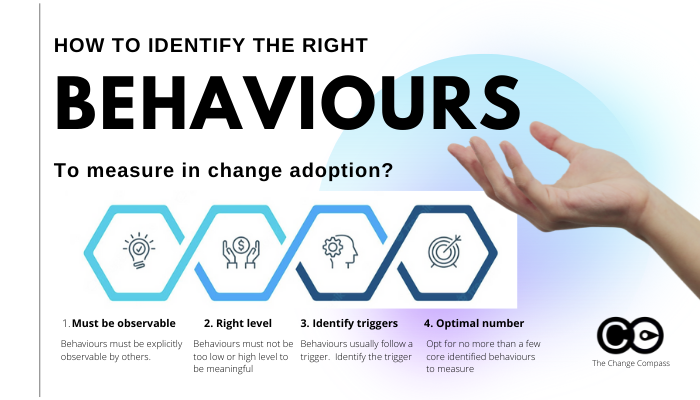
Measuring behaviours as a part of change adoption is a key part of effective change management, ensuring the full achievement of initiative benefits and helping practitioners understand whether impacted stakeholders are truly moving toward the future state. Behaviour change, particularly in domains like physical activity and health behavior, has been the subject of significant empirical research, with findings published in major outlets like Google Scholar. To design behaviour change interventions and select the right behaviours to measure, change practitioners should take a structured approach, informed by research findings and practical experience. There are different approaches to effective measurement and we explore some of these.
Selecting the Right Behaviours to Measure
Start with a clear understanding of the initiative’s objectives, the current state, the complexity of the change, different impacts, the change approach, target behaviours, and the quantum of the change being introduced. Not every behaviour is equally important; focus on the key elements most closely tied to initiative success and the full adoption of behaviours required for the future state.
Consider the impacted person’s perspective toward the desired future state: What will they have to do differently? From adopting new physical behaviours (such as physical effort required in physical activity interventions) to changes in decision-making or collaboration, choose behaviours that best reflect actual change, not just awareness or intent.
Prioritize observable and measurable actions. Research suggests that reminders of events or structured prompts can support behaviour change, but measuring the visible results of these reminders—such as compliance rates, social norm adherence, or reduction in social deviance—is essential for meaningful metrics.
Design and Measurement Considerations
Resist the heavy design of change interventions that lead to measurement overload. Simplicity and ease of understanding are crucial, both for those being measured and those collecting the data.
Draw from behavioral change frameworks supported by significant empirical research. For example, a Stanford professor’s work on social norm dynamics highlights how aligning behaviours with group expectations—rather than just individual compliance—can create more durable change.
Integrate measurement as part of a series of change interventions. Behaviour rarely shifts overnight; structured reinforcement, monitoring, and feedback, as supported by research findings, are necessary for full adoption.
Best Practice Tips
Use multiple sources of data: direct observation, self-reports, digital analytics, and reminders of events all have roles in robust measurement systems.
Anchor behaviour change efforts to broader elements like organizational culture (social norms) and systems for monitoring and feedback, to sustain behavioural change and minimize social deviance.
Apply the old adage, “what gets measured, gets managed,” but with the right focus—select measures tightly linked to initiative success.
Ultimately, successful behaviour change – and its measurement – depends on aligning the structured approach of change management with an empathy for the impacted person’s journey. Choosing the right behaviours to measure, grounded in significant empirical research and designed for ease of understanding, supports not only the full achievement of initiative benefits but also continuous improvement for future state readiness
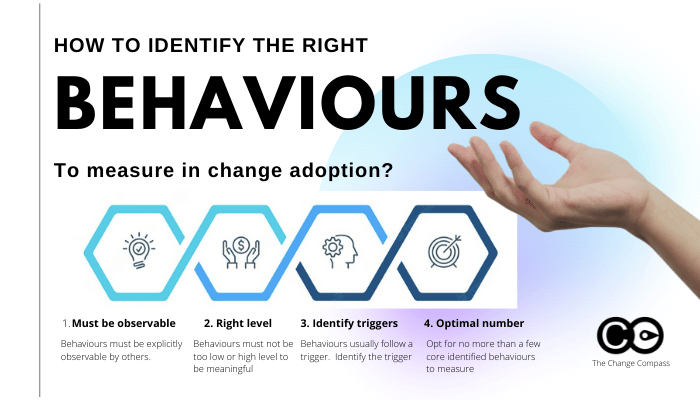
Whilst there could be a wide range of different behaviours depending on the initiative in concern, what are some of the tips in selecting the right behaviours to measure?
Check out our infographic on the top 4 elements to pay attention to when measuring behaviours as a part of change adoption metrics. Also check out Dr BJ Fogg’s model (Stanford University) on effective behaviour change.
Managing change saturation and change fatigue can be tricky, but a common occurrence and a status quo for large companies when various types of changes occur in unison. External factors mean that the volume of change is often necessary. It is not necessarily something you can see or touch. It can be hidden. It can be hearsay. Without the right data organisations can miss the risk. Missing the risk can mean that your organisation suffers from performance drops, and at the same time your changes are not adopted. Managing the risk or presence of change saturation can be complex. In this article we leverage the principles of chi (as a change management model or a change management framework) to manage this people side of change.
Understanding Change Saturation
In the field of change management managing change saturation as a part of the change management strategy is essentially about managing the organizational energy. When an organization experiences too many organisational changes at once, it can lead to fatigue, resistance, and decreased productivity among employees. In the history of change management the volume of change has been increasing. Just like in traditional Chinese medicine, where the flow of chi, or vital energy, through the body is crucial for good health, the flow and maintenance of energy within an organization is essential for its success.
The Principle of Chi
In Chinese philosophy, chi is the fundamental life force that flows through all living beings and the universe. It is the energy that animates and sustains everything. The concept of chi can be applied to organizations as well, like change models, where it represents the energy that drives processes, interactions, and productivity. Chi is recognized as the energy that flows beyond the physical, connecting us with universal energy.
By understanding and applying the principles of chi, organisations can effectively manage their energy and navigate through periods of change without succumbing to saturation during transformational change, even with limited business and change management resources. Just as in traditional Chinese medicine, where balance and harmony are essential for optimal health, maintaining balance and harmony within the organization is crucial for its well-being.
Symptoms of Change Saturation
Before delving into techniques for managing change saturation, it’s essential to recognize the symptoms of organisational change when the process of change involves major changes. From an individual change perspective, symptoms may include:
Burnout: Employees may feel overwhelmed and exhausted by the change management process, leading to decreased motivation and productivity.
Resistance: There may be increased resistance to change as employees become fatigued from constant transitions, losing any sense of urgency for the change.
Stress: High levels of stress and anxiety can manifest in physical and emotional symptoms such as headaches, insomnia, and irritability.
From an organizational perspective, symptoms may include:
Decreased Performance: The organization may experience a decline in overall performance and efficiency.
Increased Turnover: Employees may leave the organization due to stress and burnout.
Lack of engagement: Employees may not engage with where the organisation is heading and not feel invested.
Lack of Innovation: Change saturation can stifle creativity and innovation as employees focus on managing constant changes rather than exploring new ideas. During times of anxiety and stress, there is not sufficient mental capacity for innovation.
Recognizing these symptoms is a key step in addressing change saturation and restoring balance to the organization.
Managing Chi in Change Management
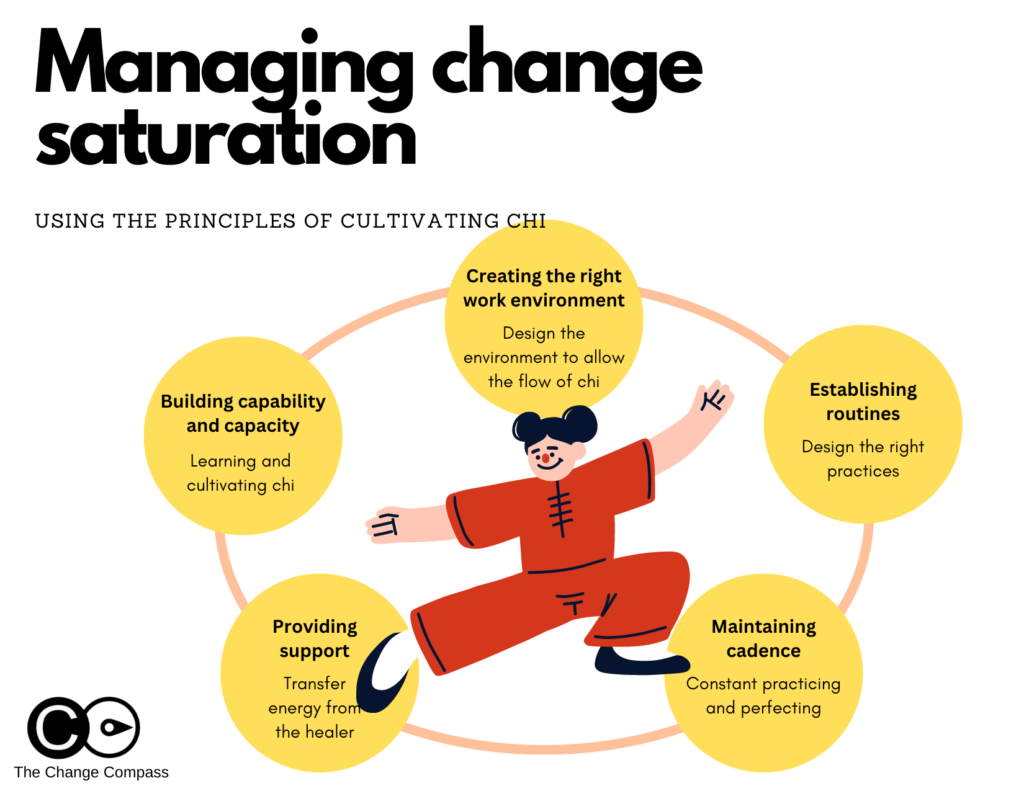
Just as traditional Chinese medicine emphasizes practices to cultivate and balance chi within the body, organizations can adopt techniques to manage their energy and navigate through periods of change effectively as a part of the change management plan.
Some of these techniques to result in successful change management include:
Building Capability and Capacity:
Building capability in managing change is essential for ensuring that employees have the skills and knowledge needed to navigate through periods of change effectively. Ideally this is already part of the company culture and part of driving continuous improvement and operational efficiency through capability. This is similar to the process of developing and cultivation chi through learning. In a similar vein, change practitioners can take practical steps within a structured process to build capability within their organizations which will increase the capacity for change, including:
Training and Development Programs: Implementing training and development programs focused on change management principles, methodologies, and best practices. These programs can include workshops, seminars, online courses, and coaching sessions to help employees develop the necessary skills and competencies for managing change.
Change Leadership Development: Investing in the development of change leadership skills among managers and leaders within the organization. Change leaders play a critical role in driving change initiatives forward, communicating effectively with employees, and fostering a culture of openness and adaptability. Leaders have a significant impact on the change outcome so this is critical.
Mentorship and Coaching: Establishing mentorship and coaching programs where experienced change practitioners can mentor and support business leaders (or those whose job roles involve leading change) at an individual level who are new to change management. This provides valuable guidance and support to individuals as they navigate through change initiatives and develop their skills over time to develop their sense of change.
Communities of Practice: Creating communities of practice where change practitioners can come together to share knowledge, experiences, and best practices at a regular basis. Those from different disciplines may be welcome. These communities provide a platform for collaboration, learning, and networking among individuals with a shared interest in change management.
On-the-Job Learning Opportunities: Providing employees with opportunities to apply their change management skills in real-world scenarios during the implementation phase is one of the most effective ways for learning. This can include participating in change projects, leading change initiatives, and taking on new roles and responsibilities that require them to apply their knowledge and expertise in managing change.
Establishing Routines:
Establishing routines and processes for managing change helps create structure and consistency within the organization. Think of this like exercising to develop the chi. Through exercises chi practitioners can harness the energy flow through controlled movements. Regular practices to cultivate and manage chi are essential. Change practitioners can implement the following practical routines to ensure that change initiatives are effectively managed and monitored:
Change Readiness Assessments: Conducting regular change readiness assessments across large projects to gage the organisation’s readiness for upcoming change initiatives and any changes in new business processes. This involves assessing factors such as employee readiness, organizational readiness, and potential barriers to change.
Effective change communication channels: Having effective communication channels that provide community based information flow and discussions as well as 2-way information sharing between the leadership and employees is critical. Effective communication channels need to be managed and promoted to ensure they are working to support change communication goals.
Change Governance: A part of practicing change is about regularly reviewing change data and making decisions to improve how change is managed and how change is implemented. This also includes ongoing monitoring of the capacity of change and any risks of change saturation. Ultimately, making the right decision on the prioritisation and sequencing of change has significant impact on change saturation.
Change Monitoring and Reporting: Establishing mechanisms for monitoring and reporting on the progress and employee adoption of change initiatives. This may include regular status updates and progress reports to feed data requirements of change governance bodies and identify areas for improvement. Collecting and reviewing change data should be viewed as a part of managing business (business as usual) vs. an ‘extra’ task.
Providing Support:
In the manipulation and healing of chi this is about transferring the energy from the healer to the patient to restore balance and health. Techniques like Reiki, Qigong healing, and therapeutic touch are popular forms. Likewise in change management, providing support to employees throughout the change process is essential for mitigating resistance, reducing stress, and fostering a culture of resilience.
Change practitioners can offer practical support in the following ways:
Change Champion Networks: Establishing change champion networks comprised of enthusiastic and influential employees who can help drive change initiatives forward within their respective teams or departments. Change champions serve as advocates for change, providing support, encouragement, and guidance to their colleagues throughout the change process. Change champions may be leaders or even project managers.
Change Coaching and Mentoring: Offering one-on-one coaching and mentoring support to employees who may be struggling to adapt to change. This provides individuals with a safe space to express their concerns, seek guidance, and develop coping strategies for managing change effectively.
Change Support Resources: Providing employees with access to resources and tools to support them through the change process. This may include training materials, job aids, self-help resources, and online support forums where employees can access information, share experiences, and seek assistance from their peers.
Leadership Support and Involvement: Engaging leaders and managers at all levels of the organization in supporting change initiatives and modeling desired behaviors. Leaders play a crucial role in setting the tone for change, communicating the vision, and demonstrating their commitment to supporting employees through periods of transition.
Employee Assistance Programs: Offering employee assistance programs (EAPs) or counseling services to employees who may be experiencing stress, anxiety, or other emotional challenges related to change. Providing access to confidential counseling and support services can help employees cope with the emotional impact of change and build resilience over time.
Creating the Right Work Environment:
Managing chi is not just about the individual, it also extends to the environment (just like the definition of change management includes the environment). To harness good chi, factors such as room layout and the overall design of the environment are also important. The goal is to create an environment where chi can flow freely, bringing balance, health and prosperity.
Creating a supportive work environment can foster chi, and is essential for fostering resilience, innovation, and collaboration within the organization. Change practitioners can take practical steps to create the right work environment for managing change, including:
Promoting Psychological Safety: Creating a culture of psychological safety where employees feel comfortable expressing their ideas, concerns, and feedback without fear of reprisal or judgment. Psychological safety encourages open communication, trust, and collaboration, which are essential for navigating through periods of change. This needs to be modelled and supported through leaders.
Encouraging Flexibility and Adaptability: Encouraging flexibility and adaptability among employees by promoting a growth mindset and embracing change as an opportunity for learning and growth. Providing opportunities for employees to develop new skills, explore new roles, and take on new challenges can help foster a culture of resilience and agility within the organization.
Fostering Collaboration and Teamwork: Fostering a collaborative and inclusive work environment where employees feel valued, respected, and empowered to contribute their unique perspectives and talents. Encouraging cross-functional collaboration, team-building activities, and knowledge sharing helps break down silos and promote a sense of unity and common purpose among employees.
Providing Adequate Resources and Support: Ensuring that employees have access to the resources, tools, and support they need to succeed in their roles and navigate through periods of change effectively. This may include providing training and development opportunities, allocating sufficient time and resources for change initiatives, and offering ongoing support and guidance from leadership.
Celebrating Success and Milestones: Celebrating success and milestones along the change journey to recognize the efforts and achievements of employees. Acknowledging progress, rewarding contributions, and celebrating successes helps build morale, motivation, and momentum for future change initiatives.
Maintaining Cadence:
Maintaining a consistent cadence for change initiatives helps prevent overload and fatigue, ensuring that change is managed effectively and sustainably over time. Change practitioners can maintain cadence by:
Setting Realistic Timelines and Milestones: Setting realistic timelines and milestones for change initiatives based on the organization’s capacity and resources. This involves carefully planning and sequencing change activities to avoid overwhelming employees and minimize disruption to day-to-day operations.
Prioritizing and Sequencing Change Initiatives: Prioritizing change initiatives based on their strategic importance, urgency, and impact on the organization. This helps focus resources and attention on the most critical changes while ensuring that less urgent changes are managed effectively within the organization’s capacity. The sequencing and design of change impact activities across all initiatives is also critical as this shapes the experiences of employees.
Maintaining Governance and Oversight: Maintaining the right governance structures and oversight mechanisms to ensure that change initiatives are aligned with organizational goals, objectives, and priorities. This may include ensuring the right change management committees (including the right numbers of committees), capable change sponsors, and conducting regular reviews and assessments as to the effectiveness of the governance bodies.
Communicating Regularly and Transparently: Communicating regularly and transparently with employees about the status of change initiatives, upcoming milestones, and any changes to plans or timelines. Providing clear and consistent communication helps keep employees informed, engaged, and ensures there are no surprises.
By incorporating these techniques into their change management practices, organizations can effectively manage change saturation and promote a healthy, resilient, and thriving organizational environment. However, one that supports change and is not prone to change saturation.
Change saturation can pose significant challenges for organizations, leading to decreased performance, employee burnout, and resistance to change. By applying the principles of chi and adopting techniques to manage organizational energy, such as developing capability, and cadence and creating the right environment, organizations can navigate through periods of change more effectively and promote a culture of resilience, innovation, and well-being. Just as in traditional Chinese medicine, where balance and harmony are essential for good health, maintaining balance and harmony within the organization is crucial for its success in an ever-changing world.
To read up more about managing change saturation check these out:
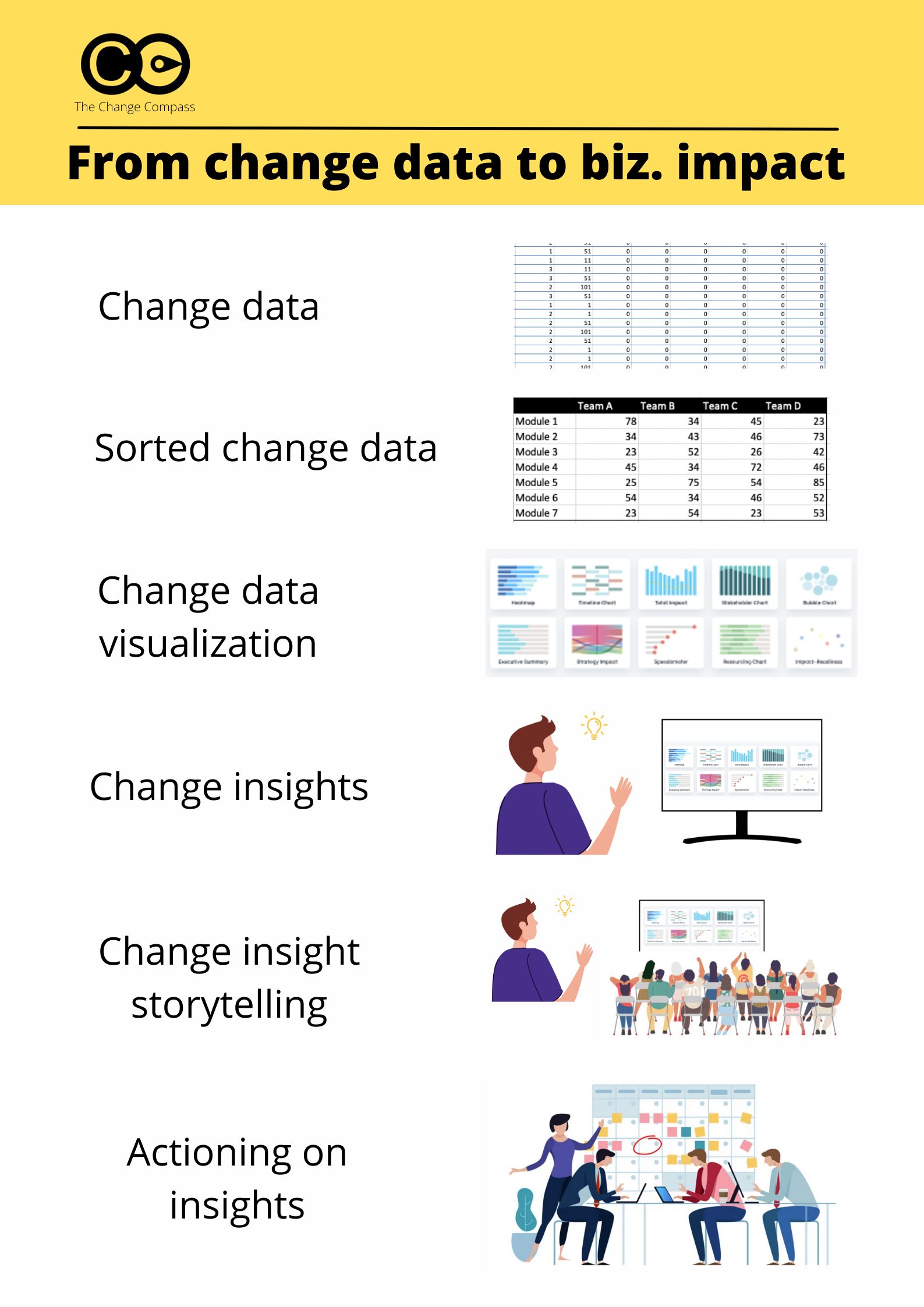
Here is a powerful infographic template that highlights the key steps from change management data, sorted change management data, change management data visualization, generating change insight, storytelling the change insights generated, and actioning on change management insights.